

Overview
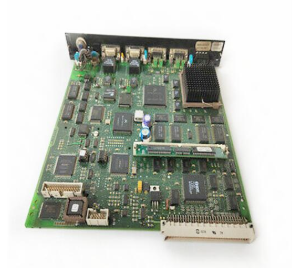
ALSTOM’s UT150-1 is a device with significant application value in the industrial field. From the model perspective, UT150-1 has clear markings, making it easy to identify and configure in various industrial systems.
In terms of application, UT150-1 is mainly used in DCS/PLC industrial control systems. In these systems, it plays a crucial role in facilitating the stable operation of the entire industrial control process. In order to ensure performance, the device adopts a series of advanced measures, such as digital filtering and power frequency shaping sampling. This technology can effectively eliminate periodic interference, ensure the accuracy of data acquisition, avoid signal deviation caused by interference, and thus ensure the stable operation of the control system. At the same time, UT150-1 also uses measures such as timed calibration of reference point potentials to prevent potential drift. Potential drift may affect the normal working state of equipment, and this measure can adjust the potential in a timely manner to maintain stable operation of the equipment.
NOTE
To install the controller, select a location where:
1. No-one may accidentally touch the terminals;
2. Mechanical vibrations are minimal;
3. Corrosive gas is minimal;
4. The temperature can be maintained at about 23°C with minimal fluctuation;
5. There is no direct heat radiation;
6. There are no resulting magnetic disturbances;
7. The terminal board (reference junction compen sation element, etc.) is protected from wind;
8. There is no splashing of water; and
9. There are no flammable materials
Never place the controller directly on flammable items.
If the controller has to be installed close to flammable items or equipment, be sure to enclose the controller in shielding panels positioned at least 150mm away from each side.
These panels should be made of either 1.43mm thick metal plated steel plates or 1.6mm thick uncoated steel plates.
Mount the controller at an angle within 30° from horizontal with the screen facing upward. Do not mount it facing downward.
CAUTION
1) Before you start wiring, turn off the power source and use a tester to check that the controller and cables are not receiving any power in order to prevent electric shock.
2) For safety, be sure to install a circuit breaker switch (of 5A and 100V AC or 220V AC, and that
conforms to IEC60947) near the instrument so as to be operated easily, and clearly indicate that the
device is used to de-energize the instrument.
3) Wiring should be carried out by personnel with appropriate electrical knowledge and experience
IMPORTANT
1) Use a single-phase power source. If the source has a lot of noise, use an isolation transformer for the primary side and a line filter (we recommend TDK’s ZAC2205-00U product) for the secondary side.
When this noise-prevention measure is taken, keep the primary and secondary power cables well apart.
Since the controller has no fuse, be sure to install a circuit breaker switch (of 5A and 100V AC or 220V AC, and that conforms to IEC standards) and clearly indicate that the device is used to de-energize the controller.
2) For thermocouple input, use shielded compensating lead wires. For RTD input, use shielded wires which have low resistance and no resistance difference between the 3 wires. See the table given later for the specifications of the cables and terminals and the recommended products.
3) The control output relay cannot be replaced even though it has a limited service life (100,000 relay
contacts for the resistance load). Thus, an auxiliary relay should be used so that the load can be turned on and off.
4) When using an inductive load (L) such as an auxiliary relay and solenoid valve, be sure to insert a CR filter (for AC) or diode (for DC) in parallel as a spark-rejecting surge suppressor to prevent malfunctions or damage to the relay.
5) When there is the possibility of being struck by external lightening surge, use the arrester to protect the instrument.
NOTE
• Always fix a terminal cover bracket to the UT150 controller before wiring if an optional anti-electric
shock terminal cover (part number: L4000FB) is used.
• Two types of optional anti-electric-shock terminal covers (part numbers T9115YE and T9115YD) are
available for the UT152 and UT155 controllers, respectively.
Field and purpose
As a globally renowned enterprise in the fields of rail transit, electricity, etc., Alstom’s UT150-1 control board is commonly used in the control systems of rail transit vehicles, such as subways, light rails, trains, etc., to achieve various control functions of the vehicles, ensuring the safe operation and efficient performance of the trains. For example, it may be responsible for controlling important functions such as traction, braking, speed regulation, and door opening and closing of the train.
Working principle
Signal processing and transmission: The control board receives signals from various sensors and operating devices of the train, such as speed sensors, position sensors, driver operation handles, etc., processes and analyzes these signals, and then sends control signals to the corresponding actuators according to preset logic and algorithms to achieve precise control of the train’s operating status.
Communication and network connection: Through specific communication protocols and network interfaces, the UT150-1 control board interacts and communicates with other systems and devices on the train, such as the central control system, traction system, braking system, etc., to share information and work together to ensure the coordinated operation of the overall train system.
FEATURES
High reliability: Adopting redundant design, fault-tolerant technology, and highly reliable electronic components to ensure stable operation in complex operating environments, reduce the probability of failures, and ensure the safety and reliability of train operation.
High real-time requirements: Real time response is required for train control, which can react to various signals and events in a very short time to achieve precise control of train operation and meet the safety and efficiency requirements of train operation.
Strong anti-interference ability: With good electromagnetic compatibility, it can work normally in the complex electromagnetic environment on the train, without being affected by electromagnetic interference from other devices, and without causing interference to other devices.
Maintenance
Regular inspection: It is necessary to regularly inspect the UT150-1 control board, including visual inspection, connection component inspection, circuit board status inspection, etc., to discover possible physical damage, looseness, corrosion and other issues.
Cleaning and dust removal: Keep the control board clean, regularly remove dust and debris, and prevent dust accumulation from affecting heat dissipation and circuit performance.
Software updates and upgrades: With the development of technology and changes in train operation requirements, it is necessary to timely update and upgrade the software of the control board to fix vulnerabilities, optimize performance, add new features, etc.
Leave a comment
Your email address will not be published. Required fields are marked *