

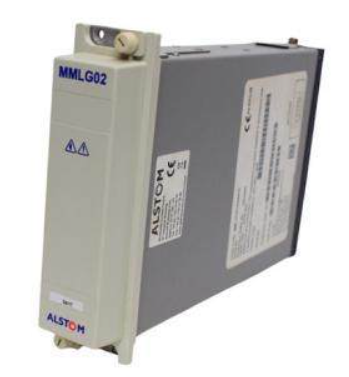
The Alstom PIB310 3BHB0190 control module occupies an important position in the field of industrial automation. As a key CPU module, it integrates advanced technology to provide stable and efficient support for various industrial control systems.
Technical highlights
Advantages of chipset: This module adopts advanced Intel 815E chipset technology. This chipset significantly alleviates bottlenecks on the PCI bus by separating high bandwidth I/O access (such as IDE or USB device related access) from PCI access, thereby greatly improving system performance. For example, in industrial scenarios with frequent data transmission, it can ensure fast and stable data transmission, reducing latency.
Integration and functional characteristics: The 815E chipset brings higher integration and optimizes the performance of the motherboard chipset. At the same time, it also has a standard interrupt architecture and comprehensive memory and I/O mapping capabilities. This enables the module to systematically store, call, and control equipment when processing complex industrial control instructions, ensuring the stable operation of the system.
Application scenarios
Gas turbine control system: In the gas turbine equipment, the Alstom PIB310 3BHB0190 control module plays a core role. It is responsible for precise monitoring and control of various parameters during the operation of the gas turbine. For example, by connecting various sensors, real-time data such as temperature and pressure can be obtained, and fuel supply and combustion conditions can be adjusted according to preset programs and algorithms to ensure efficient and stable operation of the gas turbine. In the application of gas turbine cards, it can accurately detect and control the flame state based on complex logical judgments.
Industrial automation production line: On an automated production line, this control module can serve as a central control unit to coordinate various production processes. For example, in the automobile manufacturing production line, it controls the motion trajectory of the robotic arm, the conveying rhythm of components, and the start stop of various processing equipment, ensuring efficient and coordinated operation of the entire production line, improving production efficiency and product quality.
Precautions for use
Flame fault testing: For application scenarios involving flame detection, such as gas turbine control, debugging engineers must conduct flame fault testing after programming the relevant scanners. This is a crucial step in ensuring safe and reliable testing. Engineers need to ensure that the scanner can accurately detect the target flame (flame on condition) and promptly identify the target flame off (flame off condition).
Trip diagnosis and register operation: The Phoenix scanner associated with this module can provide trip diagnosis for multiple advanced parameters, including power spectral density, average amplitude, best fit, single power supply, internal faults, or combinations of these parameters. When the scanner trips due to flame extinguishing or other reasons, the reason for the trip will be stored in the trip register. This register can store eight (8) trip events, with old events stored in the bottom position LED (1) and new events stored in the top position LED (8). It should be noted that once the register is filled, it must be manually reset to store subsequent trip events, and it will not automatically reset or scroll. For example, when performing equipment maintenance or troubleshooting, engineers need to accurately determine the sequence and cause of faults based on the records in the registers, in order to quickly solve the problem.
The Alstom PIB310 3BHB0190 control module plays an irreplaceable role in the industrial field with its advanced technology and reliable performance, providing a solid guarantee for the efficient operation of industrial automation
Leave a comment
Your email address will not be published. Required fields are marked *