
Call us 24/7uaedcs@163.com
Welcome to the official website of CNIACS Automation Technology Co., Ltd!
Call us 24/7uaedcs@163.com

Bently 330500 Velomitor piezoelectric velocity sensor

Product Overview

Core functions

The 330500 Velomitor piezoelectric velocity sensor is a special type of piezoelectric accelerometer that uses solid-state design and integrates embedded electronic components for measuring absolute vibration (relative to free space) of bearing seats, housings, or structures. It has no moving parts, avoiding mechanical degradation and wear, and can be installed vertically, horizontally, or at any angle.

Application points

Suitable for detecting vibration changes caused by common faults such as rotor imbalance and misalignment.

If the integral output is used to measure displacement, it should be noted that electrical noise may amplify and affect data accuracy. Therefore, it is necessary to choose the installation position, grounding, and shielding method reasonably to maximize amplitude and frequency response and reduce non actual vibration data interference.

We can provide engineering services to determine the optimal installation location. For more information, please visit Bently.com.

Technical specifications

1. Electrical parameters

Sensitivity: 3.94mV/mm/s (100 mV/in/s) ± 5%.

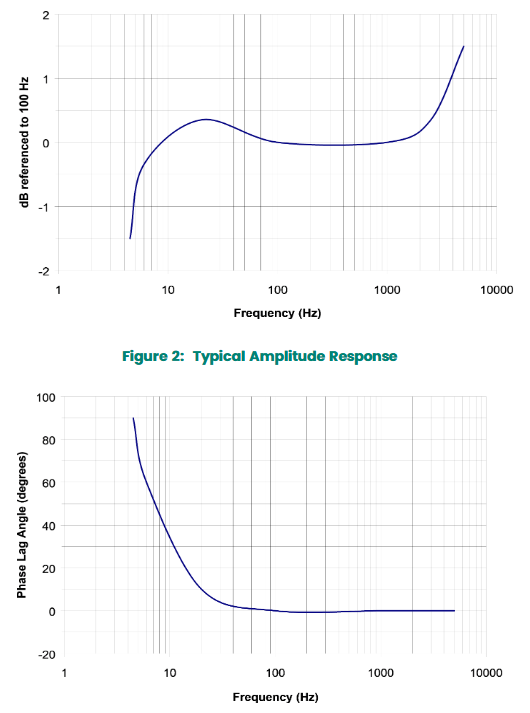
Frequency response: 4.5 Hz to 5 kHz (270 cpm to 300 kcpm) ± 3.0 dB; 6.0 Hz to 2.5 kHz (360 cpm to 150 kcpm) ± 0.9 dB.

Temperature sensitivity: The typical value within the working temperature range is -14% to+7.5%.

Speed range: 1270 mm/s (50 in/s) peak.

Lateral sensitivity: less than 5% of sensitivity.

Amplitude linearity: ± 2% (up to a peak of 152 mm/s (6 in/s)).

Installation resonance frequency: greater than 12 kHz.

Output bias voltage: -12 ± 3.0 V DC (relative to pin A, full temperature range).

Dynamic output impedance: less than 2400 Ω.

Broadband noise floor (4.5 Hz to 5 kHz): 0.004 mm/s (160 μ in/s) rms (nominal value).

Grounding: Shell isolation.

Maximum cable length: With the 02173006 cable model, it can reach 305 meters (1000 feet) without signal attenuation.

2. Environmental restrictions

Working temperature range: -55 ° C to 121 ° C (-67 ° F to 250 ° F).

Impact bearing capacity: 5000 g peak (maximum).

Relative humidity: 100% non submerged state; The shell is sealed in an airtight manner.

Base strain sensitivity: 0.005 in/s/µ strain.

Magnetic field sensitivity:<51 µ in/s/Gauss (50 Gauss, 50-60Hz).

3. Physical parameters

Weight: Typical value of 142 grams (5.0 oz).

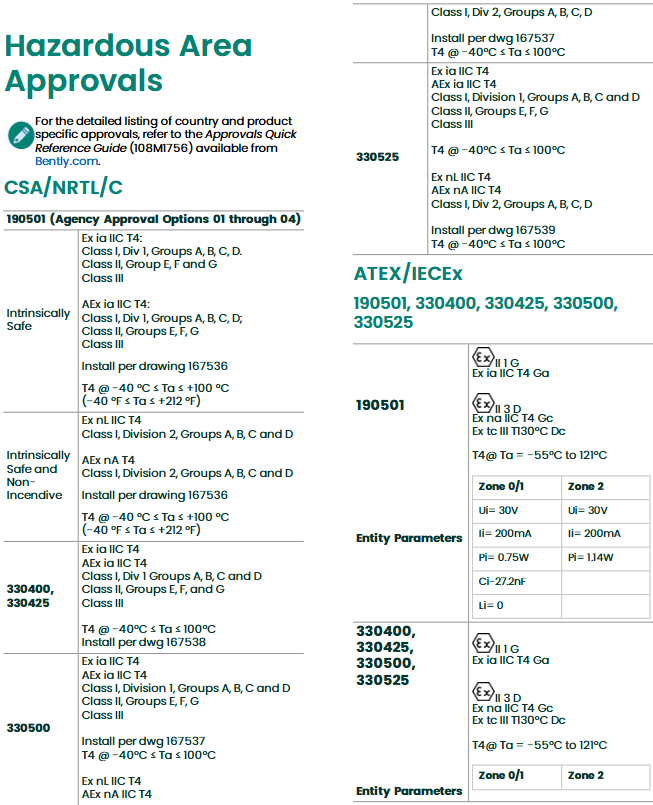
Diameter: 25.3 mm (0.995 in).

Height: 63.2 mm (2.49 in).

Shell material: 316L stainless steel.

Connector: 2-pin Mil-C-5015 airtight package, 316L stainless steel shell.

Installation torque: Maximum 32-46 kg · cm (24-40 in lb).

Polarity: When the sensor housing moves towards the connector, pin A is positive relative to pin B.
Compliance and Certification

1、 Basic compliance certification

FCC certification

This device complies with Part 15 of FCC regulations and requires two conditions for operation:

Shall not cause harmful interference;

We must accept any interference received, including interference that may cause unexpected operations.

EMC Directive

Compliant with the European Community EMC Directive 2014/30/EU, meeting electromagnetic compatibility requirements in industrial environments, including immunity and emission limits.

RoHS Directive

Compliant with RoHS Directive 2011/65/EU, restricting the use of specific hazardous substances in electronic and electrical equipment, environmentally compliant.

Maritime certification

Only models 330400 and 330425 comply with:

The ABS 2009 Steel Ship Rules (1-1-4/7.7, 4-8-3/1.11.1, 4-9-7/13) are applicable to ship and offshore platform scenarios.
2、 Hazardous Area Certification

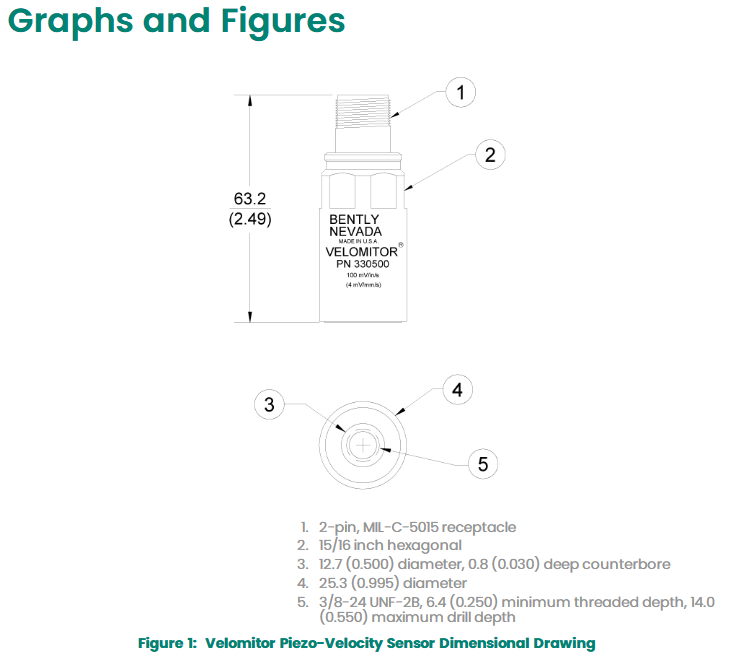
1. CSA/NRTL/C certification

Intrinsic safety type (Ex ia IIC T4):

Applicable to Class I, Div 1, Groups A, B, C, D; Class II,Groups E、F、G; Class III。

Installation must follow drawings 167536/167537/167538, with an ambient temperature range of -40 ° C ≤ Ta ≤+100 ° C (-40 ° F ≤ Ta ≤+212 ° F).

Intrinsically safe and non flammable (Ex nL IIC T4/AEx nA T4):

Suitable for Class I, Div 2, Groups A, B, C, D, installation requirements are the same as above.

2. ATEX/IECEx certification

Covering models such as 190501, 330400, 330425, 330500, 330525, etc., the specific details are as follows:

Zone 0/1(II 1 G Ex ia IIC T4 Ga):

Entity parameters: Ui=28V-30V, Ii=150mA-200mA, Pi=0.75W-1.26W, Ci=10.8NF (some models), Li=0。

Devices that meet the above parameters need to be connected, and cables must comply with EN 60079-25 standard type A or B.

Zone 2(II 3 G Ex nA IIC T4 Gc / Ex tc III T130°C Dc):

The power supply parameters shall not exceed the limits of Ui, Ii, and Pi mentioned above, and the ambient temperature shall be -55 ° C ≤ Ta ≤ 121 ° C.

3、 Certification conditions and precautions

INSTALLATION REQUIREMENTS

When used in hazardous areas, installation must be carried out according to specified drawings (such as 167536, 167537, 167538, etc.) to ensure that cable types and connection methods comply with certification specifications.

Temperature limit

The environmental temperature range under different certifications must be strictly followed (such as the highest environmental temperature corresponding to T4 level), and exceeding the range may result in certification failure.
Bently 3500/50M tachometer module

Product Overview

Core functions

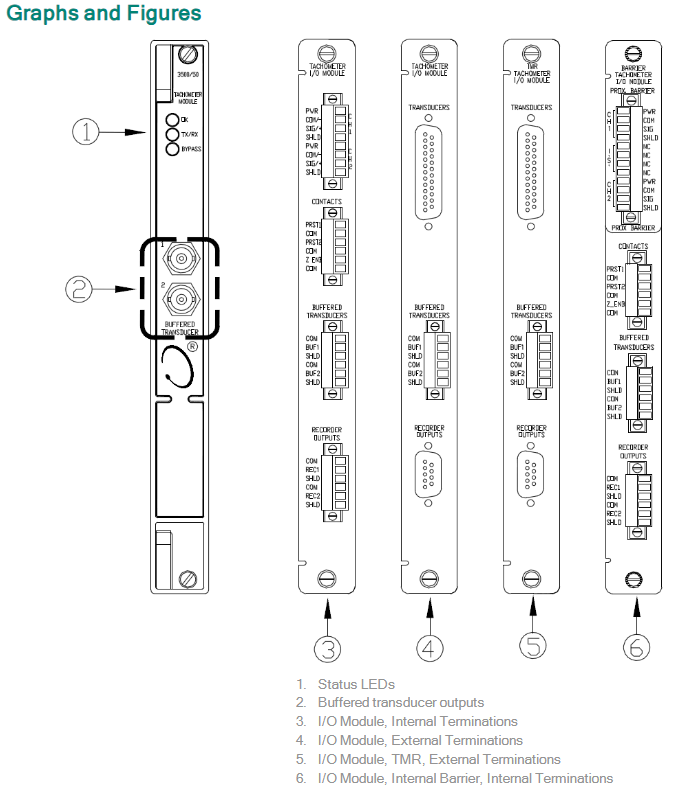
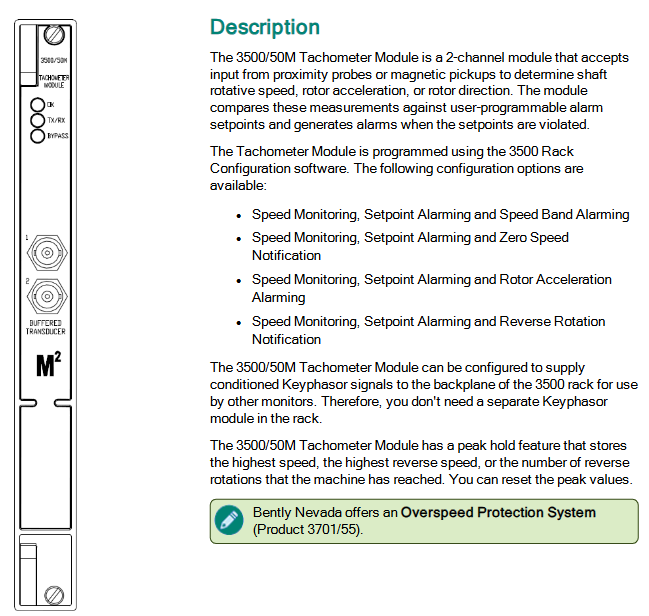
The 3500/50M tachometer module is a dual channel module that can receive input signals from proximity probes or magnetic pickups, used to measure shaft speed, rotor acceleration, or rotor steering, and compare these measured values with user programmable alarm settings. When the set values are exceeded, an alarm is generated.

main features 

Multiple configuration options: supports multiple configurations such as speed monitoring, set value alarm, speed band alarm, zero speed notification, rotor acceleration alarm, reverse rotation notification, etc.

Signal supply: It can be configured to provide conditioned Keyphasor signals to the rear 3500 rack backplane without the need for separate Keyphasor modules in the rack.

Peak hold function: Stores the maximum speed, maximum reverse speed, or number of reverse rotations reached by the machine, and the peak value can be reset.

Technical specifications

1. Input parameters

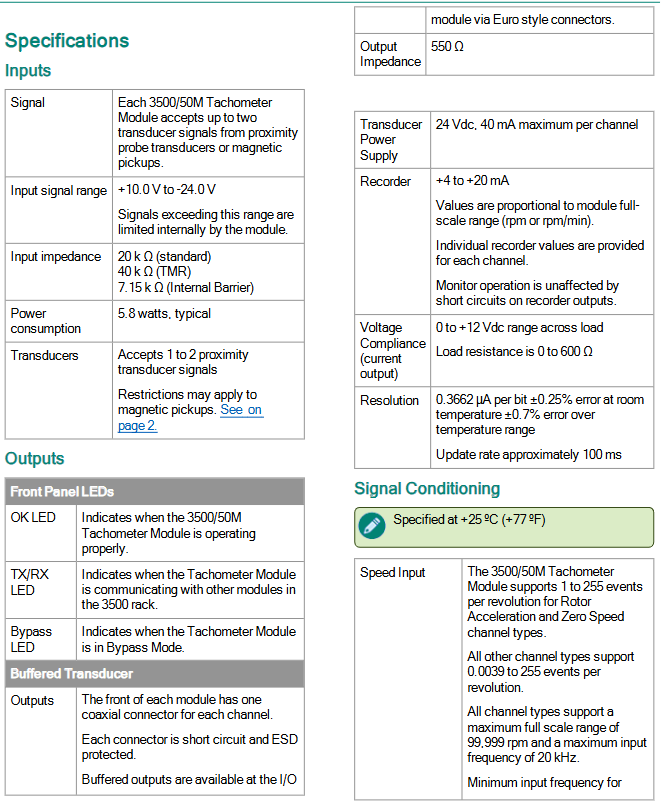
Signal input: Each module can receive up to 2 sensor signals from proximity probes or magnetic pickups, with an input signal range of+10.0 V to -24.0 V. Signals outside the range will be restricted internally by the module.

Input impedance: The standard is 20 k Ω, TMR is 40 k Ω, and the internal barrier is 7.15 k Ω.

Sensor power supply: 24 Vdc, maximum 40 mA per channel.

Power consumption: Typical value of 5.8 watts.

Speed input: supports 1 to 255 events per revolution; The minimum input frequency of the proximity sensor is 0.0167 Hz (1 rpm at 1 event/rev); The minimum input frequency for passive magnetic pickups is 3.3 Hz.

2. Output parameters

Analog output: proportional to the module’s full-scale range (rpm or rpm/min), each channel provides independent recorder values, and monitoring operations are not affected by recorder output short circuits; The voltage dependence of the current output is 0 to+12 Vdc (load resistance 0 to 600 Ω).

Resolution: 0.3662 µ A/bit, with an error of ± 0.25% at room temperature and ± 0.7% over the entire temperature range. The update rate is approximately 100 ms.

Front panel LED:

OK LED: Indicates that the module is operating normally.

TX/RX LED: Indicates that the module is communicating with other modules in the 3500 rack.

Bypass LED: Indicates that the module is in bypass mode.

3. Signal conditioning and accuracy

Threshold: The automatic threshold is applicable to any input above 0.0167 Hz (1 event/rev at 1 rpm), triggering a minimum signal amplitude of 1 V peak to peak; The manual threshold can be selected within the range of+9.5 Vdc to -23.5 Vdc, with a minimum trigger signal amplitude of 500 mV peak to peak.

Lag: Users can choose within the range of 0.2 to 2.5 volts.

Accuracy:

Speed accuracy: ± 0.1 rpm when<100 rpm; ± 1 rpm between 100 and 10000 rpm; ± 0.01% true shaft speed between 10000 and 99999 rpm.

Speed/minute accuracy: ± 20 rpm/min.

4. Alarm parameters

Alarm setting value: Each channel can set alarm level 1 (set value) for the measured value, which can be adjusted within the range of 0 to 100% of the full range of each measured value through software configuration.

Alarm delay: Alarm 1 has a delay of 1 to 60 seconds (1-second interval); Alarm 2 has a delay of 1 to 60 seconds (0.1 second interval).

Physical and installation parameters

Physical parameters

1. Monitoring module (motherboard)

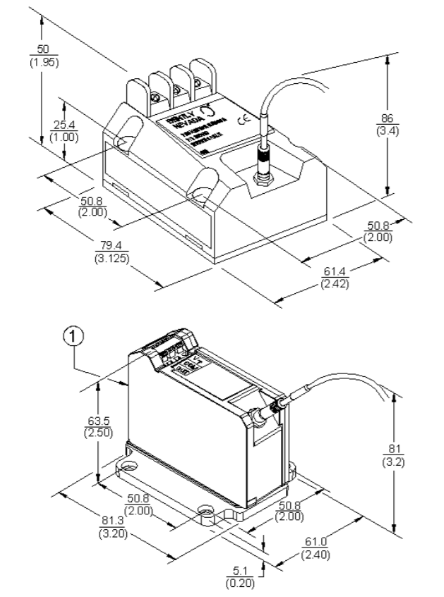
Dimensions (height x width x depth): 241.3 mm x 24.4 mm x 241.8 mm (9.50 in x 0.96 in x 9.52 in)

Weight: 0.82 kg (1.8 lb)

2. I/O module

Barrier free I/O module

Weight: 0.20 kg (0.44 lb)

I/O module with internal barrier

Dimensions (height x width x depth): 241.3 mm x 24.4 mm x 163.1 mm (9.50 in x 0.96 in x 6.42 in)

Weight: 0.46 kg (1.01 lb)

Installation parameters

1. Rack space requirements

Monitoring module: occupying 1 full height front-end slot

I/O module: occupies 1 full height backend slot

2. Wiring and accessories

External terminal block (ET block)

To be used in conjunction with I/O modules with external terminals, terminal blocks and cables need to be ordered separately.

Supports European connectors and terminal block connectors, with specific models including 125808-05 (tachometer ET block, European connector), 128015-05 (tachometer ET block, terminal block connector), etc.

cable

Tachometer signal to ET block cable (135101-AAAA-BB): Available in lengths of 5 feet (1.5 meters), 7 feet (2.1 meters), 10 feet (3.0 meters), etc., supporting assembled or unassembled states.

Recorder output to ET block cable (129529-AAAA-BB): The length specification is the same as the above cable, and it also supports assembly or non assembly.

Installation restrictions

External terminal blocks cannot be used in conjunction with I/O modules with internal terminals.

I/O modules with TMR (Triple Modular Redundancy) require the use of bus type external terminal blocks.

Environment and Compliance

Hazardous Area Certification: Supports CSA/NRTL/C, ATEX/IECEx and other certifications, suitable for Class I, Zone 2 or Division 2 hazardous environments (depending on whether the I/O module is equipped with internal barriers).

Electromagnetic compatibility (EMC): Complies with EN 61000-6-2 (industrial environment immunity) and EN 61000-6-4 (industrial environment emission) standards.

Electrical safety: comply with LV Directive 2014/35/EU and EN 61010-1 standards.

Bently 177230 seismic transmitter

Product Overview

Core functions

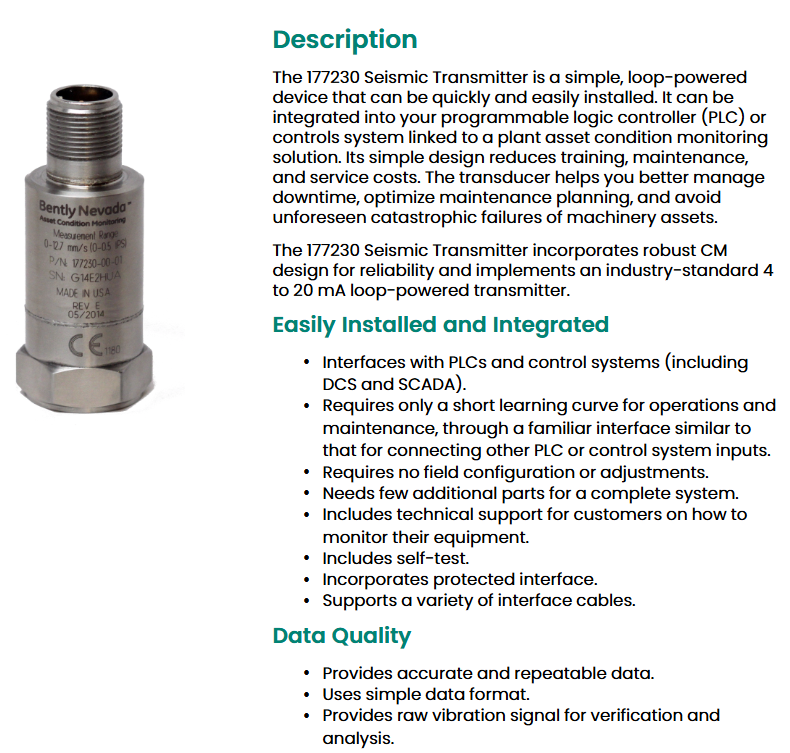
The 177230 earthquake transmitter is a simple loop powered device that can be quickly and easily installed, and can be integrated into a programmable logic controller (PLC) or control system connected to a factory asset status monitoring solution. Its design aims to help users better manage downtime, optimize maintenance plans, and avoid unexpected catastrophic failures of mechanical assets.、

Main features 

Easy to install and integrate: compatible with control systems such as PLC, DCS, and SCADA, with a short learning curve for operation and maintenance, no need for on-site configuration or adjustment, minimal additional components required, technical support provided, self checking function and protected interfaces, and support for multiple interface cables.

High data quality: providing accurate and reproducible data, using a simple data format, and providing raw vibration signals for verification and analysis.

Compliant with EHS standards: Designed with safety ergonomics to support entry into hazardous areas.

Technical specifications

1. Electrical parameters

Excitation voltage: 12 to 30 Vdc (current limited to 40 mA), suitable for PLC, DCS, and SCADA systems with internal power sources and current typically limited to the range of 30 mA to 35 mA.

Stable time: less than 15 seconds within 2% of the final value.

Installation resonance frequency: greater than 12 kHz.

Lateral sensitivity: less than 5% of sensitivity.

Sensor element type: ceramic/shear type.

Connector wiring specifications:

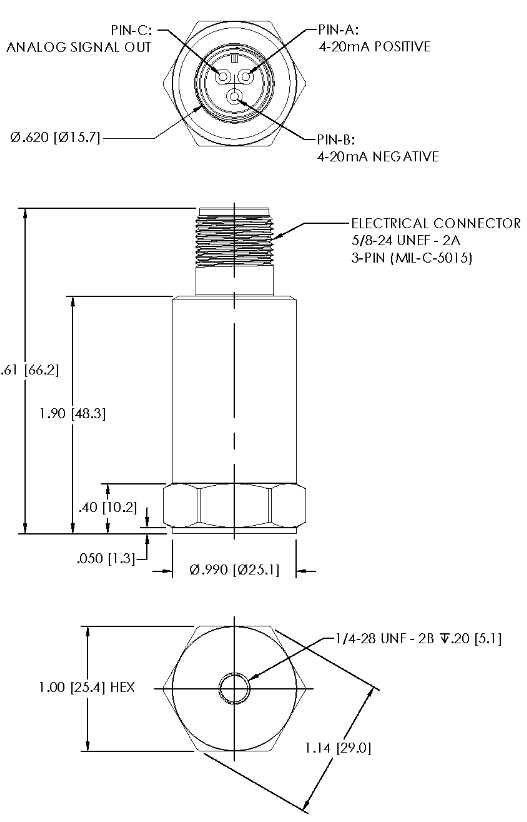
Pin A: 4-20 mA positive loop (positive relative to pin B).

Pin B: The 4-20 mA loop return (the negative loop return of pin A and the common terminal of the dynamic signal) needs to be isolated from any ground, otherwise the 4-20 mA loop will short circuit and result in no output.

Pin C: Dynamic acceleration signal (not buffered, refer to pin B).

Speed output:

Output signal: 4 to 20 mA current loop from pin A to pin B.

Full scale range (- AA): 00 is 0-12.7 mm/s (0.5 in/s) ± 10%; 01 is 0-25.4 mm/s (1.0 in/s) ± 10%; 02 is 0-50.8 mm/s (2.0 in/s) ± 10%, all of which are broadband RMS (root mean square) full-scale.

Frequency response (- BB): 01 is 10 Hz to 1 kHz (600 cpm to 60 kcpm) ± 10%, and the output signal is proportional to the RMS vibration level; 02 is 3 Hz to 1 kHz (180 cpm to 60 kcpm) ± 10%, and the output signal is proportional to the peak vibration level.

Acceleration output:

Output signal: Unbuffered voltage from pin C to pin B (reference).

Sensitivity: 10.2 mV/m/s ² (100 mV/g) ± 20%.

Full scale range: 147 m/s ² (15 g) peak.

Frequency response: 2.5 Hz to 10 kHz (150 cpm to 600 kcpm) ± 10%.

Linearity: ± 1% of full scale.

Output bias: 2.5 V ± 0.1 V (refer to pin B).

2. Environmental restrictions

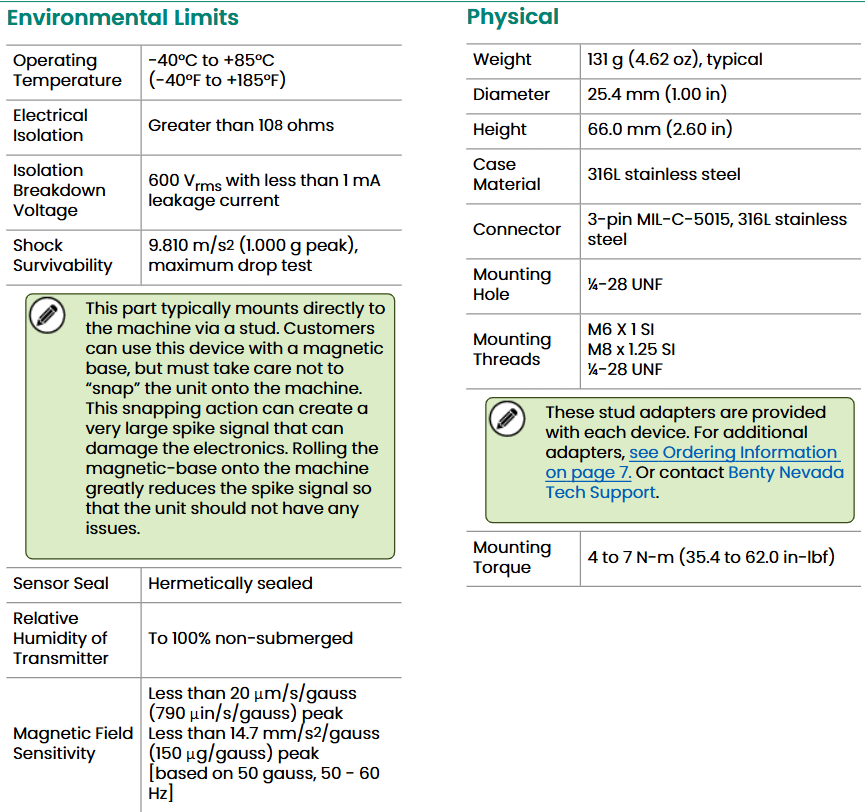
Working temperature: -40 ° C to+85 ° C (-40 ° F to+185 ° F).

Electrical isolation: greater than 10 ohms.

Isolation breakdown voltage: 600 Vrms, leakage current less than 1 mA.

Impact bearing capacity: 9.810 m/s ² (1.000 g peak), maximum drop test. If a magnetic base is used during installation, it is necessary to avoid “popping” the device onto the machine. Rolling the magnetic base can reduce the damage of peak signals to electronic devices.

Sensor sealing: airtight packaging.

Bently 3300 XL 8mm Proximity Sensor

System Overview

component

The 3300 XL 8mm proximity sensor system consists of three parts:

3300 XL 8mm probe

3300 XL extension cable (1-meter system does not require extension cable)

3300 XL Proximitor Sensor

Core functions

The system output voltage is proportional to the distance between the probe tip and the measured conductive surface, and can simultaneously measure static (position) and dynamic (vibration) values. It is mainly used for vibration and position measurement of fluid film bearing machinery, as well as Keyphasor reference and velocity measurement.

Main advantages

Advanced performance, the 5-meter standard system fully complies with API 670 standards (mechanical configuration, linear range, accuracy, and temperature stability).

The components are completely interchangeable, without the need to match or calibrate probes, extension cables, and proximity sensors.

Backward compatibility with non XL 3300 series 5mm and 8mm sensor system components, including 3300 5mm probes.

Key component description

1. Proximitor sensor

Installation flexibility: Supports high-density DIN rail installation and traditional panel installation, sharing the same 4-hole installation footprint as the old model.

Anti interference capability: Strong resistance to radio frequency interference (RFI), can be installed in fiberglass enclosures, and can meet EU CE certification without the need for special shielding conduits or metal enclosures.

Convenient wiring: Using SpringLoc terminal blocks, no specialized installation tools are required, making wiring faster and more secure.

2. Approaching the probe and extending the cable

Structural improvement: The probe adopts the patented TipLoc molding method, which makes the probe tip more firmly combined with the probe body; The cable adopts a patented CableLoc design, with a tensile strength of 330N (75lbf).

Special option: Optional FluidLoc cable to prevent oil and other liquids from leaking from the machine through the inside of the cable.

Connector: Adopting corrosion-resistant and gold-plated ClickLoc connector, it only needs to be tightened with fingers (there will be a “click” sound when tightened), and the specially designed locking mechanism prevents loosening. Installation and disassembly do not require special tools.

3. Extended Temperature Range (ETR) component

ETR probe: Temperature rating up to 218 ° C (425 ° F).

ETR extension cable: Temperature rating up to 260 ° C (500 ° F).

Compatibility: Compatible with standard temperature probes and cables, but system accuracy is limited by the accuracy of the ETR system when using any ETR component.

Technical specifications

1. Electrical parameters

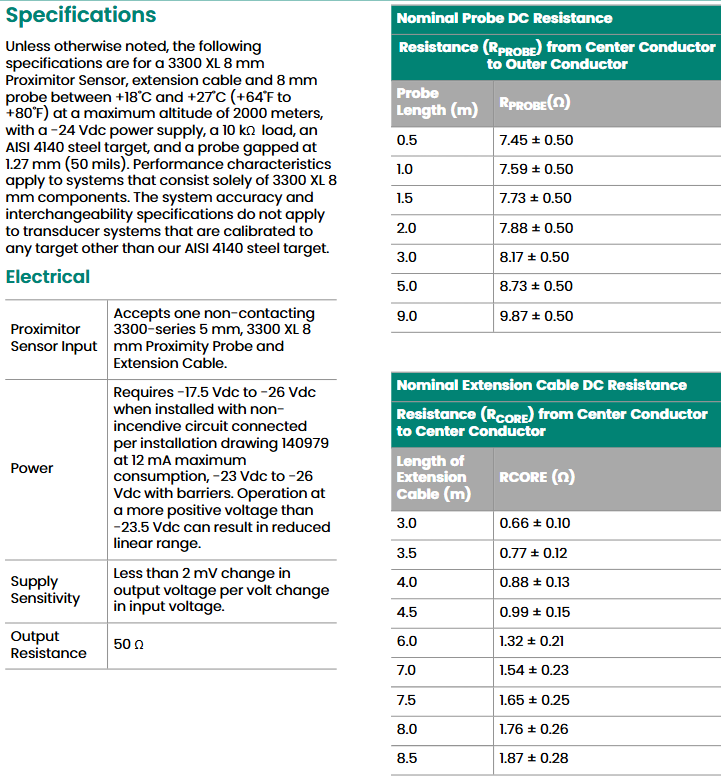
Power supply: -17.5Vdc to -26Vdc (non intrinsic safety circuit), -23Vdc to -26Vdc (with barrier), maximum power consumption of 12mA.

Output resistance: 50 Ω.

Linear range: 2mm (80 mil), starting from approximately 0.25mm (10 mil) from the target, ranging from 0.25 to 2.3mm (10 to 90 mil) (approximately -1 to -17Vdc).

Recommended radial vibration clearance setting: -9Vdc [approximately 1.27mm (50 mils)].

Incremental scaling factor (ISF):

Standard 5-meter or 1-meter system: 7.87V/mm (200mV/mil) ± 5%.

Standard 9-meter system: 7.87V/mm (200mV/mil) ± 6.5%.

Extended Temperature Range (ETR) 5-meter and 9-meter systems: 7.87V/mm (200mV/mil) ± 6.5%.

2. Mechanical parameters

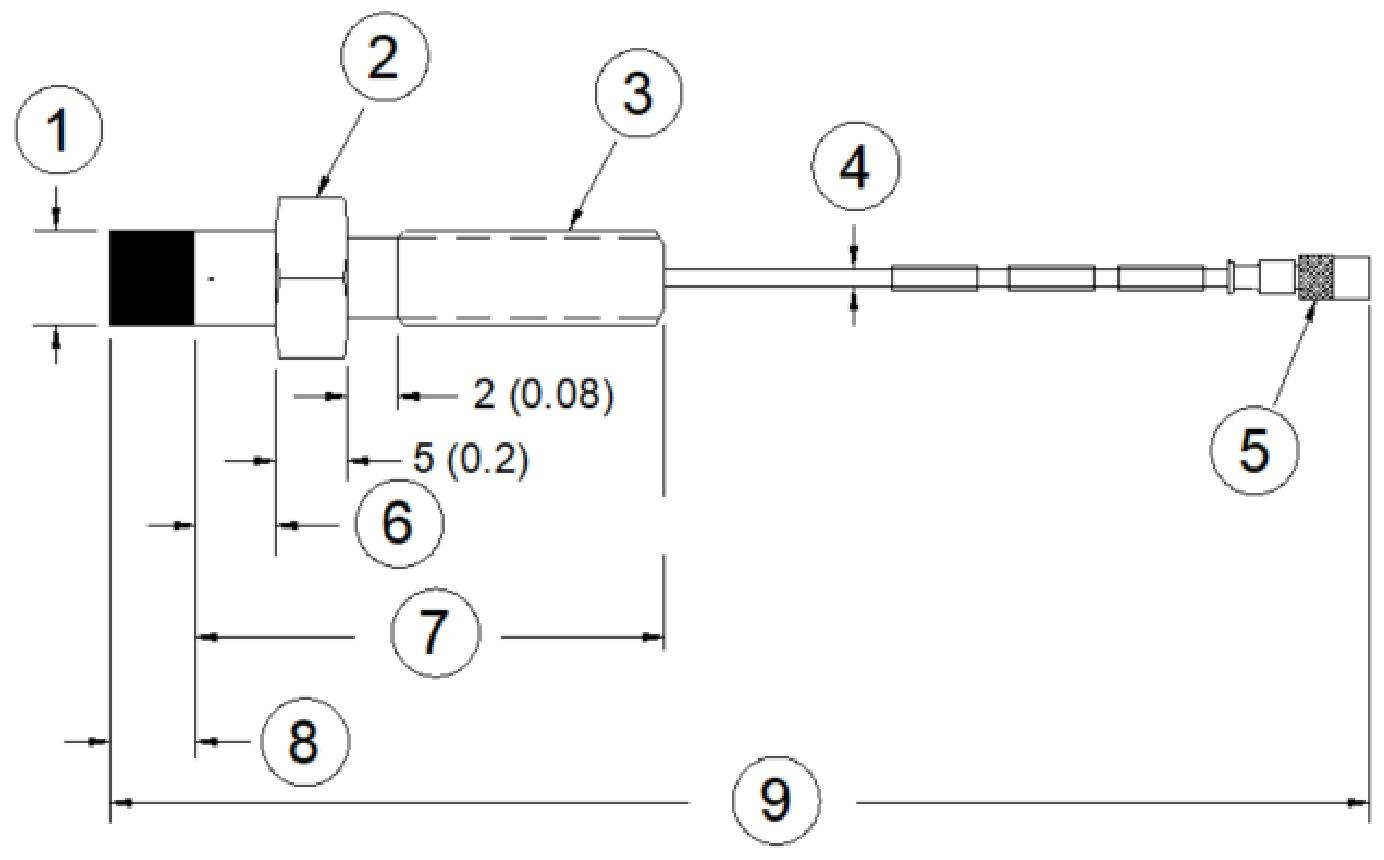
Probe tip material: Polyphenylene sulfide (PPS).

Probe housing material: AISI 303 or 304 stainless steel (SST).

Cable specifications:

Standard cable: 75 Ω three-axis, fluorinated ethylene propylene (FEP) insulation, probe total length of 0.5, 1, 1.5, 2, 3, 5 or 9 meters.

Extended temperature range cable: 75 Ω three-axis, perfluoroalkoxy (PFA) insulation, probe total length of 0.5, 1, 1.5, 2, 5 or 9 meters.

Minimum cable bending radius: 25.4mm (1.0 inch).

Weight:

Total weight of the system (typical value): 0.7kg (1.5lbm).

Probe: 323g/m (11.4oz).

Extension cable: 34g/m (0.4oz/ft).

Armored extension cable: 103g/m (1.5oz/ft).

Proximitor Sensor: 246g (8.67oz).

3. Environmental parameters

Probe temperature range:

Standard probe: -52 ° C to+177 ° C (-62 ° F to+350 ° F).

Extended temperature range probe: probe tip -52 ° C to+218 ° C.

image.png

GE Multilin 889 Generator Protection System

Product Overview

Core functions

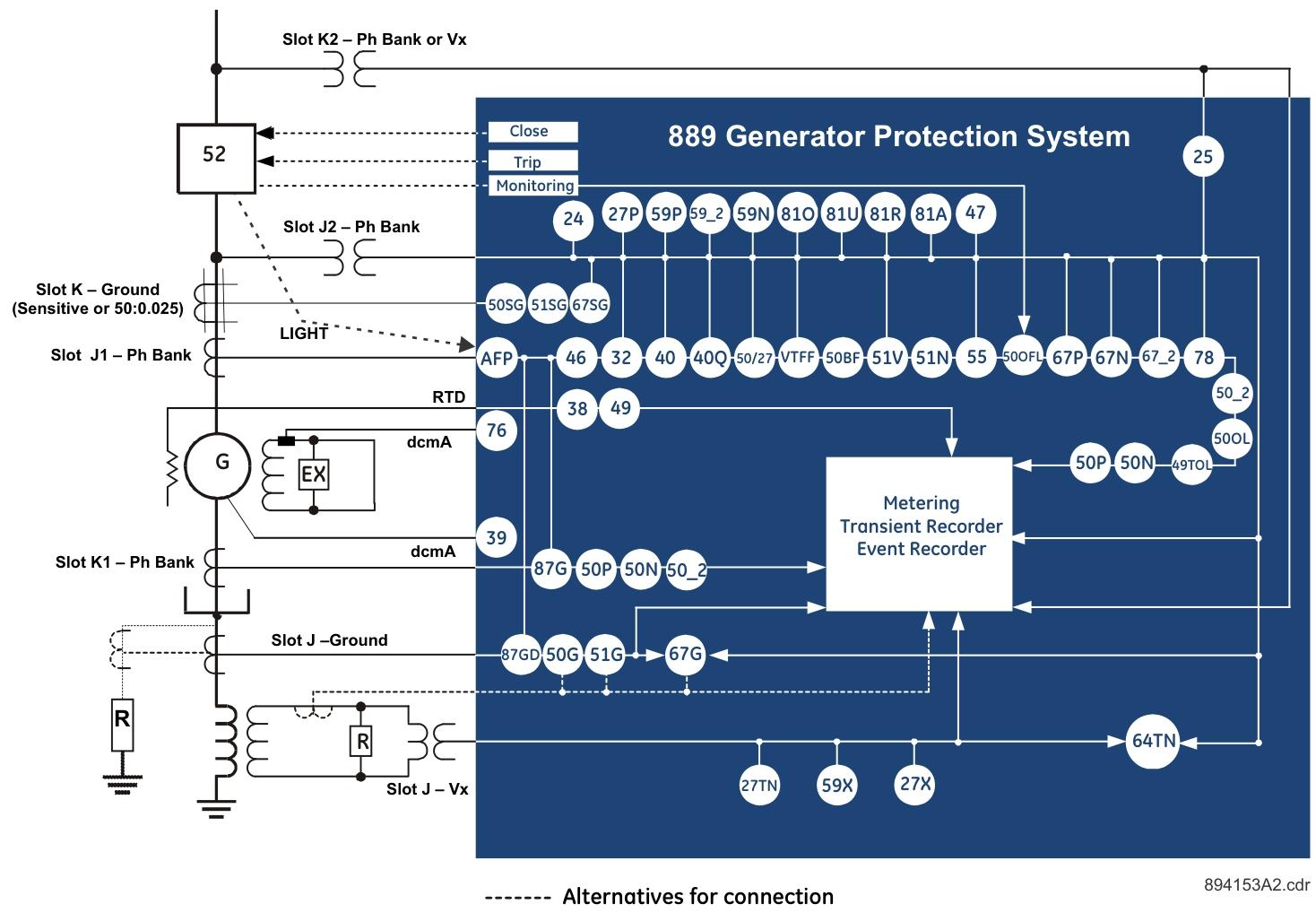
The 889 generator protection system is a microprocessor based device used for primary and backup protection of small and large generators, with protection, control, and asset monitoring functions. It can monitor the imbalance, differential, overexcitation, demagnetization and other states of the generator, and meet different industry standards and user needs through flexible configuration.

main features 

Protection function: covering various protection elements such as percentage differential protection, overcurrent, overvoltage/undervoltage, frequency abnormality, demagnetization, reverse power, etc. (see ANSI equipment numbering table for details).

Flexibility: Supports custom logic (FlexLogic), programmable curves (FlexCurve), multiple sets of setpoints, and default settings simplify initial configuration.

Monitoring and recording: Real time monitoring of parameters such as current, voltage, and power, with functions such as event recorder (1024 events), transient recorder (waveform capture), and fault report (15 events).

Communication capability: Supports multiple protocols such as Modbus, DNP3.0, IEC 60870-5-103/104, IEC 61850, etc., with optional interfaces such as Ethernet, RS485, Wi Fi, etc.

Installation instructions

1. Mechanical installation

Size and installation method: Supports standard panel installation, drawer installation, and can be matched with a depth reducing ring to adapt to narrow spaces; The full-size weight is about 9kg, and ventilation gaps need to be reserved at the top and bottom.

Key component installation: The power module and magnetic module (CT/VT) need to be plugged and unplugged according to the steps. Before removing the magnetic module, the system power must be disconnected and the CT secondary side short circuited to prevent high voltage hazards.

Installation of arc light sensor: The optical fiber should avoid bending with a radius less than 25mm, and the installation position should be unobstructed. It supports 4 point sensors and has a standard fiber length of 18 feet (maximum 32 feet).

2. Electrical installation

CT/VT connection: CT supports 1A/5A secondary, VT supports star/triangle connection, pay attention to phase sequence and polarity to ensure correct protection function.

Grounding requirements: The system rack, EMI shielding, and cables must be reliably grounded, and the grounding resistance of the intrinsic safety system must be<1 Ω.

Wiring specifications: The control power supply should match the rated range (such as 110-250V AC/DC), and the communication line should use shielded twisted pair. The maximum distance of RS485 is 1200 meters.

Interface Description

1. Front panel interface

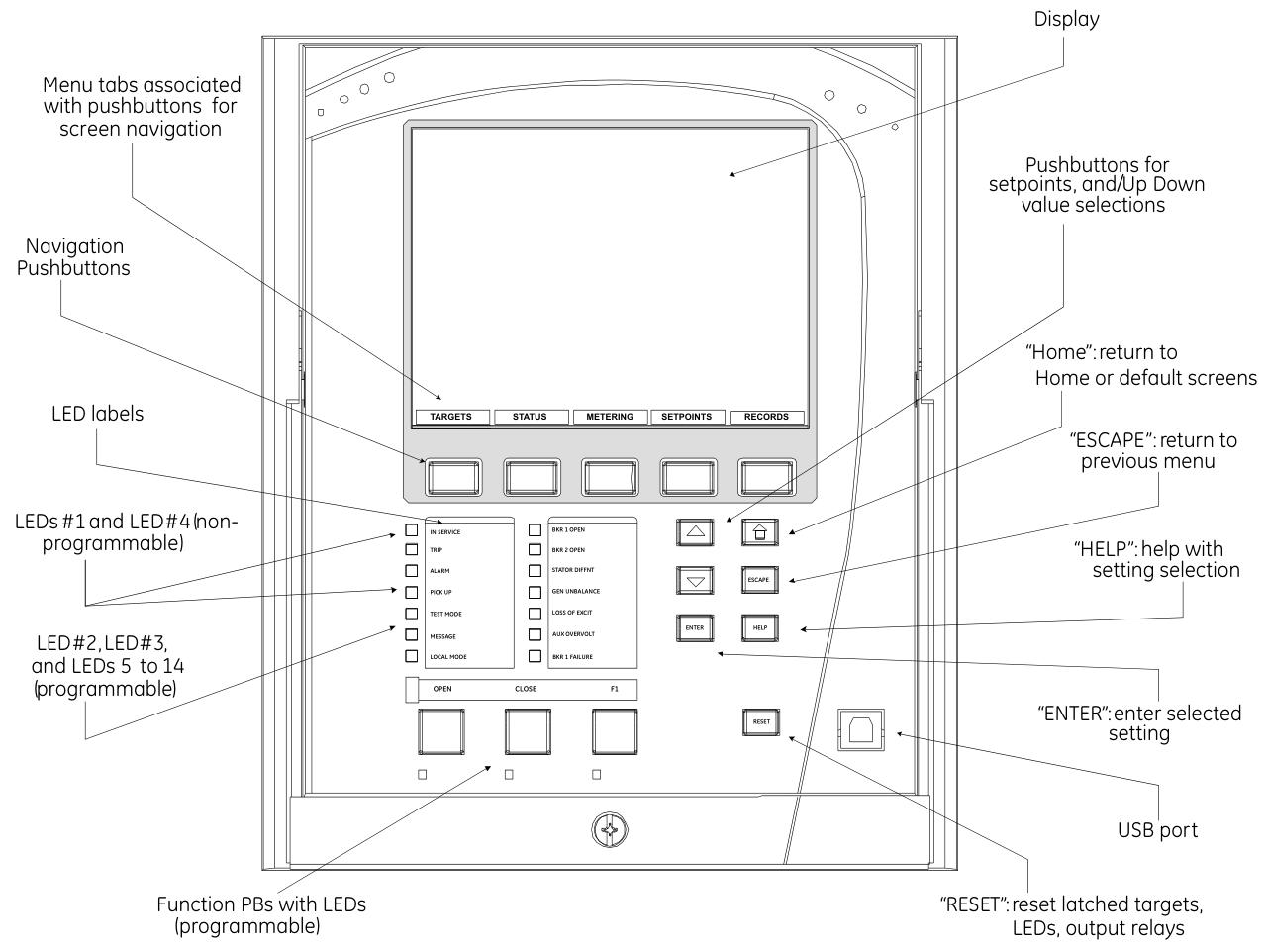
Display screen and buttons: graphic LCD display, supports menu navigation (Targets, Status, Metering, etc.), 5 navigation keys+3 programmable function keys, 17 LEDs (including programmable status indication).

Operation function: It can view real-time data, set parameters, reset alarms, support single line diagram (SLD) display, and can configure default screens and color schemes.

2. Software interface (EnerVista 8 Series Setup)

Function: Used for configuring parameters, upgrading firmware, viewing records, drawing custom SLDs, etc., supporting online/offline operations.

Connection method: Connect via USB, Ethernet, Wi Fi, and configure communication parameters such as IP address and port.

Advanced features: SLD configurator (custom single circuit diagram), FlexCurve editor (custom protection curve), transient recorder (waveform analysis), etc.

Detailed explanation of core functions

1. Protection function

Differential protection: including generator stator differential (87G), overall differential (87O), supporting dual slope characteristics, 2nd/5th harmonic braking.

Overcurrent protection: including phase/neutral/ground overcurrent (50/51 series), supporting multiple inverse time curves (IEEE, IEC, etc.).

Voltage protection: Over/Under voltage (59/27 series), Negative sequence overvoltage (59_2), Voltage Hertz protection (24), etc.

Other protections: demagnetization (40), reverse power (32), abnormal frequency (81U/O/R), arc protection (AFP), etc.

2. Monitoring function

Real time monitoring: current, voltage, power, frequency, harmonics, temperature (RTD), etc., with an accuracy of ± 0.25% (current) and ± 0.5% (voltage).

Recording function: Event recording (timestamp accurate to microseconds), transient recording (waveform before and after fault), data log (configurable with 16 analog quantities).

3. Control function

Circuit breaker control: supports opening/closing, locking, and bypass, adopts the “select first, operate later” mechanism, and is compatible with local/remote control.

Synchronization check (25): Monitor voltage, frequency, and phase difference to ensure that the grid connection conditions are met.

Arc protection: Detecting arc light through fiber optic sensors, quickly triggering tripping, and reducing equipment damage.

Set point configuration

Device settings: including clock synchronization (IRIG-B, PTP, SNTP), security (user roles, password policies), and communication protocol parameters.

System settings: CT/VT parameters, generator rating, grounding method, etc.

Input/output settings: Configure analog input (such as 4-20mA), digital input (wet/dry contacts), and output relay (trip/alarm).

Protection settings: Threshold, delay, action mode (trip/alarm), etc. of each protection element, supporting multiple sets of setting point switching.

Specifications and Safety

Environmental parameters: Operating temperature -40 ° C to 60 ° C, humidity 0-95%, no condensation, seismic rating IEC 60255-21-3 Class 2.

Safety certification: CE, UL508, ISO 9001, etc., in compliance with EMC standards (EN 61000 series).

Warning: Before operation, the dangerous voltage must be disconnected, and the CT secondary side must not be open circuited. Suitable personal protective equipment must be used.

image.png

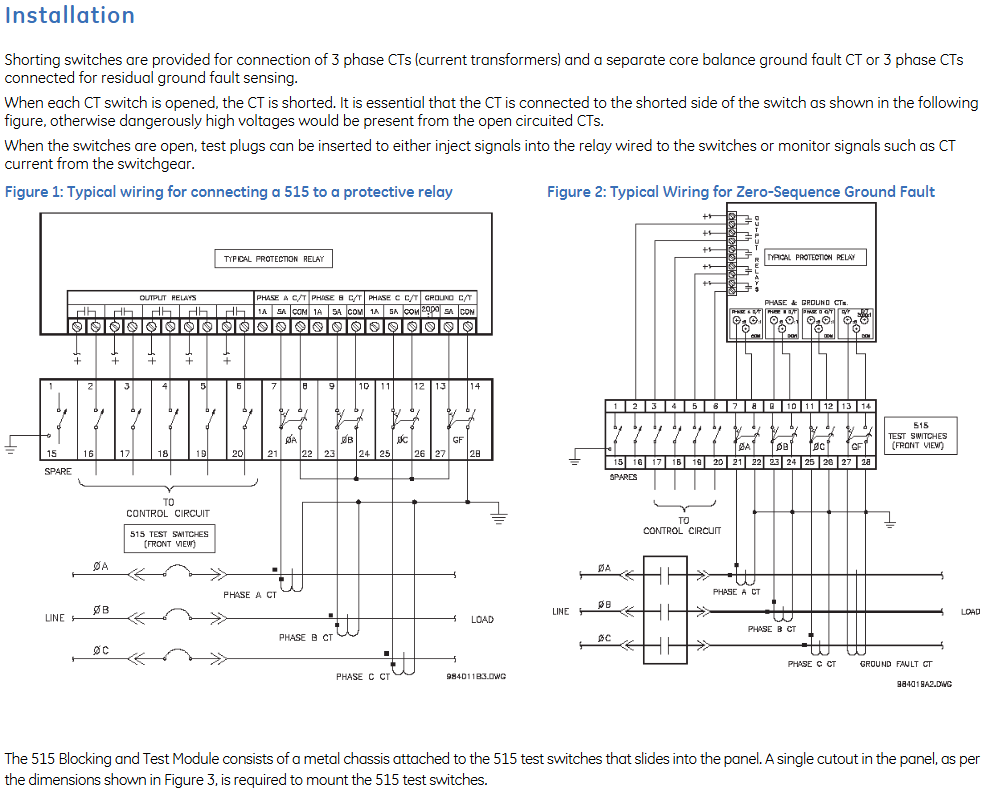
GE Multilin 515 Locking and Testing System

Product Overview

Core functions

The 515 lockout and testing module is a specialized testing device for GE Multilin relays, with main functions including:

Provide trip locking, relay isolation, and testing functions;

By turning on the switch and inserting the test plug, it is possible to monitor the phase current and residual current from the primary CT, or inject current into the relay through the secondary injection testing equipment during debugging;

Ensure that the CT (current transformer) is short circuited during testing to avoid high voltage hazards, while also isolating the output circuit of the trip relay to prevent false tripping.

main features 

Including a 14 pole switch group, the CT input automatically short circuits when the current switch is turned on;

Support injection of current in each phase, equipped with grounding terminals;

Intuitively isolate (disconnect) the output circuit of the trip relay and provide a protective cover;

Suitable for power and industrial scenarios, equipped with 515 test plugs.

Installation instructions

CT Connection and Safety Requirements

The module provides a short-circuit switch for connecting three-phase CTs and individual zero sequence ground fault CTs (or three-phase CTs used for residual ground fault detection);

Key safety point: The CT must be connected to the short-circuit side of the switch. When the CT switch is opened, the CT will be short circuited to avoid dangerous high voltage caused by CT open circuit.

PANEL MOUNT

The module consists of a metal chassis and a test switch, and needs to be installed by sliding it in from the front of the panel;

The panel needs to be cut according to the dimensions shown in Figure 3, and the module should be fastened by bending retaining tabs. If necessary, the accompanying # 8 screws and anti vibration nuts can be used for reinforcement;

After installation, fasten the front cover and rotate the fasteners at both ends by 1/4 turn to lock it in place;

There is a grounding screw at the bottom right corner of the module’s rear side, which needs to be connected to the panel chassis grounding.

Operating instructions

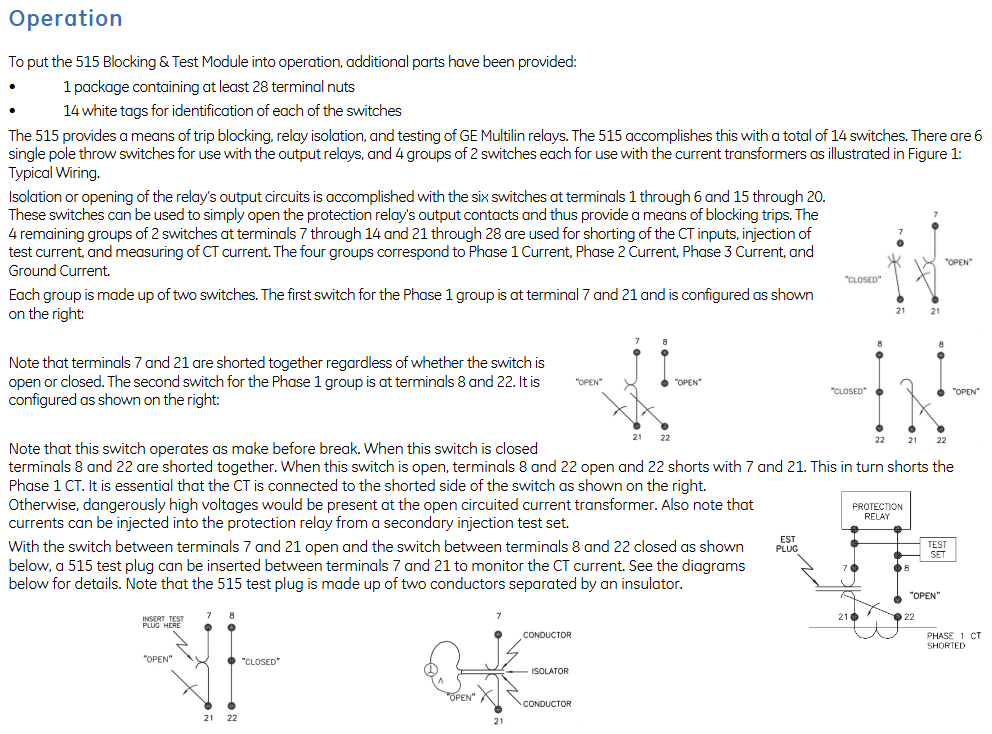
Switch configuration and function

There are a total of 14 switches, divided into two categories:

6 single pole switches (terminals 1-6 and 15-20): used to isolate relay output circuits, disconnect trip and auxiliary circuits, and achieve trip locking;

4 sets of dual switches (terminals 7-14 and 21-28): corresponding to A-phase, B-phase, C-phase currents and grounding currents, each set of switches is used for CT short circuit, test current injection, and CT current measurement.

The working logic of each set of dual switches:

The first switch (such as terminals 7 and 21): regardless of the switch status, the terminals are always short circuited;

The second switch (such as terminals 8 and 22) adopts a “close first, then open” design. When closed, the terminals are short circuited, and when opened, terminals 8-22 are open and 22 and 7-21 are short circuited (to achieve CT short circuit).

test process

Before testing: Disconnect the trip and auxiliary circuits to prevent accidental tripping, and then short-circuit the CT;

During testing: After turning on the switch, insert the test plug to inject signals or monitor CT current;

After testing: first close the CT switch to restore the normal operation of the relay, and then close the trip and auxiliary circuits.

image.png

Bently  3500/20 Rack Interface Module

Module Overview

Core functions

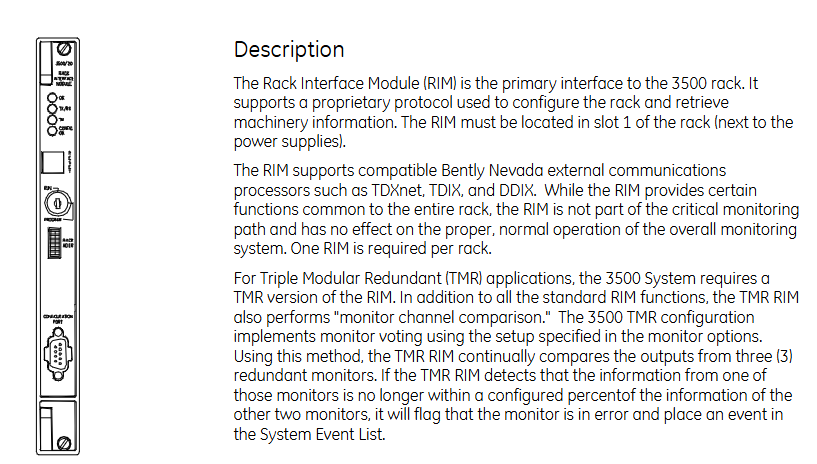
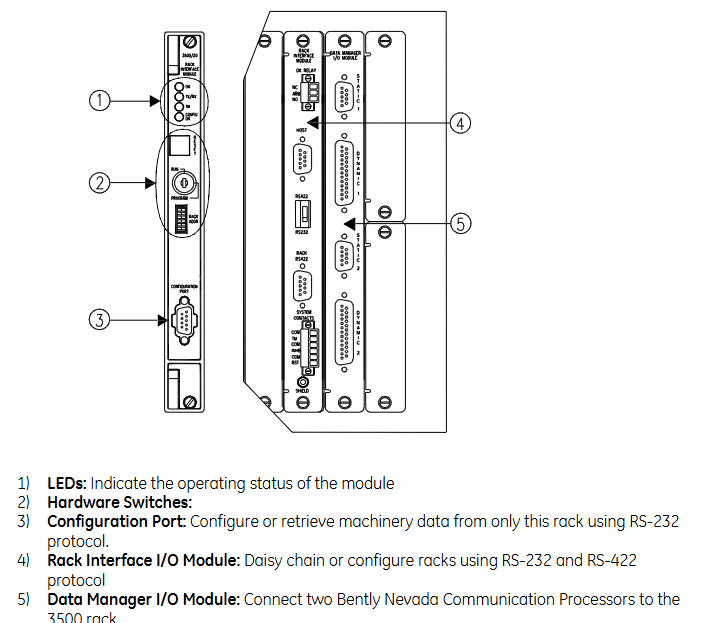
As the main interface of the 3500 rack, it supports proprietary protocols for configuring the rack and obtaining mechanical information, and must be installed in slot 1 of the rack (adjacent to the power supply).

Supports compatible Bently Nevada external communication processors (such as TDXnet, TDIX, DDIX), does not participate in critical monitoring paths, does not affect system normal operation, and requires one per rack.

TMR version: For Triple Modular Redundancy (TMR) applications, in addition to standard functions, it can also perform “monitoring channel comparison” – continuously comparing the outputs of three redundant monitors. If the data of one monitor deviates from the other two by more than the configured percentage, an error will be marked and recorded in the system event list.

Technical specifications

input parameter

Power consumption: Typical value of 4.75 watts.

Data interface:

Front panel: Standard RS232 serial communication, speed of 38.4 k baud.

I/O module: Supports RS232/RS422 serial communication (up to 38.4 k baud) and internal modem communication (14.4 k baud).

Output parameters

Front panel LED:

OK LED: Indicates that the module is operating normally.

TX/RX LED: Indicates that the module is communicating with other modules inside the rack.

TM LED: Indicates that the rack is in the “Trip Multiply” state.

CONFIG OK LED: Indicates that the rack configuration is valid.

I/O module OK relay: used to indicate the normal operation or fault of the rack, with the option to select the “open” or “close” contact annunciate fault state, normally excited operation, rated value 5A @ 24Vdc/120Vac (120W/600VA), equipped with an arc extinguisher, normally closed contact.

Control components

Front panel reset button: clears the lock alarm and timed OK channel failure inside the rack, with the same function as the “Rack Reset” contact on the I/O module.

Address switch: Set the rack address to a maximum of 63 addresses.

Configure key lock: Switch the rack to “RUN” mode (normal operation, locking configuration changes) or “GRAM” mode (allowing local/remote configuration), the key can be removed from any position, RUN mode restricts unauthorized reconfiguration, and GRAM mode supports remote configuration at any time.

Communication and Interface

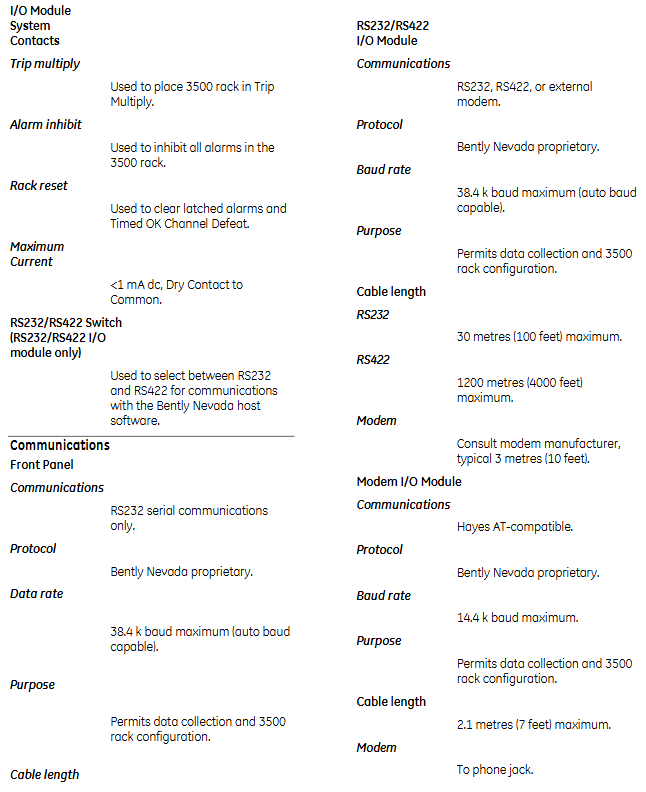
I/O module system contacts

Including Trip Multiply (to put the rack into Trip Multiply state), Alarm inhibit (to suppress all alarms), Rack reset (to clear lock alarms, etc.), maximum current<1mA dc (from dry contact to common terminal).

Communication interface details

Interface type, communication protocol, rate usage, maximum cable length

Front panel RS232 Bently Nevada proprietary maximum 38.4 k baud (supports automatic baud rate) data collection and rack configuration 30 meters (100 feet)

RS232/RS422 I/O module Bently Nevada proprietary communication with host software up to 38.4 k baud RS232: 30 meters; RS422: 1200 meters (4000 feet)

The I/O module of the modem is Hayes AT compatible, with a proprietary protocol of up to 14.4 k baud for data collection and rack configuration. It is 2.1 meters (7 feet, up to the telephone jack) long

Rack connector RS422 Bently Nevada proprietary maximum 38.4 k baud multi rack Daisy choked communication 1200 meters

Data Manager I/O Module (2 sets of ports) Bently Nevada proprietary fixed 9600 baud static and dynamic data collection 3 meters (10 feet)

Environmental and physical parameters

Environmental limitations

Rack interface module and RS232/RS422 I/O: operating temperature -30 ° C to+65 ° C, storage temperature -40 ° C to+85 ° C; modem I/O module: operating temperature 0 ° C to+50 ° C, storage temperature -40 ° C to+85 ° C.

Humidity: 95% non condensing.

CE certification: Complies with EMC directives (EN50081-2, EN55011, etc.) and low voltage directives (EN 61010-1).

Hazardous Area Certification: CSA/NRTL/C Class I, Div 2, Groups A, B, C, D, T4 @ Ta=-20 ° C to+65 ° C.

Physical specifications

RIM dimensions: 241.3mm x 24.4mm x 241.8mm (height x width x depth), weight 0.91kg.

RS232/RS422 I/O、 Modems I/O and Data Manager I/O modules: size 241.3mm × 24.4mm × 99.1mm, weight 0.45kg.

Rack space requirement: RIM motherboard occupies one full height front slot; The RIM I/O module and the Data Manager I/O module each occupy one full height rear slot.

Order Information

Module model: 3500/20-AXX-BXX-CXX

A (interface type): 01=standard RIM, 02=TMR RIM (only for TMR configuration).

B (I/O module type): 01=with built-in modem, 02=with RS232/RS422 interface.

C (institutional certification): 00=none.

Spare parts and cables

Spare parts include standard/TMR RIM, various I/O modules, grounding wristbands, firmware ICs, etc.

There are various types of cables, including interfaces (RS232/RS422), lengths (10 feet to 500 feet+), and insulation materials (PVC/Teflon) ®) And assembly status classification, supporting connections between hosts and racks, and between racks. Expansion cables can be used for distances exceeding 500 feet.

Bently Nevada 3500 Monitoring System Rack Installation

Receiving and Processing Instructions

Receiving inspection

Visually inspect the system for any obvious transportation damage. If there is any damage, file a claim with the carrier and submit a copy to Bently Nevada, LLC.

Handling and storage precautions

The circuit board is susceptible to static damage and requires the use of a grounding strap (such as 3M Velostat) before operation ®  No.2060) Grounding: Avoid using tools/materials that are prone to static electricity, such as ungrounded soldering irons and non-conductive plastics.

Transport and storage of circuit boards require the use of conductive bags or foil, and special attention should be paid to static electricity accumulation in dry weather (humidity<30%).

When the system loses power, it will lose its mechanical protection function; When operating correctly, the module can be plugged in and out while powered on (see Chapter 4 for details).

Basic Information

System Overview

The 3500 monitoring system is used to continuously monitor the status of rotating and reciprocating machinery (such as imbalance, misalignment, shaft cracks, bearing failures, etc.) to improve factory safety, product quality, equipment availability, and reduce operating costs.

Core advantage: Enhanced operator information (providing multi-dimensional data, Windows) ®  Basic display software, better integration of factory control computers (multi protocol communication gateway, time synchronization data), reduced installation and maintenance costs (reduced wiring, backward compatibility, easy configuration), improved reliability (redundant power supply, TMR system), intrinsic safety options, multiple output interfaces (supporting multiple display and control systems).

General characteristics

Hot swappable module: When operated correctly, any module can be plugged in and out while the system is powered on, without affecting the operation of unrelated modules (plugging in and out of the power supply does not interrupt the system when dual power is available).

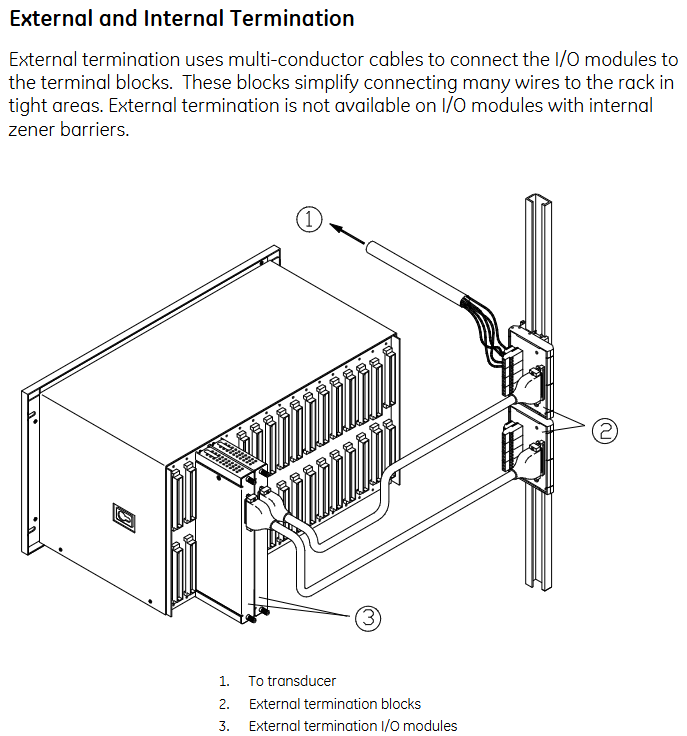
Internal and external terminals: External terminals are connected to I/O modules and terminal blocks through multi-core cables (suitable for narrow space areas); Internal terminals allow sensors to be directly connected to I/O modules (I/O modules with internal Zener barriers have no external terminals).

System components

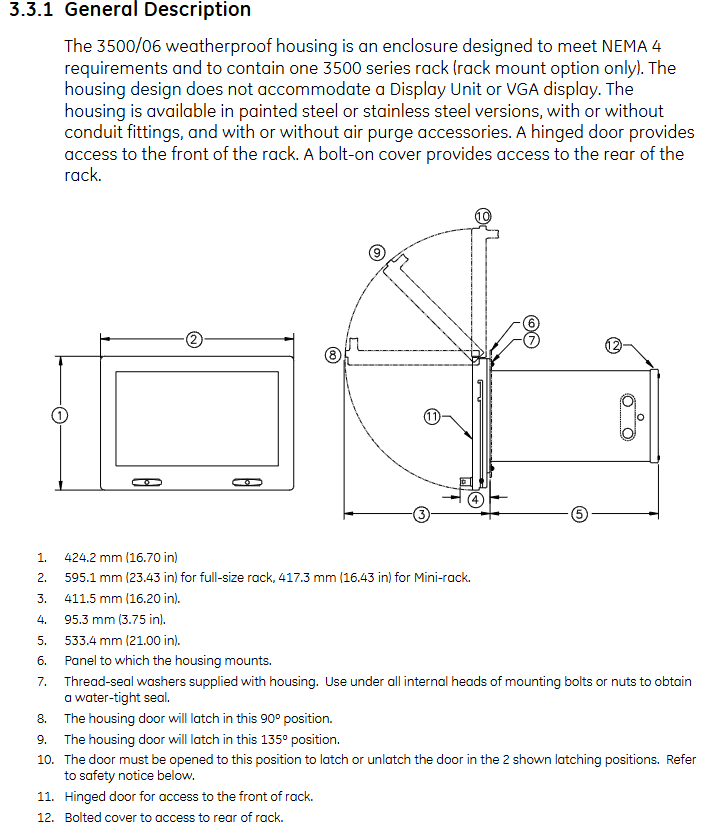
Including a weatherproof enclosure (protecting the rack from moisture and dust), rack (full-size 19 inch/compact 12 inch Mini rack), power supply (half height module, supporting 1-2 redundant installations), Rack Interface Module (RIM, communicating with the host and other modules, maintaining event lists), communication gateway module (allowing external devices to access information), monitoring module (collecting sensor data), relay module (controlling relays based on channel status) Keyphasor ®  Modules (supplying power to sensors and processing signals), display modules (supporting multiple display devices), grounding modules (providing low impedance grounding, used in conjunction with internal barrier I/O modules), etc.

Relays and Safety Systems

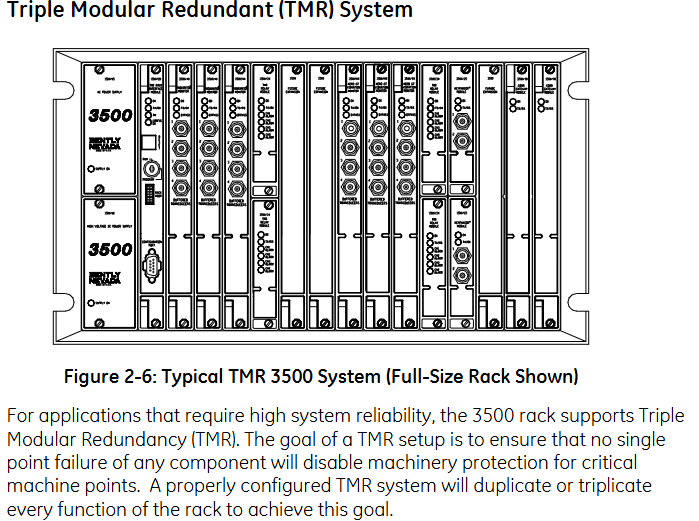
Standard rack relay options: independent relay (each monitoring module is equipped with more than one relay module), bus relay (multiple monitoring channels share a single relay), Triple Modular Redundancy (TMR) system (high reliability configuration, triple redundancy function, avoiding single point failure).

Intrinsic safety internal barrier system: suitable for hazardous environments, needs to be used in conjunction with grounding modules, has strict installation restrictions (such as prohibiting the use of bus sensors, requiring isolation of RS-232 connections, etc.), and has characteristics such as dual IS grounding and safe/hazardous area wiring separation.

Initial rack installation

General installation process

Refer to the installation checklist (confirm conditions such as power supply, space, ventilation, grounding, etc.);

Install weatherproof casing (if required);

Install the rack;

Set rack jumpers and switches;

Install external terminal blocks (if necessary);

Install modules;

Connect sensors, relays, and power wiring;

Complete the software configuration for rack installation.

Key installation details

Weather resistant enclosure: Meets NEMA 4 requirements, not compatible with display units; Attention should be paid to temperature derating (due to limited ventilation), panel cut size, conduit fittings (to avoid mixing power and signal wiring), and air purification options (to meet specific pressure and flow requirements).

Rack installation: Ensure ventilation (minimum gap of 50.4mm between top and bottom), support panel installation, rack installation (19 inch EIA cabinet), Bulkhead installation, etc. Different installation types have specific size and fixing requirements.

Intrinsic safety operation: Ensure that the grounding resistance is less than 1 Ω, use 4-10mm ² cables to connect to the factory’s IS grounding, and use a single point grounding to avoid loops.

High electromagnetic noise/CE installation: The system rack, EMI shielding, and cables must be thoroughly grounded to shield all wiring out of the metal cabinet. CE installation must comply with EN61000.3.2 standard.

Module installation and removal

Installation steps

Power supply: First install the Power Input Module (PIM), configure single point grounding, connect the power cord (in a non powered state), then install the main module and tighten the screws.

Full height module: First install the I/O module (configuration options, fastening screws, connection wiring), and then install the main module (ensure that the ejectors are in place, inserted along the guide rail, and fastened).

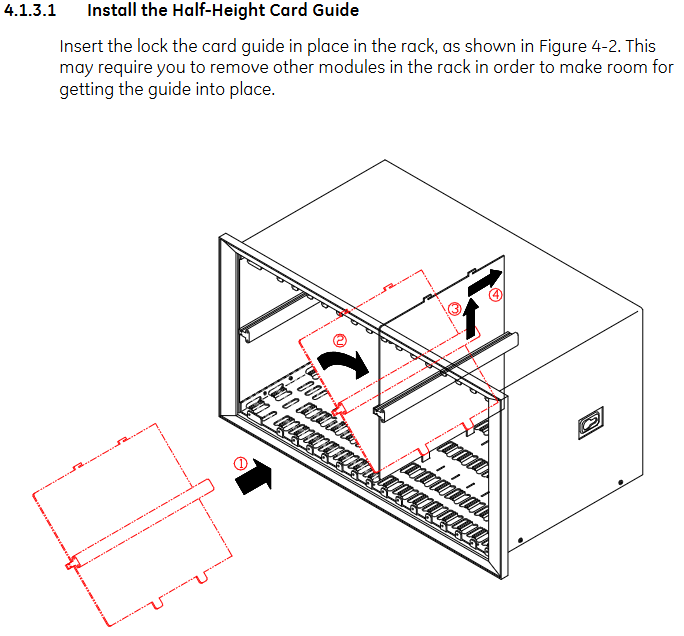
Half height module: First install the half height card guide rail, then install the I/O module and main module, similar to the steps for full height modules.

Remove steps

After power off, loosen the module screws and use ejectors (full height) or screws as handles (half height/power) to pull out the module; The I/O module needs to remove the wiring first, and then loosen the screws to remove it.

Replace module

Main module: Save the configuration before removing the old module, reconfigure and verify after installing the new module.

I/O module: The main module and wiring need to be removed first, replaced, reconnected, and verified.

Maintenance

General maintenance

The internal components of the module cannot be repaired on site, and maintenance mainly involves testing whether the channel is normal and replacing faulty modules (spare parts are required).

Support live plugging and unplugging modules (follow the steps in Chapter 4), the system does not require calibration, but the functionality needs to be verified regularly.

Maintenance interval

The initial interval is 1 year; If the monitoring machine is a critical equipment or the rack is in an extreme temperature, high humidity, or corrosive environment, the interval needs to be shortened; Adjust the interval based on the verification results and ISO 10012-1 after each maintenance.

Order Information

Rack ordering: Specify the size (19 inches/12 inches Mini rack), installation method (panel/rack/Bulkhead installation), institutional certification (CSA-NRTL/C), European compliance (CE), etc. through code.

Windproof shell ordering: optional materials (painted steel/stainless steel), conduit fittings, air purification options, etc., incompatible with display units, Mini rack requires adapter panel.

Grounding module and spare parts: The grounding module needs to occupy one rack slot; Spare parts include TMR/SIM jumpers, blank panels, adapters, etc.

Specification parameters

Dimensions: Detailed length, width, and height data for different installation types (panel/rack/Bulkhead installation, full-size/Mini rack) (such as full-size panel installation rack width 482.6mm, height 265.9mm).

Weight: The weight of different configurations (empty/full load, with internal barriers) (such as a full-size full load panel installation of approximately 31.07kg).

Environmental parameters:

Working temperature: -30 ° C to 65 ° C (0 ° C to 65 ° C with internal barrier); Storage temperature: -40 ° C to 85 ° C.

Humidity: 0% -95% without condensation.

Mechanical performance: 10g impact (11ms); 3g sine vibration (5-100Hz).

ABB medium voltage frequency converter ACS2000 4kV frame

Safety and Identification System

1. Safety instructions and standards

The safety instructions aim to highlight potential hazards when operating equipment and must be strictly followed, otherwise it may endanger personnel safety, equipment integrity, and environmental safety. The specific classification and meaning are as follows:

DANGER: Indicates the existence of direct danger, which, if not avoided, will inevitably lead to death or serious injury.

Warning: There is a potential danger that, if not prevented, may result in death or serious injury.

CAUTION: Identify hazardous situations that may cause minor or moderate injury.

NOTICE: Used to explain operational precautions unrelated to personal injury, such as equipment protection, program specifications, etc.

These safety instructions are developed in accordance with ISO 3864-2:2004 (E) “Graphic Symbols – Safety Colors and Safety Signs – Part 2: Design Principles for Product Safety Labels” and ANSI Z535.6 “American National Standard for Product Safety Information in Product Manuals, Instructions, and Other Supporting Materials”.

2. Driver identification information

To determine suitable spare parts, it is necessary to refer to the serial number nameplate of the input/control section’s inner door. The nameplate contains rich parameters, such as:

Model code (such as ACS 2040-1L-AN1-a-0R+FAME0+FDPL05)

Rated input voltage (4160V), rated auxiliary voltage (480V)

Rated input current (108A), rated auxiliary current (7.0A)

Maximum allowable short-circuit current (45kA), cooling method, and ambient temperature (FA/max104’F)

Rated output voltage (0… 4160V), protection level (TYPE1 (IP21)), etc

There are currently three frame sizes for ACS2000, with the following power coverage range:

Frame 1:300HP to 1000HP

Frame 2: 1250HP to 2000HP

Frame 3: 250HP to 3000HP

At the same time, a corresponding relationship table between rated input current, power (kW and hp), and basic model code is provided for different frame sizes, making it easy to quickly search for matching spare parts.

Classification and detailed parameters of core spare parts

Power electronic devices

(1) Semiconductor category

Phase module kit: Different frame sizes correspond to different models, such as 2UEA001345 (including disassembly tools) for Frame 1, 2UEA002570 (including disassembly tools) for Frame 2, and 2UEA003021 (including disassembly tools) for Frame 3, used to achieve power conversion and control.

Stacking components of pry bar: Frame 1 corresponds to 2UEA003051, Frame 2 corresponds to 2UE003063, and Frame 3 corresponds to 2UEA0003031, mainly used for overvoltage protection.

Diode clamp: Model 2UEA000911, suitable for all frames, providing clamp protection.

Clamp resistors: 2UEA000360 is used for Frame 1 and 2, and 2UEA001469 is used for Frame 3 to limit the peak voltage.

DC link resistance: Use 2UEA000893 for Frame 1, 2UEA001348 for Frame 2, and 2UEA001470 for Frame 3 to maintain stable DC link voltage.

(2) Capacitor class

EMC filter capacitors: 2UEA0000005 is used for Frame 1, 2UEA001404 is used for Frame 2, and 2UEA001464 is used for Frame 3 to suppress electromagnetic interference.

DC link capacitors: 2UEA000358 for Frame 1, 2UEA001406 for Frame 2, and 2UEA001466 for Frame 3, store electrical energy and stabilize DC voltage.

Bentley 60M100 Condition Monitoring System

Product Overview

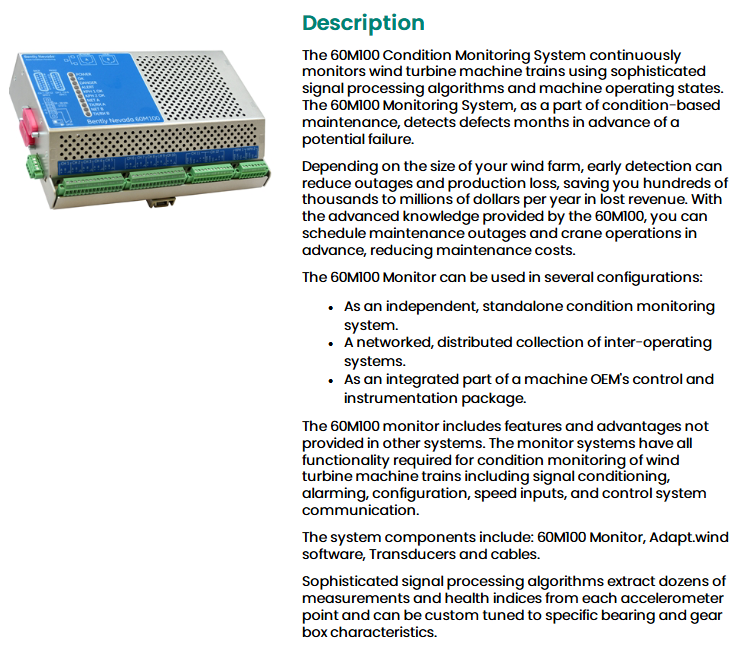
The 60M100 condition monitoring system is a continuous permanent monitoring system designed by Bently Nevada (a business under Baker Hughes) specifically for wind turbine units, suitable for equipment that requires extremely high reliability and availability. Its core function is to detect potential faults months in advance through complex signal processing algorithms and machine operation status analysis, thereby reducing downtime and production losses, and lowering maintenance costs.

The system can be configured in various ways: as an independent state monitoring system, a networked distributed interoperability system, or integrated into the control and instrumentation package of the machine’s original equipment manufacturer. The system components include a 60M100 monitor, Adaptewind software, sensors, and cables.

image.png

Monitoring scope and core functions

Monitoring object

The key components and characteristics of wind turbines include:

Tower sway

main bearing

Main Rotor

Gearbox (all internal bearings, all bearing meshing, debris monitoring)

generator bearings

Generator grounding

Core functions

Monitor 150 static variables, generate high-resolution waveform data and trend lines

Supports up to 12 dynamic channel inputs, 2 Keyphasor signals, and digital communication

Equipped with 24 bit analog-to-digital conversion and a 40kHz bandwidth design, it enhances the mechanical and gear monitoring capabilities of rolling bearings

Provide digital communication function, support integration with ADAPT software and other automation systems through Ethernet TCP/IP, compatible with Modbus/TCP protocol (supporting server and client modes)

Technical specifications

Electrical specifications

Input power supply: 18-36Vdc

Maximum current: 1.7A

Surge current: maximum 2.7A (less than 5ms)

Module Input/Output

Input: Up to 12 dynamic signals and 2 Keyphasor signals

Dynamic range: 110dB (fs=102.4ksps)

Signal to noise ratio: 110dB (fs=102.4ksps)

Analog to digital conversion: nominal 24 bit Sigma Delta

Bandwidth: 0-40kHz

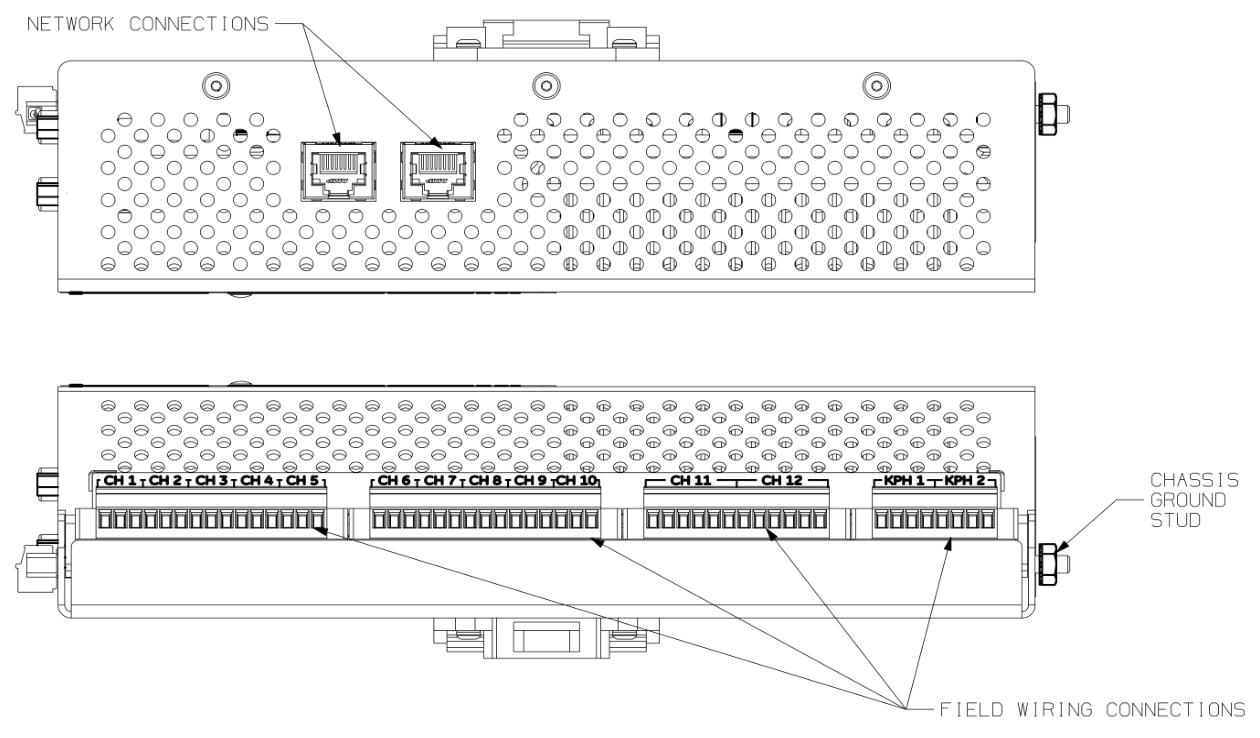
Output: 2 independent Ethernet ports (Net A is a 10/100 BaseT DHCP port, Net B is a 10/100 BaseT local static IP port); Buffer signal output of 2 15 pin DSUB connectors (output impedance 550 ohms)

precision parameter

Direct peak or effective value: Typical value is ± 0.5% of full scale, worst case ± 1.1%

Rotor, meshing, and fault frequency: typical value ± 6.7%, worst-case scenario ± 9.7%

Bearing frequency: typical value ± 6.7%, worst-case scenario ± 9.7%

Tower sway: typical value ± 0.16m/s ² (0.016g), worst-case scenario ± 0.23m/s ² (0.023g)

Alarm

Mode: Divided into 5 modes based on generator power (25% -40%,>40% -55%,>55% -70%,>70% -85%,>85%)

Setpoint: Warning and Alarm Level 2

Time delay: All measurements are fixed at 300 seconds

All alarm states are locked

Dynamic Data and Spectrum

Asynchronous waveform: 8192 samples, 320ms

Synchronous waveform: Multiple sample/conversion configurations (such as 4 to 8192 samples, 2048 samples/conversion, etc.)

Spectrum: Tower sway at 15.625Hz, 200 lines; Anti aliasing minimum -80dB; update rate of 30 seconds; The historical data storage rate is 4 hours, and it can be stored for 2 weeks under typical no alarm conditions

Environmental and Physical Specifications

Working temperature: -40 ° C to+70 ° C (-40 ° F to 158 ° F)

Storage temperature: -45 ° C to+85 ° C (-49 ° F to 185 ° F)

Relative humidity: 0% -95% (non condensing, working and storage)

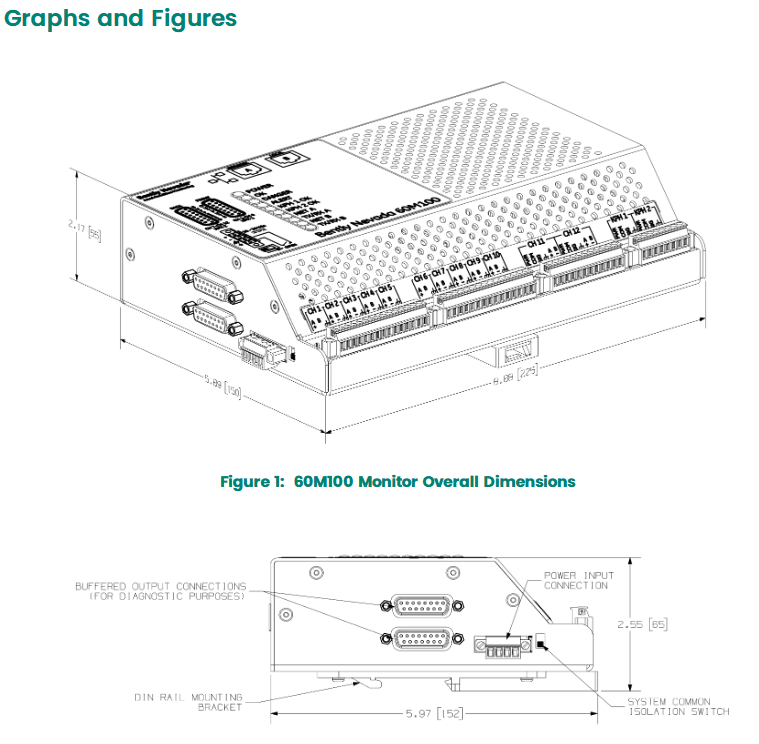
Size: 8.88 x 5.89 x 2.17 inches (225 x 150 x 55mm)

Weight: 1.4kg (3lbs)

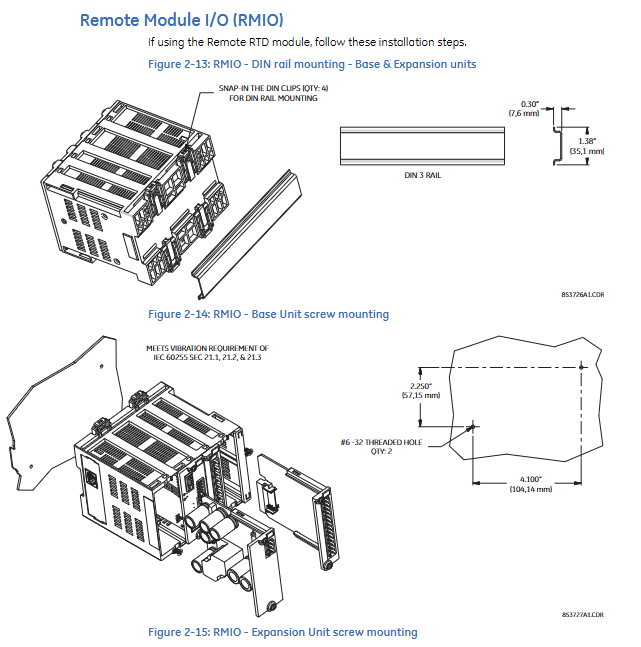
Installation method: DIN rail installation

Compliance and Certification

FCC: Compliant with Part 15 of FCC rules

EMC: Compliant with EN 61000-6-2, EN 61000-6-4, EMC Directive 2014/30/EU

Electrical safety: compliant with EN 61010-1, Low Voltage Directive 2014/35/EU

RoHS: Compliant with RoHS Directive 2011/65/EU

Order Information

Main product models

60M100-AA: Almost Nevada Wind State Monitor (monitor only), “A” in “AA” represents certification, “00” is standard

60M100_KIT-AA-BB: Almost Nevada Wind Condition Monitoring System Kit, “AAA” for configuration (applicable to different models such as GE 1. X MW, Vestas V82, etc.), “BB” for certification (“00” indicates none)

Spare parts and sensor cables

Software package: 3701 software package and options, including initial purchase, software updates, and other versions

Sensors: such as Turningpoint TP100 accelerometer, low-frequency accelerometer, etc

Cables: accelerometer cables, CAT5 cables, buffer output cables, etc

Attachment: Surge protector, power supply, grounding wristband, etc

Search for products

Back to Top
Product has been added to your cart