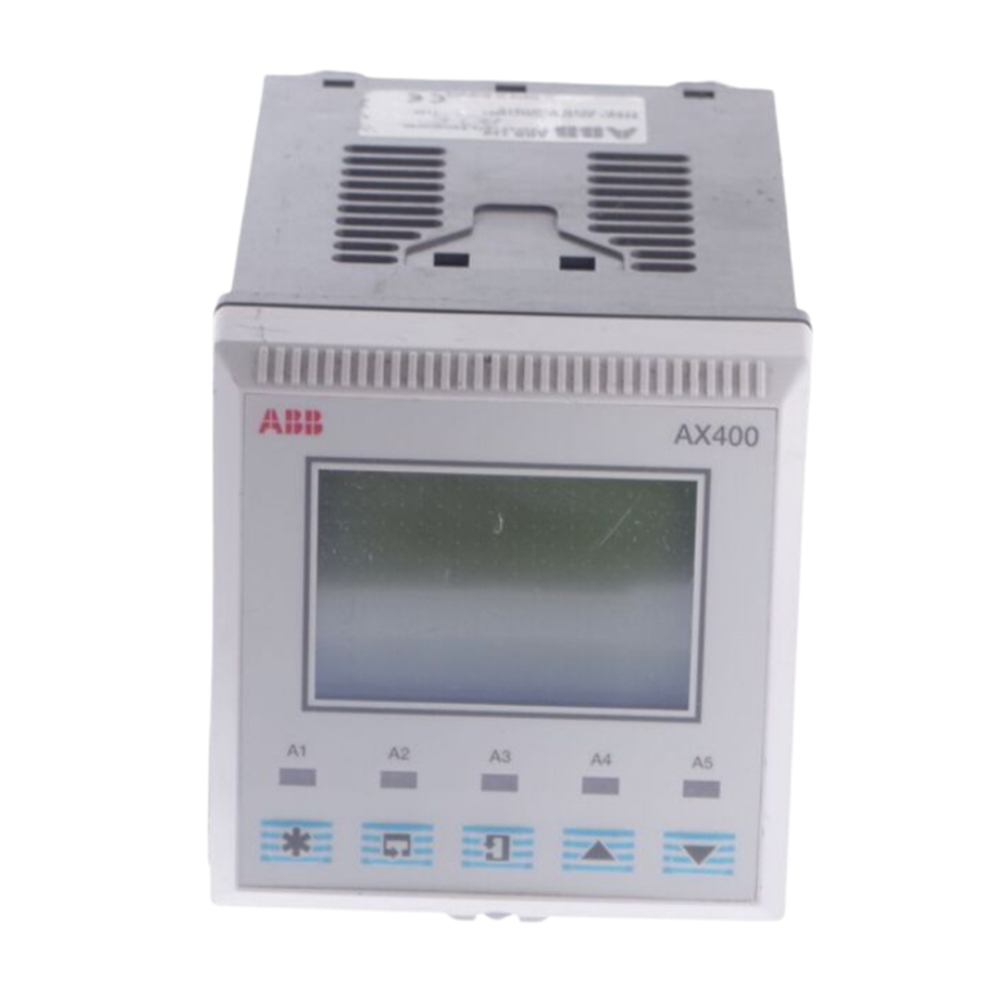
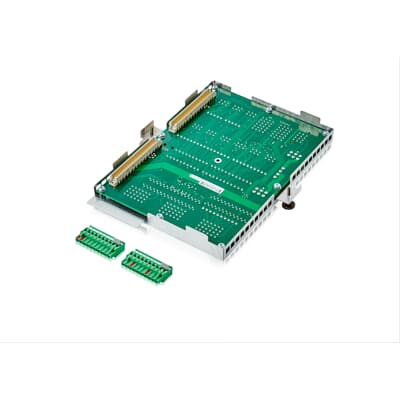
Product Overview The ABB AX411/50001 is a highly accurate industrial process analyser designed for low conductivity measurements, supporting single or dual input configurations for the water and wastewater treatment, power and pure water, semiconductor, chemical, pharmaceutical, pulp and paper industries. Its core features include: Flexible Input Selection: Supports single or two conductivity input channels, or a combination of conductivity and pH/ORP measurements. Integrated PID control: Built-in PID controller allows direct adjustment of process parameters, reducing the need for external equipment and lowering installation costs. Multi-parameter calculations: Support for conductivity, resistivity, difference, ratio and other calculations, expanding monitoring and control capabilities. Digital features: Equipped with ABB Ability™ digital solutions to support data logging, remote monitoring and predictive maintenance.
Core features and benefits Measurement performance High accuracy: Advanced electrode technology ensures low conductivity measurements are accurate (e.g. 0.01 μS/cm to 200 mS/cm range). Temperature compensation: Automatic temperature compensation function improves measurement stability in different environments. Hardware design Compact design: Wall/pipe or panel mounting with IP65 protection for harsh industrial environments. Energy saving features: high brightness backlit display with auto switch off function, 30V DC option reduces safety testing costs. Communication and Expansion Interface Configuration: Supports analogue outputs (4-20 mA), digital communications (e.g. HART or PROFIBUS-PA/-DP), optional five alarm relays and four current outputs. Logging: Built-in service log records historical data for easy troubleshooting and compliance auditing. Industry Adaptability Ultrapure water monitoring: USP/EP compliant for high purity water testing in the pharmaceutical and semiconductor industries. Process optimisation: Improve production efficiency in chemical and pulp industries through real-time data feedback and PID control.
Technical Parameters Measurement range Conductivity: 0.01 μS/cm to 200 mS/cm (optional range) pH/ORP: -2.00 to 16.00 pH, -2000 to +2000 mV Accuracy Conductivity: ±0.5% F.S. (typical) pH/ORP: ±0.01 pH, ±1 mV Temperature Compensation: Automatic (0-100°C) Power supply: 24V DC (9-30V DC) Output signal:4-20 mA (isolated, configurable) Communication protocol:HART (optional), PROFIBUS-PA/-DP (optional) Alarm function: 5 relay outputs (configurable) Protection level: IP65 (wall / pipe mounting)
Application Scenarios Water and wastewater treatment Monitor conductivity in reverse osmosis (RO) systems to optimise water quality control. pH and ORP monitoring in wastewater treatment to ensure discharge compliance. Power & Pure Water Ultrapure water monitoring of boiler make-up water in power plants to prevent scaling and corrosion. High purity water testing in semiconductor manufacturing to meet cleanroom standards. Chemical & Pharmaceutical Conductivity monitoring in reaction vessels for real-time control of chemical reaction processes. Resistivity measurement of water for injection (WFI) in the pharmaceutical industry to meet GMP requirements. Pulp and Paper Conductivity and pH control in pulp production to improve paper quality. Water quality analysis in wastewater recycling systems to reduce resource consumption.
Installation and Maintenance Installation Guide Environmental requirements: avoid strong electromagnetic interference, ambient temperature 0-50°C, humidity ≤ 95% RH (non-condensing). Wiring method: universal terminal design, support quick connection of sensor and power line. Calibration method: Support single-point or multi-point calibration, which can be carried out through local menu or remote software. Maintenance Recommendations Regular Cleaning: Clean the electrode surface quarterly to prevent contamination from affecting measurement accuracy. Sensor Replacement: It is recommended to replace the conductivity electrode every year to ensure long-term stability. Firmware update: Update the firmware regularly through the official ABB tool to get new functions and security patches.
Selection and Configuration Model selection: AX411 is a dual-input model, AX410 is a single-input model, supporting conductivity or pH/ORP combination. Option Board Expansion: Option boards can be added to achieve more alarm outputs or communication protocols. Customisation: ABB offers customised solutions to suit specific industry requirements (e.g. explosion-proof certification). Compliance and Certification Industry standards: Comply with CE, UL, ATEX and other certifications, applicable to the global market. Data security: support data encryption and access rights management, in line with ISO 27001 information security standards.
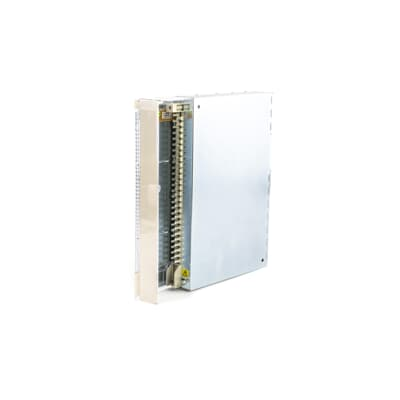
Product ID 3BHT300008R1 ABB Type Designation AO610 Catalog Description AO610 Analog Output 16ch, 12bit Long Description AO610 Analog Output 16Ch. 12Bit 0-20mA, 0-10V
Additional Information Medium Description AO610 Analog Output 16Ch. 12Bit 0-20mA, 0-10V Technical Information S600 I/O Analog Output Module 16 channels, 12 bits resolution, 0-20 mA, 0-10 V, opto-isolated as one group Note! This part is exempted from the scope of 2011/65/EU (RoHS) as provided in Article 2(4)(c), (e), (f) and (j) therein (ref.: 3BSE088609 – EU DECLARATION OF CONFORMITY – ABB Advant Master Process Control System)
Categories Control System Products → I/O Products → S600 I/O → S600 I/O – Modules → AO610 Analog Outputs → AO610 Analog Output Control Systems → Advant OCS with Master SW → Controllers → Advant Controller 160 → Advant Controller 160 Version 2.2 → I/O Modules Control Systems → Advant OCS with Master SW → I/Os → S600 I/O → I/O Modules
Core technical parameters Number of channels: 16 independent analogue output channels, can simultaneously output 16 analogue signals to meet the needs of multi-equipment co-control or multi-parameter adjustment in complex industrial processes, effectively improving the integration and efficiency of system control.
Signal types: Support a variety of standard analogue output signals, including 4 – 20mA current signals, 0 – 10V voltage signals, ±10V voltage signals, etc. Among them, 4 – 20mA current signals, 0 – 10V voltage signals, ±10V voltage signals and so on. Among them, 4-20mA current signal is commonly used for remote control of industrial field equipment due to its strong anti-interference ability and long transmission distance; 0-10V and ±10V voltage signals are suitable for actuator control that is sensitive to voltage signals.
Resolution: With 12-bit resolution, the digital signal can be converted into 4096 (2^12) discrete analogue output values with an output accuracy of ±0.1% F.S. (full scale), which enables fine adjustment of the analogue signals and meets the requirements of most industrial control scenarios for control accuracy.
Output Accuracy and Stability: The output accuracy of the module remains stable over the entire operating temperature range (-40℃ – 70℃), and the temperature drift coefficient is less than ±50ppm/℃, which effectively reduces the output deviation due to temperature changes and ensures the accuracy of the control in the long term operation process.
Output driving capacity: For current output channel, the output driving capacity can reach 20mA (4-20mA signal), which can directly drive most of the industrial field actuators; For voltage output channel, the output impedance is low, such as 0-10V voltage output, the output impedance is less than 100Ω, which can provide stable voltage signals for loads to ensure the accuracy of the signal transmission process.
Response time: signal conversion and output response time is short, generally less than 1ms, can quickly respond to changes in control system commands to achieve real-time control of industrial processes, especially for dynamic control scenarios that require high response speed. Communication protocols: It supports a variety of industrial communication protocols, such as Modbus RTU, Profibus DP, EtherCAT, etc., which can be seamlessly connected with different brands and types of PLCs and DCS control systems, and realise the efficient transmission of digital signals and the accurate delivery of control commands.
Communication interface: Equipped with standard communication interfaces, such as RS485 interface (for Modbus RTU communication), DP interface (for Profibus DP communication), Ethernet interface (for EtherCAT communication), etc. These interfaces are industrial-grade design, with good anti-jamming ability and communication stability, and support long-distance data transmission.
Wiring: detachable terminal block wiring, each channel corresponds to an independent terminal, clearly marked, convenient for installation, debugging and maintenance. The terminal block supports hot-swappable function, allowing safe replacement of modules during system operation, reducing downtime and improving the convenience of system maintenance.
Dimension and Installation: The module adopts a compact design with a width of only 25mm (standard DIN-rail mounting specification), which saves space in the control cabinet. Supporting 35mm DIN rail mounting, the installation process is simple and fast, and can be installed side by side with other industrial automation modules, which is convenient for system hardware expansion and layout.
Protection level: IP20, suitable for installation in indoor control cabinets, distribution boxes and other places with good protection environment, can prevent solid foreign objects with a diameter of more than 12mm from entering, and protect the module’s internal electronic components.
Working environment: the working temperature range of – 40 ℃ – 70 ℃, the storage temperature range of – 40 ℃ – 85 ℃, can adapt to the harsh industrial environment conditions; relative humidity requirements of 5% – 95% (non-condensing), with good moisture-proof performance, to ensure that the high temperature, low temperature, humidity and other stable operation of the environment.
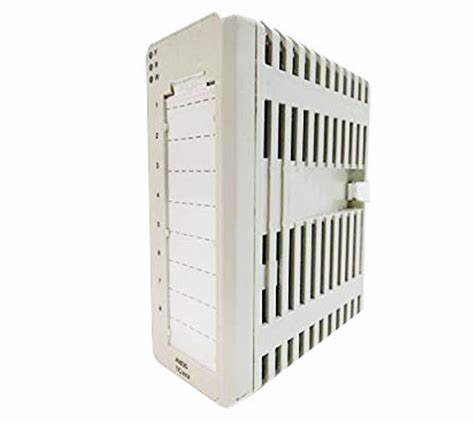
The AI835/AI835A provides 8 differential input channels for Thermocouple/mV measurements. Measurement ranges configurable per channel are: -30 mV to +75 mV linear, or TC Types B, C, E, J, K, N, R, S and T, for AI835A also D, L and U.One of the channels (Channel 8) may be configured for “Cold Junction” (ambient) temperature measurements, thus serving as CJ channel for Ch. 1 .7. The junction temperature may be measured loca ly on the MTUs screw terminals, or on a connection unit distant form the device. Alternatively, a fix junction temperature for the module may be set by the user (as parameter) or for AI835A also from the application. Channel 8 may be used in the same manner as Ch. 1 .7 when no CJ temperature measurement is needed
Features and benefits The AI835/AI835A provides 8 differential input channels for Thermocouple/mV measurements. Measurement ranges configurable per channel are: -30 mV to +75 mV linear, or TC Types B, C, E, J, K, N, R,S and T, for AI835A also D, L and U. One of the channels (Channel 8) may be configured for “Cold Junction” (ambient) temperature measurements, thus serving as CJ channel for Ch. 1 .7. The junction temperature may be measured loca ly on the MTUs screw terminals, or on a connection unit distant form the device. Alternatively, a fix junction temperature for the module may be set by the user (as parameter) or for AI835A also from the application. Channel 8 may be used in the same manner as Ch. 1 .7 when no CJ temperature measurement is needed. 8 differential input channels for thermocouple/mV. Channel 8 can be designated as the CJ-channel (4-wire Pt100 RTD) Variety of thermocouples with the folowing characteristics: B, C, E, J, K, N, R, S and T for AI835A also D,L and U 15 Bit resolution (A/D)Inputs are monitored for wire-break open-circuit
Application Fields Power industry Power plant monitoring: In thermal, hydro and wind power plants, the System 800xA is used to collect key analogue parameters such as boiler temperature, pressure, steam flow, turbine speed and power, generator voltage and current, etc. These data are transmitted to the System 800xA control system in real time to achieve accurate monitoring and optimal control of the power generation process. These data are transmitted to the System 800xA control system in real time to achieve accurate monitoring and optimal control of the power generation process, improve power generation efficiency and ensure the safe and stable operation of power production.
Chemical industry Chemical production process control: In the chemical production process, various sensors are connected to collect analogue signals such as reactor temperature, pressure, liquid level, pipeline flow, component concentration, etc. The data are transmitted to the control system to achieve accurate monitoring and optimal control of the power generation process, and ensure the safe operation of power production. Transmit the data to the control system to realise real-time monitoring and automatic adjustment of the chemical production process, ensure stable reaction conditions, improve product quality and production safety, and prevent safety accidents caused by abnormal parameters.
Oil and gas industry Oil and gas field production monitoring: In the process of oil and gas extraction, it collects analogue signals such as wellhead pressure, temperature, flow rate, oil and gas pipeline pressure, flow rate and leakage detection. The data is transmitted to the control system through the AI835A module to realise remote monitoring and automated control of the oil and gas field production process, improve extraction efficiency and ensure production safety.
Related products TU810V1 TU812V1 TU814V1 TU830V1 TU833
Product Positioning ABB AI625 Analog Input 16ch, 12 Bit, 4-20 mA is a 16-channel analog input module specially designed for industrial automation data acquisition, focusing on converting 4 – 20mA standard analog current signals into digital signals to provide accurate data support for PLC, DCS and other control systems, widely used in electric power, chemical industry, manufacturing industry and other industrial scenarios that require real-time monitoring of analog data. Widely used in electric power, chemical industry, manufacturing industry and other industrial scenarios that require real-time monitoring of analogue data, is an important component to achieve accurate control and efficient management of industrial automation.
Core Technical Parameters Channel and Signal Parameters Number of channels: 16 independent analog input channels, can simultaneously collect 16 4-20mA analog current signals to meet the demand for simultaneous monitoring of multiple parameters, suitable for multi-node data collection in complex industrial systems. Signal type: only support 4 – 20mA current signal input, the signal has the advantages of strong anti-interference ability, long transmission distance, etc., commonly used in industrial field sensor signal transmission, such as pressure sensors, flow sensors and other equipment signal acquisition. Resolution: 12-bit resolution, the input signal can be converted to 4096 (2^12) discrete digital values, the measurement accuracy can reach ± 0.1% of the full scale, to ensure the accuracy of data acquisition, can effectively capture the signal changes.
Performance Parameters Sampling rate: each channel sampling rate of 500Hz, can quickly respond to signal changes, for dynamic changes in the analogue (such as real-time flow fluctuations in the pipeline) can be collected in a timely manner to provide real-time data for the control system support. Input Impedance: The input impedance is less than 250Ω, which meets the standard requirement of 4-20mA current loop, ensuring the stability of current during signal transmission and reducing signal attenuation and interference. Isolation characteristics: electrical isolation design between channels and between channels and systems, isolation voltage up to 500V AC, effectively preventing signal crosstalk and the spread of electrical faults, improve system stability and safety, especially for industrial sites with complex electromagnetic environments.
Communication and interface parameters Communication protocol: support Modbus RTU, Profibus DP and other mainstream industrial communication protocols, which is convenient to integrate with different brands of controllers (e.g. ABB, Siemens, Schneider and other PLCs) and the host computer system, and realise rapid data transmission and interaction. Communication interface: Equipped with RS485 interface (for Modbus RTU communication), DP interface (for Profibus DP communication), the interface adopts industrial-grade design, has good anti-interference ability, supports long-distance communication, and ensures stable data transmission. Wiring: detachable terminal block wiring, each channel corresponds to an independent terminal, clear identification, easy to install, debug and maintain, support hot-swappable operation, can be replaced when the system is running the module, reduce downtime.
Mechanical and environmental parameters Size and installation: compact design, width of only 25mm (standard rail mounting specifications), saving space in the control cabinet. Support 35mm DIN rail mounting, easy installation process, can be installed side by side with other modules to achieve flexible system expansion. Protection grade: IP20, suitable for installation in indoor control cabinets and other places with good protection environment, can prevent solid foreign objects with a diameter of more than 12mm from entering, and avoid the accumulation of dust affecting the performance of the module. Working environment: working temperature range – 40℃ – 70℃, storage temperature – 40℃ – 85℃, can adapt to harsh industrial environments; relative humidity 5% – 95% (non-condensing), with moisture-proof ability, high temperature, low temperature, humidity and other environments can still be stable operation.
Technical Advantages High-precision data acquisition Accurate signal conversion: With 12-bit high resolution and advanced A/D conversion technology, it can accurately convert 4-20mA analogue signals into digital signals, and with the auto-calibration function, it can periodically correct the measurement error to ensure stable long-term operation accuracy and provide a reliable data base for industrial control. Low-noise design: Built-in digital filtering algorithm can effectively suppress high-frequency noise and interference in the signal, and different filter strengths, such as mean filter, median filter, etc., can be selected through the software configuration, so as to make the collected data smooth and stable, which is suitable for application scenarios with high requirements on signal quality. Highly reliable operation Redundancy and Failure Diagnosis: Some models support redundancy configuration, automatic switching of standby modules when the main module fails to ensure uninterrupted operation of the system; built-in self-diagnostic function, real-time monitoring of power supply, communication, channel status, faults through the indicator and communication protocols to provide rapid feedback, to facilitate rapid positioning and repair. Anti-interference ability: adopting multi-layer circuit board layout and shielding technology, combined with isolation design, it can effectively resist the influence of electromagnetic interference and power grid fluctuation at industrial sites, and can still work stably in high electromagnetic environments such as metallurgy, chemical industry, etc., reducing the system failure rate. Flexible and easy-to-use features Convenient configuration management: Supporting special configuration software, the graphical interface can quickly set the channel parameters (such as range, filtering mode, alarm threshold), support batch configuration, improve debugging efficiency; support online modification of parameters, without interrupting the system operation. Strong system compatibility: standardised communication protocols and interface design, can be seamlessly integrated into various industrial automation systems, whether it is a new project or an upgrade of the existing system, can be quickly accessed to reduce the cost and difficulty of system integration.
Application Fields Power industry Substation monitoring: It is used to collect analogue data such as current, voltage and power of power equipment, and transmit them to the monitoring system through 4-20mA signals to monitor the operation status of the substation in real time, and discover abnormal situations such as overload and short circuit in time to ensure the safe and stable operation of the power system. Power plant control: In thermal and hydroelectric power plants, it collects parameters such as boiler pressure, steam flow, generator current, etc., and provides data for the DCS system, so as to achieve precise control of power generation process and optimise the efficiency of energy utilisation. Chemical industry Production process monitoring: connecting pressure sensors, temperature sensors, liquid level sensors and other equipment, collecting data such as reactor pressure, temperature, pipeline flow, real-time monitoring of the chemical production process to ensure stable reaction conditions and prevent safety accidents caused by abnormal parameters. Environmental protection monitoring: It is used to monitor the key indicators of wastewater and waste gas treatment in chemical enterprises, such as the pH value of wastewater, COD content, and the concentration of waste gas pollutants, etc., to provide data support for environmental protection supervision and to ensure that the enterprise meets the emission standards. Manufacturing Automated production line: In automotive manufacturing, electronic assembly and other production lines, collect analogue quantities such as robot arm torque, conveyor belt tension, equipment temperature, etc., to achieve real-time monitoring of production line operation status and fault warning, and improve production efficiency and product quality. Quality inspection: connecting inspection equipment, collecting analogue signals such as product size, weight, surface roughness, etc., judging product quality through data analysis, realizing automated quality inspection, reducing manual inspection errors and costs.
Precautions Installation and wiring Environmental requirements: should be installed in a dry, ventilated, non-corrosive gas control cabinet, away from strong electromagnetic interference sources and heat sources, to ensure that the normal operation of the module environmental temperature and humidity meet the requirements. Wiring specification: Use shielded twisted pair cable to connect 4-20mA signal source, and ground the shield reliably; follow the identification of the terminal row to connect correctly, and distinguish between positive and negative poles of the power supply and the signal input channel; avoid parallel laying with power cables to prevent electromagnetic interference. Use and maintenance Parameter setting: Before using configuration software to set parameters, confirm that the signal source range is consistent with the module settings; regularly check the alarm threshold settings to ensure timely response to abnormal conditions. Daily maintenance: Clean the dust on the surface of the module regularly; check the status of the indicator to determine whether the operation is normal; according to the frequency of use and environmental conditions, calibrate the module every 1 – 2 years to ensure the accuracy of measurement.
Comparison and supplement of other models Performance upgrade models ABB AI635: the same 16-channel design, but the resolution has been increased to 16 bits, with a measurement accuracy of ±0.05% F.S., and the sampling rate has been increased to 1000Hz, which is suitable for scientific research, precision processing and other fields that have very high requirements for accuracy and real-time performance. ABB AI645: the number of channels is extended to 32 to meet the needs of large-scale data acquisition, support for more sensors to access, suitable for large-scale factory automation monitoring system. Function expansion models ABB AI625 – HART: AI625 based on the addition of HART communication protocol support, can communicate with HART intelligent instrumentation, instrument parameters to achieve remote configuration and diagnostics, suitable for oil, gas and other industries that require in-depth instrumentation management. ABB AI625 – Isolated: Enhanced isolation performance, isolation voltage upgraded to 1000V AC, further improve the system anti-interference ability, suitable for complex electromagnetic environment, high security requirements of special industrial scenarios.
Core technical parameters Electrical parameters Input Signal Type: It supports a variety of common analogue input signals, including 4 – 20mA current signal, 0 – 10V voltage signal, ±10V voltage signal, etc., which can meet the output requirements of different types of sensors and transmitters. For example, in the temperature measurement system, with the 4 – 20mA output temperature transmitter, can accurately collect temperature analogue data. Number of channels: With 32 independent analogue input channels, 32 analogue signals can be collected at the same time, which greatly improves the efficiency of data collection and the integration of the system, and is suitable for large-scale data collection in industrial scenarios, such as the production process monitoring system of large factories. Resolution: The 12-bit resolution provides high measurement accuracy and converts analogue signals into 4096 (2^12) discrete digital values. Taking 0 – 10V voltage signal input as an example, the measurement accuracy can reach 10V / 4096 ≈ 2.44mV, which can meet the accuracy requirements of most industrial applications. Sampling rate: the sampling rate of each channel can reach 1000Hz, which can quickly capture the changes of analogue signals and reflect the dynamic information of process parameters in a timely manner, which is suitable for industrial process control that is sensitive to the changes of signals, such as monitoring of fast-reacting chemical reaction processes.
Performance parameters Accuracy and error: In the whole working temperature range (-40 ℃ – 70 ℃), the measurement accuracy of the module can reach ± 0.1% F.S. (full scale), to ensure the accuracy of the collected data. At the same time, with low drift characteristics, temperature drift coefficient of less than ± 50ppm / ℃, effectively reduce the temperature change caused by the measurement error, to ensure the stability of long-term operation. Isolation characteristics: electrical isolation design between channels and between channels and the system, the isolation voltage can reach 500V AC, effectively preventing signal interference and electrical faults affect each other, improve the reliability and safety of the system. For example, in complex industrial electromagnetic environments, the isolation design can avoid signal crosstalk between different channels and ensure the accuracy of data acquisition. Input impedance: For voltage input signal, the input impedance is more than 10MΩ, which reduces the loading effect on the signal source and ensures the authenticity of signal acquisition; for current input signal, the input impedance is less than 50Ω, which meets the requirements of the 4-20mA current loop and ensures the stable transmission of the current signal.
Communication and interface parameters Communication protocols: It supports a variety of industrial communication protocols, such as Modbus RTU, Profibus DP, EtherCAT, etc., which is convenient for connecting and data interaction with different brands and types of controllers. Through Modbus RTU protocol, it can easily establish communication with PLC controller to achieve real-time transmission of analogue data and remote monitoring. Communication interfaces: Equipped with standard communication interfaces, such as RS485 interface (for Modbus RTU communication), DP interface (for Profibus DP communication), Ethernet interface (for EtherCAT communication) and so on. These interfaces are industrial-grade design with good anti-interference ability and reliability to ensure stable and efficient data communication. Wiring method: The detachable terminal block wiring method is convenient for users to connect and maintain the cables. The signal input port, power port and ground port of each channel are clearly marked on the terminal block, which makes the wiring operation simple and intuitive and reduces the difficulty of installation and commissioning.
Mechanical and environmental parameters Size and installation: the module adopts a compact design with a small external dimension of only 25mm in width (for example, standard DIN rail mounting module), which can effectively save the internal space of the control cabinet. Support the standard 35mm DIN rail mounting, easy and fast installation process, easy to modular layout and expansion in the industrial control cabinet. Protection level: IP20, suitable for installation in indoor control cabinets, distribution boxes and other environments, can prevent the entry of solid foreign objects with a diameter of more than 12mm. In practice, it should be installed in control cabinets with protective functions to ensure normal operation in industrial environments. Working environment: the working temperature range is – 40℃ – 70℃, the storage temperature range is – 40℃ – 85℃, which can adapt to most of the harsh industrial environment conditions. In high temperature environments, the module’s heat dissipation design ensures that the temperature of the internal electronic components remains within safe limits; in low temperature environments, it can also start and work normally. Relative humidity requirements of 5% – 95% (non-condensing), with good moisture-proof performance.
Functional characteristics High-precision data acquisition Advanced A/D conversion technology: Built-in high-performance A/D converter, combined with 12-bit resolution and high sampling rate, can achieve accurate acquisition and fast conversion of analogue signals. Whether it is a slowly changing process parameters (such as temperature, pressure), or rapidly changing signals (such as flow, vibration), can be accurately captured and converted to digital signals, providing a reliable data base for the control system. Calibration and Compensation Function: With automatic calibration and manual calibration function, users can calibrate the module periodically to ensure the measurement accuracy. At the same time, it supports linear and non-linear compensation algorithms, which can correct the measurement data according to the characteristics of the sensor to further improve the measurement accuracy. For example, for sensors with non-linear output characteristics, the non-linear compensation function can make the collected data closer to the true value .
Powerful signal processing capability Filtering function: Each channel has built-in digital filtering function, supporting a variety of filtering methods, such as mean filtering, median filtering, weighted average filtering and so on. Users can choose the appropriate filtering method and filtering parameters according to the actual application requirements, effectively suppressing the noise interference in the signal and improving the stability and reliability of the signal. In the case of electromagnetic interference or mechanical vibration in industrial sites, the filtering function can significantly improve the data quality. Over-limit alarm function: the upper and lower alarm thresholds can be set for each channel, when the collected analogue data exceeds the preset threshold range, the module can send out an alarm signal in time and transmit the alarm information to the controller or host computer through the communication interface. Alarm mode supports hardware alarm (e.g. relay output) and software alarm (e.g. alarm flag bit in the communication protocol), which is convenient for users to discover and deal with abnormal situations in time.
High reliability and stability Redundancy design: Some models of AI610 modules support redundancy configuration to improve the reliability of the system by means of dual-module redundancy or power supply redundancy. In dual-module redundancy configuration, when the main module fails, the standby module can automatically switch over and take over the data acquisition task, ensuring uninterrupted operation of the system and reducing the risk of production interruption caused by module failure. Anti-interference design: Multi-layer circuit board design and shielding technology are adopted to effectively suppress electromagnetic interference and radio frequency interference. At the same time, the power supply circuit inside the module has been optimised and designed with good power filtering performance, which can resist the influence of grid voltage fluctuation and power supply noise and ensure stable operation in the complex industrial electromagnetic environment. Self-diagnostic function: Built-in perfect self-diagnostic mechanism can monitor the working status of the module in real time, including power supply status, communication status, channel faults, etc. When a fault is detected, the module can detect it. When a fault is detected, the module can output fault information through the indicator or communication protocol, which is convenient for users to quickly locate and troubleshoot, reducing maintenance costs and downtime.
Precautions Installation and wiring Installation environmental requirements: it should be installed in a dry, well-ventilated environment without corrosive gases and dust, and avoid installing it in places with high temperature, humidity and strong electromagnetic interference. The installation location should be far away from heat and vibration sources to ensure the normal operation of the module. Wiring specification: When connecting the cables, it should be operated in strict accordance with the wiring diagram and manual of the module. Analogue signal lines should be shielded cables, the shield should be reliably grounded to reduce electromagnetic interference. Different types of analogue signals (such as voltage signals and current signals) should be wired separately to avoid signal crosstalk. At the same time, ensure that the power line is connected correctly to avoid reverse or short circuit .
Use and Operation Parameter setting: Before using the module, the parameters of the module should be set correctly according to the actual application requirements, such as input signal type, range, filtering mode, alarm threshold, etc.. Improper parameter setting may lead to data acquisition errors or system failure, so the parameters should be carefully checked and verified after setting. Communication Configuration: When the module communicates with the controller, it should ensure that the communication protocol and communication parameters (such as baud rate, address, data format, etc.) are set consistently. In the communication process, if there is an abnormal data transmission, you should check whether the communication cable connection is firm, whether the communication interface is damaged, and troubleshooting through diagnostic tools .
Maintenance Daily maintenance: Clean the module regularly, wipe the module surface with a clean soft cloth to remove dust and stains. Check the status of the module’s indicator lights to ensure that the module operates normally. If the indicator light is found to be abnormally flashing or always on, you should check the fault information of the module in time and carry out troubleshooting . Regular calibration: In order to ensure the measurement accuracy of the module, the module should be calibrated regularly. The calibration period can be determined according to the actual application requirements and the use of the module environment, it is generally recommended to carry out calibration once a year. During the calibration process, standard calibration equipment should be used and operated in accordance with the calibration procedures. Spare parts management: In order to reduce the production interruption caused by module failure, it is recommended that users reserve a certain number of spare parts. When choosing spare parts, it should be ensured that the models and specifications of spare parts are consistent with the original module and purchased from regular channels to ensure the quality and compatibility of spare parts .
Other Models Performance Upgrade Models ABB AI620 – 32 Channel 16-bit Analog Input Module: Based on AI610, the resolution is increased to 16-bit, and the measurement accuracy is further improved to ±0.05% F.S. Meanwhile, the sampling rate is increased to 2000 bits. At the same time, the sampling rate is increased to 2000Hz, which can capture signal changes more quickly, and is suitable for industrial applications that require higher accuracy and real-time performance, such as high-precision laboratory measurements and precision instrument control. ABB AI630 – 64 Channel 12-bit Analog Input Module: The number of channels has been increased to 64 to meet the needs of large-scale data acquisition systems. While maintaining 12-bit resolution, it optimises the communication interface and data processing algorithms to improve data transmission efficiency and system response speed, which is suitable for the integrated automation monitoring system of large-scale factories.
Function Expansion Models ABB AI611 – 32 Channel 12-bit Analog Input Module with HART: On the basis of AI610, it adds the support for HART communication protocol, which can communicate with smart meters with HART protocol and realise remote configuration and diagnosis of instrument parameters. It is suitable for industrial application scenarios that require in-depth management and monitoring of smart meters, such as petrochemical, natural gas transmission and other industries. ABB AI612 – 32 Channel 12-bit Analog Input Module with Isolated Outputs: In addition to all the functions of the AI610, the AI612 also has an isolated output function that provides independent analogue output signals for each channel. These output signals can be used to drive external devices or as inputs to other control systems, enabling the secondary use of data and system expansion, suitable for industrial automation systems that require signal distribution and conversion.
Special Application Models ABB AI610 – EX – 32 Channel 12-bit Analog Input Module (Explosion-proof): Designed for hazardous environments such as chemical industry, oil and gas, it has passed the relevant explosion-proof certifications (e.g. Ex certification). Special explosion-proof measures have been taken in the structural design and material selection to ensure safe operation in flammable and explosive environments, and can be used for analogue data acquisition in hazardous locations. ABB AI610 – IP67 – 32 Channel 12-bit Analog Input Module (High Protection): The protection level has been increased to IP67, which is able to completely prevent the entry of dust and can be immersed in a certain depth of water without affecting the normal operation, and is suitable for use in wet, watery, dusty and other harsh environments, such as mines, mines, mines, mines, and mines. It is suitable for humid, watery and dusty environments, such as mines, tunnels, outdoor equipment monitoring and so on.
Historical background of the brand ABB, as a global leader in power and automation technology, has a history of more than 130 years. Its predecessors, ASEA and Brown Boveri, laid a solid technological foundation for ABB with their continuous innovations and breakthroughs in the electrical field. In the field of industrial automation, ABB with deep technical deposits and keen insight into market demand, continue to launch high-performance, highly reliable products, widely used in electric power, industry, transport, infrastructure and other industries. 61615-0-1200000 Panel Controller is one of the important achievements in the field of automation control, inherited the ABB consistent high quality and advanced technology. ABB consistent high quality and advanced technology concept.
Second, the basic information of the product product positioning ABB 61615-0-1200000 Panel Controller is a panel controller designed for industrial automation control scenarios, as the core hub of human-computer interaction and equipment control, it can achieve real-time monitoring of industrial equipment, parameter settings, programme control and other functions, widely used in various types of automated production lines, intelligent factories and industrial control systems, to help enterprises to improve production efficiency, optimize production and control. It is widely used in all kinds of automated production lines, intelligent factories and industrial control systems to help enterprises improve production efficiency, optimise production processes and ensure stable operation of equipment. Appearance and structure Appearance design: It adopts compact design and the overall size has been optimised, so it is easy to be installed in various industrial control cabinets, operation panels or on the surface of equipments. Its simple and generous appearance not only meets the industrial aesthetic standards, but also effectively saves space and adapts to different industrial installation environments. Material and protection: the shell is made of high-strength, flame-retardant engineering plastics with excellent mechanical strength and impact resistance, able to withstand the impact of collision, vibration and other external forces in the industrial environment. At the same time, the shell has good insulation properties, which can effectively prevent electric shock accidents. The protection level of the panel controller reaches IP65, which can prevent dust from entering the interior, and can resist water splashing from all directions, ensuring normal operation in humid, dusty and other harsh industrial environments. Interface Layout: Equipped with a wealth of interfaces, including power supply interface, communication interface (such as Ethernet interface, RS485 interface, USB interface, etc.), input and output interfaces, etc., which are reasonably laid out to facilitate cable connection and device integration. The interfaces are designed with standard specifications to ensure the reliability and compatibility of the connection.
Core technical parameters Electrical parameters Power supply voltage: support a wide range of AC voltage input, usually AC 90 – 264V, can adapt to different regions of the world’s power grid voltage standards, in a certain degree of voltage fluctuations (such as ± 10%) can still be stable operation, effectively reducing the risk of equipment failure due to unstable grid voltage. Power Consumption: Under normal operating conditions, the power consumption is low, generally between 20 – 50W, which is a significant energy saving effect and helps to reduce the operating costs of enterprises. Operating current: According to different working modes and load conditions, the operating current varies, and the rated operating current is generally around 0.5 – 1A, which can provide stable power support for the connected equipment.
Performance Parameters Processor performance: Equipped with a high-performance microprocessor with strong data processing and computing power. The main frequency of the processor can be more than 1GHz, which can quickly respond to various control commands and handle complex logic operations and data processing tasks, ensuring the efficient operation of the panel controller in multi-tasking and real-time control scenarios. Storage capacity: Built-in high-capacity storage devices, including flash memory and random access memory (RAM). Flash memory capacity is generally between 8GB – 16GB, which can be used to store system programs, user programs, configuration parameters and historical data, etc. RAM capacity is around 2GB – 4GB, which provides sufficient temporary storage space for system operation and data processing, and ensures the smooth operation of the system. Display parameters: Equipped with a high-resolution colour display, the screen size is usually 7 inches or 10 inches, with a resolution of 800×480 or 1024×600 pixels. The display adopts advanced touch technology, support multi-touch operation, sensitive operation, rapid response, the user can easily achieve a variety of functions through the touch screen call and parameter settings. The display has a good display effect, bright colours, high contrast, even in the bright light environment can also clearly display the content of the screen.
Communication parameters Communication protocol support: It supports a variety of industrial communication protocols, including Modbus RTU, Modbus TCP, PROFINET, EtherNet/IP, CANopen and so on. The wide support of these protocols enables the panel controller to communicate and interact with different brands and types of industrial equipment (e.g. PLCs, inverters, sensors, actuators, etc.) in a seamless manner and realise integrated and intelligent management of industrial control systems. Communication rate: The communication rate of Ethernet interface can reach up to 100Mbps, which can meet the needs of rapid transmission of large amounts of data; the communication rate of RS485 interface can be set according to the actual needs, generally between 9600bps – 115200bps, which is suitable for communication scenarios with different distances and data transmission requirements.
Advantages Powerful control function Multi-tasking capability: capable of handling multiple control tasks at the same time, such as real-time monitoring of equipment operation status, execution of control algorithms, data acquisition and analysis. Through efficient task scheduling and resource management mechanisms, it ensures that tasks do not interfere with each other and run in an orderly manner to meet the demand for multi-tasking in complex industrial control systems. Flexible Programming and Configuration: It supports a variety of programming languages and programming tools, such as ladder diagram, structured text, function block diagram, etc., which is convenient for users to carry out program development and function configuration according to their own needs and programming habits. At the same time, it provides graphical programming interface and rich function module library, users can quickly achieve various control functions through simple drag and drop and parameter setting, which greatly reduces programming difficulty and development cost. Accurate control algorithms: Built-in a variety of advanced control algorithms, such as PID control algorithms, fuzzy control algorithms, adaptive control algorithms, etc., according to different control objects and control requirements, to achieve accurate control regulation. In temperature control, pressure control, flow control and other industrial process control, these control algorithms can effectively improve the control accuracy, reduce the control error, and ensure that the controlled parameters are stable within the set range.
Excellent human-computer interaction experience Intuitive and easy-to-use operation interface: adopting graphical operation interface design, the interface layout is simple and clear, and the function partition is clear. Users can easily access various function menus and operation buttons through the touch screen, and view the running status of the equipment, parameter information and alarm prompts in real time. The interface supports multi-language switching, which is convenient for users from different regions. Rich visualisation display: Using the high-resolution display screen, it is possible to visually display the equipment operation data and production process in various forms, such as charts, curves and animations. For example, by drawing real-time temperature curves, flow rate trend graphs, etc., it helps users to quickly understand the operating conditions of the equipment and changes in the production process, and identify problems and take appropriate measures in time. Convenient operation mode: In addition to touch operation, it also supports key operation and external device control (e.g. mouse, keyboard), so that users can choose the appropriate operation mode according to actual needs. At the same time, the operating interface has a good response speed and smoothness, to ensure that the user operation is convenient and efficient .
High reliability and stability Hardware reliability design: A series of reliability measures are adopted in hardware design, such as redundant design, over-voltage protection, over-current protection, anti-static protection and so on. The key components adopt high-quality electronic components and undergo strict screening and testing to ensure the stability and reliability of the hardware system. At the same time, the internal equipment adopts reasonable heat dissipation design, which can effectively reduce the operating temperature of the equipment and prolong the service life of the equipment. Software Stability Guarantee: The operating system and application software have been strictly tested and optimised, with good stability and compatibility. The system has a perfect error handling mechanism and fault diagnosis function, which can detect and deal with errors and abnormalities in the process of software operation in a timely manner to ensure the stable operation of the software system. In addition, the software supports regular updates and upgrades, users can download the latest version of the software to obtain new features and performance optimisation to improve the overall performance of the equipment. Strong anti-interference ability: Adopting advanced electromagnetic compatibility (EMC) design, it can effectively resist external electromagnetic interference and ensure that the equipment works normally in the complex electromagnetic environment. Signal transmission within the device uses shielded cables and isolation measures to reduce signal interference and crosstalk, ensuring the accuracy and reliability of data transmission .
Good scalability and compatibility Rich interface expansion: In addition to the standard configuration of the interface, also supports through the expansion module to increase the number and type of interfaces, to meet the individual needs of different users docking interface. For example, analogue input and output interfaces, digital input and output interfaces, communication interfaces, etc. can be added through the expansion module to facilitate the connection of more industrial equipment and sensors. Wide range of equipment compatibility: Due to the support of a variety of industrial communication protocols and standard interfaces, the panel controller can be compatible with most of the mainstream brands of industrial equipment on the market, including PLCs, inverters, servo drives and so on from different manufacturers. In the process of industrial control system upgrading or transformation, there is no need to replace the existing equipment, just a simple configuration and connection to achieve integration with the new equipment, reducing the cost and difficulty of system upgrades.
Application Fields Industrial automation production line Automobile manufacturing industry: In the automobile production line, it is used to control and monitor the operation of the equipment in various production processes such as stamping, welding, painting and general assembly. Through the panel controller, the operator can adjust the production parameters in real time, monitor the status of the equipment, deal with abnormalities in the production process to ensure efficient, stable and high quality automotive production. Electronic manufacturing industry: in the production of electronic components and electronic product assembly process, the mounter, plug-in machine, welding equipment, etc. for precise control and management. Panel controllers can achieve the program call, parameter setting, production data collection and analysis of equipment, and other functions to improve the production efficiency of electronic products and product quality. Machining industry: applied to CNC machine tools, machining centres and other machining equipment control and operation. Operators can use the panel controller for the preparation of machining procedures, tool path planning, machining parameter settings, etc., to achieve precise control of the machining process, improve machining accuracy and production efficiency.
Smart Factory and Industrial Internet of Things Smart factory management: as one of the core control devices of the smart factory, the panel controller can communicate and interact with various smart devices, sensors and management systems in the factory. Through real-time collection and analysis of production data, it can achieve intelligent monitoring and management of the production process, optimise the production process, improve resource utilisation and reduce production costs. Industrial IoT Integration: Supporting industrial IoT protocols, it is able to upload equipment operation data to the cloud platform and realise functions such as remote monitoring, remote diagnosis and remote maintenance. In industrial IoT applications, the panel controller acts as an edge computing device, which can perform preliminary processing and analysis of the collected data, reduce the amount of data transmission, and improve the efficiency of data processing.
Energy and Power Industry Power monitoring system: in power facilities such as substations, distribution rooms, etc., it is used to monitor and control the operation status of power equipment, such as transformers, circuit breakers, switchgear, and so on. Panel controllers can collect real-time power parameters (such as voltage, current, power, frequency, etc.) and display them to operators through a visual interface to detect abnormalities in the power system in time and take corresponding measures to ensure the safe and stable operation of the power system . New energy power generation control: In solar photovoltaic power stations, wind farms and other new energy projects, control and management of power generation equipment. The panel controller can automatically adjust the operating parameters of the power generation equipment according to weather conditions, grid demand and other factors to achieve efficient power generation and grid connection of new energy.
Other industries Food and beverage industry: In the process of food processing and beverage production, control and monitoring of production line equipment to ensure the quality and safety of food and beverage production. Panel controllers can achieve accurate control of temperature, pressure, flow and other key parameters to meet the hygiene standards and process requirements of food and beverage production . Chemical industry: In the chemical production process, the reactor, pumps, valves and other equipment control and management. The panel controller can monitor various parameters in the chemical production process in real time, such as temperature, pressure, liquid level, concentration, etc., and automatically adjust according to the preset control logic to ensure the safety and stability of the chemical production process .
Precautions Installation and wiring Installation environmental requirements: it should be installed in a dry, well-ventilated environment without corrosive gases and dust, avoiding installation in places with high temperature, humidity and strong electromagnetic interference. The installation location should be far away from heat and vibration sources to ensure the normal operation of the equipment. Wiring specification: When connecting cables, the relevant electrical wiring specification should be followed. Power lines, communication lines and signal lines should be laid separately to avoid mutual interference. Communication cables should be shielded cables, and ensure that the shield is reliably grounded. Cable connections should be firm to avoid loose or poor contact leading to communication failures or equipment abnormalities .
Use and operation Operation training: Before using the panel controller, the operator should receive professional training and be familiar with the operation methods, functional characteristics and safety precautions of the equipment. Untrained personnel should not operate the equipment at will, so as not to cause equipment damage or safety accidents. Parameter setting: When setting parameters, the operation should be carried out in strict accordance with the requirements of the equipment manual to ensure that the parameters are set correctly. For the setting of key parameters, it should be backed up and recorded so that the parameters can be restored or adjusted when needed. Data backup: Regularly back up the important data in the panel controller (such as system programs, user programs, configuration parameters, historical data, etc.) to prevent data loss. Data backup can be performed through USB storage devices or network storage devices.
Maintenance and upkeep Routine maintenance: Clean the panel controller regularly, use a clean soft cloth to wipe the surface of the display and shell to remove dust and stains. Check the operating status of the device to see if there are abnormal alarm messages, whether the indicator lights are flashing normally, etc . Regular inspection: Regularly check the connection cables, interfaces, power supply, etc. of the equipment to ensure that the connection is firm and not loose or damaged. Check whether the cooling fan of the equipment is functioning normally and whether the ventilation openings are unobstructed, so as to avoid overheating and damage to the equipment due to poor heat dissipation. Troubleshooting: When the equipment malfunctions, you should first check the alarm information and fault records of the equipment to make a preliminary judgement on the cause of the malfunction. If you can not solve the problem by yourself, you should contact professional technicians for maintenance, do not dismantle the equipment privately or carry out improper operation.
Other model additions
Performance upgrade models
ABB 61616-0-1200000 Panel Controller: On the basis of 61615-0-1200000, the processor performance has been further upgraded, the main frequency has been increased to 1.5GHz, and the data processing speed is faster, which is able to better satisfy the complex control tasks with high real-time requirements. At the same time, the storage capacity has been increased to 32GB of flash memory and 8GB of RAM, which can store more programmes and data.
ABB 61617-0-1200000 Panel Controller: This model has been upgraded in terms of display, equipped with a 12-inch high-resolution display, with a resolution of 1920×1080 pixels, the display effect is more clear and delicate. In addition, enhanced communication capabilities, support for more industrial communication protocols, and improve the communication rate, the Ethernet interface communication rate of up to 1000Mbps, to meet the demand for rapid transmission of large amounts of data.
Function expansion models
ABB 61615-1-1200000 Panel Controller: on the basis of the standard model, the number of analogue input and output interfaces is increased, which is suitable for industrial application scenarios where more analogue signals need to be collected and controlled, such as the precise control of temperature, pressure, flow rate and other parameters in process control systems.
ABB 61615-2-1200000 Panel Controller: This model especially enhances the digital input and output functions, with more digital input and output channels, which can be connected to more switching devices, such as sensors, relays, solenoid valves, etc., to meet the diversified needs of industrial automation production lines for digital control.
Special application models
ABB 61615-0-1200001 Panel Controller (explosion-proof): designed for chemical, oil and gas and other hazardous environments, it has passed the relevant explosion-proof certification (such as Ex certification). Special explosion-proof measures have been taken in structural design and material selection to ensure safe operation in flammable and explosive environments.
ABB 61615-0-1200002 Panel Controller (waterproof): the protection level has been upgraded to IP67, which can completely prevent dust from entering and can be immersed in water for a certain period of time without affecting the normal work, suitable for humid and watery industrial environments, such as food processing workshop, aquatic products processing plant, etc..
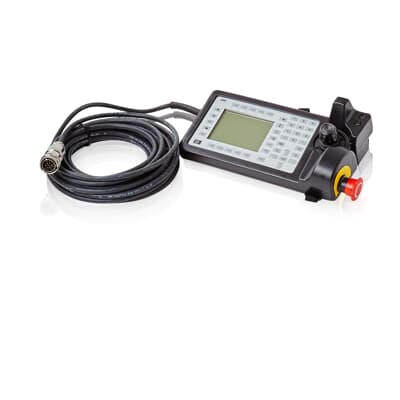
Historical background of the brand ABB (ASEA Brown Boveri) as the world’s leading power and automation technology group, its industrial automation business can be traced back to the world’s first industrial robot launched in 1974. After decades of development, ABB in the field of industrial robots, automation control systems have accumulated a deep technical heritage, especially in high-precision control, complex systems integration at the forefront of the industry. Its products are widely used in automotive manufacturing, electronics, new energy and other fields, with a global installed capacity of more than 160,000 units. Second, the basic information of the product Model name: ABB 3HNE00313-1 TILLV.0317 Machine No. 64-25653 (including 10 m cable and plug) Product type: Industrial robot teach pendant (programming unit) Core function: for offline programming, real-time debugging and operation monitoring of industrial robots, supporting multi-language operation interface and graphical programming tools.
Physical Characteristics: Size: 140mm x 90mm x 65mm (module body) Weight: 0.5kg (module) + 0.8kg (10m cable and plug) Shell material: high strength ABS engineering plastic, excellent impact resistance. Cable & Plug: Length: 10 metres flexible drag chain cable, suitable for frequent movement scenarios. Interface type: M12 circular connector (8-pole), supports high-speed data transmission (such as EtherCAT protocol). Protection level: IP20 (module body), cable part IP65 (need to cooperate with waterproof connector). Core technical parameters
Technical Advantages High precision control capability Supports sub-millimetre level programming of the robot’s motion trajectory, with positioning accuracy up to ±0.1mm, suitable for precision assembly, welding and other processes. Built-in adaptive PID algorithm can automatically optimise the control parameters according to the load changes to ensure the stability of dynamic response. Communication and Integration Advantages The 10-metre cable is twisted and shielded, supporting high-speed data transmission (up to 100Mbps) and strong anti-interference capability. Compatible with a wide range of industrial protocols, it can be seamlessly interfaced with ABB robotics controllers (e.g. IRC5) and third-party devices.
Reliable design The main body of the module is IP20 certified, and the cable portion supports IP65 protection (external waterproof connector is required) to adapt to harsh industrial environments. Mean Time Between Failure (MTBF) ≥ 50,000 hours, reducing maintenance costs. Optimised human-computer interaction The 10-inch touch screen supports glove operation, and the brightness of the backlight is automatically adjusted to adapt to different lighting conditions. Physical emergency stop buttons and enabling devices comply with ISO 10218-1 safety standards to ensure operator safety.
Application Areas Industrial robot programming Automotive manufacturing: used for welding robot trajectory teaching, support spot welding, arc welding and other process parameters real-time adjustment. Electronic manufacturing: for high-precision motion control of semiconductor chip packaging equipment, such as mounter, AOI inspection equipment. Automated production line debugging Food packaging: in filling machines, palletising machines and other equipment, through the oscillator to achieve rapid programming and verification of the action sequence. Metal processing: tool path editing and machining parameter optimisation for CNC machines. Research and Education Colleges and research institutions for the development and verification of robot control algorithms, support for secondary development interfaces (such as Python API).
Notes Installation and Wiring Cables should be avoided to be laid in parallel with power cables, the recommended spacing is ≥30cm, and metal pipes need to be worn to isolate the crossover. Plugs should be firmly connected, and the sealing of interfaces should be checked regularly to prevent loose signals from being interrupted. Environmental Adaptability IP20 module body should be installed in the control cabinet to avoid direct exposure to dust and liquid environment. Long-term high-temperature environment (>50℃) is recommended to configure a cooling fan to prevent overheating of the device.
Maintenance and Upgrade Clean the surface of the touch panel regularly with a non-corrosive cleaning agent. Software version upgrade should be through the official ABB tool, to avoid the use of non-authorised firmware resulting in compatibility problems. Other Models 3HNE00314-1 Alternative model, support higher resolution screen (1280×1024), add USB 3.0 interface. 3HNE00131-1 Basic version, no backlight screen, only supports RS485 communication. 3HNE00313-2 Version with 20 m cable, with fibre optic interface, suitable for long distance transmission (e.g. large production lines). 3HNE00313-3 Explosion-proof version (ATEX certified) for hazardous environments such as chemical, oil and gas.
Basic Product Information Model number analysis 3HNE: A common numbering prefix for ABB industrial robots and automation equipment, indicating that the product belongs to ABB’s industrial automation product line and is related to robotic systems, automation control equipment, etc. 00313-1: may be a specific serial number or version number of a product, used to distinguish between different specifications or iterations of the same type of product. There may be differences in functionality, performance or hardware configuration between versions, e.g. a new version may have optimised control algorithms, enhanced communication capabilities, or improved hardware architecture to enhance reliability .
TILLV.0317: Presumably a customised or revised version of the product is identified, and ‘TILLV’ may be ‘Tillverkning’ (Swedish for ‘manufacturing ‘TILLV’ may be a corruption of “Tillverkning” (Swedish for “manufacturing” or “production”), and 0317 may represent information such as the production batch, the date of customisation, or the date of a version update. Machine No. 64-25653: The machine number, similar to a product’s ID number, is used for product traceability, after-sales service and equipment management. Through this number, ABB officials or users can query the production information, factory test reports, installation records, etc., which is convenient for quick location and solution when equipment problems occur. Product positioning speculation Based on ABB’s business layout in the field of industrial automation, 3HNE 00313-1 TILLV.0317 is likely to be a key component of an industrial robot system, such as robot controllers, servo drive modules, teach pendulums, or specialised control units in automated production lines. The customised version identification and detailed machine number indicate that the product may have been customised for specific customer needs or application scenarios to meet the requirements of high-precision and high-reliability operation in complex industrial environments.
Core Technical Parameters (I) Electrical parameters Power supply voltage: If it is a robot controller or servo drive module, it is expected to adapt to common industrial voltages, such as three-phase AC 380V ± 10%, to ensure stable operation in a standard industrial power grid environment, and at the same time, it has a certain adaptability to voltage fluctuations, so as to ensure that the equipment can still work normally when the power grid is unstable. Power consumption: Depending on the function and application scenarios, the power consumption may range from a few hundred watts to several kilowatts. For example, as a robot controller, the power may be 500W – 2000W; if it is a high-power servo drive module, the power may reach several kilowatts, in order to drive the heavy joints of industrial robots or the large mechanical parts of automated production lines. Communication interfaces: In order to achieve interoperability with the robot body, sensors, host computer and other automation equipment, it may be equipped with a variety of communication interfaces, such as Ethernet interfaces (supporting industrial Ethernet protocols such as PROFINET, EtherCAT, etc.), RS485, CAN bus, fieldbus interfaces (e.g., Profibus), etc. These interfaces can meet different communication rates and requirements. These interfaces can meet the requirements of different communication rates and protocols to achieve high-speed and stable data transmission and ensure seamless integration of the device with the entire automation system.
(ii) Performance parameters Control accuracy: If it is a control device, in position control, the positioning accuracy may reach ±0.1mm or even higher, in order to meet the high precision requirements of industrial robots in precision assembly, welding and other processes; in speed control, the speed fluctuation range may be controlled within ±1%, to ensure the smoothness of the movement. Response speed: In order to adapt to the rapidly changing working conditions in industrial automation, the response time of the equipment may be at the millisecond level. For example, after receiving control commands, the servo drive module can complete the adjustment of motor speed and torque within a few milliseconds, and the robot controller can quickly process and respond to the sensor feedback information to achieve real-time precise control of the robot movement. Work stability: through redundant design, heat dissipation optimisation, electromagnetic compatibility (EMC) design and other technical means, to ensure that the equipment maintains a stable working condition in a harsh environment, such as long-time continuous operation, high temperature, high humidity and strong electromagnetic interference. Mean Time Between Failure (MTBF) is expected to reach tens of thousands of hours, reducing equipment maintenance costs and downtime, and improving production efficiency.
Product Overview ABB 3HNA001572-001 MCCB-02 is a moulded case circuit breaker (MCCB, Molded Case Circuit Breaker), as the key protection equipment in the electrical distribution system, mainly used for the distribution of electrical energy, to protect the lines and power supply equipment from overloads, short circuits, under-voltage and other fault hazards. Relying on ABB’s deep technical accumulation and innovative R&D capability in the field of electrical protection, the product has reliable protection performance and excellent electrical stability, and is widely used in power distribution systems in industrial, commercial and civil buildings, providing a solid guarantee for the safe and stable operation of power supply. Core Technical Parameters
Electrical parameters
Rated voltage: suitable for AC 400V, 690V and other common industrial and civil power distribution voltage levels, able to operate stably in a standard voltage environment, and at the same time has a certain degree of adaptability to voltage fluctuations, can be in the rated voltage ±10% of the range of normal operation, effective response to the unstable grid voltage, to ensure the reliable operation of the circuit system.
Rated current: The rated current range is usually between 16A – 250A, and different specifications can meet a variety of current-carrying requirements from small load equipment to medium-sized distribution lines. For example, in the power distribution system of small commercial shops, lower rated current models can be used to supply power for lighting, sockets and other equipment; while in the power distribution lines of industrial workshops, larger rated current models can be chosen to drive motors and other high-power equipment.
Short-circuit breaking capacity: It has excellent short-circuit breaking capacity, which can reach 15kA – 70kA (the specific value depends on different specifications). When a short-circuit fault occurs in the circuit, it can quickly cut off the fault current in a very short time (usually within a few milliseconds), preventing the short-circuit current from causing serious damage to the lines and equipment, and effectively protecting the safety of the electrical system.
Protection function parameters
Overload protection: Built-in thermal magnetic or electronic overload protection device, through monitoring the current size and duration in the circuit to determine whether the overload. When the current exceeds a certain multiple of the rated current and the duration reaches the set threshold, the circuit breaker will automatically trip and cut off the circuit, avoiding fire and other safety accidents caused by overheating of lines and equipment due to overloading.
Short-circuit protection: Adopting fast electromagnetic release mechanism, when there is a short-circuit fault in the circuit and the current increases sharply in an instant, the electromagnetic release will act quickly to make the circuit breaker break the circuit in a very short time, effectively isolate the short-circuit fault point, and prevent the fault from expanding.
Undervoltage protection (optional): Some models of 3HNA001572-001 MCCB-02 are equipped with undervoltage protection function, when the voltage of the power grid drops to the range of 70% – 35% of the rated voltage (the specific threshold can be set), the circuit breaker trips automatically to avoid the equipment from not functioning normally or being damaged due to undervoltage.
Mechanical and environmental parameters
Operation mode: support manual operation and electric operation. Manual operation directly controls the opening and closing of the circuit breaker through the handle, which is suitable for on-site manual control or use in the case of power outage for maintenance, etc.; electric operation can be realised remotely through external control signals, which is convenient for centralized control and remote monitoring in the automated power distribution system.
Mechanical and electrical life: the mechanical life can usually reach more than 20000 times, the electrical life can also meet the needs of long-term frequent operation, under normal use and maintenance conditions, it can ensure the stable and reliable operation of the circuit breaker for a long time, reduce the frequency of replacement of equipment, and reduce the maintenance cost.
Protection level: the enclosure protection level reaches IP20, which can prevent solid foreign objects with a diameter of more than 12mm from entering, and is suitable for installation in indoor power distribution cabinets, distribution boxes and other environments. If it is needed to be used in more severe environments, the protection level can be increased by adding protection accessories.
Working environment: the working temperature range is generally -5℃ – 40℃, the storage temperature range is -25℃ – 55℃, which can adapt to most of the conventional indoor and outdoor environmental conditions. In a high temperature environment, the heat dissipation design of the circuit breaker can ensure that the temperature of the internal components remains within the safe range; in a low temperature environment, it can also start and work normally.
Structure and Design Features Mechanical structure
Plastic shell material: the shell is made of high-strength, flame-retardant engineering plastics, featuring light weight, excellent insulation performance and high mechanical strength. This material can not only effectively prevent electric shock accidents, but also resist a certain degree of external impact, to protect the internal electrical components from damage, and at the same time has good flame retardant properties, in the event of an electrical failure resulting in high temperatures, it can prevent the spread of fire.
Modular design: Adopting the modular design concept, the internal disconnectors, operating mechanisms, terminals and other components can be replaced and maintained independently. This design makes the product more convenient in maintenance and upgrading, users can flexibly select and replace different functional modules according to the actual needs, such as replacing different protection characteristics of the off-trigger to adapt to different load requirements.
Compact shape: the overall structure is compact, small size, small space occupation, easy to install and layout in the distribution cabinet, distribution box and other electrical equipment with limited space. At the same time, its compact shape design is also conducive to improving the integration of the power distribution system and reducing the cost of equipment installation.
Electrical design
Contact system: The contacts are made of high-quality silver alloy material with good electrical conductivity and arc resistance. During the opening and closing process, the contacts can quickly and reliably connect and disconnect the circuit, reduce arc generation, reduce contact wear and improve the electrical life and reliability of the circuit breaker .
Arc extinguishing system: Equipped with high-efficiency arc extinguishing chamber, adopting special arc extinguishing grid structure and arc extinguishing materials. When the circuit breaks and generates an arc, the arc extinguishing chamber can quickly introduce the arc into the arc extinguishing grille, and then quickly extinguish the arc by splitting and cooling the arc, preventing the arc from damaging the contacts and other parts, ensuring that the circuit breaker can safely break the circuit under short-circuit and other fault conditions.
Application Fields Industrial field
Factory power distribution system: in all kinds of industrial factories, it is used in workshop power distribution, lighting power distribution and other systems. Provide overload and short-circuit protection for motors, fans, pumps and other power equipment to ensure the normal operation of the equipment; at the same time, provide reliable electrical protection for the lighting lines to ensure the safe production and normal operation of the factory.
Automated production line: as the key protection equipment of the power distribution system of automated production line, it is used in conjunction with PLC, frequency converter and other automated equipments. In case of electrical faults in the production line, it can cut off the power supply in time, protect the expensive automation equipment from damage, and at the same time ensure the safe shutdown of the production line, and facilitate troubleshooting and maintenance.
New energy power station: In solar photovoltaic power station, wind power station and other new energy projects, it is used in the low-voltage power distribution system of the power station to protect the power generation equipment, energy storage equipment and related distribution lines, and to ensure the stable operation of the new energy power generation system.
Commercial and civil building field
Commercial buildings: Widely used in the power distribution system of shopping malls, office buildings, hotels and other commercial buildings to provide reliable electrical protection for lighting, air conditioning, lifts, fire protection and other equipment. Ensure the safety and stability of power supply in commercial buildings, and meet the operation requirements of a large number of power-using equipment.
Residential area: It is used as the line protection equipment in the distribution box and distribution cabinet of residential area to protect the safety of household electricity consumption. When the family circuit overload, short circuit and other faults, timely cut off the power supply to prevent electrical fires and other accidents, to protect the lives and property of residents.
Public facilities: used in schools, hospitals, libraries and other public facilities of the power distribution system, for these places of lighting, electrical equipment, medical equipment, etc. to provide stable and reliable electrical protection, to ensure the normal operation of public facilities and personnel safety.
3HAC17326-1/02 Motor M26 Type B is a high-performance servo motor launched by ABB, as the core power components of industrial automation equipment, it is designed to closely focus on the demanding needs of industrial applications, aimed at providing stable, efficient and accurate power output for various automation systems. The motor, based on ABB’s deep technical accumulation in the field of electrical transmission and motion control, combines advanced manufacturing processes and innovative technologies, and can adapt to complex and changing industrial environments, providing a reliable guarantee for the efficient operation of industrial production.
Core technical parameters
(I) Electrical parameters
1. Rated voltage: usually adapted to industrial common three-phase AC voltage, such as 380V, can be stably connected to most of the industrial power grid system, to ensure that the motor operates efficiently under the standard voltage environment. In practical application, its wide voltage adaptability can maintain normal operation within a certain degree of voltage fluctuation (e.g. ±10%), reducing the risk of equipment failure caused by unstable grid voltage.
2. Rated power: According to the performance range of similar products and industrial application scenarios, the rated power of the motor is about 3 – 5kW, which makes it able to provide sufficient power for the joint drive of small and medium-sized industrial robots and the precision transmission mechanism of automated assembly lines, etc., and to meet the needs of loads under different working conditions.
3. Rated current: Corresponding to the rated power, the rated current is generally around 10 – 15A. The current characteristic of the motor directly affects its operation stability and efficiency, the motor through the optimised electromagnetic design, effectively reduce the current loss, improve the efficiency of power conversion.
Mechanical parameters
1. Rated speed: The motor has a high rated speed, up to about 5000rpm. The high rotational speed characteristic makes the motor able to complete rapid start-stop and high-speed operation in a short time, which is suitable for automation equipment with high requirements on movement speed, such as high-speed sorting robots, high-speed packaging machines, and so on.
2. Output torque: At rated speed, the continuous output torque is about 6 – 10N・m, and the peak torque can reach a higher level (e.g. 15 – 20N・m). The strong torque output capability enables it to drive heavy loads and maintain stable operation under the working conditions of industrial robots for heavy lifting and precision machine tools for powerful cutting.
3. Shaft diameter and shaft extension length: the shaft diameter size has been precisely designed, common specifications such as the diameter of 20 – 30mm, the length of the shaft extension according to different application requirements, generally between 30 – 50mm. Such shaft diameter and shaft extension length facilitate reliable connection with various transmission components (e.g. couplings, pulleys, etc.) to ensure efficient power transmission.
Control parameters
1. Encoder type and resolution: Equipped with high-precision absolute or incremental encoder. If it is an absolute encoder, its resolution can reach millions of pulses/revolution, which can provide precise position feedback information for the servo system and achieve micron-level positioning accuracy; if it is an incremental encoder, its resolution can reach thousands of pulses/revolution, which can satisfy the high-precision requirements of general industrial automation scenarios on the position and speed detection.
Response Frequency: The response frequency of the motor’s current loop, speed loop and position loop are all at the leading level in the industry. The response frequency of the current loop can reach thousands of hertz, and the bandwidth of the speed loop can also reach a high value, which makes the motor able to respond quickly when receiving control commands, adjusting the speed and torque quickly, effectively reducing the motion lag and overshooting phenomenon, and improving the dynamic performance of the system.
Structure and design features
Mechanical structure
1. Compact design: the overall structure is compact, small size, compared with the same power level of the traditional motor, the space occupied is greatly reduced. This design feature makes it easy to be installed inside industrial equipments or control cabinets with limited space, especially suitable for automated production lines with high requirements for equipment integration.
2. Sturdy shell: the shell is made of high-strength aluminium alloy or cast iron, with good mechanical strength and impact resistance. The surface of the shell has been specially treated with corrosion resistance, rust resistance and other characteristics, and can adapt to harsh industrial environments, such as high temperature, humidity, dust and other places, effectively extending the service life of the motor.
3. Heat dissipation design: the internal design of the efficient heat dissipation system, such as a large area of the heat sink combined with optimised air duct structure. The heat sink increases the heat dissipation area and speeds up the heat emission; the reasonable air duct design can guide the air flow and take away the heat generated during the motor running process in time to ensure that the motor maintains a stable temperature under a long time continuous working condition, avoiding the performance degradation or failure caused by overheating.
Electrical design
1. Permanent magnet synchronous technology: permanent magnet synchronous motor technology is adopted, with built-in high-performance permanent magnets and high power density and efficiency. Compared with traditional asynchronous motors, permanent magnet synchronous motors do not need excitation current, which reduces power loss and improves the operating efficiency of the motor, and at the same time has better dynamic response performance and speed regulation performance .
2. Insulation and protection: The windings of the motor are made of high-grade insulating materials, which have good insulation performance and electrical strength and can withstand high voltage and current impact. The protection level of the motor reaches IP65 or above, which can effectively prevent dust from entering into the motor, and at the same time, it can resist water splashing from all directions, ensuring the safe and reliable operation of the motor in complex industrial environments.
Application Areas
Industrial robots
1. Joint drive: as the core drive component of industrial robot joints, 3HAC17326-1/02 Motor M26 Type B can accurately control the movement of robot joints and achieve complex spatial trajectory planning. In the automotive manufacturing industry, it is used in the joint drive of welding robots, which can ensure that the robot can accurately complete the welding seam tracking during high-speed movement, and improve the welding quality and efficiency; in the electronics manufacturing industry, it is used in assembly robots to achieve the accurate grasping and placing of tiny parts, and to meet the demand for high-precision assembly of electronic products.
2. Collaborative robots: In the field of collaborative robots, the motor’s high responsiveness and high-precision control characteristics enable it to work safely and efficiently with human operators. For example, in the fields of medical care and logistics, collaborative robots use the motors to achieve flexible movement execution and complete tasks such as surgical assistance and object handling.
CNC machine tools
1. Feed axis drive: In CNC machine tools, it is used to drive the movement of the feed axis to achieve accurate feeding of tools in the X, Y, Z axes and other directions. With its high-precision position control and fast dynamic response capability, it can ensure that the machine tool achieves high-speed and high-precision cutting in the machining process to improve the machining accuracy and surface quality of the parts, which is suitable for the machining and manufacturing of precision parts.
2. Spindle drive: it can also be used as the spindle drive motor of CNC machine tools, through precise control of the spindle speed and torque to meet the requirements of different machining processes (such as milling, drilling, boring, etc.) on the spindle performance. In high-speed cutting, the motor can maintain a stable speed and torque output to ensure tool stability and machining efficiency.
Automated production line
1. Material Handling and Conveying: In the automated production line, drive conveyor belts, elevators, sorters and other equipment to achieve efficient material handling and conveying. The stable operation and precise control of the motor can ensure the accurate position of materials in the conveying process, avoid the accumulation or misplacement of materials, and improve the automation and production efficiency of the production line.
2. Precision machining equipment: applied to the precision machining equipment in the automated production line, such as laser cutting machine, EDM machine tools, etc., to provide accurate power drive for these equipment. The high-precision control and fast response ability of the motor can meet the strict requirements of precision machining on the accuracy and speed of the movement to ensure the stability of the machining process and machining quality.