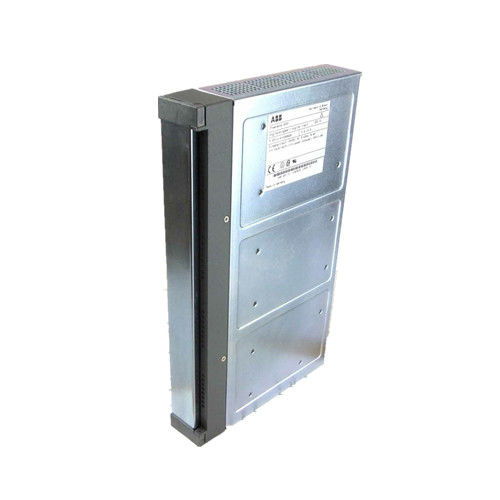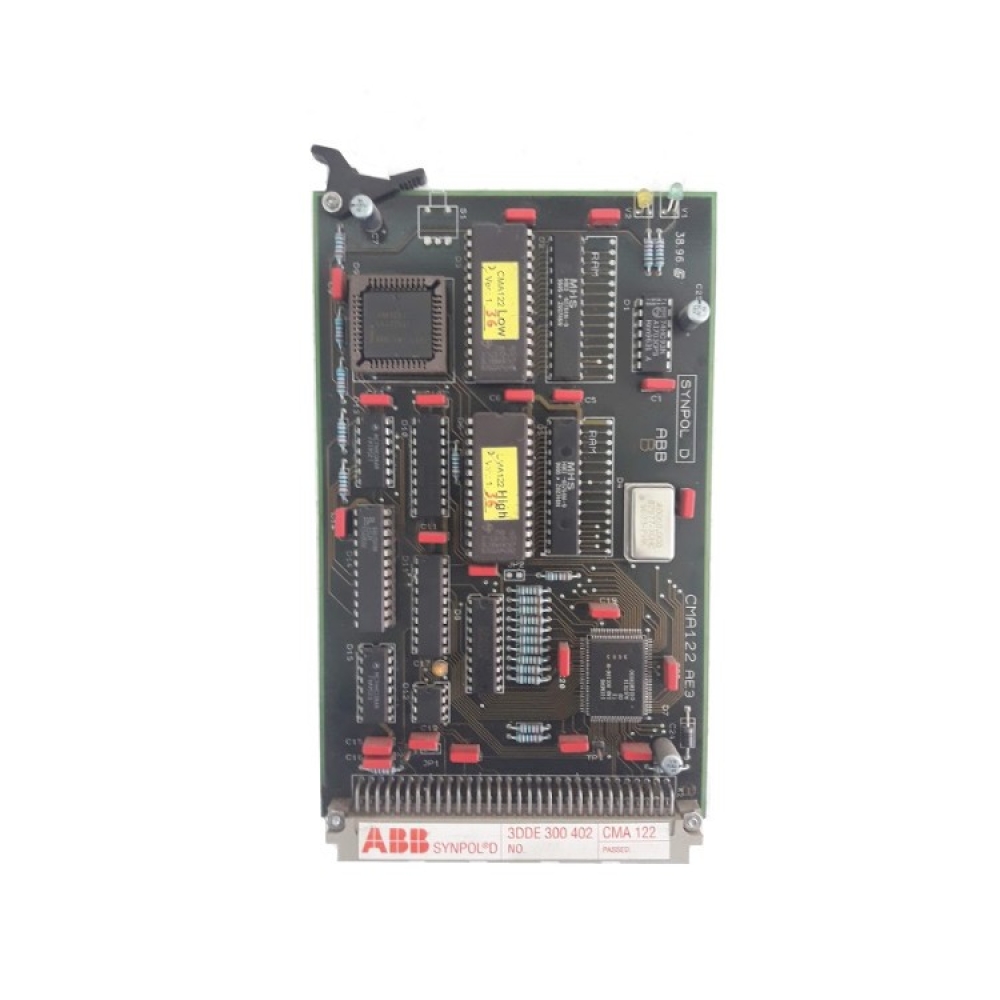

Call us 24/7uaedcs@163.com
Welcome to the official website of CNIACS Automation Technology Co., Ltd!
Call us 24/7uaedcs@163.com

ABB DI610 – 32-Channel Digital Input Module

Product Overview
ABB DI610 is a 32-channel digital input module designed to provide stable and reliable digital signal acquisition for industrial automation systems. It can efficiently process up to 32 digital inputs and accurately transmit various switching signals from external devices, such as sensor signals and switching status signals, to upper control systems, such as Programmable Logic Controllers (PLCs) or Distributed Control Systems (DCSs), providing real-time and accurate data support for system decision-making.
Operating Voltage:220 V
Channel Count:32
Input Type:Digital
Dimension (D x H x W):252 x 273 x 40 mm
Weight:1.17 kg

The ABB DI610 Digital Input Module is engineered to meet the stringent demands of industrial automation environments. With its robust design and superior performance, this module ensures reliable and accurate data acquisition from various sensors.
Featuring 32 digital input channels, the DI610 allows for flexible configuration to suit diverse applications, from process control to machine monitoring. Each channel supports a maximum current rating of 2A, ensuring compatibility with a wide range of input devices.
Operable within an extensive temperature range from -20°C to +70°C, the DI610 maintains consistent performance in harsh industrial settings. Its IP20 enclosure protection provides basic dust resistance, safeguarding against minor debris and dust ingress.
Equipped with Modbus RTU communication interface, the module facilitates seamless integration with existing control systems. This interface enables efficient data exchange between the DI610 and other components in the network, enhancing system interoperability and productivity.
For easy installation and maintenance, the DI610 employs a compact panel mount design, which can be conveniently mounted on the control panel or enclosure. This not only optimizes space utilization but also simplifies the wiring process, reducing installation time and costs.

Application Fields

  1. Manufacturing
    Automated production line: In the automated production line of manufacturing industry, DI610 module plays a vital role. It can be used to monitor and control the running status of various equipments on the production line, such as the starting and stopping of motors, the running speed of conveyor belts, and the movement position of robotic arms. Through the real-time acquisition of digital signals from these devices and their transmission to the PLC or DCS control system, the automated control and optimal management of the entire production line can be realised, thus improving production efficiency and product quality. For example, in the SMT placement production line of electronic product manufacturing, DI610 module can real-time monitor the operating parameters and status signals of the placement machine, reflow soldering oven and other equipment to ensure the accuracy and stability of the placement process, and effectively reduce the rate of defective products.
    Robot control: With the wide application of industrial robots in the manufacturing industry, the DI610 module has become an important part of the robot control system. It receives digital signals from robot sensors (such as position sensors, force sensors, vision sensors, etc.) and transmits these signals to the robot controller, enabling the robot to accurately perform various actions according to changes in the external environment and task requirements. At the same time, the DI610 module can also feedback the robot’s operating status signals to the upper control system, realising real-time monitoring and remote control of the robot’s working process.
  2. Energy Industry
    Monitoring of power generation equipment: In the field of power generation, whether it is thermal power generation, hydroelectric power generation or wind power generation, DI610 module can be used to monitor the running status of power generation equipment in real time. For example, in thermal power plants, it can collect digital signals from boiler water level sensors, turbine speed sensors, generator temperature sensors and other devices, and transmit these signals to the DCS control system of the power plant to achieve comprehensive monitoring and fault diagnosis of power generation equipment. Once equipment abnormalities occur, the control system can issue alarm signals in time and take corresponding protective measures to ensure the safe and stable operation of power generation equipment.
    Substation monitoring: In the substation, DI610 module can be used to monitor the tripping status of various switchgear (e.g. circuit breakers, isolation switches, etc.), the signals of current and voltage transformers as well as the action signals of relay protection devices, etc. Through the acquisition and operation of these digital signals, DI610 module can be used to monitor the status of various switchgear. By collecting and transmitting these digital signals, it can realise real-time monitoring and remote operation of the operating status of the substation, improve the automation management level of the substation, and guarantee the reliable power supply of the power system.
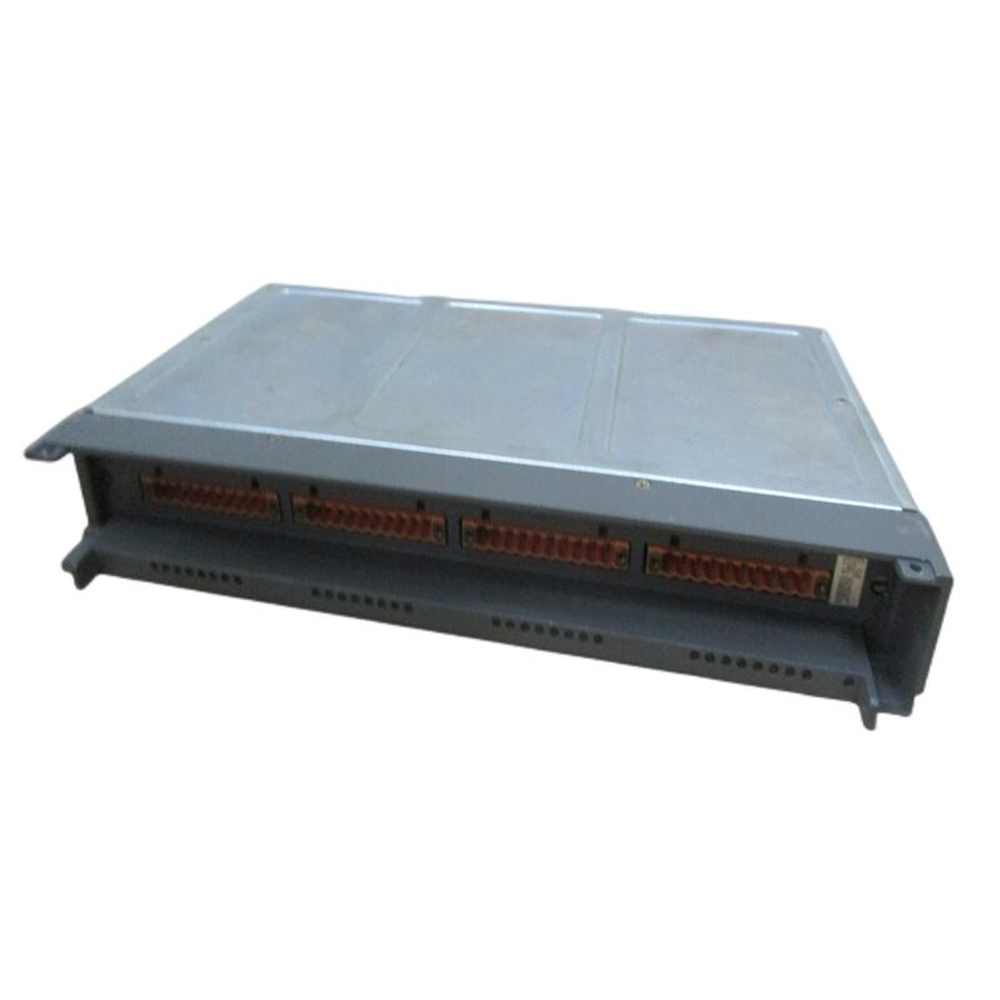
DO610 ABB - Digital Output Module 3BHT300006R1 - PLC-World

ABB DDO02 Industrial Digital Output Module

The DDO02 digital output module provides up to 16, CH-2-CH isolated transistor type, 24 to 48 VDC output signals. The open-collector outputs of the module are capable of sinking or sourcing up to 250 mADC.
The DDO02 module features also include short-circuit detection, status indication and overcurrent protection.
FC 221 (I/O Device Definition) sets DO module operating parameters and each output channel is configured using FC 225 (Digital Output CH) to set indivdual output channel parameters such as alarm state setting, default state on loss of communication with controller, etc.

Features and benefits
16 individually CH-2-CH isolated DI channels supporting:
24 to 48 VDC Transistor Type DO signals
Module can sink or source up to 250 mADC I/O current
Short-circuit detection, status indication and overcurrent protection.
Output Status LEDs on module frontplate
Galvanic isolation of 1500 V for up to 1 minute

Technical specifications
Model: DDO02
Number of output channels: 16
Output signal type: 24VDC (can be configured as dry contact / wet contact output)
Single channel output current: 1A
Communication interface: dual RS-485, dual Ethernet interface
Support communication protocols: Modbus RTU, Modbus TCP, PROFINET, EtherNet/IP, etc.
Resolution: 12 bits
Operating temperature range: -40°C to +85°C
Humidity range: 5% to 95% (non-condensing)
Protection rating: IP65
Dimensions: 22cm x 6cm x 35cm
Weight: 2.1kg

Precautions for use
Installation and wiring: When installing, make sure the module is installed in a firm position and avoid violent vibration and impact. Strictly in accordance with the wiring diagram for the power supply and signal line connection, the use of cables that meet the specifications, and do a good job of shielding and grounding to prevent electromagnetic interference affecting signal transmission. For high-power load equipment, it is necessary to confirm that the cable current-carrying capacity to meet the requirements, to avoid overloading caused by potential safety hazards.
Parameter Configuration and Commissioning: Before putting into use, make sure to accurately configure the module parameters through programming software according to the actual application requirements. During the debugging process, gradually check the function of each output channel and observe whether the device action meets expectations. The switching function of the dual-redundant communication interface can be tested by simulating a fault scenario to ensure the reliability of the communication system.
Routine maintenance and care: Clean the module regularly, wipe the surface dust and dirt with a dry and dust-free soft cloth to prevent dust accumulation from affecting heat dissipation and electrical performance. Check whether the connecting cables of the module are damaged or aging, and replace the damaged cables in time. Pay attention to the module status indicator, if there is an abnormal flashing or alarm prompts, you need to consult the fault code manual in time to take the appropriate maintenance measures

ABB DDO02 Digital Output Module Reasonable price - SAUL ELECTRIC

ABB 0369627MR DDO01 – DIGITAL OUTPUT

Product Overview.
ABB 0369627MR DDO01 digital output module is a key component of industrial automation control system, belongs to ABB Freelance 2000 series. The module focuses on the control system issued by the digital signal is accurately converted to drive the output signal of external devices, so as to achieve effective control of various types of industrial equipment, widely used in electric power, chemical industry, manufacturing and many other industrial fields, for the automation of the industrial production process and provide important support for the intellectualisation of the process.

Core features
Abundant output channels: with 32 digital output channels, it can control up to 32 external devices at the same time, which greatly improves the control efficiency and integration of the system. In large-scale automated production lines, it can drive many motors, valves, indicators and other devices at the same time to meet the demand for centralised control of multiple devices in complex industrial scenarios.
Stable output signal: the output signal type is 24VDC and the output current can be up to 0.5A, which has good stability and driving ability. It can be adapted to different load requirements and ensure that it can provide stable and reliable drive signals for external devices under the complex electrical environment of industrial sites, so as to guarantee the normal operation of the devices.
High-efficiency communication ability: support a variety of industrial communication protocols, and can be seamlessly connected with all kinds of mainstream control systems. Through the high-speed communication interface, it can quickly receive the instructions given by the control system and feedback the execution results to the control system, realising the two-way fast transmission of data and ensuring the real-time and accuracy of the system control.

High reliability design: advanced circuit design and high-quality electronic components, with excellent anti-interference ability, can effectively resist the electromagnetic interference, vibration, shock and other unfavourable factors in the industrial field. At the same time, the module built-in perfect self-diagnostic function, can real-time monitoring of its own working status, once found faults, immediately send out an alarm signal, to facilitate timely maintenance and repair, to protect the stability and reliability of the system operation.
Flexible Configuration Function: Users can flexibly configure the output channel of the module according to the actual application requirements, such as setting the initial state of the output signal, response time and other parameters. This flexible configuration allows the module to better adapt to the control requirements of different industrial processes and equipment, improving the versatility and applicability of the module.

Technical specifications
Model No.: 0369627MR DDO01
Number of output channels: 32
Output signal type: 24VDC
Output current: 0.5A
Communication interface; with a variety of industry-standard communication interfaces, such as RS-485, Ethernet, etc.
Support communication protocols: Modbus, PROFINET and other common industrial communication protocols.
Operating temperature range: -20℃ to + 70
Humidity range: 5% to 95% (non-condensing)
Protection grade: IP20
Size: 20.3cm x 5.1cm x 33.0cm
Weight: 1.7kg

Precautions for use
Installation environment selection: It should be installed in a dry, well-ventilated place away from strong electromagnetic interference sources and corrosive substances. Avoid installing in high temperature, high humidity or environment with violent vibration to ensure the normal operation and service life of the module. When installing, make sure the module is fixed firmly to avoid poor contact or damage due to looseness.
Wiring specification operation: strictly in accordance with the product specification for wiring, to ensure that the power and signal lines are connected correctly. Pay attention to the distinction between positive and negative polarity, to avoid reversing the module damage. At the same time, ensure that the wiring is firmly connected to prevent unstable signal transmission or equipment malfunction due to looseness. For the output signal cable, choose the appropriate cable specification according to the load type and current size to ensure the reliability and safety of signal transmission.

Parameter Configuration and Debugging: Before use, it is necessary to configure the parameters of the module according to the actual application requirements, such as setting the function of the output channel, the initial state, the response time and so on. During the configuration process, the parameter settings should be carefully checked to ensure consistency with the requirements of the control system and external equipment. During debugging, the function of each output channel should be checked step by step to see if it is normal, and observe whether the operation status of the equipment meets the expectation, so as to find and solve the problems in time.
Daily maintenance and inspection: Clean the module regularly, use a dry soft cloth to wipe the surface dust to prevent the accumulation of dust affecting the module heat dissipation and electrical performance. Check whether the connecting cables of the module are damaged, aged or loose, and replace or tighten them in time if there is any problem. At the same time, pay attention to the module’s operating status indicators, regularly check the self-diagnostic information, timely detection of potential faults and deal with them to ensure the stable operation of the module.

ABB DDO01 Equipment module New arrival - SAUL ELECTRIC

ABB DDI03 Module

Product Overview
ABB DDI03 module belongs to digital input module, which is an important part of industrial automation control system. It is mainly used to collect digital signals from the field, such as switch on/off status, sensor trigger signals, etc., and transmit these signals to the control system, so that the control system can make corresponding decisions and control actions according to the signal situation. With its stable and reliable performance, flexible configuration and good adaptability, the module is widely used in various industrial fields.

Technical specifications
Number of channels: Generally has more than one digital input channel, common 8 channels, 16 channels, etc., according to the actual demand to choose the appropriate number of channel configuration.
Input signal type: support dry contact and wet contact input signal, can adapt to different types of field equipment signal access
Input voltage range: usually 24VDC, some products may support a certain range of voltage fluctuations, in order to adapt to the complex power supply environment in the industrial field.
Resolution: generally have a high resolution, can accurately identify the state of the input signal changes
Communication interface: Equipped with common industrial communication interfaces, such as RS-485, Ethernet, etc., supporting industrial communication protocols such as Modbus, PROFINET, etc., which is convenient for data interaction with other devices.
Operating temperature range: generally can work normally under the temperature environment of – 20℃ to + 70℃, some products can adapt to a wider temperature range after special design.
Humidity range: Relative humidity is usually 5% – 95% (non-condensing) under stable operation.
Protection level: High protection level, commonly IP20 and above, some products can reach higher protection level to adapt to harsh environments.

Performance Characteristics
(i) High reliability
The use of high-quality electronic components and advanced manufacturing processes to ensure the reliability and stability of the module in the industrial environment. With perfect anti-interference design, can effectively resist electromagnetic interference, radio frequency interference, etc., to ensure the accuracy of signal acquisition. At the same time, the module also has a self-diagnostic function, real-time monitoring of its own operating status, once the fault is found in a timely manner to send an alarm signal.
(ii) Flexible configuration
Users can be based on the actual application requirements, flexible configuration of the module’s input channel parameters, such as signal type, filtering time and so on. This flexibility allows the module to adapt to different industrial site requirements, improving the versatility and applicability of the module.
(iii) Fast response
Fast response to the input signal, can timely and accurately feedback the field signal changes to the control system. This is very important for industrial processes that require real-time monitoring and control, helping to improve production efficiency and product quality.

Application scene
(A) Manufacturing
In the production line of automobile manufacturing, machining and other manufacturing industries, it is used to collect the running status signals of various equipment, such as the start and stop status of machine tools and the running status of conveyor belts. By transmitting these signals to the control system, it realises automatic monitoring and control of the production line and improves production efficiency and product quality.
(ii) Power industry
In power plants, substations and other power facilities, it is used to monitor the switching status of switchgear and the action signals of relay protection devices. It provides reliable signal support for the safe operation of the power system, and facilitates the staff to discover and deal with abnormal situations in time.
(iii) Chemical industry
In the chemical production process, it is used to collect the opening and closing status of various valves and the signals of liquid level sensors. It helps the control system to achieve precise control and safety protection of the chemical production process and prevent safety accidents.

Precautions for use
(i) Installation environment
It should be installed in a dry, well-ventilated place away from strong electromagnetic interference sources and corrosive substances. When installing, make sure the module is firmly fixed to avoid damage to the module due to vibration or collision.
(ii) Wiring specification
Strictly follow the product specification for wiring to ensure that the power and signal lines are connected correctly. Pay attention to the shielding treatment of the signal lines to reduce the impact of electromagnetic interference on signal transmission. At the same time, avoid loose wiring or short circuit, so as not to affect the normal operation of the module.
(iii) Regular maintenance
Clean and inspect the module regularly to remove dust and dirt from the module surface. Check whether the connecting cables of the module are damaged or aged, and replace them in time if necessary. At the same time, check the working status and parameter settings of the module on a regular basis to ensure that the module is always in normal working condition.

Models
DDI01: The same ABB digital input module may differ from DDI03 in terms of the number of channels, the type of input signals, the communication interface, etc. For example, the number of channels may be less, and the number of input signals may not be the same. For example, the number of channels may be less, or the voltage range required for the input signal may be different.
DI610: Also a digital input module from ABB, it usually has a different channel configuration and electrical characteristics. It may be suitable for different industrial scenarios or have differences in immunity to interference or signal processing speed.
DI620: Similar in function to DDI03, but with differences in specific technical parameters and performance. For example, it may have a higher protection level and is more suitable for use in harsh industrial environments.

ABB DDI01-DDI03 输入输出控制器 - 深圳雄霸

ABB 0369626M-EXC Exchange of DDI 01, Digital input as of V 3

Product Overview
The ABB 0369626M-EXC DDI 01 Digital Input Module (V3 and above) is a key device for digital signal acquisition and transmission in industrial automation control systems. The ‘Exchange’ indicates that the module may be a product for replacement or updating, with mature and stable performance. It is mainly responsible for accurately converting and transmitting all kinds of digital signals on site, such as switch status, sensor signals, etc., to the control system, so as to carry out the subsequent logical judgement and control decision-making, which is widely used in electric power, chemical industry, manufacturing industry and other industrial fields, to ensure the efficient and stable operation of the industrial production process.

Technical Specification Parameters
Model number: 0369626M-EXC (DDI 01, version V3 and higher). This model number specifies the product identity of the module, where ‘Exchange’ indicates that it may be used for replacement or updating.
Number of input channels: 8. The module is capable of accessing 8 digital signals at the same time, which can meet the demand for digital signal acquisition on a certain scale, for example, in small and medium-sized automated production lines, where the operating status signals of several devices can be monitored at the same time.
Signal type: supports dry contact and wet contact signals, and can be flexibly configured according to the actual application scenarios. This means that it can be adapted to different types of on-site signal sources, such as dry contact signals from mechanical switches or wet contact signals from proximity sensors.
Input voltage range: 24 VDC. 24 VDC is used as the input power supply, which is the standard voltage used in industrial automation and is stable, easy to access and manage.

Resolution: 12-bit. Higher resolution enables the module to more accurately identify and distinguish between different states of digital signals, reduce signal errors and improve the accuracy of data acquisition, which is more suitable for industrial applications that require certain signal accuracy.
Communication interface: It has RS-485 and Ethernet interfaces, and supports a variety of industrial communication protocols, such as Modbus, PROFINET and so on. The RS-485 interface can realise long-distance communication connection, which is suitable for communication between industrial field devices; the Ethernet interface provides higher data transmission rate and more convenient network connection, which is convenient for data interaction with superior control system and monitoring system.
Operating temperature range: -20℃ to + 70℃. The module is able to work stably in a wide temperature range, whether in industrial environments in cold regions or in high-temperature workshops and other scenarios, it can perform digital signal acquisition tasks normally.
Humidity range: 5% to 95% (non-condensing). Can be operated in higher humidity environment, as long as the environment does not exist in the condensation phenomenon, will not have a significant impact on the performance of the module, suitable for such as textile workshop, food processing workshop and other industrial places with high humidity.
Protection class: IP20, which means that the module has a basic dustproof ability, can prevent the intrusion of solid foreign objects with a diameter of more than 12.5mm, to provide a certain degree of protection for the internal circuitry, suitable for general indoor industrial control environments.

Core features
High-precision Signal Acquisition: Advanced signal processing technology is used to accurately capture digital input signals, ensuring that the acquired signals accurately reflect the true state of the equipment on site. In automated production lines that require high signal accuracy, it can avoid equipment malfunction caused by signal errors and improve the reliability of the production process and product quality.
Stable communication performance: It supports a variety of industrial communication protocols, such as Modbus, PROFINET, etc., and can achieve stable and fast data interaction with different brands and models of PLC, DCS and other control systems. Equipped with reliable communication interface and good anti-interference ability, it can guarantee the accuracy and stability of signal transmission in the complex industrial electromagnetic environment and ensure that the control system obtains accurate digital input information in time.

Flexible Channel Configuration: The module has multiple digital input channels, and users can flexibly configure the channel parameters, such as signal type (dry contact or wet contact signal), filtering time, etc., according to the actual application requirements. This flexible configuration allows it to adapt to diverse industrial scenarios, whether it is a simple equipment status monitoring, or complex multi-signal acquisition system, can be easily dealt with.
Highly reliable design: with perfect self-diagnostic function, it can monitor the working status of the module itself in real time, and once a fault is detected, such as channel abnormality, communication interruption, etc., it can send out an alarm signal in time, and feed back to the operator through the indicator light or communication interface, so as to facilitate rapid positioning and troubleshooting. At the same time, the module adopts rugged hardware design, which can adapt to harsh industrial environments, such as high temperature, high humidity, strong vibration, etc., reducing equipment failures caused by environmental factors and improving the overall reliability of the system.

Precautions for use

  1. Installation: Make sure the module is firmly installed to avoid vibration and shaking affecting signal acquisition and transmission. Connect the power supply and signal lines in strict accordance with the wiring diagram to ensure that the power supply voltage is stable and meets the requirements of 24VDC, and that the signal lines are connected correctly to prevent damage to the module or signal abnormality caused by wiring errors. At the same time, pay attention to the shielding of the signal lines, and ground the shielding layer reliably to enhance the anti-interference capability.
  2. Configuration and debugging: Before configuring and debugging the parameters of the module, be sure to read the user manual carefully and operate according to the prescribed steps. In the process of configuration, pay attention to the signal type of the input channel, range and other parameter settings to ensure that it matches the actual access to the signal source. During debugging, gradually check the signal acquisition and transmission function of each channel, observe the status indicator of the module and the feedback information of the control system, and find and solve problems in time.
  3. Daily maintenance: Clean the module regularly, use a dry soft cloth to wipe the surface dust, to prevent the accumulation of dust affecting the module heat dissipation and normal operation. Check whether the connecting cable of the module is loose and whether the interface is damaged to ensure stable and reliable communication and power connection. Regularly check the module’s self-diagnostic information and alarm records, and carry out timely investigation and treatment of potential faults and dangers to prolong the module’s service life and ensure the stable operation of the system.
DDI01 ABB Freelance 2000 Hartmann & Braun Digital Input Module PLC ...

ABB Y0338701M DCP10 – CPU MODULE 8 MB

Product Overview
ABB Y0338701M DCP10 CPU module, equipped with 8MB memory, is a core control unit designed for harsh industrial environments and high reliability requirements. With its excellent performance, powerful functions and outstanding stability, it plays a key role in the field of industrial automation, and is capable of efficiently handling complex control tasks, realising precise control and intelligent management of industrial production processes, and is widely used in various industrial scenarios with high requirements for reliability and performance.

Core features

  1. Powerful data processing and storage capacity: 8MB memory capacity provides sufficient space for programme operation and data storage, which can store a large number of complex control programmes, historical data and parameter configuration information. Combined with a high-performance processor, it can quickly process massive input and output data, execute complex control algorithms and logic tasks in real time, and analyse and process the operating data of many devices at the same time in large-scale industrial production systems to ensure efficient and stable operation of the system.
  2. Highly reliable redundancy design: It adopts a comprehensive dual redundancy design, which not only supports hot-standby redundancy of CPU modules so that when the main CPU fails, the standby CPU can be instantly and seamlessly switched over to ensure uninterrupted operation of the system; it also carries out redundancy configurations of the key communication interface and power supply module to effectively reduce the risk of the system being paralysed due to a single point of failure, which greatly improves the reliability and stability of the system, and is suitable for continuous production industries that cannot be easily shut down. It is suitable for continuous production industries that cannot be easily shut down, such as petrochemical, electric power and energy.
  3. Outstanding environmental adaptability: The protection level reaches IP67, with dustproof and waterproof characteristics, it can work stably in the humid, dusty, and even briefly submerged in water in the harsh environment. At the same time, after special design and enhanced treatment, it has stronger anti-vibration and anti-shock ability, which can adapt to extreme industrial environments such as mining, offshore oil platforms, tunnel construction, etc., ensuring reliable operation under complex working conditions.
  4. Rich communication and expansion functions: equipped with a variety of communication interfaces, supporting Modbus, PROFINET, OPC UA and other communication protocols, it can conveniently carry out high-speed and stable data interaction and communication with various industrial equipment, sensors, actuators and higher management systems. In addition, it has good expandability and can be flexibly connected to expansion modules according to the actual needs to meet the function expansion needs of industrial automation projects of different scales and complexity.

Technical specifications
Model: Y0338701M DCP10
Memory capacity: 8MB
Processor type: high-performance industrial-grade processor
Data processing speed: fast processing of complex data, timely response
Communication interface: Ethernet, RS-485 and other interfaces
Support communication protocols: Modbus, PROFINET, OPC UA, etc.
Protection grade: IP67
Operating Temperature Range: -25℃ to +70
Humidity range: 5% to 95% (non-condensing)
Vibration Resistance: Conforms to relevant industrial standards, can withstand a certain intensity of vibration.
Shock Resistance: Good shock resistance.

Precautions for use
Installation environment selection: Despite the excellent environmental adaptability of the module, when installing it, try to choose a relatively dry and well-ventilated location to avoid direct exposure to corrosive gases or liquids. During installation, make sure the installation surface is flat and firm to prevent the module from loosening due to vibration.
Redundancy system configuration and testing: When using the redundancy function, strictly follow the instructions to configure the redundancy of the CPU module, communication interface and power supply module. After the configuration is completed, a comprehensive redundancy switching test is carried out to ensure that the standby module can normally take over the work when the main module fails, so as to avoid system failures caused by improper redundancy configuration.
Data backup and management: Since the module can store a large amount of important data, it is crucial to regularly back up the programme, configuration files and historical data. Establish a perfect data management mechanism to ensure data security and recoverability to prevent data loss due to unforeseen circumstances, affecting the normal operation of the system and production traceability.
Regular Maintenance and Inspection: Clean the module regularly, using dry and dust-free tools to remove surface dust and dirt. Check whether the connecting cables of the module are firm, and whether there are signs of loose or damaged interfaces. At the same time, pay attention to the module’s operating status indicator, timely detection of potential problems and deal with them to ensure that the module is always in good working condition.

Similar Models
ABB DCP11 CPU Module
ABB DCP08 CPU Module
ABB DCP12 CPU Module

ABB DCP10,ABB

ABB DCP02 CPU MODULE

Product Overview
ABB DCP02 CPU module is the core brain of industrial automation control system, which is responsible for processing all kinds of data, executing control procedures and coordinating the operation of various components in the system. It plays a key role in the field of industrial automation by virtue of its powerful data processing capability and stable and reliable performance, and can be widely used in electric power, chemical industry, manufacturing industry and other industries, to meet the needs of automation control of different complexity, and provide strong support for the efficient and stable operation of industrial production.

Core Functions
Efficient Data Processing: Equipped with a high-performance processor, it has strong computing power, which can quickly process a large amount of input and output data and execute complex control algorithms and logic programmes. In large-scale industrial production lines, facing the real-time data collected by many sensors and various control instructions, DCP02 CPU module can quickly complete the analysis, arithmetic and processing of the data to ensure timely response of the system and guarantee the smooth operation of the production process.

Rich communication interfaces: Equipped with a variety of communication interfaces, such as Ethernet interface, RS-485, RS-232, etc., supporting a variety of communication protocols, including Modbus, PROFINET, TCP/IP and so on. This enables the module to conveniently exchange data and communicate with PLCs, HMIs (human-machine interfaces), sensors, actuators, and other control systems to achieve system integration and cooperative work. For example, connecting to a factory’s management system through an Ethernet interface allows real-time uploading of production data for monitoring and decision-making by management personnel.

Flexible Programming and Configuration: It supports a variety of programming languages, such as ladder diagram, structured text, function block diagram, etc., which makes it convenient for engineers with different technical backgrounds to write programmes and configure the system according to project requirements. Meanwhile, users can flexibly set the parameters of the CPU module according to the actual application scenarios, such as input/output address assignment, communication parameter configuration, etc., in order to meet diversified control requirements.

High reliability and stability: Adopting redundancy design concept and supporting hot standby function, when the main CPU module fails, the standby module can be quickly and seamlessly switched to continue to perform control tasks, which greatly reduces the risk of system downtime. In addition, the module has a perfect self-diagnostic function, which can monitor its own working status in real time, and once a fault is detected, it will immediately send out an alarm signal and take corresponding protective measures to ensure the safe and stable operation of the system. In harsh industrial environments, such as high temperature, high humidity, and strong electromagnetic interference, the DCP02 CPU module can also maintain stable operation with its excellent anti-interference performance and reliable hardware design.

Specification
Model:DCP02
Processor type: High-performance industrial-grade processor
Data processing speed: can quickly process a large amount of data, the specific speed varies depending on the application scenario.
Memory capacity: sufficient programme storage and data processing memory to meet the needs of complex control programmes.
Communication interface: Ethernet, RS-485, RS-232, etc.
Support communication protocols: Modbus, PROFINET, TCP/IP, etc.
Programming language: ladder diagram, structured text, function block diagram, etc.
Operating temperature range: -20℃ to + 60℃.
Humidity range: 5% to 95% (non-condensing)
Protection class:IP20

Precautions for use
Installation process
Power supply adaptation: Be sure to strictly use the specified power supply voltage, voltage fluctuations beyond the standard may lead to module performance degradation or even damage. Before connecting to the power supply, use professional equipment to test the stability of the power supply and the voltage value, and at the same time ensure that the power supply polarity is correctly connected to avoid burning the internal components of the module due to connection instead.
Static electricity protection: When operating the CPU module, the static electricity generated by the human body may cause irreversible damage to it. Therefore, operators should wear anti-static bracelets and ensure that the working environment is well grounded. During installation, avoid touching the circuit boards and pins of the module directly with your hands, and use anti-static tools for operation as much as possible.

Heat dissipation: Although the module’s operating temperature range is from -20℃ to +60℃, it should be installed in a well-ventilated control cabinet to ensure its long-term stable operation. Avoid stacking debris around the module, maintain a safe distance from other heat generating equipment, and install a cooling fan if necessary to prevent the module from degrading or failing due to high temperature.
Use and Maintenance
Procedure backup: Before updating the procedure or modifying the parameters of the module, the original procedure and configuration file must be completely backed up. Once the operation error leads to program loss or system crash, it can be quickly restored to the normal state, reducing downtime and potential losses.

Troubleshooting: When the module has a fault alarm, do not disassemble it immediately. Firstly, through the diagnostic function and the status indicator to determine the initial type of fault, check the communication connection, power supply and other external factors. If you are unable to determine the cause of the fault, you should contact ABB’s professional technicians to avoid expanding the scope of the fault due to improper operation.
Regular maintenance: Clean the module regularly, use a dry, soft brush or compressed air to remove surface dust to prevent dust accumulation from affecting heat dissipation and electrical performance. At the same time, check whether the fixing screws of the module are loose, whether the communication cable and power cable are firmly connected, to ensure that the module is always in good working condition.

Related Models
DCP01 CPU Module
DCP03 CPU Module
DCP10 CPU Module

ABB DCP02 HARTMANN & BRAUN DIGIMATIK CPU module Original & New in Stock

ABB 0369629M-REF Refurbished DAO 01, Analog output, as of V3

Product overview
ABB 0369629M-REF Refurbished DAO 01 analogue output module (version V3 and above) is a key device for converting digital signals to analogue outputs in industrial automation control systems. Professionally refurbished, the module ensures reliable performance with a high price/performance ratio, and is able to meet the needs of analogue signal output in many industrial scenarios. It is mainly used to convert digital commands from the controller into analogue signals that can drive on-site actuators, such as controlling the opening of control valves and the speed of motors, etc., to achieve precise control of industrial processes, which plays an important role in industrial automation processes.

Core features
Accurate signal conversion: adopting high-precision digital-to-analogue conversion technology, it can accurately convert digital signals into analogue signals for output. The high precision and stability of the output signal can meet the strict requirements for control accuracy of industrial applications, such as chemical reactor temperature, pressure precision control, to ensure that the analogue signal output is highly matched with the digital instructions to reduce control errors.
Reliable performance guarantee: Although the module is refurbished, its performance can reach the level close to that of a brand new module after strict testing and repair process. The module has good anti-interference ability, and can operate stably in complex industrial electromagnetic environment, such as metallurgical workshop, power substation, etc. It ensures that the analogue signal output is not affected by external interference, and ensures the reliable operation of industrial equipment.
Flexible configuration and communication: It supports a variety of communication protocols, which is convenient for integration with PLC, DCS and other control systems of different brands and models. Users can flexibly configure the type of output signals (such as 4-20mA, 0-10V, etc.), range and other parameters according to the actual needs to adapt to various types of on-site equipment to meet the needs of diverse industrial control scenarios.
Convenient maintenance and management: The module is designed for easy installation and maintenance, and has intuitive status indicators, which can quickly display the working status of the module, making it convenient for operators to find abnormal situations in time. At the same time, its standardised interface and modular design enable quick replacement in case of failure, reducing equipment downtime and improving production efficiency.

Technical specifications
Model: 0369629M-REF (DAO 01, V3 and above)
Number of output channels: 2
Output signal type: 4-20mA, 0-10V, etc. (configurable)
Output accuracy: ±0.1% FS (full scale)
Resolution: 12 bits
Communication interface: RS-485, Modbus, etc. (support a variety of protocols)
Supply voltage: 24VDC
Operating Temperature Range: -20℃ ~ +70℃
Humidity range: 5% ~ 95% (non-condensing)
Protection Grade:IP20

Application Scenarios
Process control field: In the production process of chemical, pharmaceutical, food and beverage industries, it is used to accurately control various process parameters. For example, in chemical production, to control the opening of the feed valve of the reaction kettle, the DAO 01 module converts the digital instructions of the control system into analogue signals, and accurately adjusts the valve so as to control the material flow, ensure that the chemical reaction is carried out in the appropriate conditions, and improve product quality and production efficiency.
Power system: In power plants and substations, it is used to control the operating parameters of power equipment. Such as regulating the excitation current of the generator, controlling the excitation system through the analogue output signal, stabilizing the output voltage of the generator; or controlling the tap position of the power transformer to realize the automatic adjustment of voltage and guarantee the stable power supply of the power system.
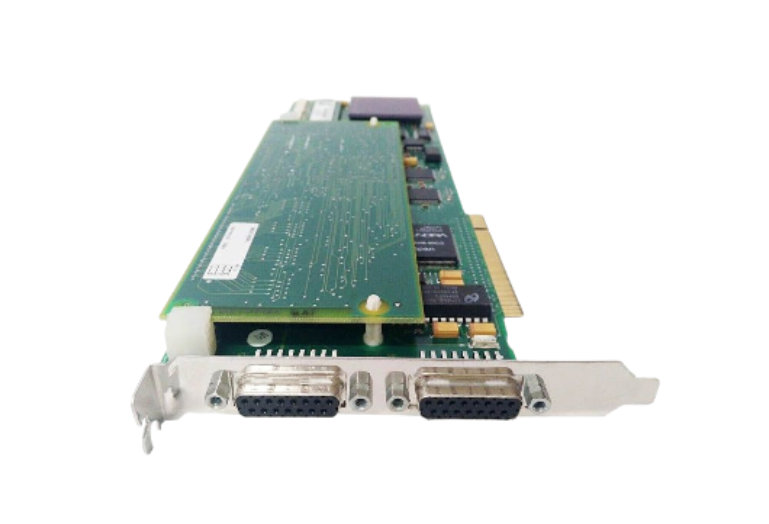
Industrial automation production line: In the automation production line of machinery manufacturing, automobile manufacturing, etc., it is used to control the movement speed and position of the mechanical arm. By converting the digital signals from PLC to analogue signals and driving servo motors, it realizes the precise movements of the robotic arm, ensures the automation and high precision of the production process, and improves the consistency of the products and the production efficiency.

Introduction of related models
(I) DAO 02 Analogue Output Module
DAO 02 analogue output module is the upgraded model of DAO 01, which is mainly improved in the number of output channels and performance. With 4 output channels, it can drive more field actuators at the same time compared with the 2 channels of DAO 01, which is suitable for complex industrial scenarios where multiple analogue devices need to be controlled, such as multi-parameter coordinated control of large-scale chemical plants. In terms of output accuracy, DAO 02 reaches ±0.05% FS (full scale), and the resolution is upgraded to 14-bit, which enables more accurate analogue signal output to meet the needs of high-end manufacturing fields that require very high control accuracy. In terms of communication, in addition to supporting RS-485 and Modbus protocols, support for PROFINET protocol has been added, further enhancing compatibility with different control systems and communication efficiency.

(II) DAO 10 analogue output module
DAO 10 analogue output module focuses on high reliability and harsh environment applications. It also has 4 output channels, and the output signal type is similar to that of DAO 01, which can be flexibly configured as 4-20mA, 0-10V, etc. The protection level of this module is up to IP65. The module is IP65 rated, dustproof and waterproof, and is suitable for harsh environments such as mines, harbours and outdoor production lines. It has been specially designed for vibration and shock resistance, and has passed strict mechanical performance tests, so it can operate stably even in industrial environments with severe vibration. In addition, DAO 10 has a built-in redundant power supply interface, so when the main power supply fails, it can be automatically switched to the backup power supply to guarantee the continuous operation of the module and improve the reliability and stability of the system.

(III) DAO 15 analogue output module
DAO 15 analogue output module features high-speed response and large data processing capability. With 8 output channels, it can quickly process and output multiple analogue signals to meet the real-time control requirements of high-speed automated production lines. The module adopts advanced digital signal processing technology, and the signal update rate can be up to milliseconds, which can realise precise control of rapidly changing process parameters. In terms of communication, it supports Ethernet communication with higher data transmission rate and larger data throughput, which is convenient for integration with industrial Ethernet system to realise remote monitoring and real-time data sharing. Meanwhile, DAO 15 also has a data storage function, which can record the module’s operating parameters and historical data for easy data analysis and fault tracing.

DAO01 | ABB | Analog output

ABB DAI03 Digital Input Module

The DI03 Digital Input Module can handle up to 16 individual digital input signals, each channel individually CH-2-CH isolated and supporting 24 VDC inputs. Each channel is individually CH-2-CH isolated and supports 24 VDC inputs.FC 221 (I/O Device Definition) sets the DI module as a parameter, and each input channel is configured using FC 224 (Digital Input CH) to set input channel parameters such as alarm status, de-jitter cycles, etc. The DI03 digital input module is also equipped with an I/O Device Definition (I/O Device Definition) to set the input channel parameters.

Features and Benefits
16 independent CH-2-CH isolated DI channels supported:
24 VDC digital input signals
Configurable contact debounce time up to 255 ms
DI03 module can sink or pull I/O currents
Input status LEDs on module front panel
1500 V current isolation for up to 1 minute
DI03 does not support SOE
Highly accurate signal conversion: ADC with 12-bit resolution accurately converts analogue signals to digital signals, ensuring accurate data acquisition in a wide range of industrial processes.
Rich communication interface: Equipped with RS-485 communication interface, it can be seamlessly integrated into the existing fieldbus network, which is convenient for connecting and data interaction with PLC and other control systems.
Wide Operating Range: With an operating temperature range of – 20°C to + 70°C and a humidity range of 5% to 95% non-condensing, it maintains reliable performance in harsh industrial environments.
Compact and Durable Design: Measuring 33.5×25.5x3cm and weighing 0.6kg, it is compact, easy to install, and has a high-strength housing that can withstand vibration, shock, and electromagnetic interference in industrial sites.
Powerful diagnostics: Advanced diagnostic features enable rapid fault identification and localisation, reducing system downtime and improving operational efficiency.

Technical Specifications
1.Physical Parameters
Net depth/length: 350.52mm, the size of the design of the internal circuitry to ensure a reasonable layout at the same time, easy to install in all kinds of control cabinets, equipment racks, will not occupy too much space, is conducive to saving the overall installation space of the equipment.
Net height: 129.54mm, moderate height, not only to meet the heat dissipation needs of the internal electronic components, but also with other modules or equipment in the vertical direction to achieve good cooperation and integration.
Net width: 482.6mm, this width allows the module to have enough input channels and functional circuits at the same time, maintain good structural stability, and facilitate wiring and connection with peripheral equipment.
Net weight: 0.22kg, light weight, not only easy to transport and install, but also in the process of equipment operation, will not bring too much burden to the support structure, help to improve the overall mechanical stability of the equipment.

2.Electrical Parameters
Channel type: DI (Digital Input), specially used for collecting digital signals on site and converting them into digital signal format suitable for control system recognition and processing.
Number of input channels: 16, can simultaneously access 16 digital signals, to meet the needs of most industrial automation scenarios for multi-channel signal acquisition. In the production line monitoring system of some large factories, it may be necessary to monitor the operation status of many devices (such as the start and stop of motors, the opening and closing of valves, etc.) at the same time, and the 16 input channels can effectively realise the centralised acquisition and transmission of status signals of these devices.
Resolution: 12-bit, higher resolution can more accurately identify and distinguish between different states of the digital signal, reduce signal error, improve the accuracy of data acquisition. In application scenarios requiring high signal accuracy, such as precision instrument manufacturing and high-end automated testing equipment, 12-bit resolution ensures that the collected digital signals accurately reflect the actual state of the field equipment, providing a reliable basis for subsequent control decisions.
Communication interface: RS-485, which is a widely used communication interface standard in the industrial field, has the advantages of long transmission distance (up to 1200 metres) and strong anti-interference ability. Through RS-485 interface, DAI03 can be conveniently connected with PLC, host computer and other devices to build a stable and reliable industrial communication network and realise rapid data transmission and sharing.

Voltage range: 24VDC, the module is powered by 24VDC DC power supply, which is a commonly used power supply voltage level in the field of industrial automation, and has the advantages of good power supply stability, easy to obtain and manage. In practical applications, it can easily share the power supply system with other 24VDC power supply equipment in the factory, reducing the complexity and cost of power supply configuration.
Operating Temperature: -20°C to +70°C. The wide operating temperature range allows it to adapt to a variety of extreme environmental conditions. Whether in the cold winter outdoor scenes in the north, or in the hot summer hot shop in the south, DAI03 can maintain normal working conditions, to ensure stable acquisition and transmission of digital input signals.
Humidity range: 5% to 95% non-condensing, can be normal operation in higher humidity environment, and is not affected by condensation phenomenon. In some production environments with high humidity, such as textile workshops, food processing workshops, etc., the module can work reliably, avoiding electrical failures caused by humidity problems and guaranteeing the long-term stable operation of the equipment.

ABB D-20-0-1102 control module

Core Technical Parameters
Power supply and power consumption:
Support 110V DC (some sources are labelled as 241V DC or 110V AC, which should be confirmed according to the specific model), with a wide voltage input range, adapting to different industrial environments.
Power consumption is as low as ≤100mA, optimising energy efficiency and meeting green industrial standards.
Communication protocol:
Standard Modbus RTU, compatible with mainstream industrial protocols, supports seamless connection with PLC, HMI and other devices.
Some models are integrated with Ethernet/IP or Profinet to meet the demand for high-speed data transmission, suitable for smart factory network architecture.
Environmental Adaptability:
Operating temperatures range from -20°C to + 60°C (some sources are labelled – 20°C to + 70°C), allowing stable operation in extreme industrial environments (e.g., cold storage, high-temperature workshops).
Protection class IP20/IP54 (depending on the model), dust and humidity resistant, suitable for harsh working conditions.
Functional features:
Integrated PID control, logic operation, data acquisition and other functions, support for custom programming, to meet the diverse control needs.
Modular design, can expand the input and output channels (such as analogue, digital), adapted to different equipment interfaces.

Typical application scenarios
Industrial automation:
Manufacturing industry: used for real-time control of production line equipment (such as robotic arms, conveyor belts), to improve production efficiency and precision.
Energy management: monitoring and regulating the operating parameters of power systems, renewable energy equipment (such as photovoltaic inverters, wind turbines).
Process control:
Petrochemical industry: Realise closed-loop control of temperature, pressure and flow in oil refining and chemical production to ensure process stability.
Water treatment: for pumping unit control and water quality monitoring systems in wastewater treatment plants to optimise resource utilisation.
Building automation:
HVAC system: regulates the operation of air conditioning and ventilation equipment to achieve a balance between energy saving and comfort.
Intelligent building: integrating lighting and security systems to achieve centralised management through a central controller.

Market Feedback and User Evaluation
Advantage:
Reliability: user feedback that the module has a low failure rate in continuous operation, especially in the vibration, electromagnetic interference environment, stable performance.
Ease of use: support for ABB programming software (such as Automation Builder), friendly configuration interface, reduce the threshold of debugging.
Compatibility: Seamless integration with other ABB product lines (e.g. ACS series frequency converter, PLC), reducing system compatibility problems.
Suggested improvements:
Documentation update: Some users pointed out that the official manual does not describe specific functions in sufficient detail, and they need to rely on third-party technical forums or training resources.
Communication Expansion: It is recommended to add support for emerging protocols such as OPC UA, MQTT, etc. to adapt to the needs of Industrial Internet of Things (IIoT).

Procurement and Maintenance
Lifecycle:
Some sources indicate that the model has been discontinued, but stock is still available. Users are advised to consult ABB officials to confirm replacement models (e.g. ABB AC 800M series controllers).
Certifications:
Complies with CE, UL approvals and supports global market access. Customised versions are available for special environments (e.g. ATEX zones).

Typical Examples
An automobile factory: The D-20-0-1102 module is used to achieve the cooperative control of multiple devices in the welding line, which has increased the production efficiency by 15% and reduced the failure rate by 30%.
A photovoltaic power plant: communicates with inverters via Modbus protocol, adjusts power generation in real time, reduces the rate of abandoned light, and increases annual revenue by 8%.

Technology trends
Digital transformation: ABB launched the ABB Ability™ platform, which supports the D-20-0-1102 module to access the cloud for remote monitoring and predictive maintenance.
Edge computing: The module has built-in edge computing capability, which allows data processing to be done locally, reducing dependence on the cloud and improving response speed.

【GSH204 D20】ABB漏电断路器_价格_图片_科旭机电

Search for products

Back to Top
Product has been added to your cart