
Call us 24/7uaedcs@163.com
Welcome to the official website of CNIACS Automation Technology Co., Ltd!
Call us 24/7uaedcs@163.com

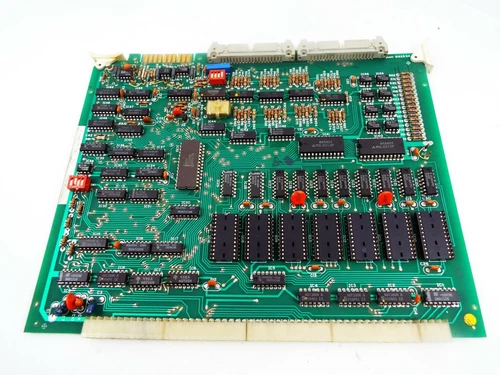
Xycom XVME-244 DIO Digital Input

Overview

The XVME-244 Digital I/O Module is an isolated 64-channel, digital I/O module designed for use in

VMEbus systems.

Thirty-two input channels and thirty-two output channels are provided, arranged in groups of eight, optically-isolated from the others and from the VMEbus circuitry.

The 64 I/O channels are arranged to form eight, byte wide I/O registers. The I/O registers are addressed consecutively, allowing the input and output channels to be accessed as either bytes or words.

To add to the integrity of the system, default initialization disables all outputs both during system power-up and during a software reset or SYSFAIL.

This module is ideally suited for interfacing to pushbutton or relay contacts. 

It contains input debouncing circuitry which eliminates the effects of contact bounce from such inputs.

The XVME-244 provides four filtered inputs for those applications where filtering is desired for a particular input. 

One filtered input is provided for each input group as a read-only register containing  the state of

the filtered input. 

These registers may be accessed as bytes or as 16-bit words.

Features

Outputs

• 32 optically-isolated digital output channels

• Outputs to 30 V and 400 mA

• 300 VDC optical isolation group-to-group and

1000 V group-to-VMEbus

• Hardware initialization of outputs at power-up

• Outputs are software-readable

• Transient protection on all outputs

Inputs

• 32 digital input channels

• Input voltage range 10-35 VDC

• Input debouncing circuitry

• 35 VDC reverse bias protection

• 300 VDC optical isolation group-to-group and

1000 V group-to-VMEbus

Applications

Outputs

• Control valves

• Solid-state relays

• Alarm interface

• Indicator lamps

Inputs

• Limit switches

• Push buttons or panel switches

• Proximity switches

• Alarm trips

• Photo detector switches

Product Overview

Xycom XVME-244 DIO Digital Input/Output Card Module 70244-001 is a digital input/output card module designed based on the VME Bus standard, specifically designed for industrial automation control, data acquisition, and monitoring systems. As a key component of signal interaction in industrial control systems, it can efficiently collect and output digital signals, accurately control various actuators, ensure the stable operation of industrial production processes, and is widely used in fields such as automotive manufacturing, electronic assembly, and energy management.

Brand background

Xycom has been deeply involved in the fields of industrial automation and embedded computing for many years, renowned for providing high-performance and highly reliable hardware products. With its profound technical accumulation and strict quality control, its products have gained wide recognition and trust in industries such as industry, aerospace, etc. that require extremely high stability and accuracy. Xycom continues to innovate and is committed to meeting the increasingly complex application needs of industrial customers, making it the preferred partner for many industrial enterprises.

Core functions

Digital signal acquisition: Quickly and accurately collect various digital signals from industrial sites, such as equipment start stop status, limit switch signals, sensor trigger signals, etc. Real time processing and caching of collected signals to provide accurate equipment operating status information for the control system, in order to make timely control decisions.

Digital signal output: According to the instructions of the control system, the digital signal is accurately output to the actuator to achieve on/off control of the equipment. For example, controlling the start and stop of motors, opening and closing of valves, and turning on and off indicator lights to ensure that industrial production processes proceed in an orderly manner according to preset logic.

Signal isolation and protection: Through optoelectronic isolation technology, input/output signals are effectively isolated from external circuits to prevent external electrical interference from affecting the module and control system. At the same time, it has overcurrent and short-circuit protection functions to enhance the reliability and durability of the module and extend the service life of the equipment.

Communication and Collaboration: Supports communication with other devices on the VME Bus bus, uploads collected digital signals to the main controller or upper computer, and receives control instructions from the main controller to achieve collaborative work with the entire industrial control system, ensuring consistency and stability of system operation.

Precautions

Installation environment: During installation, a dry, well ventilated, and dust-free environment should be selected to avoid installation in places with corrosive gases, large amounts of dust or water vapor, and to prevent electronic components from being corroded or damaged. At the same time, it is necessary to ensure that the installation location has good heat dissipation conditions to avoid affecting the performance and lifespan of the module due to high temperatures.

Wiring operation: When wiring the module, it is necessary to ensure that the equipment is in a power-off state and strictly follow the wiring diagram and instructions to avoid module damage or system failure caused by wiring errors. For input signals, it is necessary to ensure that the voltage level of the signal source matches the input requirements of the module; For output signals, attention should be paid to the rated voltage and current of the load to avoid overload.

Static protection: When installing, disassembling, or maintaining modules, operators must wear protective equipment such as anti-static wristbands to avoid damage to the precision electronic components on the module caused by human static electricity. During the operation, direct contact with electronic components and circuits should be avoided as much as possible.

Communication settings: When communicating with other devices on the VME Bus bus, ensure that the communication parameters of the module (such as address, baud rate, etc.) are consistent with other devices, otherwise it may cause communication failure. During system operation, if communication parameters need to be changed, the relevant equipment should be stopped before setting the parameters

Xycom XVME-244 DIO 数字输入/输出卡模块 70244-001 VME 总线 - 第 2 张/共 5 张

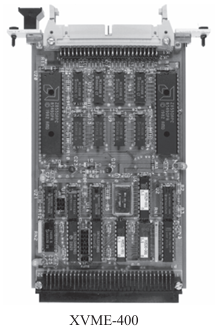
XYCOM XVME-400 70400-001 card

Overview

The Xycom Automation XVME-400 and XVME-401 Quad Serial I/O Modules are single-high, single-wide VMEbus modules that provide a VMEbus system with four serial communication channels.  

The XVME-400 and XVME-401 differ only in their communication interface:  the XVME-400 provides four RS-232C serial ports, while the XVME-401 provides four RS-422A/RS-485 serial ports.

Both modules contain two Z8530 Serial Communica tion Controller (SCC) chips which provide a variety of communication modes, including asynchronous, byte synchronous, and bit-oriented protocols.

Each channel is independently programmable and has its own baud rate generator and modem signal controls.

The VMEbus interface directly maps the Z8530 SCC chips into the short I/O address space, starting on a jumper-selected 1 Kbyte boundary.

The modules can also be jumpered to generate an interrupt on any of the seven VMEbus interrupt levels.

The two Z8530 SCC chips can generate a total of 16 different interrupt vectors.

For applications not allowing I/O to be routed out the front panel, the XVME-490 and XVME-491 offer the same functionality as the XVME-400 and XVME-401.

In a 6U form factor, the I/O is routed via the VMEbus P2 connector on the back of the board

Features

• Four serial ports

• Single (3U) size (XVME-400/401) or

double (6U) size (XVME-490/491)

• Asynchronous, monosynchronous, bisynchronous,

HDLC, SDLC operation

• Zilog Z8530 Serial Communication Controller

• Modem control

• RS-232C or RS-422A/RS-485-compatible

• Independent baud rate generators for each signal

channel

Applications

• Terminal or modem interface

• Serial printer interface

Hardware Specifications

Number of Channels 4

Serial Device

Zilog Z8530 SCC

Level Compatibility

XVME-400/490

XVME-401/491

Maximum Baud Rate

Internal, async

Internal, sync

External, async

External, sync

RS-232C

RS-422A/485

57.6 Kbaud

500 Kbaud

57.6 Kbaud

500 Kbaud

Modem Control Signals

XVME-400/401/490 RTS, CTS, DCD, DTR

XVME-491

RTS, CTS, DCD

Power Requirements

XVME-400/490

XVME-401/491

+5 V @ 1.1 A typ., 1.3 A max.

+12 V @ 100 A typ.,110 A max.

+5 V @ 1.4 A typ., 1.6 A max.

VMEbus Compliance

• Complies with VMEbus Specification, IEEE 1014

• A16:D08(O) DTB Slave

• Interrupter I(1)-I(7)(STAT), ROAK

• Interrupt vector D08(O)(DYN)

• Form Factor:- XVME-401 and XVME-401:  SINGLE

3.9″ × 6.3″ (99.06 mm × 160.02 mm)- XVME-490 and XVME-491: DOUBLE

9.2″ × 6.3″ (233.68 mm × 160.02 mm)

Environmental Specifications

Hardware Specifications

Number of Channels 4

Serial Device

Zilog Z8530 SCC

Level Compatibility

XVME-400/490

XVME-401/491

Maximum Baud Rate

Internal, async

Internal, sync

External, async

External, sync

RS-232C

RS-422A/485

57.6 Kbaud

500 Kbaud

57.6 Kbaud

500 Kbaud

Modem Control Signals

XVME-400/401/490 RTS, CTS, DCD, DTR

XVME-491

RTS, CTS, DCD

Power Requirements

XVME-400/490

XVME-401/491

+5 V @ 1.1 A typ., 1.3 A max.

+12 V @ 100 A typ.,110 A max.

+5 V @ 1.4 A typ., 1.6 A max.

VMEbus Compliance

• Complies with VMEbus Specification, IEEE 1014

• A16:D08(O) DTB Slave

• Interrupter I(1)-I(7)(STAT), ROAK

• Interrupt vector D08(O)(DYN)

• Form Factor:- XVME-401 and XVME-401:  SINGLE

3.9″ × 6.3″ (99.06 mm × 160.02 mm)- XVME-490 and XVME-491: DOUBLE

9.2″ × 6.3″ (233.68 mm × 160.02 mm)

Ordering Information

XVME-400 4 Channel RS-232C Serial I/O

XVME-401 4 Channel RS-422A Serial I/O

XVME-931 2 Channel RS-232C Cable for

XVME-400

XVME-932 2 Channel RS-422A/485 Cable for

XVME-401

XVME-490 6U Version of XVME-400 with I/O

Routed to the VMEbus P2 Connector

XVME-491 6U Version of XVME-401 with I/O

Routed to VMEbus P2 Connector

Product Overview

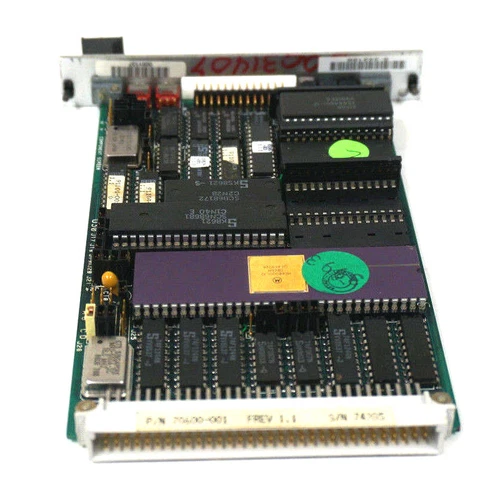
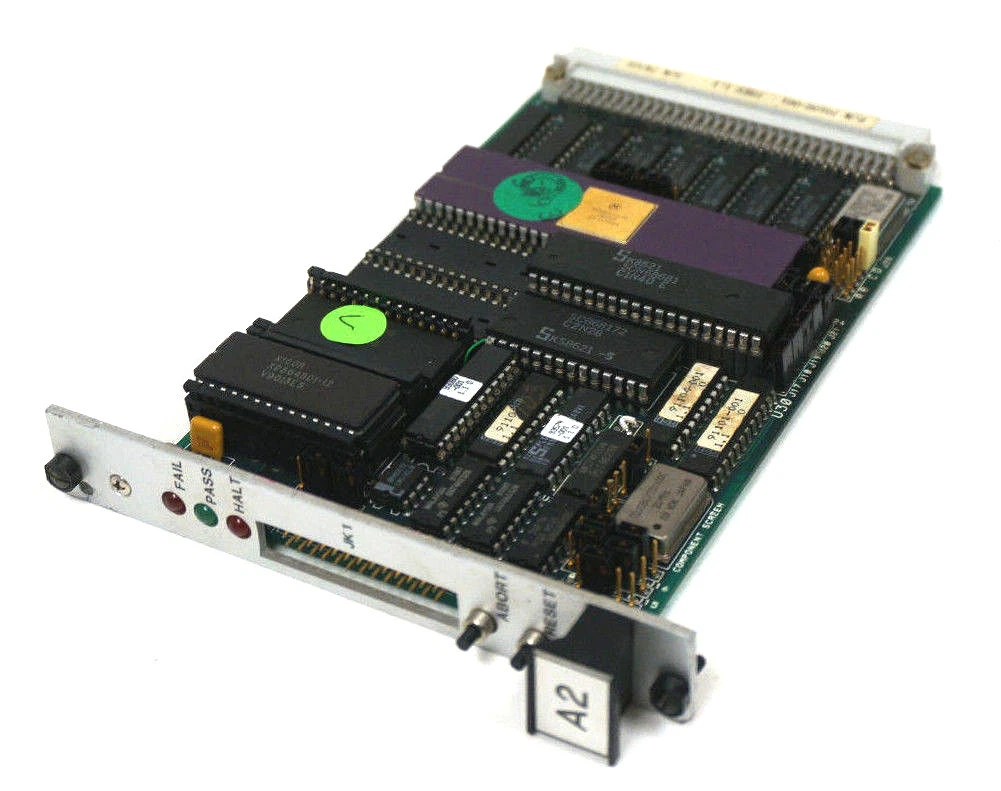
XYCOM XVME-400 70400-001 card is a high-performance board designed based on the VMEbus architecture, specifically designed for industrial automation control systems, data acquisition systems, and complex industrial monitoring scenarios. It highly integrates multiple functions, efficiently processes various types of data, accurately controls equipment operation, plays a key role in industrial production processes, and helps improve production efficiency and product quality.

Precautions

Installation environment: The card should be installed in a dry, well ventilated, and dust-free environment, avoiding installation in places with corrosive gases, large amounts of dust or water vapor, to prevent electronic components from being corroded or damaged. At the same time, ensure that the installation location has good heat dissipation conditions to avoid affecting the performance and lifespan of the card due to high temperatures. The installation process must be operated according to the requirements of the installation manual, ensuring that the card is tightly connected to the slot to prevent poor contact from causing equipment failure.

Static protection: When installing, disassembling, or maintaining the card, operators must wear protective equipment such as anti-static wristbands to avoid damage to the precision electronic components on the card caused by human static electricity. Try to avoid direct contact with electronic components and circuits during the operation process. If contact is necessary, release static electricity from the body first.

Power management: Strictly supply power within the working voltage range specified by the card to ensure power stability and purity. Using inferior or non compliant power sources may cause the card to malfunction or even damage the board. It is recommended to equip dedicated power filters and voltage stabilizing devices to reduce the impact of power fluctuations and interference on the card.

Software operation: When performing software operations such as program downloads and parameter settings, it is necessary to follow the steps in the operation manual to avoid program errors or system failures caused by improper operation. Before updating software versions, it is recommended to back up important data and programs to prevent data loss. At the same time, regularly maintain and update the software system of the card to achieve better performance and security.

ADEPT TECH/XYCOM 70244-702 10330-00800 PC board

Product Overview

ADEPT TECH/XYCOM 70244-702 10330-00800 PC  Board is a high-performance printed circuit board designed specifically for industrial automation and control systems. It is built on advanced industrial standard architecture, aiming to provide stable data processing, efficient communication capabilities, and precise control functions for industrial equipment. Whether in automated production lines, precision machinery equipment control, or complex industrial monitoring systems, this PC board can ensure the stable operation of industrial systems with excellent performance and reliable stability.

Core functions

Data collection and processing: capable of real-time collection of analog and digital data from various sensors, instruments, and other devices, such as temperature, pressure, flow rate, position, and other information. Preprocess the collected data by filtering, amplifying, and converting it to improve its accuracy and stability. Then, use a powerful processor for rapid analysis and computation, providing reliable decision-making basis for industrial control systems. For example, in an automated production line, the operating parameters of production equipment can be collected in real time, and through analysis and processing, the operating status of the equipment can be adjusted in a timely manner to ensure product quality and production efficiency.

System control and coordination: As the core component of industrial control systems, responsible for coordinating and managing the operation of various equipment and modules in the system. According to the preset program and control logic, send precise control instructions to the executing mechanism to achieve precise control of equipment such as motors, valves, and robotic arms, ensuring that the industrial production process proceeds smoothly according to the predetermined process. At the same time, it can monitor the operating status of the equipment in real time. Once abnormal situations are detected, such as equipment failure, parameter exceeding limits, etc., corresponding protective measures such as alarm and shutdown should be taken immediately to avoid accidents.

Communication and networking: With rich communication interfaces and supported multiple communication protocols, high-speed data communication and networking functions with other devices, controllers, or upper computers can be achieved. Upload the collected data to the upper computer of the monitoring center for real-time monitoring and data analysis by operators; Receive control instructions and parameter settings issued by the upper computer to achieve remote monitoring and management. In addition, it can also interact with other intelligent devices for data exchange and collaborative work, build intelligent industrial control systems, and improve the automation and intelligence level of industrial production.

Working principle

When sensors and other devices in the industrial field collect data, the data is transmitted to the 70244-702 10330-00800 PC board through the corresponding interface. The input interface on the PC board receives and preliminarily processes data, such as signal conditioning, level conversion, etc., and then transmits the data to the processor. The processor performs deep analysis, computation, and processing of data based on pre written programs and algorithms, to determine whether control or adjustment of the device is necessary. If necessary, the processor converts control instructions into corresponding electrical or digital signals through the output interface, sends them to the actuator, drives the actuator to act, and achieves control of industrial equipment.

Throughout the process, the PC board also interacts with other devices through communication interfaces for data exchange. On the one hand, upload the processed data to other devices or upper computers to achieve data sharing and remote monitoring; On the other hand, it receives instructions and parameters from other devices or upper computers, adjusts the working state and control strategy according to the instructions, and ensures the coordinated operation of the entire industrial control system. At the same time, the built-in self diagnostic module of the PC board will monitor its own operating status in real time. Once a fault or abnormality is detected, an alarm signal will be immediately sent out through the indicator light or communication interface, making it convenient for technicians to troubleshoot and repair.

Key advantages

High reliability: using industrial grade components and strict manufacturing processes, after multiple rigorous tests and verifications, it has excellent anti-interference ability and stability. Being able to operate stably for a long time in harsh industrial environments such as high temperature, humidity, vibration, and strong electromagnetic interference greatly reduces equipment failure rates and maintenance costs, ensuring the continuity and stability of industrial production.

Powerful scalability: With rich communication interfaces and scalable hardware architecture, this PC board can be easily integrated with various industrial equipment and modules. Users can flexibly add or replace functional modules according to their actual needs, such as data acquisition modules, communication modules, storage modules, etc., to meet the diverse needs of different industrial application scenarios and facilitate system upgrades and expansions.

Easy to develop and debug: Supports multiple commonly used programming languages and development environments, such as C, C++, Python, etc., making it convenient for engineers to develop and debug programs. At the same time, providing comprehensive software development tools and detailed technical documentation reduces development difficulty, improves development efficiency, and shortens project cycles.

Precautions

Installation environment: The PC board should be installed in a dry, well ventilated, and dust-free environment, avoiding installation in places with corrosive gases, large amounts of dust or water vapor, to prevent electronic components from being corroded or damaged. At the same time, it is important to ensure that the installation location has good heat dissipation conditions to avoid affecting the performance and lifespan of the PC board due to high temperatures. During the installation process, it is necessary to follow the requirements of the installation manual to ensure that the PC board is tightly connected to the slot and avoid equipment failure caused by poor contact.

Static protection: When installing, disassembling, or maintaining PC boards, operators must wear protective equipment such as anti-static wristbands to avoid damage to the precision electronic components on the board caused by human static electricity. During the operation, direct contact with electronic components and circuits should be avoided as much as possible. If contact is necessary, static electricity on the body should be released first.

Power management: Strictly follow the working voltage range specified by the PC board to ensure the stability and purity of the power supply. Using inferior or non compliant power sources may cause the PC board to malfunction or even damage the board. It is recommended to equip dedicated power filters and voltage stabilizing devices to reduce the impact of power fluctuations and interference on the PC board.

Software operation: When performing software operations such as program downloads and parameter settings, it is necessary to follow the steps in the operation manual to avoid program errors or system failures caused by improper operation. Before updating software versions, it is recommended to back up important data and programs to prevent data loss. At the same time, regularly maintain and update the software system of the PC board to achieve better performance and security.

Similar model supplement

ADEPT TECH/XYCOM 70245-703: Another PC board in the same series, which has some similarities in functionality and architecture with the 70244-702 10330-00800 PC board, but may have differences in processor performance, memory capacity, interface configuration, etc., making it suitable for industrial application scenarios with different performance requirements. For example, 70245-703 may be faster in data processing speed and more suitable for high-speed automated production lines with extremely high real-time requirements.

NEW XYCOM XVME-244 ADEPT PC BOARD 10332-00800 XVME244 1033200800 - SB ...

XYCOM AIO XVME-540 Analysis of I/O Module

Features

• 32 single-ended or 16 differential input channels

• Inputs are configurable as bipolar or unipolar

• 12-bit conversion

• Three ranges of programmable gain

• Jumper-selectable input/output voltage ranges

• Four input sampling modes

• Four output channels, each selectable for

voltage or current output

• Fully compatible with Analog Devices 3B

Signal conditioning

​Applications

• Data acquisition

• Process control

• Pressure and temperature sensing

• Machine control

Overview

The XVME-540 Analog Input/Output Module is a powerful, VMEbus-compatible I/O module that

can perform 12-bit A/D and D/A conversions.

The XVME-540 contains 32 single-ended or 16 differential analog input channels.

The input channels can be programmed to operate in any one of four operating modes:  random channel sampling, sequential channel sampling, single channel sampling, and sampling based on an

external trigger.

The XVME-540 has program mable gain available within one of three jumper selected ranges.

The XVME-540 also contains four analog output channels.

These output channels can be config ured as either voltage or current outputs.

Analog Outputs

Number of Channels:4

Accuracy

Resolution:12 bits

Overall error:±1/2 LSB

Differential linearity:±1 LSB

Voltage Output Characteristics

Ranges:0-5 V, 0-10 V, ±5 V, ±10 V

Output current:5 mA min. @ ±10 V

Settling time:50 µsec

Load resistance range:50-500 ohms

Offset T.C. 75 ppm/ºC

Gain T.C. 100 ppm/ºC

Current Loop Characteristics

Range:4-20 mA, non-isolated

Compliance voltage:10 V @ 20 mA

Loop supply voltage:+15 V to +30 V

Settling time:50 µsec

Load resistance range:50-500 ohms

Offset T.C. 75 ppm/ºC

Gain T.C. 100 ppm/ºC

Analog Inputs

Number of Channels

Single-ended:32

Differential:16

A/D Input Full Scale Voltage Ranges (G=1)

Unipolar:0-5 V, 0-10 V

Bipolar:±2.5 V, ±5 V & ±10 V

Programmable Gain

Range:1 1,2,5,or 10

Range:2 4, 8, 20, 50, or 100

Range:3 10, 20, 50, or 100

Maximum Input Voltage

Power on 44 V

Power off 30 V

Input Impedance

w/22 MΩ resistor 17 MΩ, min.

w/o 22 MΩ resistor 100 MΩ, min.

Bias Current:±100 nA, max.

Input Capacitance:225 pF, max.

Operating Common Mode Voltage:+13 V/-11 V

Common Mode Rejection:Ratio 60 db, min.

External Trigger to Sample:25 µsec

VMEbus Compliance

Complies with VMEbus Specification:IEEE 1014

A24/A16:D16/D08(EO) DTB Slave

Interrupter:(1)-I(7)(STAT), RORA

Interrupt Vector: D08(0)(DYN)

Interrupt Signals:SYSFAIL

Form Factor NEXP

Conforms to Xycom Automation Standard I/O Architecture

Product Overview

The XYCOM AIO XVME-540 I/O module is a high-performance industrial grade input/output module designed based on the VMEbus architecture, aimed at providing reliable and flexible signal interaction solutions for industrial automation control systems. As an important member of the XYCOM AIO (All In One) series, it highly integrates multiple I/O functions, can quickly collect and process various signals from industrial sites, and accurately output control instructions to actuators, playing a key role in industrial automation production lines, mechanical equipment control, energy management systems, and other fields.

Key advantages

High integration: integrating multiple I/O functions into one, reducing the number of modules in the system, lowering system complexity and cost, while improving system reliability and stability.

Flexibility and Scalability: Rich I/O channels and support for multiple communication protocols enable it to flexibly adapt to different industrial application scenarios and system requirements. Users can easily expand and upgrade the system according to their actual needs by increasing or decreasing the number of modules, adjusting module configurations, and other methods.

High reliability: using industrial grade components and strict manufacturing processes, it has excellent anti-interference ability and environmental adaptability. In harsh industrial environments such as high temperature, humidity, vibration, and strong electromagnetic interference, it can still operate stably for a long time, effectively reducing equipment failure rates and maintenance costs.

Easy to use and maintain: Provides standardized interfaces and communication protocols for easy connection and integration with other devices. Meanwhile, the user-friendly interface and comprehensive technical documentation enable engineers to quickly get started with programming, debugging, and maintenance work.

Precautions

Installation environment: During installation, a dry, well ventilated, and dust-free environment should be selected to avoid installing I/O modules in places with corrosive gases, large amounts of dust or water vapor, and to prevent electronic components from being corroded or damaged. At the same time, it is necessary to ensure that the installation location has good heat dissipation conditions to avoid affecting the performance and lifespan of the module due to high temperatures.

Wiring operation: When wiring the I/O module, it is necessary to ensure that the equipment is in a power-off state and strictly follow the wiring diagram and instructions to avoid module damage or system failure caused by wiring errors. For analog signals, shielded cables should be used for connection and grounding treatment should be done to reduce signal interference.

Static protection: When installing, disassembling, or maintaining I/O modules, operators must wear protective equipment such as anti-static wristbands to avoid damage to the precision electronic components on the module caused by human static electricity. During the operation, direct contact with electronic components and circuits should be avoided as much as possible.

Communication settings: When establishing communication connections and setting parameters, ensure that the communication protocol, baud rate, data format, and other parameters of the I/O module are consistent with those of other devices, otherwise communication failure may occur. During system operation, if communication parameters need to be changed, the relevant equipment should be stopped before setting the parameters.

XYCOM 2050 Warranty&Extended Technical Support

XYCOM 2050 Warranty&Extended Technical Support

Standard Warranty Policy

Warranty period: According to common industry practices and some dealer information, XYCOM industrial control board products usually provide a one-year warranty period, calculated from the date of product delivery or installation completion. For example, dealers such as Xiamen Zhongxinda have explicitly stated that the XYCOM spare parts they sell have a one-year warranty period and must undergo professional testing and certification.

Warranty coverage:

During the warranty period, if the product malfunctions due to quality issues such as manufacturing defects or material problems, the manufacturer or distributor is responsible for free repair or replacement.

Warranty services typically cover hardware failures, but do not include the following situations:

Human damage (such as improper operation, disassembly, modification);

Environmental conditions that are not used according to the instructions or exceed the product’s technical specifications;

Damage caused by force majeure factors such as earthquakes and floods;

Unauthorized repair or replacement of components.

Warranty process:

Users need to keep purchase vouchers (such as invoices, warranty cards) as the basis for warranty.

Some manufacturers may require submitting warranty claims through authorized dealers or directly contacting manufacturer customer service for fault diagnosis and handling.

Extend technical support services

Service Content:

Technical consultation: Provide remote technical support for product usage, configuration, troubleshooting, and other aspects.

Firmware/software updates: Some models may support paid upgrades to obtain new features or fix vulnerabilities.

On site service: According to the contract agreement, engineers can go to the site to provide installation, commissioning, maintenance, or troubleshooting.

Priority supply of spare parts: During the extended support period, prioritize the supply of critical spare parts to reduce downtime.

Service level and cost:

Extended support is usually divided into different service levels (such as standard response, 7×24 hour emergency response), and the cost depends on the scope and duration of the service.

Specific terms need to be negotiated with the manufacturer or distributor, for example, Xiamen Zhongxinda and other distributors can provide discount discounts.

Application method:

Users need to sign an extended support agreement with XYCOM official or authorized dealers before the end of the standard warranty period.

Some manufacturers support submitting applications online or through dedicated customer managers.

Precautions

Model differences: There may be differences in warranty policies for different models. It is recommended that users refer to the product manual or directly contact the manufacturer to confirm the specific terms of the 2050 model.

Registration and credentials: Some manufacturers require product registration to activate warranty services, and users need to keep their purchase receipts and product serial numbers properly.

Compliance: Ensure that the equipment is used in accordance with local regulations and manufacturer technical specifications to avoid warranty expiration due to improper operation.

Suggestion

Official channel confirmation: Please inquire about the detailed warranty policy and extended support options for the 2050 model through the XYCOM official website or customer service hotline.

Dealer collaboration: Contact local authorized dealers (such as Xiamen Zhongxinda) to obtain personalized service plans and quotations.

Preventive maintenance: Combined with extended technical support services, develop regular maintenance plans to extend equipment lifespan and reduce the risk of failure.

XYCOM 81625DA Control Board

The XYCOM 81625DA control board is a high-performance printed circuit board (PCB) designed specifically for industrial automation and embedded control scenarios, suitable for industrial environments that require high-precision data processing and multi device collaborative control. The following comprehensive analysis is conducted from the aspects of technical characteristics, functional design, and application scenarios:

Technical architecture and core configuration

This control board is built on an industrial grade hardware platform and adopts modular design to adapt to complex industrial environments. Although the specific processor model is not specified in the public information, based on the characteristics of similar XYCOM products, it is speculated that it may be equipped with high-performance embedded processors that support real-time operating systems (RTOS) or Linux systems, meeting the strict requirements of industrial control for real-time performance.

In terms of communication capabilities, the 81625DA is equipped with multiple standard interfaces, including:

Ethernet interface: supports TCP/IP protocol and can achieve high-speed data exchange with the upper computer or factory network;

RS-232/485 serial port: compatible with industrial protocols such as Modbus and Profibus, making it easy to connect sensors, PLCs, and other devices;

USB interface: used for local data storage or expanding peripherals.

In terms of power management, the board supports wide voltage input (such as DC 12-24V) and has overvoltage protection function, which can adapt to scenarios with large voltage fluctuations in industrial sites.

Functional characteristics and application value

1. Data collection and processing

Multi channel analog/digital input/output: supports real-time acquisition of multiple types of sensor signals (such as temperature, pressure, displacement), and preprocesses them through onboard processors such as filtering and calibration to ensure data accuracy;

Edge computing capability: it can complete data operation and logic judgment locally, reduce dependence on the central processor, and improve system response speed.

2. Control logic execution

Programmable Logic Controller (PLC) Function: Supports multiple programming methods such as ladder diagrams and C language, and can achieve complex sequential control, motion control, and other functions;

Multi axis motion control interface: may integrate pulse output or analog output interfaces, suitable for actuators such as stepper motors and servo drives.

3. System scalability

Modular expansion capability: Through PCI or ISA bus expansion slots, data acquisition modules, communication modules, etc. can be flexibly added to meet different application needs;

Redundant design: Some models may support dual power input or hot swappable functionality to enhance system reliability.

Typical application scenarios

1. Industrial automation production line

Equipment control: As the core controller, it realizes real-time monitoring and collaborative operation of equipment such as robotic arms and conveyor lines on the production line;

Quality inspection: Combined with visual inspection system, conduct online quality analysis of products and adjust production parameters based on the results.

2. Energy and Power Systems

Distributed energy management: used in smart grids to monitor and control the output of distributed power sources (such as solar panels, wind turbines), optimize energy allocation;

Power equipment status monitoring: Collecting operational data of transformers, distribution cabinets, and other equipment through sensors to achieve fault warning and predictive maintenance.

3. Intelligent transportation and logistics

Warehouse automation: responsible for path planning, obstacle avoidance, and communication with logistics management systems in AGV (Automated Guided Vehicle) control systems;

Rail transit signal control: used for key links such as railway switch control and train scheduling to ensure safe operation.

​Reliability Design and Precautions

Environmental adaptability:

The working temperature range is usually -20 ℃ to 70 ℃, suitable for harsh industrial environments such as high and low temperatures;

Equipped with anti vibration and anti electromagnetic interference (EMI) design, in compliance with industry standards such as IEC 61000-6-2.

Maintenance and Upgrade:

Support remote firmware upgrades to reduce downtime;

Provide detailed diagnostic interfaces and status indicator lights for quick fault location.

Compliance certification:

May be certified by CE, UL, etc. to ensure compliant use worldwide.

Alternative solutions and selection suggestions

If alternative models are needed, consider XYCOM’s 81625BA or 83594BD control cards of the same series. These models may have differences in interface configuration or processing capabilities, and should be selected according to specific needs. In addition, Pro face (XYCOM parent company)’s AGP series industrial tablets can also serve as an integrated solution, providing richer human-machine interaction functions.

When selecting, it is recommended to focus on the following parameters:

Processor performance: Select appropriate processing power based on the complexity of the control algorithm;

Interface type and quantity: Ensure compatibility with existing devices;

Scalability: Reserve sufficient expansion slots to cope with future demand changes;

Environmental parameters: Confirm that the working temperature, humidity, and other indicators meet the requirements of the application scenario.

XYCOM 81625DA 控制板 - 第 5 张/共 5 张

XYCOM 70600-001 PC board 70600001 REV 1.4

Product Overview

XYCOM 70600-001 PC board (70600001 REV 1.4 version) is a printed circuit board (PCB) designed specifically for industrial control and automation scenarios. It is based on mature industrial standard architecture, with powerful data processing, communication, and control capabilities, and can operate stably in complex industrial environments, providing reliable hardware support for industrial control systems. This PC board has broad application prospects in industrial automation production lines, mechanical equipment control, energy management, and other fields.

Specification parameters

Communication interface: It has rich communication interfaces, such as Ethernet interface (supporting high-speed and stable data transmission, facilitating communication with factory networks or other devices), RS-232/485 serial port (suitable for connecting traditional industrial instruments and equipment), USB interface (facilitating data transmission and device expansion), etc. It supports multiple industrial communication protocols, such as Modbus, Profibus, etc., to achieve interconnection and intercommunication with different devices.

Working voltage: Supports wide voltage input within a specific voltage range, such as DC 12V-24V, to adapt to diverse power supply conditions in industrial sites and ensure stable operation even under voltage fluctuations.

Working temperature: It can operate normally within a wide temperature range of [-20 ℃ -70 ℃], adapt to harsh industrial environments such as high and low temperatures, and ensure the reliability of equipment under extreme conditions.

Core functions

Data processing and computation: Powerful processors are capable of real-time acquisition, processing, and computation of analog and digital data from sensors, instruments, and other devices. For example, in industrial production processes, temperature, pressure, flow rate and other data can be quickly processed and analyzed and judged based on preset control logic, providing accurate basis for subsequent control decisions.

System control and management: As the core component of industrial control systems, responsible for coordinating and managing the operation of various equipment and modules in the system. By sending control instructions, the actions of executing mechanisms (such as motors, valves, etc.) can be precisely controlled, achieving automated control of the production process. At the same time, it can also monitor the system status in real-time, detect faults in a timely manner, and take corresponding protective measures.

Communication and networking: With rich communication interfaces and supported communication protocols, high-speed data communication can be achieved with other devices, controllers, or upper computers. For example, uploading the collected data to the upper computer in the monitoring center for analysis and display, while receiving control instructions and parameter settings issued by the upper computer, to achieve remote monitoring and management.

Working principle

After the sensors and other equipment on the industrial site collect data, the data is transmitted to the 70600-001 PC board through the corresponding interface. The input interface on the PC board receives and preprocesses data, and then transmits it to the processor. The processor analyzes, calculates, and processes data based on pre written programs and algorithms, and makes control decisions. Next, the processor sends control instructions to the executing mechanism through the output interface to achieve control of the device. Throughout the process, the PC board also interacts with other devices through communication interfaces to ensure the collaborative operation of the system. At the same time, the PC board will monitor its own operating status and various system parameters in real time. Once an abnormal situation is detected, corresponding fault handling measures will be taken immediately, such as alarm, shutdown protection, etc.

二手 XYCOM 70600-001 PC 板 70600001 REV 1.4 - 第 3 张/共 4 张

Key advantages

High reliability: using industrial grade components and strict manufacturing processes, after multiple rigorous tests and verifications, it has excellent anti-interference ability and stability. It can operate stably for a long time in harsh industrial environments such as high temperature, humidity, vibration, and strong electromagnetic interference, greatly reducing the equipment’s failure rate and maintenance costs.

Flexibility and Scalability: The rich communication interfaces and scalable hardware architecture enable this PC board to be easily integrated with various industrial equipment and modules. Users can flexibly add or replace functional modules according to their actual needs, such as data acquisition modules, communication modules, etc., to meet the diverse needs of different industrial application scenarios.

Easy to program and debug: Supports multiple commonly used programming languages and development environments, such as C, C++, etc., making it convenient for engineers to develop and debug programs. At the same time, providing comprehensive software development tools and technical documentation reduces development difficulty and improves development efficiency.

Precautions

Installation environment: The PC board should be installed in a dry, well ventilated, and dust-free environment, avoiding installation in places with corrosive gases, large amounts of dust or water vapor, to prevent electronic components from being corroded or damaged. At the same time, it is important to ensure that the installation location has good heat dissipation conditions to avoid affecting the performance and lifespan of the PC board due to high temperatures.

Static protection: When installing, disassembling, or maintaining PC boards, operators must wear protective equipment such as anti-static wristbands to avoid damage to the precision electronic components on the board caused by human static electricity. During the operation, direct contact with electronic components and circuits should be avoided as much as possible.

Power requirements: Strictly follow the working voltage range specified by the PC board to ensure the stability and purity of the power supply. Using inferior or non compliant power sources may cause the PC board to malfunction or even damage the board.

Software operation: When performing software operations such as program downloads and parameter settings, it is necessary to follow the steps in the operation manual to avoid program errors or system failures caused by improper operation. Before updating software versions, it is recommended to back up important data and programs.

第 2 张/共 4 张

Xycom XVME-979 Rev. 1.1 CD-ROM/HDD/FDD interface card

Product Overview

Xycom XVME-979 Rev. 1.1 is a CD-ROM/HDD/FDD interface card/module designed specifically for MV controllers, playing a critical role in data storage and retrieval in industrial control systems. This interface card is developed based on the VMEbus standard architecture. With its excellent compatibility and stable performance, it can efficiently achieve data exchange between MV controllers and storage devices such as CD ROMs, hard disk drives (HDD), and floppy disk drives (FDD), providing reliable data storage and transmission support for the stable operation of industrial control systems.

Core functions

Data storage connection: As a bridge between MV controllers and storage devices, it can connect various storage devices such as CD-ROM, HDD, FDD, etc., to achieve the storage function of industrial control system data. For example, in industrial production processes, production data, equipment operation logs, and other information are stored on hard drives for subsequent querying and analysis.

Data Reading Interaction: Supports reading data from connected storage devices, such as program files and system configuration files stored on CD ROMs, and transferring them to the MV controller to provide necessary data support for system operation. At the same time, data from the MV controller can be written to storage devices to achieve bidirectional data exchange.

Device management control: It has the function of managing and controlling connected storage devices, such as detecting the status of storage devices (whether they are connected normally, remaining storage space, etc.), controlling the read and write operations of storage devices, and ensuring the accuracy and reliability of data storage and reading.

Working principle

When the MV controller issues a data storage or read instruction, the XVME-979 Rev. 1.1 interface card receives the instruction signal through the VMEbus bus. Then, the interface card communicates with the corresponding storage device interface (CD-ROM, HDD, FDD interface) based on the instruction type. During the data storage process, the interface card converts the data transmitted from the MV controller into a format that the storage device can recognize and writes it to the storage device; During the data reading process, the interface card reads data from the storage device, converts it into a format suitable for processing by the MV controller, and then transmits it back to the MV controller through the VMEbus bus, thus achieving the complete interaction process of data between the MV controller and the storage device.

Key advantages

High compatibility: specifically designed for MV controllers, it has good compatibility with MV controllers and other VMEbus architecture devices, and can be easily integrated into existing industrial control systems without the need for large-scale system modifications.

Stable and reliable: Designed and manufactured according to industrial standards, using high-quality electronic components with excellent anti-interference ability and stability, it can operate stably for a long time in complex industrial environments, reducing the risk of data loss or system shutdown caused by interface card failures.

Flexible Expansion: Supports multiple storage device connections, allowing users to flexibly choose to connect different types of storage devices such as CD-ROM, HDD, FDD, etc. according to their actual needs, meeting diverse data storage and reading requirements, and providing convenience for the functional expansion of industrial control systems.

Precautions

Installation operation: When installing the XVME-979 Rev. 1.1 interface card, be sure to ensure that the device is in a power-off state and strictly follow the steps in the installation manual to avoid damage to the interface card or other devices due to improper operation. At the same time, it is necessary to ensure that the interface card is firmly connected and in good contact with the VMEbus slot and storage device interface.

Device matching: When selecting a connected storage device, it is necessary to ensure that the specifications and parameters of the storage device are compatible with the interface card, such as interface type, data transmission protocol, etc. Incompatible storage devices may cause abnormal data transmission or malfunction.

Environmental requirements: Although the interface card has certain environmental adaptability, it should be installed in a dry, well ventilated, and dust-free environment as much as possible to avoid the impact of harsh environments such as high temperature, humidity, and strong electromagnetic interference on the performance and lifespan of the interface card. If used in special environments, corresponding protective measures should be taken.

Maintenance: Regularly inspect the interface card to check for loose connections, dust accumulation, and other issues. If any abnormalities are found in the interface card, such as data transmission errors, inability to recognize storage devices, etc., professional technicians should be contacted in a timely manner for maintenance. Do not disassemble and repair it at will.

Similar model supplement

Xycom XVME-978: an interface card product based on the Xycom VMEbus architecture, which may have some similarities in functionality and application scenarios with XVME-979, but may differ in interface types, data transmission rates, and other aspects. It is suitable for industrial control scenarios with different interface requirements.

XYCOM XVME-100 70100-001 card

XYCOM XVME-100 70100-001 card

Product overview

XYCOM XVME-100 70100-001 card is a high-performance board based on the VMEbus architecture, playing a key role in industrial control systems. As a mature industrial bus standard, VMEbus provides reliable support for the integration and communication of industrial equipment with its strong scalability and stability. This board, with its excellent performance and flexible configuration capabilities, can meet the needs of various complex industrial application scenarios.

Specification parameters

Processor performance: Equipped with high-performance processors, it has fast data processing and computing capabilities, and can efficiently process large amounts of data collected from industrial sites, meeting the needs of real-time control and complex algorithm operation.

Memory capacity: Equipped with a certain capacity of memory, it can ensure fast storage and reading of data during system operation, ensuring smooth program operation and timely data processing.

Communication interface: It has rich communication interfaces, such as Ethernet interface, serial port, etc., supporting multiple industrial communication protocols, facilitating data exchange and system integration with other devices, and achieving interconnection and intercommunication between industrial devices.

Working voltage: Supports standard industrial voltage input range, adapts to the power supply conditions of industrial sites, and ensures stable operation in different voltage environments.

Working temperature: With wide temperature working characteristics, it can operate stably in the temperature range of -40 ℃ to 85 ℃, and can work normally in harsh environments such as high and low temperatures.

Core functions

Data Collection and Processing: Real time collection of analog and digital data from various sensors, instruments, and other devices, and efficient processing to provide accurate real-time data for industrial control systems for precise control and decision-making.

System control: In industrial control systems, as the core control unit, it precisely controls the executing mechanism based on preset programs and algorithms, achieving automated operation of equipment and ensuring stable and efficient production processes.

Communication and Networking: Utilizing rich communication interfaces and supported communication protocols to achieve high-speed and stable data communication with other devices, controllers, or upper computers, realizing networked management and remote monitoring of industrial systems.

Working principle

The XVME-100 70100-001 card transmits and communicates data with other modules in the system via the VMEbus bus. When external devices send data requests or signals, the communication interface of the board receives the signal, processes and converts it through internal circuits, and transmits the data to the processor. The processor analyzes, calculates, and processes data based on preset programs and algorithms, and then transmits the processing results to the corresponding output interface through the bus, driving the execution mechanism to act or interact with other devices for data exchange, thereby achieving control and management of the entire industrial system.

Key advantages

High reliability: Using industrial grade components and strict manufacturing processes, it has excellent anti-interference ability and stability, and can operate stably for a long time in harsh industrial environments, reducing equipment failure rates and maintenance costs.

Powerful Scalability: Based on the VMEbus architecture, it supports the expansion of multiple functional modules and can flexibly configure and upgrade the system according to actual application needs, meeting the constantly changing needs of different industrial projects.

Flexible programming and configuration: Supports multiple programming languages and development environments, facilitating engineers in program development and system configuration, improving development efficiency, and shortening project cycles.

Precautions

Installation operation: When installing the board, it is necessary to ensure that the operation is carried out in a power-off state to avoid damage to the board or other equipment caused by live plugging and unplugging. At the same time, it is necessary to follow the correct installation steps and specifications to ensure that the board is tightly connected to the slot.

Environmental requirements: Although the board has certain environmental adaptability, it should still be installed in a dry, well ventilated, and dust-free environment as much as possible to avoid the impact of harsh environments such as high temperature, humidity, and strong electromagnetic interference on the performance and lifespan of the board.

Maintenance: Regularly inspect and maintain the board, clean the surface dust, and check if the interface connections are loose. If any abnormal situation is found with the board, professional technicians should be contacted in a timely manner for maintenance. Do not disassemble or repair it at will.

Similar model supplement

XYCOM XVME-165: Based on the VMEbus architecture, it shares some similarities in performance and functionality with XVME-100, but may differ in processor performance, memory capacity, interface types, etc. It is suitable for industrial applications with higher performance requirements or special interface requirements.

XYCOM XVME-560: As another product in the VMEbus board series, it has unique advantages in data processing capabilities, communication functions, etc. It can be compared and selected with XVME-100 according to specific project requirements to meet the diverse needs of different industrial control projects.

PHILIPS PG 1220 SERIES WITH CPU BOARD XYCOM XVME

​PHILIPS PG 1220 SERIES WITH CPU BOARD

PHILIPS has long been renowned in the electronics field, and its PG 1220 Series with CPU BOARD product reflects the company’s technological strength in industrial control and automation. This series of products with a CPU board may be a human-machine interface (HMI) or control terminal designed specifically for industrial automation scenarios.

Based on common Philips industrial product features, it is speculated that the PG 1220 series CPU board may have the following characteristics:

Efficient data processing capability: able to quickly process data from various sensors and actuators, ensuring that the system responds promptly to various changes in the production process. For example, in industrial production lines, equipment operation status data can be quickly processed to achieve precise control and adjustment of equipment.

Rich interface configuration: To facilitate integration with other devices, it is highly likely to be equipped with multiple standard interfaces, such as Ethernet interfaces for data communication, which can interact with other devices in the factory network for data exchange; The RS-232/485 interface is used to connect traditional industrial instruments and equipment, enhancing system compatibility.

Reliable stability: Using industrial grade electronic components and design standards, it can operate stably in complex industrial environments, such as facing harsh conditions such as high temperature, humidity, and strong electromagnetic interference, while still ensuring the normal operation of equipment and guaranteeing the continuity of industrial production.

II XYCOM XVME – 491

XYCOM’s XVME-491 belongs to its XVME series products, which are widely used in industrial automation, aerospace and other fields.

(1) Product Features

Data Communication and Processing: XVME-491 may serve as a communication module to undertake tasks of data transmission and preliminary processing in industrial systems. It can collect data from different data sources, organize and preprocess this data, and then transmit it to other core devices in the system, such as the upper computer or main controller. For example, in a large automated factory, sensor data distributed throughout various production stages can be collected, and the organized data can be sent to the central control system for further analysis and decision-making.

System Expansion: This module may have good scalability and can be connected to other XVME series modules or compatible devices to expand system functionality. For example, additional storage modules or functional modules can be added to meet the demand for data storage capacity or special functions in different application scenarios.

(2) Technical characteristics

High speed data transmission: Advanced communication technology is used to achieve high-speed data transmission, ensuring the rapid flow of data in the system and reducing data transmission delays. This is crucial for some industrial applications that require high real-time performance, such as equipment control and motion control on high-speed production lines.

Durable Design: Following XYCOM’s consistent industrial standards, XVME-491 features a sturdy and durable casing and stable circuit design, capable of adapting to harsh working environments, including wide temperature ranges, high vibrations, high impacts, and other environmental conditions, ensuring long-term stable operation of the equipment in complex industrial environments.

CNC SERVO Controller

Numerical control servo controllers play a core role in computer numerical control (CNC) systems, mainly used for precise control of the motion of machine tools and other equipment.

(1) Core functions

Position control: By receiving instructions from the CNC system, the rotation angle and position of the servo motor are accurately controlled, thereby achieving precise positioning of the machine tool worktable or tool. For example, in precision machining processes, the tool can be positioned with micrometer level accuracy to ensure the production of high-precision components.

Speed control: It can adjust the speed of the servo motor in real time according to the requirements of the processing technology, so that the machine tool can run at an appropriate speed in different processing stages. During rough machining, a higher speed can be used to improve machining efficiency, while during precision machining, the speed can be reduced to ensure machining quality.

Torque control: For some machining tasks that require specific torque output, the CNC servo controller can control the servo motor to output appropriate torque to ensure the smooth progress of the machining process, such as playing a key role in machining operations that require large torque, such as tapping.

(2) Working principle

When the CNC servo controller works, it first receives digital command signals from the CNC system, which contain information such as target position, speed, and torque. The controller converts these digital signals into analog control signals, and then amplifies the signals through a power amplifier to drive the servo motor to operate. At the same time, the encoder on the servo motor will provide real-time feedback on the actual position, speed, and other information of the motor to the controller. The controller adjusts the control signal using a closed-loop control algorithm based on the difference between the feedback signal and the input command signal, thereby achieving precise control of the servo motor and ultimately ensuring that the machine tool actuator moves according to the predetermined trajectory and parameters.

(3) Application scenarios

Metal processing machine tools: widely used in metal processing equipment such as CNC lathes, milling machines, and grinders, used to control the relative motion of cutting tools and workpieces, achieve precision machining of various complex shaped parts, such as aircraft engine blades, automotive parts, etc.

Electronic manufacturing equipment: In electronic manufacturing equipment such as PCB drilling machines and surface mount machines, CNC servo controllers precisely control the movement of the equipment, ensuring the accurate installation and processing of electronic components, and improving the production accuracy and quality of electronic products.

Woodworking machinery: used for woodworking carving machines, CNC panel saws and other woodworking equipment, to achieve precise cutting, carving and other processing operations of wood, meeting the requirements of furniture manufacturing and other industries for wood processing accuracy and efficiency.

Search for products

Back to Top
Product has been added to your cart