
Call us 24/7uaedcs@163.com
Welcome to the official website of CNIACS Automation Technology Co., Ltd!
Call us 24/7uaedcs@163.com

KONGSBERG DPS132 positioning system host navigation ship

Technical principles and functional characteristics

High precision positioning mechanism

DPS132 is based on dual frequency GPS signals (L1 and L2 frequency bands), combined with satellite based augmentation systems (SBAS, such as WAAS, EGNOS) and wide area differential correction technology, which can improve positioning accuracy to sub meter level. The system has a built-in lever arm compensation function, which can accurately calculate the positions of multiple measurement points on the ship by integrating the ship’s heading information, meeting the needs of multi-sensor fusion.

Redundancy Design and Reliability

The system adopts a two-level redundant control architecture with a fail safe mechanism, which can automatically switch to backup modules when critical components fail, ensuring the continuity of positioning function. Its hardware design meets the high reliability requirements of maritime environments, supports Windows NT4.0 operating system, and has long-term stable operation capability.

Multi mode operation capability

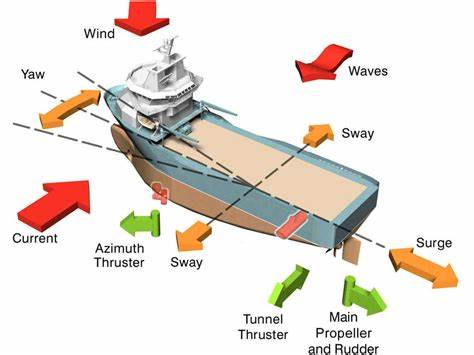
DPS mode: By processing real-time data from sensors such as GPS, gyro compass, sonar, etc., the thruster thrust is dynamically adjusted to counteract external forces such as wind, waves, and currents, enabling the ship to hover at a fixed point or navigate along a preset path.

Navigation mode: Used as a conventional navigation system, it provides basic position, speed, and heading information.

Data visualization and user interface

DPS132 can be integrated with KONGSBERG’s K-Master comprehensive bridge system, displaying ship status, sensor data, and environmental parameters through a unified graphical interface (such as touch screen), and supporting linkage control with ECDIS, radar, autopilot, and other equipment.

Application scenarios and industry value

Marine engineering operations

In tasks such as deepwater drilling and submarine cable laying, DPS332 can ensure that ships maintain a stable position without anchoring conditions, such as controlling system errors within 0.3 meters in Class II sea conditions. Its precise positioning ability significantly improves operational efficiency and reduces the time and cost consumption of traditional anchoring methods.

Scientific expedition and deep-sea exploration

Research vessels such as the “Exploration 2” are equipped with a DP2 level dynamic positioning system (similar to DPS132 technology), which can support the deployment and recovery of manned submersibles and precise operation of deep-sea observation equipment in complex sea conditions. The low noise characteristics of DPS332 (electric propulsion design) can also provide a stable working environment for underwater acoustic equipment and improve data acquisition quality.

Port and narrow water operations

The automatic tracking and heading control functions of DPS332 can assist crew members in dealing with complex steering and obstacle avoidance needs in entering and exiting ports or congested waterways, reducing human operational risks.

Industry standards and certifications

Although specific certification information was not explicitly mentioned in the search results, KONGSBERG, as a global maritime technology leader, typically meets the Dynamic Positioning (DP) standards of the International Maritime Organization (IMO) (such as DP-2 or DP-3) and has been certified by authoritative organizations such as DNV GL. For example, the DP2 level system of “Exploration 2” reflects the practical application of KONGSBERG technology in the field of scientific research ships.

Core technical parameters

positioning accuracy 

Horizontal accuracy: With the support of SBAS (Satellite Based Augmentation System), the typical value is * *<1 meter * * (RMS); Combined with wide area differential correction technology, it can be upgraded to sub meter level (0.3-0.5 meters).

Vertical accuracy: * *<2 meters * * in SBAS mode, and can be optimized to 1-1.5 meters in dual frequency GPS mode.

Dynamic response: The system delay is less than 100ms, meeting the real-time control requirements of the ship.

Navigation sensor compatibility

Support multi-sensor fusion: GPS (L1/L2 dual frequency), gyro compass, MRU (motion reference unit), sonar, etc.

Built in Lever Arm compensation function, which can access ship heading information and calculate the positions of multiple measurement points on board.

Differential correction support

Compatible with DGPS (Wide Area Differential), SBAS (such as WAAS, EGNOS), and UHF link differential (for offshore loading scenarios).

Physical and environmental parameters

​Hardware configuration

Host unit: 4U standard rack mounted design, weighing approximately 15-20kg (referring to similar maritime equipment).

Interface type:

Communication interface: RS-422/485, Ethernet (supporting NMEA 0183/2000 protocol).

Sensor interfaces: gyro compass (such as KONGSBERG HUGIN), MRU, sonar (such as HIPAP 500).

Power requirements:

Input: 220-240V AC, 50/60Hz, power consumption * * ≤ 500W * * (including redundant modules).

Backup power supply: Supports DC 24V (optional UPS).

Environmental adaptability

Working temperature: -20 ° C to+55 ° C (compliant with maritime equipment standards).

Humidity: 5% -95% RH (non condensing).

Protection level: IP54 (dustproof and splash proof), in compliance with DNV GL maritime environmental certification.

Redundancy and reliability

System Architecture

Secondary redundancy: Main/backup controllers, power modules, and communication links, with a fault switching time of less than 200ms.

Data backup: Supports local storage (SSD) and remote log transfer.

Certification standards

Complies with the IMO MSC.86 (70) dynamic positioning standard and supports DP-2/DP-3 level applications (such as the configuration of the “Haiyang Shiyou 981” drilling platform).

Certified by DNV GL (specific model confirmation required, reference to similar products).

function characteristics

Multi mode operation

DPS mode: Real time dynamic positioning, supporting fixed-point hovering, path tracking, and automatic obstacle avoidance.

Navigation mode: Basic navigation information output (latitude and longitude, speed, heading).

Test mode: Sensor calibration and system diagnosis.

data output

Output frequency: 10Hz (configurable).

Data format: NMEA 0183/2000, KONGSBERG specific protocol (such as K-Bridge).

Application scenario parameters

Marine engineering operations

Under the second level sea conditions (wind speed of 12-19 knots, wave height of 1.25-2.5 meters), the position maintenance error is * * ≤ 0.5 meters * *.

Support deepwater operations (water depth>3000 meters), compatible with HIPAP sonar positioning system.

Scientific expedition and deep-sea exploration

Low noise design (compatible with electric propulsion), supporting stable operation of underwater acoustic equipment.

Integrate K-Master bridge system to achieve multi device linkage control.

Scalability

Communication Expansion

Support UHF wireless links (used for relative positioning between ships, such as loading scenarios at sea).

Can be connected to KONGSBERG Intelligent Awareness system (AI assisted navigation).

software upgrading

Support remote firmware updates and feature extensions (such as adding sensor protocols).

Industry application examples

The “Haiyang Shiyou 981” drilling platform is equipped with DPS132 and DPS200 dual redundant positioning systems, which meet the DP-3 level requirements and have a positioning accuracy of less than 0.5 meters.

The “Exploration 2” scientific research vessel adopts similar DP2 technology, supporting the deployment of manned submersibles and the operation of deep-sea observation equipment.
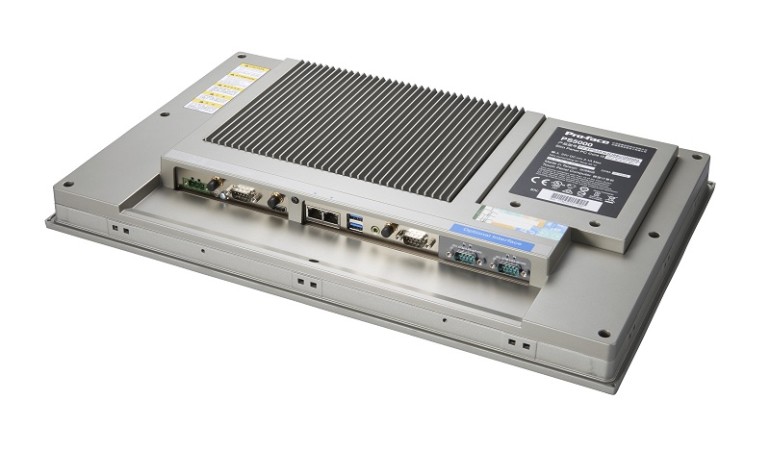
PRO-FACE XYCOM 1546 Heavy Industrial PC

Product Overview

The 1546 and 1547 Node Box Industrial PCs offer a powerful, compact package for the factory floor and other harsh environments.

These node box industrial PCs feature an open architecture to meet a wide variety of applications that require both a powerful PC and a durable industrial enclosure.

The systems integrate a computer card cage, mass storage, and power supply in a truly industrial form.

The processor board combines all the functions of a complete PC/AT® compatible computer on a single industrially hardened circuit board.  

Standard Features  

The 1546 and 1547 units come standard with the following features:

AIM4 board

Wall or shelf mountable

Flash BIOS

SATA HD controller for up to 2 drives

Removable 40 GB SATA hard drive(s), rear access

AGP Video Controller, 4M of system DRAM, up to 32M

PCI local bus IDE controller (for CD/DVD and CF options)

Two 240 pin DDR2 DIMM sockets that support 256MB, 512MB, 1GB and 2GB options

Intel® Socket 478 Celeron® M or Pentium® M options up to 2.0GHz 400MHz or 533MHz front side bus depending on the processor type

1546 – Four AT bus expansion slots  

One PCI (8.0” max)

One PCI (9.0” max)

One ISA (9.0” max)

One PCI or ISA slot (9.0” max)

1547 – Four AT bus expansion slots  

One ½ length PCI

One full length PCI

One full length ISA

One full length PCI or ISA slot

IBM® PS/2® keyboard port and mouse port

Four serial COM ports, with three external ports configured as RS-232 and one configurable as either RS-232 or RS-422 or RS-485.

The fourth port is an internal header only and defaulted as disabled.

Parallel port  

VGA port

Four USB 2.0 ports

Legacy USB keyboard and mouse support

Legacy USB floppy, USB CDROM, and USB mass storage support

Two onboard Ethernet ports, one is a 10/100 BASE T and the other is 10/100/1000 BASE T

Microsoft Windows XP® operating system

Internal rear access Compact Flash (CF) interface

120/240 VAC 50/60Hz Auto switching power supply

UL Listed for use in Class I and Class II, Division 2 hazardous locations, Groups A, B, C, D, F, and G

Optional Features

Following are optional available features of the 1546 and 1547:

Higher capacity SATA hard drives and solid state drives  

Various CD/DVD drive options

Internal rear access floppy

Various processor speeds

Preinstalled Windows® 2000, or Windows XP® Professional

External 9000-USBF, USB floppy (requires Windows 2000, or XP)

CompactFlash™ options up to 4GB

2.5” Dual hard drives

2.5” RAID array support

24VDC power supply (on 1547 units only)

The figures and tables on the next several pages illustrate the internal and external components on the front and back panels of the unit to help you locate the features of the 1546 and 1547 Node Boxes.

Installation Overview

Warning

For installation in Hazardous Locations, review the Hazardous Locations

Installation section in this chapter before startup.  

The rugged design of the 1546 and 1547 Node Boxes allows it to be installed in most industrial environments.

The system is generally placed in a NEMA 4/4X/12 enclosure to protect against contaminants such as dust, and moisture.

Metal enclosures also help minimize the effects of electromagnetic radiation that nearby equipment can generate.

For Underwriters Laboratories (UL) compliance, the unit must be installed within a suitable fire enclosure.

Read the following sections carefully to be sure that you are complying with all the safety requirements.

Select a NEMA rated enclosure and place the unit to allow easy access to the system ports (see other sections in this chapter and Appendix A).

To assure a NEMA 4 seal choose an approved enclosure that has a 14-gauge(0.075 in/1.9 mm thick steel or 0.125 in/3.2 mm thick aluminum) front face.

Be sure to account for the unit’s depth when choosing the depth of the enclosure.

Create a mounting location in the enclosure (see System Mounting Dimensions).

Be sure to place the unit at a comfortable working level

Make sure the area around the mounting location is clean and free from metal burrs

Mount the unit position and properly secure the unit into the panel.

Tighten the fourteen #10 screws to 20 inch-pounds (2.597 Newton-meters /23Kgf cm).

Construct a power cable following the instructions in AC Power Cable in this chapter.

Attach one end of the power cord to the power receptacle on the unit and the other end to a properly grounded 115/230 VAC, 50-60 Hz outlet.

A ground path from the unit chassis to the enclosure chassis can be established using the 6-32 threaded ground point hole provided on the bottom panel of the unit

Turn on power to the system. The system will boot up the installed operating system.

Install the application software via a floppy drive, CD-ROM, or the network.

Additional aspects to take into account when mounting your 1546 and 1547 Node

​Boxes:

Consider locations of accessories such as AC power outlets and lighting (interior lighting and windows) for installation and maintenance convenience

Prevent condensation by installing a thermostat-controlled heater or air conditioner

To allow for maximum cooling, avoid obstructing the airflow 

Place any fans or blowers close to the heat generating devices.

If using a fan,make sure that outside air is not brought into the enclosure unless a fabric or other reliable filter is used. This filtration prevents conductive particles and other harmful contaminants from entering the enclosure.

Do not select a location near equipment that generates excessive electromagnetic interference (EMI) or radio frequency interface (RFI). Examples of these types of equipment are: high power welding machines; induction heating equipment; and large motor starters.

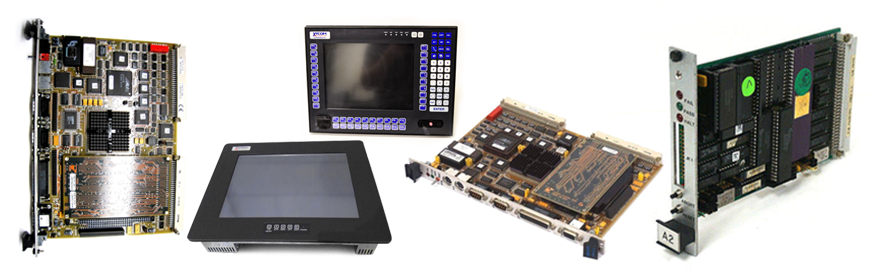
Pro-face Industrial PCs | Advantage Industrial Automation

Xycom XVME-660 processor module 70660-716

Xycom XVME-660 processor module 70660-716

Product positioning and technical specifications

Core functions:

Processor configuration: Using Intel Celeron 566MHz or Pentium III 600-700MHz processors (specific model to be confirmed according to version), supporting real-time operating systems (such as VRTX, UNIX) and industrial communication protocols.

VME bus compatibility: Supports 6U VME standard, providing high-speed data transmission capability, suitable for scenarios with high real-time requirements such as aerospace and semiconductor manufacturing.

Storage and Expansion:

Memory: Onboard 64MB SDRAM, supporting expansion up to 128MB (to be confirmed based on specific version).

Interface: Includes PMC (PCI Mezzanine Card) expansion slots, which can be connected to high-speed I/O modules or communication cards.

Technical parameters:

Working voltage: Typical value is+5V DC, supporting redundant power input.

Temperature range: Industrial grade design (-40 ° C to+85 ° C), suitable for harsh environments.

Communication protocol: Supports VME64x protocol, compatible with VMEbus standard, and can seamlessly integrate with other VME modules (such as XVME-202 I/O module).

System compatibility:

Physical dimensions: 70660-716 are 6U VME modules that need to be matched with 6U slots to avoid confusion with 3U modules.

Driver support: Some VME systems require additional configuration of drivers or firmware. It is recommended to request technical documentation from the supplier in advance.

Recommended alternative solutions:

Pro Face alternative solution: Pro Face does not directly provide a replacement product for 70660-716. AGP 3xxx series industrial PCs can be considered to be paired with extended I/O modules (such as ADAM-4000 series) to achieve similar functions.

Third party VME modules, such as Mercury Systems MVME 162-110 (32 channel DIO), are compatible with the VME64x protocol and support long-term spare parts supply.

Repair and maintenance recommendations

Fault diagnosis:

LED indicator light: Determine the fault through the status light on the module (such as a constant red light indicating processor abnormality).

Self diagnostic function: Some VME systems support remote diagnosis and can read module error codes (such as memory verification errors) through software.

Product Overview

The XYCOM XVME-660 processor module is a product that plays an important role in the field of industrial automation control. It is designed based on the VME (Versa Module Europa) bus architecture, providing stable and efficient core computing capabilities for industrial control systems. It is widely used in aerospace, semiconductor manufacturing, industrial automation production lines, and other scenarios that require high real-time and reliability.

Specification parameters

Processor performance: Using Intel Celeron 566MHz or Pentium III 600-700MHz processors, the specific model varies depending on the product version. This processor configuration can meet the requirements of complex data processing and real-time control operations in industrial scenarios.

Memory configuration: Onboard 64MB SDRAM memory, and some versions support expansion up to 128MB, sufficient memory can ensure the smoothness of the system when running complex programs and processing large amounts of data.

Physical dimensions: The VME module belongs to the 6U specification and can adapt to VME bus slots that comply with the 6U standard. It fits the internal structural design of industrial control cabinets and other equipment in terms of spatial layout.

Working voltage: The typical working voltage is+5V DC and supports redundant power input, which greatly improves the power supply stability of the equipment in industrial environments and reduces the risk of system shutdown due to power fluctuations or failures.

Temperature range: Designed as an industrial grade working temperature range, from -40 ° C to+85 ° C, it can adapt to various harsh industrial environments, whether in cold outdoor work scenarios or high-temperature industrial production workshops, and can operate stably.

Core functions

Data processing and computation: With its high-performance processor, it can quickly execute various industrial control algorithms, such as real-time analysis and processing of large amounts of data collected by sensors on production lines, providing accurate decision-making basis for control systems.

Real time control: XVME-660 can meet the strict requirements of industrial automation systems for real-time performance, and can quickly respond and execute control instructions for external devices, ensuring the continuity and accuracy of the production process. For example, in semiconductor manufacturing equipment, precise control of the motion trajectory and action time of the robotic arm.

VME bus communication: High speed data communication with other VME modules through the VME bus to achieve modular integration of the system. For example, it can work in conjunction with the XVME-202 digital input/output module to build a complete industrial automation control system, achieving comprehensive monitoring and control of equipment.

Expansion function: Equipped with PMC (PCI Mezzanine Card) expansion slot, it facilitates users to connect high-speed I/O modules, communication cards and other expansion devices according to actual needs, flexibly expanding system functions to meet the special needs of different industrial application scenarios.

Working principle

The XVME-660 processor module serves as the core computing unit in industrial control systems. After the system starts up, the processor first reads the initialization program from the onboard memory to complete the initialization configuration of its own hardware. During operation, data information is continuously received from other modules (such as sensor modules, input modules, etc.) through the VME bus. The processor performs operations, analysis, and processing on these data according to pre written control programs. After processing, the control instructions are sent to the corresponding execution modules (such as output modules, motor drive modules, etc.) through the VME bus, thereby achieving real-time control and monitoring of the entire industrial system. Meanwhile, if expansion devices are connected in the system, the processor can also interact with these devices through PMC expansion slots for data exchange and collaborative work.

Similar model supplement

XVME-674: It is also a VME bus processor module of XYCOM. Compared to XVME-660, there may be differences in processor performance and memory configuration. But it also has VME bus communication function, which may be selected in some industrial projects with slightly lower computational performance requirements but stricter cost control.

Mercury Systems MVME 162-110: This is a VME module produced by third-party vendor Mercury Systems, with 32 channel DIO functionality. Although it differs from the processor module of XVME-660 in terms of core functionality, it can serve as a supplementary module to XVME-660 in terms of VME bus system integration, working together with XVME-660 to provide more comprehensive I/O control functions for industrial control systems.

Pro Face AGP series industrial PCs paired with extended I/O modules (such as ADAM-4000 series): This is a solution launched by Pro Face after acquiring XYCOM, which can replace some of XYCOM’s product functions. The AGP series industrial PCs have powerful computing capabilities and rich software functions. Paired with ADAM-4000 series extended I/O modules, they can achieve industrial automation control functions similar to XVME-660, and have advantages in product support and technological updates, making them more suitable for users who have high requirements for long-term system stability and technological upgrades.

Xycom XVME-660 Processor Module for sale online | eBay

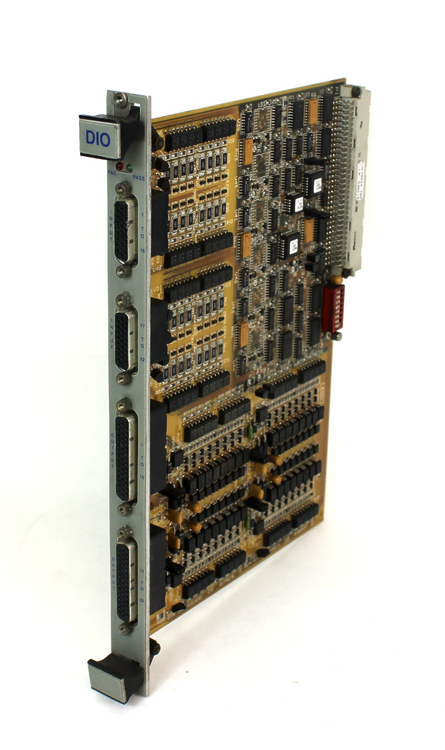
Xycom 10330-00800 board

Product positioning and technical specifications

Core functions:

32 channel design: includes 32 digital inputs (DI) and 32 digital outputs (DO), supports optoelectronic isolation, and can withstand electrical interference in industrial environments.

VME bus interface: compatible with the VME standard, suitable for industrial control systems that require high-speed data transmission (such as aerospace, semiconductor manufacturing).

Modular design: Supports hot plugging, easy maintenance and expansion, and can monitor channel status in real-time through LED indicator lights.

Technical parameters:

Working voltage: usually 24VDC (to be confirmed according to specific model).

Isolation characteristics: Optoelectronic isolation is used between the input/output channel and the VME bus, with an isolation voltage of ≥ 2500VAC.

Response time: Typical value ≤ 1ms, meeting real-time control requirements.

Verification and Risk Warning:

Product status: Suppliers are required to provide serial numbers or test reports to avoid purchasing non original or damaged equipment.

Compatibility verification: If used for old systems, the VME bus slot specifications (such as 6U size) and communication protocol (such as VME64x) need to be confirmed.

Compatibility and alternative solutions

System compatibility:

VME bus matching: It is necessary to ensure that the target system’s VME backplane supports 6U size modules and provides sufficient power supply (such as+5V,+12V).

Protocol support: Some VME systems require additional configuration of drivers or firmware. It is recommended to request technical documentation from the supplier in advance.

​Recommended alternative solutions:

Pro Face alternative model: Pro Face does not directly provide a substitute product for 10330-00800. AGP 3xxx series industrial PCs with extended I/O modules (such as ADAM-4000 series) can be considered to achieve similar functions

Third party VME modules, such as Mercury Systems’ MVME 162-110 (32 channel DIO), are compatible with the VME64x protocol and support long-term spare parts supply.

Repair and maintenance recommendations

Fault diagnosis:

LED indicator light: Determine channel faults through the status lights on the module (such as a constant red light indicating a short circuit).

Self diagnostic function: Some VME systems support remote diagnosis and can read module error codes through software.

Compatibility testing:

Require suppliers to provide test reports or prototypes to verify the stability of the module in the target system. If software migration is involved, you can consult Pro Face for protocol conversion tools.

Adept 10330-00800 DIO Digital I/O Module Card

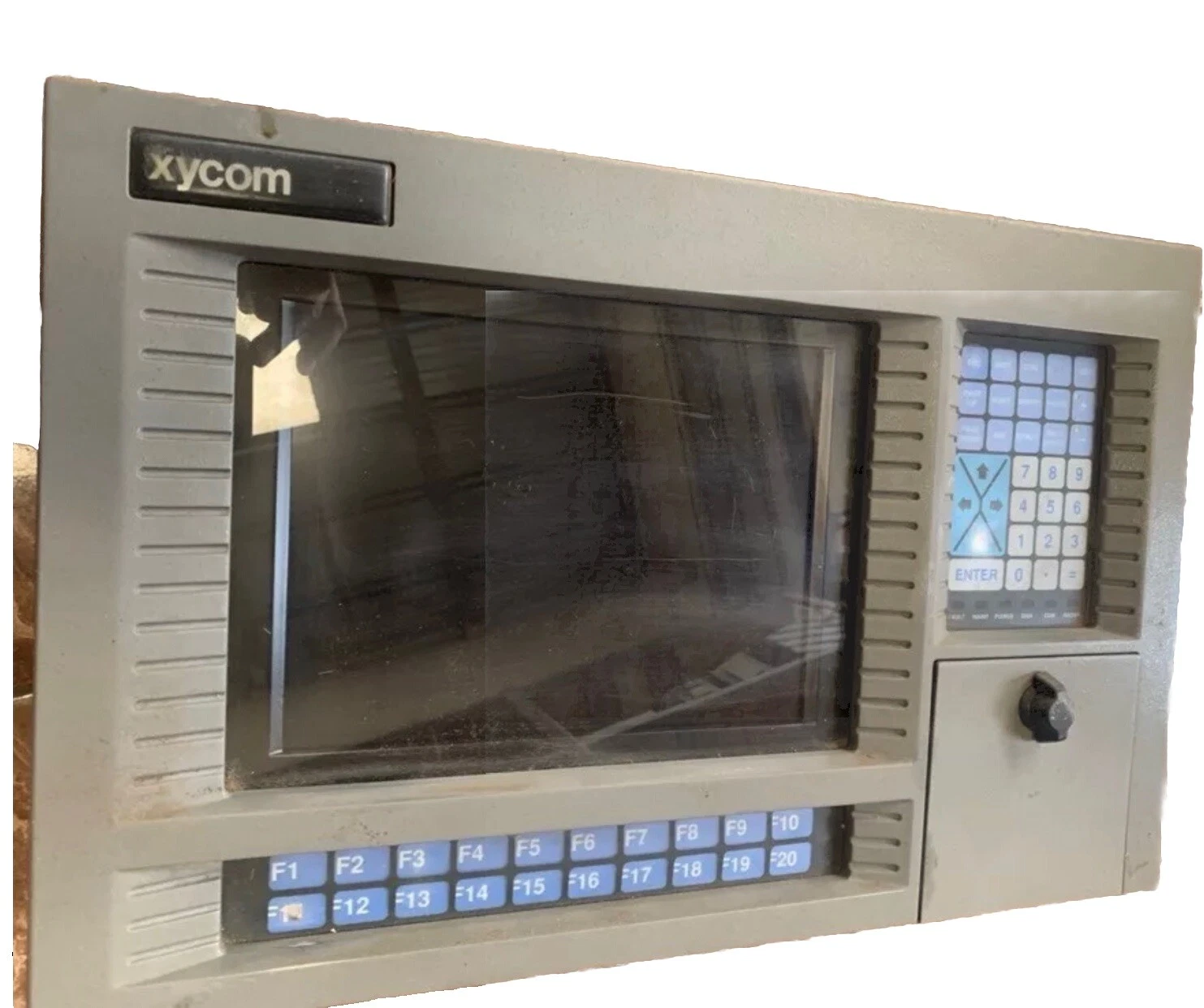
XYCOM 4860 A PLC

​Overview of PLC System

Core composition

Central Processing Unit (CPU): executes instructions and supports standardized programming languages such as Ladder Diagram and Structured Text.

Input/Output Components (I/O):

Digital I/O: Processing switch signals (such as buttons, sensors).

Analog I/O: Processing continuous variables such as temperature and pressure.

Special I/O: Supports high-speed counters, communication modules, etc.

Power module: Provides stable voltage (such as 24VDC/120VAC), with built-in lithium battery to maintain power-off data.

Programming unit: Program development and simulation are carried out through PC software such as PLCLogix and RSLogix.

application area 

Petroleum industry: Control the valves, pumps, and sensors of drilling equipment, and use HMI to achieve real-time monitoring.

Glass and cement industry: precise control of raw material ratios and production processes, combined with distributed control systems (DCS) to enhance quality control.

Manufacturing industry: Automated production line control in industries such as automobiles, food, and textiles.

development history

Origin: In 1969, Modicon introduced the first PLC (model 084) to replace relay logic systems.

Evolution: From single control to support Ethernet communication, HMI interface, and modular design, following the IEC 61131-3 programming standard.

Fundamentals of PLC Programming

programming language

Ladder diagram (LD): visually imitates relay circuits, suitable for logic control, using symbols such as normally open/normally closed contacts and coils.

Function Block Diagram (FBD): Representing logical functions (such as timers and counters) in graphical modules for system integration.

Structured Text (ST): A high-level language that is suitable for complex algorithms and supports variable and process control.

Basic instructions and scanning cycle

Scanning cycle: sequentially execute “input reading → program execution → communication processing → output update”, and the scanning time affects real-time performance.

Timer and counter:

TON (Power on Delay): The action is triggered when the timer reaches the preset value.

CTU/CTD (up/down counter): Counting based on input signal changes.

Program control instructions: JMP/LBL jump, SBR/RET subroutine call, optimize program structure.

Data Addressing and Storage

File Addressing System:

I/O File: Stores the physical input/output status (e.g. I: 3/12 represents terminal 12 of input module 3).

Data Files: including bit files (B3), integer files (N7), timer files (T4), etc., supporting addressing by word or bit.

Practical Technology and Optimization

SCADA System Fundamentals

Function: Data collection, network communication, real-time monitoring and control, presenting production status through HMI interface.

Components: Composed of PLC/RTU, sensors, communication networks (such as LAN/WAN), and SCADA software, used for industrial automation management.

Scan time optimization

Strategy:

Place the condition of high frequency being ‘false’ on the left side of the ladder diagram to reduce invalid scanning.

Avoid duplicate instructions and use subroutines (JSR/SBR) and jump instructions (JMP/LBL) to reduce the amount of code running.

Prioritize integer operations and avoid floating-point operations to shorten processing time.

Fault diagnosis and maintenance

Ladder diagram debugging: Test logic through simulation software (such as PLCLogix) and monitor timer/counter status bits (such as DN, EN, TT).

Hardware maintenance: Check the I/O module indicator lights, power supply voltage, and communication connections, and regularly backup programs.

Supplementary content and reference data

Common symbols and devices

Input devices: buttons, limit switches, pressure switches, corresponding ladder symbols (XIC/XIO).

Output devices: relay coils, solenoid valves, motors, symbols include OTE, OTL, etc.

Number Systems and Codes

Binary/Hexadecimal: The internal data storage foundation of PLC, supporting BCD code conversion (such as TOD/FRD instructions).

Gray Code: Adjacent values only change by one bit, used in high-precision scenarios such as encoders to reduce transmission errors.

Core Instruction Set

Position operation: XIC (check for closure), XIO (check for disconnection), OTE (coil output).

Mathematical operations: ADD/SUB/MUL/DIV (addition, subtraction, multiplication, and division), SQRT (square root), trigonometric functions (SIN/COS/TAN).

Data transmission: MOV (data movement), MVM (mask movement), FFL/FFU (FIFO queue operation).

Product positioning and technical specifications

Core functions:

As an HMI device, 4860 A is mainly used for human-machine interaction in industrial automation systems, supporting graphical interface display, parameter settings, and device monitoring.

Technical parameters: 12 inch screen, 115/230V wide voltage input, compatible with 50/60Hz frequency, durable design suitable for industrial environments.

Product positioning and technical specifications

System compatibility:

The communication interface of 4860 A (such as RS-232/422) needs to be matched with the existing PLC or control system. If used for old systems, it is recommended to test protocol compatibility in advance (such as Modbus RTU).

If the original system relies on XYCOM specific software, software compatibility needs to be evaluated when migrating to Pro Face, and some features may need to be redeveloped.

Xycom|We have our own in-house inventory and also work as a distributor ...

Xycom 81625DA control board 81625

Product Overview

The Xycom 81625DA control board is a high-performance core control board designed specifically for industrial automation control scenarios. With its powerful computing capabilities and rich functional configurations, it plays a key role in industrial control systems. This control board can accurately achieve real-time monitoring, data acquisition and processing, and logical control of industrial equipment. It is widely used in industrial automation production lines, energy management systems, intelligent mechanical equipment and other fields, providing reliable guarantees for the efficient and stable operation of industrial production.

Specification parameters

Ethernet interface: supports high-speed and stable data transmission, facilitates communication with factory networks, upper computers, or other intelligent devices, enables remote monitoring and management, and meets the demand for device interconnection in the industrial Internet of Things era.

RS-232/485 serial port: suitable for connecting traditional industrial instruments, sensors, and actuators, widely supports industrial communication protocols such as Modbus and Profibus, achieves reliable serial communication between devices, and ensures stable data exchange between industrial field devices.

USB interface: convenient for external storage devices, used for program backup, data import and export; It can also be connected to devices such as keyboards and mice for easy on-site debugging and operation.

Input/output channel

Analog input channel: Supports multiple types of analog signals, such as voltage (0-10V, ± 10V, etc.), current (4-20mA), etc. The input accuracy can reach [specific accuracy, such as ± 0.1% FS], with high resolution, and can accurately collect weak signal changes in industrial sites.

Working Voltage: Supports a wide range of working voltage inputs, such as DC 12-24V, to adapt to complex and changing power supply conditions in industrial sites. It has overvoltage and undervoltage protection functions to ensure stable operation of the control board in voltage fluctuation environments.

Working temperature: The working temperature range is [-20 ℃ -70 ℃], which can work normally in harsh industrial environments such as high and low temperatures, meeting the requirements of different industrial scenarios for equipment environmental adaptability.

Size specifications: The dimensions are 200mm × 150mm × 20mm, with a compact design that is easy to install in places with limited space such as industrial control cabinets and equipment chassis.

Core functions

Real time control: Real time and precise control of industrial equipment based on preset control programs and algorithms. Whether it is the start stop of the production line, the action control of the robotic arm, or the opening and closing operation of valves, the Xycom 81625DA control board can quickly and accurately execute control instructions, ensuring that the industrial production process proceeds in an orderly manner according to the predetermined logic.

Data collection and processing: Real time collection of analog and digital data from various sensors and instruments, such as temperature, pressure, flow rate, position, and other information. Preprocess the collected data by filtering, amplifying, and converting it to improve its accuracy and stability. Then, use a powerful processor for deep analysis and computation, providing reliable decision-making basis for industrial control systems.

Fault diagnosis and warning: Built in intelligent fault diagnosis system, capable of real-time monitoring of the operation status of the control board itself and connected devices. Once an abnormal situation is detected, such as equipment failure, parameter exceeding limits, communication interruption, etc., an alarm will be immediately issued through sound and light alarms, communication interfaces to upload alarm information, etc., and detailed fault information will be recorded to facilitate technical personnel to quickly locate and troubleshoot the fault.

Communication and networking: With the support of rich communication interfaces and multiple communication protocols, high-speed data communication and networking functions with other devices, controllers, or upper computers can be achieved. Upload the collected data to the upper computer of the monitoring center for real-time monitoring and data analysis by operators; Receive control instructions and parameter settings issued by the upper computer to achieve remote monitoring and management. In addition, it can also interact and collaborate with other intelligent devices to build intelligent industrial control systems.

Working principle

In the industrial production process, sensors and other equipment transmit the collected analog and digital signals to the Xycom 81625DA control board through corresponding input channels. The input interface on the control board receives and preliminarily processes signals, such as signal conditioning, level conversion, etc., and then transmits the processed signals to the core processor.

The processor analyzes and calculates data based on pre written control programs and algorithms to determine whether the current production status is normal and whether control adjustments are needed for the equipment. If control is required, the processor converts control instructions into corresponding electrical or digital signals through output channels, transmits them to the actuator, drives the actuator to act, and achieves control of industrial equipment.

At the same time, the control board interacts with other devices or the upper computer through communication interfaces for data exchange. On the one hand, the collected data and equipment operation status information are uploaded to the monitoring center or upper computer for real-time monitoring and data analysis by operators; On the other hand, it receives instructions and parameter settings from the upper computer or other devices, adjusts the working state and control strategy according to the instructions, and ensures the coordinated operation of the entire industrial automation system

Throughout the entire working process, the built-in fault diagnosis module of the control board monitors the working status of itself and connected devices in real time. Once an abnormality is detected, an alarm mechanism is immediately triggered to ensure the safe and stable operation of the system.

Key advantages

High reliability and stability: using industrial grade components and strict manufacturing processes, after multiple rigorous tests and verifications, it has excellent anti-interference ability and environmental adaptability. It can operate stably for a long time in harsh industrial environments such as high temperature, humidity, vibration, and strong electromagnetic interference, effectively reducing equipment failure rates and maintenance costs, and ensuring the continuity of industrial 

Production.

Powerful functional integration: Highly integrated with various functions such as data acquisition, processing, control, and communication, it can meet the needs of complex industrial control scenarios without the need for additional modules, simplify system architecture, and reduce system costs and complexity.

Flexibility and Scalability: The rich input/output channels and communication interfaces, as well as the scalable hardware architecture, enable the control board to flexibly adapt to different industrial application scenarios and production needs. Users can easily add or replace functional modules such as data acquisition modules, communication modules, etc. according to their actual needs, to achieve system upgrades and expansions.

Easy to use and maintain: Provides standardized interfaces and communication protocols for easy connection and integration with other devices. The control board is equipped with status indicator lights, which can intuitively display the working status and fault information, making it easy for technicians to quickly locate and troubleshoot faults. In addition, comprehensive technical documentation and development tools enable engineers to quickly get started with programming and debugging work.

Precautions

Installation environment: The control board should be installed in a dry, well ventilated, and dust-free environment, avoiding installation in places with corrosive gases, large amounts of dust or water vapor, and preventing electronic components from being corroded or damaged. The installation location should ensure good heat dissipation conditions to avoid affecting the performance and lifespan of the control board due to high temperature.

Wiring operation: When wiring the control board, it is necessary to ensure that the equipment is in a power-off state and strictly follow the wiring diagram and instructions to avoid damage to the control board or system failure caused by wiring errors. For analog signals, shielded cables should be used for connection and grounding treatment should be done to reduce signal interference.

Static protection: When installing, disassembling, or maintaining the control board, operators must wear protective equipment such as anti-static wristbands to avoid damage to the precision electronic components on the control board caused by human static electricity. Try to avoid direct contact with electronic components and circuits during the operation process.

Software management: Regularly update and maintain the software system of the control board, promptly fix vulnerabilities and optimize performance. When performing software operations such as program downloads and parameter settings, it is necessary to follow the steps in the operation manual to avoid program errors or system failures caused by improper operation. At the same time, do a good job in data backup to prevent data loss.

#Xycom 82034CA Control Board Repairs - YouTube

Allen Bradley 91195A circuit board programmable

Product Overview

The Allen Bradley 91195A circuit board is a programmable circuit board designed specifically for A-B Xycom terminals, aimed at providing efficient and reliable hardware support for industrial automation control systems. With its powerful programming capabilities and high compatibility with Xycom terminals, it can accurately control industrial equipment, collect and process data, and is widely used in industrial automation production lines, energy management, mechanical equipment control and other fields, helping enterprises improve production efficiency and automation level.

Brand background

(1) Allen Bradley

Allen Bradley (A-B for short) is a core brand under Rockwell Automation, with over a hundred years of history in the field of industrial automation. A-B is known for its innovative technology, excellent product quality, and comprehensive solutions. Its products include programmable logic controllers (PLCs), human-machine interfaces (HMI), frequency converters, etc., and are widely used in the global manufacturing industry. It holds an important position in industries such as automotive, food and beverage, pharmaceuticals, and power, and is a trusted brand in the field of industrial automation.

(2) Xycom

Xycom also has a profound technical accumulation in the fields of industrial automation and embedded computing, focusing on providing high-performance computer hardware and solutions for industries such as industry, aerospace, and defense. Xycom’s products are renowned for their high reliability, powerful functionality, and excellent environmental adaptability. Together with Allen Bradley, they are driving the development of industrial automation technology.

Technical specifications

Processor performance: Equipped with [specific processor model], it has powerful data processing and computing capabilities, can quickly execute complex control programs and algorithms, ensuring the efficient operation of industrial equipment. For example, when processing large amounts of sensor data and executing real-time control instructions, it can respond quickly to ensure the continuity of the production process. .

Communication interface

Ethernet interface: supports high-speed and stable data transmission, facilitates communication with factory networks, upper computers, or other intelligent devices, and enables remote monitoring and management. Through Ethernet, technicians can remotely upload and download programs, and view the real-time running status of devices.

RS-232/485 serial port: suitable for connecting traditional industrial instruments, sensors, and actuators, widely supports industrial communication protocols such as Modbus and Profibus, achieves reliable serial communication between devices, and ensures stable data exchange between industrial field devices.

USB interface: convenient for external storage devices, used for program backup, data import and export; It can also be connected to devices such as keyboards and mice for easy on-site debugging and operation.

Working voltage: Supports a wide range of DC voltage inputs, such as DC 12-24V, to adapt to complex and changing power supply conditions in industrial sites. It has overvoltage and undervoltage protection functions to ensure stable operation of the circuit board.

Working temperature: The working temperature range is [-20 ℃ -70 ℃], which can operate normally in harsh industrial environments such as high and low temperatures, and adapt to the needs of different industrial scenarios.

Size specifications: The dimensions are [length x width x height, such as 200mm x 150mm x 20mm], with a compact design that is easy to install in places with limited space such as industrial control cabinets and equipment chassis.

Core functions

Programmable Control: Supports multiple programming languages such as Ladder Logic, Structured Text (ST), Function Block Diagram (FBD), etc., making it convenient for engineers to write programs according to different industrial control requirements. Through programming, it is possible to achieve logical control, sequential control, motion control, and other functions of industrial equipment to meet diverse production process requirements.

Data collection and processing: Real time and accurate collection of analog and digital data from various sensors in the industrial field, and pre-processing operations such as filtering, amplification, and conversion of the collected data to improve its accuracy and stability. Then, through powerful processors for deep analysis and computation, reliable data support is provided for production decisions.

Equipment monitoring and fault diagnosis: Real time monitoring of the operating status of connected devices, and fault detection and analysis of devices through built-in diagnostic programs. Once device abnormalities are detected, such as parameter overruns, equipment failures, etc., alarm information is immediately uploaded through the communication interface and detailed fault information is displayed on the Xycom terminal for technicians to quickly locate and troubleshoot.

System integration and collaboration: With rich communication interfaces and support for multiple industrial communication protocols, seamless integration can be achieved with A-B Xycom terminals and other industrial equipment such as PLCs, HMIs, frequency converters, etc. Through data exchange and collaborative work, a complete industrial automation control system is constructed to achieve automation and intelligent management of the production process.

​Working principle

During the industrial production process, sensors and other devices transmit the collected analog and digital signals to the Allen Bradley 91195A circuit board through corresponding input channels. The signal conditioning circuit inside the circuit board performs preliminary processing on the input signal, such as filtering, amplification, level conversion, etc., and then transmits the processed signal to the core processor.

The processor analyzes and calculates data based on pre written control programs to determine whether the current production status is normal and whether control adjustments are needed for the equipment. If control is required, the processor converts the control instructions into corresponding electrical or digital signals through the output channel, transmits them to the actuator, drives the actuator to act, and achieves control of the device.

At the same time, the 91195A circuit board interacts with A-B Xycom terminals and other devices through communication interfaces for data exchange. On the one hand, the collected data and device operating status information will be uploaded to the Xycom terminal for real-time monitoring and data analysis by operators; On the other hand, it receives instructions and parameter settings from Xycom terminals or other devices, adjusts the working state and control strategy according to the instructions, and ensures the coordinated operation of the entire industrial automation system.

Throughout the entire working process, the fault diagnosis module of the circuit board monitors the working status of itself and connected devices in real time. Once an abnormality is detected, an alarm mechanism is immediately triggered to ensure the safe and stable operation of the system.

Key advantages

High compatibility: specifically designed for A-B Xycom terminals, it has extremely high compatibility with Xycom terminals and other A-B devices, enabling seamless integration, reducing the difficulty and risk of system integration, and improving system stability and reliability.

Powerful programming ability: Supports multiple popular industrial programming languages, flexible and convenient programming, and can meet industrial control needs of different levels of complexity. Both simple logic control and complex motion control and process control can be easily implemented through programming.

High reliability and stability: using industrial grade components and strict manufacturing processes, after multiple rigorous tests and verifications, it has excellent anti-interference ability and environmental adaptability. It can operate stably for a long time in harsh industrial environments such as high temperature, humidity, vibration, and strong electromagnetic interference, effectively reducing equipment failure rates and maintenance costs.

Easy to maintain and upgrade: The modular design makes maintenance of the circuit board more convenient. In case of a malfunction, the faulty module can be quickly replaced, reducing downtime. At the same time, program updates and system upgrades can be easily carried out through communication interfaces to adapt to constantly changing production needs.

Precautions

Installation environment: The circuit board should be installed in a dry, well ventilated, and dust-free environment, avoiding installation in places with corrosive gases, large amounts of dust or water vapor, and preventing electronic components from being corroded or damaged. The installation location should ensure good heat dissipation conditions to avoid affecting the performance and lifespan of the circuit board due to high temperature.

Wiring operation: When wiring the circuit board, it is necessary to ensure that the equipment is in a power-off state and strictly follow the wiring diagram and instructions to avoid damage to the circuit board or system failure caused by wiring errors. For analog signals, shielded cables should be used for connection and grounding treatment should be done to reduce signal interference.

Static protection: When installing, disassembling, or maintaining circuit boards, operators must wear protective equipment such as anti-static wristbands to avoid damage to precision electronic components on the circuit board caused by human static electricity. Try to avoid direct contact with electronic components and circuits during the operation process.

Software management: Regularly update and maintain the software system of the circuit board, promptly fix vulnerabilities and optimize performance. When performing software operations such as program downloads and parameter settings, it is necessary to follow the steps in the operation manual to avoid program errors or system failures caused by improper operation. At the same time, do a good job in data backup to prevent data loss.

Similar model supplement

Allen Bradley 91196A Circuit Board: Another circuit board product in the same series that shares some similarities in functionality and architecture with 91195A, but may differ in processor performance, memory capacity, communication interface configuration, and other aspects. For example, 91196A may have faster data processing speed or more communication interfaces, making it suitable for industrial applications with higher performance requirements.

全新 Allen Bradley 91195A 电路板 可编程式可编程式编程式编程式 适用于 A-B Xycom 终端 - 第 2 张/共 4 张

Xycom 94354-001 display screen 94354001 8503 HMI front panel

Product Overview

The Xycom 94354-001 display screen (94354001 8503 HMI front panel) is a high-performance display screen designed specifically for industrial human-machine interaction (HMI) scenarios. As a key interactive interface of industrial control systems, it combines intuitive operating experience with powerful data processing capabilities to achieve efficient information exchange between operators and industrial equipment and systems. This display screen is widely used in industrial automation production lines, energy management systems, mechanical equipment control and other fields, providing a convenient and reliable visual operation platform for monitoring, management and control of industrial production.

Brand background

Xycom has been deeply rooted in the fields of industrial automation and embedded computing for many years, and has become a trusted brand in the industry with its profound technological accumulation and continuous innovation. Its products are known for their high reliability, powerful functionality, and excellent environmental adaptability. They have long provided solutions for industries such as industry, aerospace, and defense that require high equipment stability. They have rich technological accumulation and a good market reputation in the field of industrial automation.

technical specifications

Display parameters

Resolution: 1024 × 768 pixels, capable of presenting delicate and clear images and text information, ensuring accurate and error free display of various industrial data and operation interfaces.

Display technology: It has the characteristics of high brightness and high contrast, and can still ensure clear and visible screen content under complex lighting conditions in industrial sites (such as strong direct light and dim environments).

Touch performance

Touch control method: sensitive and precise operation, fast response speed, even if the operator wears gloves, they can easily achieve touch control operation, meeting the diverse operational needs of industrial sites.

Touch lifespan: After rigorous testing, the touch panel has an ultra long lifespan and can withstand millions of clicks and sliding operations, ensuring stability and reliability during long-term use in industrial production.

Interface Configuration

Communication Interface: Equipped with a variety of communication interfaces, including Ethernet interface (supporting high-speed data transmission, facilitating communication with industrial networks, upper computers, or other intelligent devices for remote monitoring and data exchange), RS-232/485 serial port (suitable for connecting traditional industrial instruments, PLCs, and other devices, supporting industrial communication protocols such as Modbus and Profibus), USB interface (convenient for external storage devices, keyboards, mice, etc., used for data import and export, program updates, and extended device connections).

Work environment

Working voltage: Supports a wide range of DC voltage inputs, such as DC 18-36V, to adapt to the complex and changing power supply conditions in industrial sites. It has overvoltage and undervoltage protection functions, effectively ensuring the stable operation of the display screen.

Working temperature: The working temperature range is [-20 ℃ -70 ℃], which can work normally in harsh industrial environments such as high and low temperatures

Protection level: up to IP65 or other protection level standards, with dustproof and waterproof capabilities, can effectively resist the invasion of pollutants such as dust, oil, water droplets, etc. in industrial sites, ensuring the long-term stable operation of the display screen in harsh environments.

install

Installation method: Supports various installation methods such as panel embedded installation, wall mounted installation, etc. The installation process is simple and convenient, and can be flexibly selected according to actual application scenarios

Core functions

Data visualization display: Display various types of data in the industrial production process (such as equipment operating parameters, production progress, quality inspection data, etc.) in real-time on the screen in the form of intuitive charts (such as line charts, bar charts, pie charts), dashboards, text, etc., helping operators quickly understand the production status, discover problems in a timely manner, and make decisions.

Human computer interaction operation: Through touch screens or external input devices such as keyboards and mice, operators can easily control industrial equipment and systems, such as setting device operating parameters, starting/stopping devices, switching production modes, etc. The operation interface adopts a graphical design, which is user-friendly and the operation process is simple and easy to understand, reducing the learning cost of operators.

Alarm and prompt function: Built in alarm system. When industrial equipment or systems encounter abnormal situations (such as parameter exceeding limits, equipment failure), the display screen immediately issues an alarm in the form of sound and light alarm, pop-up prompt, etc., while displaying detailed alarm information (such as alarm type, occurrence time, location, etc.), reminding operators to handle it in a timely manner to avoid accidents.

Data Storage and Management: Supports local data storage, allowing key data in industrial production processes (such as historical operating parameters, alarm records, etc.) to be stored in built-in or external storage devices on the display screen, facilitating later queries, analysis, and traceability. At the same time, data can be uploaded to the upper computer or cloud server through communication interfaces to achieve centralized management and remote access of data.

Multi language support: Supports switching between multiple language interfaces, such as Chinese, English, German, etc., to meet the usage needs of different regions and operators, making it easy for multinational enterprises or international industrial projects to apply.

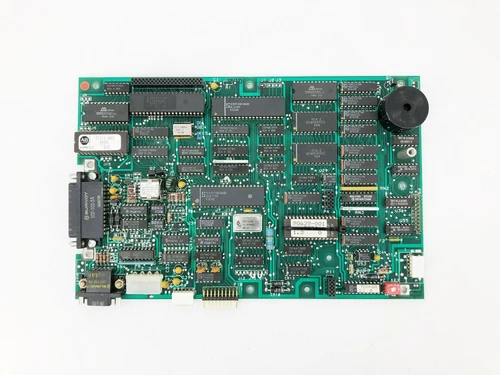
NEW XYCOM 9450-27B1319010000 OPERATOR PANEL 945027B1319010000 - SB ...

XYCOM 8100-0272A Brown Output Sensor Board

Product overview

XYCOM 8100-0272A Brown Output Sensor Board is a sensor output board designed specifically for industrial automation systems, aimed at achieving efficient acquisition, processing, and output of sensor signals. As a key component of industrial control systems, it can accurately obtain various sensor data and convert it into output signals suitable for subsequent equipment, ensuring the accuracy and real-time performance of data in industrial production processes. It is widely used in industrial scenarios that require precise monitoring and control, such as automated production lines, mechanical equipment monitoring, environmental parameter collection, etc.

Brand background

XYCOM has a profound technical accumulation and a good market reputation in the fields of industrial automation and embedded computing. For many years, the brand has been dedicated to providing high-performance and highly reliable computer hardware and solutions for industries such as industry, aerospace, and defense. With advanced technology, strict quality control, and a comprehensive service system, it has become a trusted partner for many industrial enterprises. Its products are known for their excellent stability, powerful functionality, and outstanding compatibility, and perform excellently in complex industrial environment applications.

Technical specifications

Sensor interface types: Supports multiple mainstream sensor interfaces, such as analog input interfaces (compatible with voltage and current sensors, such as 0-10V, 4-20mA signal input), digital input interfaces (supporting TTL/CMOS level standards), and can be compatible with connecting various industrial sensors such as temperature sensors, pressure sensors, displacement sensors, etc.

Communication interface: equipped with RS-232/485 serial port and Ethernet interface, supporting industrial communication protocols such as Modbus and Profibus, facilitating high-speed data communication and networking with other devices, achieving remote data transmission and monitoring.

Working voltage: Supports a wide range of DC voltage inputs, such as DC 18-36V, to adapt to the complex and changing power supply conditions in industrial sites. It has overvoltage and undervoltage protection functions, effectively ensuring the stable operation of the board.

Working temperature: The working temperature range is [-40 ℃ -85 ℃], which can work normally in harsh industrial environments such as high and low temperatures, meeting the strict requirements of industrial sites for equipment environmental adaptability.

Core functions

Sensor signal acquisition: Real time and accurate acquisition of analog and digital signals from various industrial sensors, capable of processing multiple sensor data simultaneously, ensuring comprehensive monitoring of industrial field parameters. For example, in chemical production, key parameters such as temperature and pressure of reaction vessels can be quickly collected.

Signal processing and conversion: Preprocess and convert the collected sensor signals, remove signal interference through filtering algorithms, enhance signal strength through amplification circuits, and convert analog signals into digital signals, providing accurate and stable inputs for subsequent data processing and control.

Data output and transmission: The processed sensor data is output to the target device in analog or digital form, and the data is uploaded to the industrial network or upper computer through a communication interface to achieve remote transmission and sharing of data, facilitating real-time monitoring of the industrial site status by operators.

Fault diagnosis and protection: Built in self diagnostic function, which can monitor the working status of the board and the connection status of sensors in real time. When a sensor malfunction, communication abnormality, or board malfunction is detected, the fault information is immediately reported through the indicator light alarm or communication interface for technicians to quickly locate and troubleshoot. In addition, it has functions such as short-circuit protection and overcurrent protection to ensure that the board is not damaged in abnormal situations.

Working principle

Sensors on industrial sites convert physical quantities such as temperature, pressure, displacement, etc. into electrical signals, which are then transmitted to the XYCOM 8100-0272A Brown Output Sensor Board through corresponding interfaces. After the input interface of the board receives the signal, the signal is first preprocessed by the signal conditioning circuit, such as filtering and amplification, to remove noise and interference from the signal and improve signal quality.

Next, the analog signal is converted into a digital signal through an analog-to-digital conversion (A/D) circuit, and the digital signal directly enters the logic processing unit of the board. The logic processing unit analyzes and processes the processed signals, performs data calibration, compensation, and other operations according to preset programs and algorithms to ensure the accuracy of the data.

The processed sensor data is partially output to connected devices through analog or digital output channels for controlling actuators or providing data input to other devices; The other part packages and uploads data to industrial networks or upper computers through communication interfaces according to communication protocols such as Modbus and Profibus, achieving remote transmission and centralized monitoring of data.

Throughout the entire process, the self diagnostic module of the board monitors the working status of each circuit and sensor connection in real time. Once any abnormalities are detected, the fault alarm mechanism is immediately triggered to ensure the safe and stable operation of the system.

Key advantages

High compatibility: Supports multiple types of sensor interfaces and communication protocols, seamlessly integrating with sensors and industrial equipment of different brands and specifications, greatly improving the versatility of the equipment and the flexibility of the system.

High precision and stability: Adopting high-precision signal processing circuits and advanced analog-to-digital conversion technology to ensure the accuracy and stability of sensor data acquisition. It can still work reliably in harsh industrial environments, effectively reducing data errors and system failure risks.

Easy to install and maintain: The board design is compact and easy to install, providing standardized interfaces and clear wiring labels for technicians to install and debug. At the same time, the improved fault diagnosis function and detailed technical documentation make maintenance work more convenient and efficient, reducing maintenance costs and time.

Flexible Scalability: Rich input/output channels and communication interfaces allow users to flexibly expand system functionality according to actual needs. For example, increasing the number of sensors or connecting more control devices can meet the needs of industrial production scale expansion or functional upgrading.

Precautions

Installation environment: The board should be installed in a dry, well ventilated, and dust-free environment, avoiding installation in places with corrosive gases, large amounts of dust or water vapor, to prevent electronic components from being corroded or damaged. At the same time, it is necessary to ensure that the installation location has good heat dissipation conditions to avoid affecting the performance and lifespan of the board due to high temperatures.

Wiring operation: When wiring the board, it is necessary to ensure that the equipment is in a power-off state and strictly follow the wiring diagram and instructions to avoid damage to the board or system failure caused by wiring errors. For analog signals, shielded cables should be used for connection and grounding treatment should be done to reduce signal interference.

Static protection: When installing, disassembling, or maintaining the board, operators must wear protective equipment such as anti-static wristbands to avoid damage to the precision electronic components on the board caused by human static electricity. Try to avoid direct contact with electronic components and circuits during the operation process.

Communication settings: When setting communication parameters (such as communication protocol, baud rate, device address, etc.), make sure they are consistent with the parameters of the connected device, otherwise it may cause communication failure. During system operation, if communication parameters need to be changed, the relevant equipment should be stopped before setting the parameters.

Similar model supplement

XYCOM 8100-0273A: Another sensor output board in the same series, which has some similarities in functionality and architecture with 8100-0272A, but may differ in the number of sensor interfaces, signal processing accuracy, or output channel configuration. It is suitable for industrial application scenarios with slightly different functional requirements.

Application scenarios

Industrial automation production line: In automated production lines such as automobile manufacturing, electronic assembly, and food processing, it is used to collect various parameters during the production process (such as component size, assembly position, production speed, etc.), providing data support for the automation control and quality monitoring of the production line, ensuring the efficiency, accuracy, and stability of the production process and product quality.

Mechanical equipment status monitoring: Real time monitoring of equipment operating parameters (such as vibration, temperature, speed, etc.) in various types of mechanical equipment such as CNC machine tools, printing machinery, packaging machinery, etc. By analyzing sensor data, equipment failure warning and predictive maintenance can be achieved, reducing equipment downtime and improving equipment reliability and service life.

Energy and Environmental Monitoring: Used in energy industries such as electricity, petroleum, and chemical engineering, as well as in the field of environmental monitoring, it is used to collect key parameters (such as flow rate, pressure, electricity consumption, etc.) and environmental parameters (such as temperature, humidity, air quality, etc.) in the energy production process, providing accurate data for energy management and environmental monitoring, and helping to achieve energy optimization and environmental protection goals.

Intelligent buildings and building automation: In intelligent buildings and building automation systems, indoor and outdoor environmental parameters (such as temperature, humidity, light intensity, etc.), equipment operating status (such as the working status of air conditioning, elevators, lighting equipment) and other data are collected to achieve intelligent control and energy management of building equipment, improve building comfort and energy utilization efficiency.

XYCOM 8100-0272A 棕色输出传感器板 ~ 促销卡 - 第 1 张/共 6 张

Xycom 9485 Automatic CY

System Power

Proper grounding is essential to all safe electrical installations. Applicable Fed eral/State/Provincial codes provide data such as the size and types of conductors,color codes, and connections necessary for safe grounding of electrical components.

The code specifies that a grounding path must be permanent (no solder), continuous,and able to safely conduct the ground-fault current in the system with minimal im pedance.

The following practices should be observed:

• Terminate protective Earth Ground to the enclosure chassis near the point of entry.

In a noisy environment, local ground rod may be necessary.

• All electrical racks or chassis and machine elements should be grounded to a central ground bus (a “star” ground bus is best).

• The enclosure should be properly grounded to the ground bus.

Make sure a good electrical connection is made at the point of contact with the enclosure.

Line Voltage Considerations

The 9485/9487 DC power supply is built to sustain line fluctuations of 20 – 25 VDC and still allow the system to function within its operating margin.

As long as the in coming voltage is adequate, the power supply provides all the logic voltages neces

sary to support the processor, memory, and I/O.

​Creating a Power Cable

You must create a power cable to supply power to the 9485/9487.

You need the fol lowing materials:

• Three-position power connector (supplied)

• 14 (1.6 mm), 16 (1.3 mm), or 18 (1.0 mm) gage solid or stranded copper wire within a braid/foil shielded cable, rated 80° C or better

Perform the following steps to create the cable:

1. Cut the wire cable to the desired length. It is good practice to make the protective earth ground wire ¼-inch (6.35 mm) to ½-inch (12.7 mm) longer than the +VIN and -VIN wires.

2. Strip .39-inch (10 mm) of insulation from the end of the cable. No bare wire should be exposed when the cable is connected to the workstation.

3. Tin the wire ends with solder if using stranded wire.

This keeps the wire from fraying.

4. Insert three wire ends of the power cable into the three holes of the block plug,as shown

The Ground (PE) +VIN and -VIN wires should be inserted into the corresponding holes (again, refer to Figure 2). Be sure that no bare wires are exposed.

5. Tighten the three screws above the wires to hold them firmly in place.

Product Overview

Xycom 9485 Automatic CY is a high-performance product under the Xycom brand that focuses on the field of automation. It aims to provide efficient and reliable automation solutions for industrial production, equipment control, and other scenarios. With advanced technological architecture and powerful functional features, it can achieve precise control and monitoring of complex industrial processes, help enterprises improve production efficiency, reduce operating costs, and play an important role in the process of industrial automation.

Key advantages

High reliability and stability: using industrial grade components and strict manufacturing processes, after multiple rigorous tests and verifications, it has excellent anti-interference ability and environmental adaptability. It can operate stably for a long time in harsh industrial environments such as high temperature, humidity, vibration, and strong electromagnetic interference, effectively reducing equipment failure rates and maintenance costs, and ensuring production continuity.

Flexibility and Scalability: With rich input/output channels and communication interfaces, as well as modular design architecture, the 9485 Automatic CY can flexibly adapt to different industrial application scenarios and production needs. Users can easily add or replace functional modules such as data acquisition modules, communication modules, etc. according to their actual needs, to achieve system upgrades and expansions.

Intelligence and ease of use: Integrating advanced intelligent control algorithms and fault diagnosis technology, the operating interface is simple and intuitive, supporting graphical programming and parameter settings, reducing the threshold for use, and facilitating engineers in program development and debugging. At the same time, we provide comprehensive technical documentation and training services to facilitate users in quickly mastering the use and maintenance methods of the equipment.

Precautions

Installation environment: The equipment should be installed in a dry, well ventilated, and dust-free environment, avoiding installation in places with corrosive gases, large amounts of dust or water vapor, and preventing electronic components from being corroded or damaged. The installation location should ensure good heat dissipation conditions to avoid affecting equipment performance and lifespan due to high temperatures.

Wiring operation: When wiring equipment, it is necessary to ensure that the equipment is in a power-off state and strictly follow the wiring diagram and instructions to avoid equipment damage or system failure caused by wiring errors. For analog signals, shielded cables should be used for connection and grounding treatment should be done to reduce signal interference.

Static electricity protection: When installing, disassembling, or maintaining equipment, operators must wear protective equipment such as anti-static wristbands to avoid damage to precision electronic components on the equipment caused by human static electricity. Try to avoid direct contact with electronic components and circuits during the operation process.

Software management: Regularly update and maintain the software system of the device, promptly fix vulnerabilities and optimize performance. When performing software operations such as program downloads and parameter settings, it is necessary to follow the steps in the operation manual to avoid program errors or system failures caused by improper operation. At the same time, do a good job in data backup to prevent data loss.

Xycom 9485 类型: 自动 CY - 第 1 张/共 4 张

Search for products

Back to Top
Product has been added to your cart