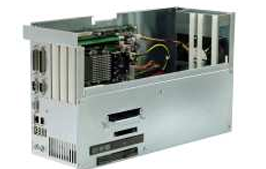
Xycom Automation’s newest generation of industrial PCs are designed and tested for the tough environments required for plant floor use. Our standard PC configurations meet the strict specifica tions required for use in hazardous locations and Europe’s CE mark.Based on CPU boards designed specifically for industrial automation,these systems provide the capabilities required by demanding appli cations. With an installed base of over 300,000 systems, our indus trial PC products are successfully applied in manufacturing and process environments world-wide.
Higher Performance,Lower Power
The 1547 utilizes an Intel mobile processor providing superior processing power while utilizing half the wattage of a comparable Pentium 4 processor. The
optional Pentium M 2.0 GHz processor(2 M Cache & 533 MHz system bus)outperforms a desktop Pentium 4,2.4 GHz (512 K Cache & 533 MHz bus)while utilizing less than half the wattage.
The increased processing power with less heat generation makes the 1547 ideal for most factory automation applications requiring a NEMA enclosure. Less wattage input into the system results in less temperature rise in the enclosure. With less temperature rise the maximum ambient operating temperature is more
easily maintained, possibly without the need for expensive enclosure cooling devices.
Superior Video
Performance
The on-board 4X AGP graphics controller defaults to 4 MB system RAM to allow resolutions up to 1280 x 1024. In addition the 1547 automatically shares up to 32MB system RAM to allow full 32-bit color depth and fast 3D rendering.
Fits Your Needs
The 1547 can be configured many different ways. With four available expansion slots many cost effective,industry standard options are easily integrated. The optional dual hard drive,externally accessible CompactFlash, or RAID-enabled configuration provides the storage solution you require. Additionally the CD-ROM can be upgraded to CD-R/W or DVD-R/W providing even more storage and backup options.
Meets High Standards
To survive on the plant floor the 1547 meets FCC, UL, cUL, and European CE mark requirements for industrial automation equipment. Xycom Automation Industrial PCs lead the industry in reliability, service, and support with an optional five year warranty available.
SERVICEABILITY
With the cover removed expansion cards are easily installed in the 1547 without cumbersome cables to contend with.
EASILY REPLACEABLE HARD DRIVE
The 1547 unit has incorporated a simple to access hard drive mount. Simply loosen 2 captive screws and extract the hard drive. No cables to install or connect. Simply plug in the new drive. Optional dual hard drives or RAID-enabled configura tions are also available
STORAGE OPTIONS
The 1547 offers several data storage options. The standard unit contains a single Serial ATA hard drive.Dual hard drives are optional, as is a RAID-enabled configuration. Also, the externally accessible TypeI/II CompactFlash can be ordered with the operating system pre-loaded for a solid state alternative. The 1547 offers a read-only CD-ROM, a CD-R/W with DVD-Read capability, a DVD-R/W, or a floppy for your choice of removable media drives. In addition, the 4 USB 2.0 ports can be utilized to add many commercially available external devices
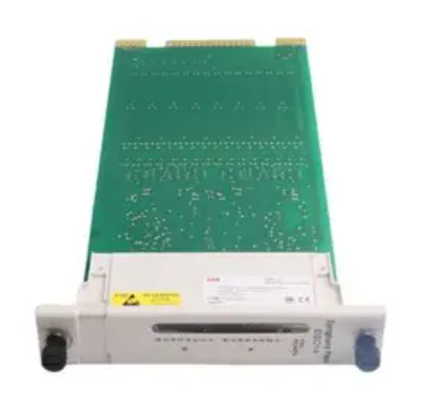
Basic functions: BCU-02, BCU-12, and BCU-22 are control units that control converters through fiber optic links. They integrate branch unit functions, collect and store real-time data from converter modules, and store it in SDHC memory cards for analysis by ABB service personnel.
Fiber Connections
BCU-02 has 2 fiber optic connections (V1, V2); BCU-12 has one BPEB-05 board with a total of seven connections (V1… V7); BCU-22 has 2 BPEB-05 boards with a total of 12 connections (V1… V12).
Maximum cable length: 35m for 1mm plastic fiber optic cable, 100m for 200 μ m hard clad quartz fiber optic cable, and the fiber pairs connected to a control unit must have the same length.
Layout and Components
It includes various I/O connectors, such as Analog Input (XAI), Analog Output (XAO), as well as switches, fiber optic connectors, optional module connectors, safety option connectors, control panel and Ethernet connectors, memory unit and card connectors, etc.
The 7-segment display and LED have different indication meanings. For example, if the 7-segment display shows “U” for a short period of time and then “o” appears, it indicates that the control program has started and is running. If the LED “BATT OK” lights up, it indicates that the real-time clock battery voltage is sufficient.
Installation
Check delivery content: Ensure that it includes the control unit (with I/O connectors), memory unit, SD/SDHC flash card, real-time clock battery, and is undamaged.
Mechanical Installation
Do not install the control unit near the electromagnetic interference source. It is recommended to have a minimum distance of 200mm, and metal shielding can be installed to reduce the distance; During installation, it is necessary to ensure that air can freely pass through the ventilation holes of the casing and should not be directly installed above the heating equipment.
It can be installed on vertical or horizontal standard 35 × 7.5/15mm DIN rails. Vertical installation can face up and down, while horizontal installation requires the connector to face downwards and the connector text to face upwards, with sufficient space reserved for wiring and maintenance.
The installation steps may vary slightly depending on the installation method (vertical, horizontal), and both require the use of latches for fixation. Alternatively, screws or end brackets can be used to prevent movement.
FSO xx safety function module installation: Install in slot 3, secure with four screws, tighten the electronic grounding screw, and connect the data cable.
Electrical installation: Follow the relevant safety instructions and connect the+24V external power supply to the XPOW connector of the control unit, which can be connected to a second power supply for redundancy; Connect the fiber optic cable according to the converter module hardware manual, and refer to other designated manuals for detailed electrical installation instructions.
Maintenance
Replace real-time clock battery: When the control unit is powered on, the “BATT OK” LED goes out and the battery needs to be replaced. The steps are to remove the screws and battery cover, remove the old battery, install the new battery, install the cover and screws, set the real-time clock, and dispose of the old battery according to regulations.
Replacing memory unit: When the control unit is powered off, remove the screws, pull out the old memory unit, insert the new memory unit, and install the screws.
Replacing SD/SDHC memory card: When the yellow “WRITE” LED is not lit, remove the screws and card cover, remove the old card, insert the new card, and install the cover and screws.
Replacing the control unit: Remove the fixing screws or end brackets, remove the control unit from the guide rail, remove the back latch, and unplug the detachable terminal block that connects the control cable. Install the new control unit in reverse order. If the safety circuit is connected to the STO terminal, a safety function acceptance test must be conducted after replacement.
Technical data
Connector data: Each connector has different parameters, such as external power input (XPOW) of 24V (± 10%) DC, 2A, which can connect two power sources to achieve redundancy; Analog inputs AI1 and AI2 have current and voltage input modes, which can be selected through switches.
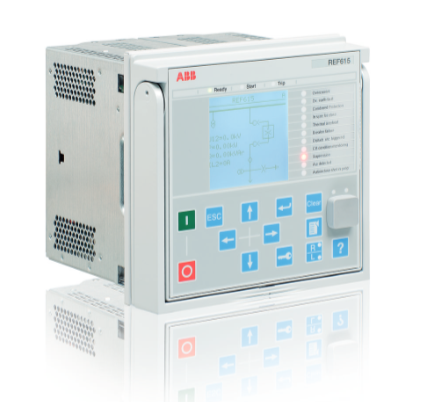
ABB REF615 is a specialized feeder intelligent electronic device (IED) designed to provide protection, control, measurement, and monitoring for overhead lines and cable feeders in public substations and industrial power systems (including radial, ring, and mesh distribution networks, with or without distributed generation). It belongs to ABB’s Relion ® The product series is part of the 615 protection and control product series, which features compact and withdrawable unit designs for IEDs. It has been redesigned to fully utilize the potential of the IEC 61850 standard in communication and interoperability between substation automation equipment.
Function and Configuration
Protection functions: covering various types of protection, such as overcurrent protection (including non directional, directional, low, high, instantaneous stages), ground fault protection (including directional, non directional, admittance based, wattmeter based, transient/intermittent, harmonic based, etc.), negative sequence overcurrent protection, phase discontinuity protection, residual overvoltage protection, three-phase thermal protection, circuit breaker failure protection, three-phase surge detector, main trip, arc protection, voltage protection (overvoltage, undervoltage, positive sequence undervoltage, negative sequence overvoltage), frequency protection, etc.
Control functions: including circuit breaker control, isolation switch control, grounding switch control, automatic reclosing, synchronization and energizing checks, etc.
Status monitoring function: including circuit breaker status monitoring, trip circuit supervision, current circuit supervision, fuse fault supervision, etc.
Measurement functions: including disturbance recorder, three-phase current measurement, sequence current measurement, residual current measurement, three-phase voltage measurement, residual voltage measurement, sequence voltage measurement, three-phase power and energy measurement, frequency measurement, etc.
Standard configuration: Provides nine standard configurations: A, B, C, D, E, F, G, H, and J. Different configurations are suitable for different scenarios and have different functions. For example, configuration A is mainly used for isolating and resonant grounding cables and overhead line feeders in distribution networks, while configuration F is mainly used for comprehensive protection and control of asynchronous motors controlled by circuit breakers.
Hardware and Interface
Physical hardware: It consists of a plug-in unit and a casing. The plug-in unit includes HMI, auxiliary power/BO module, BI/O module, AI/BI module, etc. The casing has various connectors for input and output.
Local HMI: including graphic display (supporting two character sizes with different row and column display capabilities), LED indicator lights (three protection indicator lights and 11 programmable matrix LEDs), keyboard (for navigation, control, and other operations), and communication ports.
Web HMI: accessible through a web browser, disabled by default, supports multiple functions such as programmable LED and event list viewing, system monitoring, parameter settings, etc. The menu structure is almost the same as the local HMI and can be accessed locally and remotely.
Authorization and Audit
Authorization: User categories have been predefined for LHMI and WHMI, including VIEWER, OPEROTOR, ENGINEER, and ADMINISTATOR, each with different permissions and default passwords. User authorization is disabled by default, but WHMI always uses authorization, and the default password can be changed by the administrator.
Audit Tracking: The 615 series IEDs provide a large number of event logging functions. Normal process related events can be viewed by ordinary users through the event viewer in PCM600. Critical system and IED security related events are recorded in separate non-volatile audit tracks for administrators to view. Audit tracking is a chronological record of system activities that can be checked and analyzed in a consistent manner using event lists and event viewers. IEDs store 2048 system events in non-volatile audit tracking, and 1024 process events are stored in non-volatile event lists, all following the FIFO principle.
The ABB 615 series is a series of protection and control products that have undergone partial testing according to relevant standards and meet all specified requirements without any misoperation, malfunction, or electrical damage. This series of products is manufactured by ABB Oy Distribution Solutions, and the relevant testing is approved by ABB Inc. Distribution Solutions and Distribution Automation.
Test object
Main test models include RED615 (order number HBDDFEADNLA1BMD11G), REF615 (order number HBFNAEFCNHA1AQB21G), REG615 (order number HBGDBDADNBA1BFG1G1), and the test results are also applicable to other products in the 615 series.
Basic modules: Each model includes CPU module, power module, binary I/O module, analog input module, LHMI module, communication module, backplane module, etc. The module types and parameters of different models may vary slightly. For example, RED615 uses PSM0004 power module, REF615 uses PSM0003 power module, etc. In addition, type testing was conducted on the IEC LHMI module DIS0012, and since the PCBA of ANSI and IEC LHMI are the same, the test results are also applicable to the ANSI LHMI module DIS0014.
Various test results
Mechanical structure inspection: Marking and mechanical structure comply with IEC 60255-1 and IEC 60255-27 standards; The embedded shell level is IP 54 on the front and IP 10 on the back and connection terminals, in compliance with IEC 60529 standard; The electrical clearance and creepage distance comply with IEC 60255-5 and IEC 60255-27 standards, and the results are both OK.
Overload and input testing: Under rated current, rated voltage and other parameters, the thermal tolerance, dynamic current tolerance, input impedance, load, voltage tolerance, etc. all meet the requirements of IEC 60255-1 and IEC 60255-27 standards. For example, for a rated current of 0.2/1A, the continuous thermal tolerance is 4A, and the 1-second thermal tolerance is 100A.
Power module testing: In terms of auxiliary voltage, PS-H has no effect at 38… 300 VDC, 38… 264 VAC, and PS_L has no effect at 12… 72 VDC; In the voltage drop immunity test, the product can operate normally or restart under different voltage and residual voltage conditions; During the auxiliary power supply voltage interruption test, the product was able to shut down and restart normally; The tests for DC auxiliary voltage ripple, gradual shutdown and startup, and DC power polarity reversal all meet the requirements; At the same time, the power consumption of different power modules is provided.
Contact testing: Different types of contacts (bipolar power output, unipolar power output, signal output, etc.) meet the requirements of IEC 60255-1 and IEEE C37.90-2005 standards in terms of making ability, breaking ability, mechanical tolerance, etc. For example, the bipolar power output continuously carries a current of 8A, and the 3-second turn-on and carrying current are 15A, etc.
Electromagnetic compatibility testing: Pulse interference testing at 1MHz/100kHz, pulse interference testing at 3MHz and other frequencies, electrostatic discharge testing, radio frequency interference testing, surge immunity testing, power frequency magnetic field immunity testing, and other electromagnetic compatibility tests all comply with the requirements of corresponding standards (such as IEC 61000-4 series, IEC 60255-26, etc.).
Insulation testing: dielectric testing, impulse voltage testing, insulation resistance measurement, protective grounding resistance testing, etc., in accordance with the requirements of standards such as IEC 60255-27 and IEEE C37.90-2005. For example, passing the dielectric test under the conditions of 2kV, 50Hz, and 1 minute.
Mechanical testing: vibration testing, impact and collision testing, earthquake testing, mechanical durability testing, etc., in accordance with the Level 2 requirements of standards such as IEC 60068-2 series, IEC 60255-21 series, IEEE C37.90-2005, etc.
Environmental testing: dry heat testing, dry cold testing, wet heat testing, temperature change testing, storage testing, etc., in accordance with the requirements of IEC 60068-2 series, IEEE C37.90-2005 and other standards. For example, the dry heat test passed at+55 º C for 96 hours and+85 º C for 16 hours (some products passed at+70 º C).
Characteristic
Compact and flexible design: adopting a withdrawable unit design, the structure is compact, occupies small space, and is easy to install, test, and maintain. Products such as REF615 and RET615 have a pull-out design that facilitates replacement or maintenance during equipment operation, and are compact in size, making them suitable for space limited substations and other locations. This design can also reduce the space required for equipment installation, improve space utilization, and reduce equipment costs.
Comprehensive functionality: covering multiple protection and control functions, capable of meeting the needs of different power systems. For feeder protection, it has functions such as underground and overhead cable fault detection (CFD), high impedance (HIZ) fault detection, arc flash detection (AFD), etc. REF615 can effectively detect and respond to various faults during feeder operation. In terms of transformer protection, sensitive differential protection is used for inter turn faults, overexcitation (V/HZ) protection, etc. RET615 can provide comprehensive protection for transformers. In addition, it also includes various protection functions such as overcurrent, thermal overload, grounding fault, overvoltage, undervoltage, as well as special functions such as frequency protection and phase discontinuity protection, comprehensively ensuring the stable operation of the power system.
Good communication compatibility: Supports multiple communication protocols, including IEC 61850 (supporting Edition 2 and Edition 1, including HSR, PRP, GOOSE messaging, and IEC 61850-9-2 LE), IEEE 1588 V2 (for high-precision time synchronization) Modbus ®、 DNP3, etc. Through these protocols, the product can communicate and interoperability with devices from different manufacturers, facilitating the construction of complex power automation systems, achieving data sharing and remote monitoring, and enhancing the level of system intelligence.
High reliability: Through careful design and selection of high-quality components, the product has strong reliability and can provide stable and high-quality electricity, reducing equipment failures and power outages. For example, in some industrial sites with extremely high requirements for power reliability, such as steel plants, data centers, etc., the 615 series products can operate continuously and stably, ensuring normal production and business operations, and reducing losses caused by power problems.
Easy to upgrade and maintain: With ready-made standard configurations, it is convenient to quickly set up and customize, supports flexible system upgrades, and does not require rewiring or component replacement. When expanding or upgrading the system, users can achieve it through software configuration or adding modules, reducing upgrade costs and complexity, and improving system adaptability. In addition, it also provides a wide range of lifecycle services, such as training, customer support, maintenance, and modernization, to provide users with comprehensive protection.
The ABB M063B high-frequency industrial controller is a high-performance device designed for complex automation tasks in multiple industries, focusing on providing precise and reliable control solutions for various industrial scenarios. With its outstanding performance, it plays a key role in manufacturing, energy, water treatment and other fields, becoming a core component for achieving efficient production processes and precise process control, helping enterprises improve their automation level and production efficiency.
Technical principles and core characteristics
High frequency signal processing and control mechanism: Equipped with advanced high-speed processors and precise signal processing circuits, it can quickly and accurately process high-frequency control signals. In response to the strict requirements for fast response and precise control in modern industrial production, M063B can react to input instructions in a very short time and generate corresponding high-frequency output signals. For example, in high-speed precision manufacturing equipment, when receiving production process adjustment instructions, the controller can complete signal analysis and processing at microsecond level speed, output accurate high-frequency control signals, drive the equipment to perform corresponding actions, ensure the continuity and accuracy of the production process, and effectively improve product quality and production efficiency.
High reliability architecture design: In terms of hardware construction, high-quality and highly stable electronic components are selected, and strict screening and aging testing processes are carried out to ensure stable operation in complex and changing industrial environments. The circuit board design fully considers electromagnetic compatibility (EMC), and through optimizing wiring and using multi-layer shielding, greatly reduces the impact of external electromagnetic interference on internal circuits, ensuring the accuracy and stability of signal transmission. At the software level, intelligent fault diagnosis and self-healing mechanisms are equipped, and the controller continuously monitors its own working status. Once abnormalities are detected, such as signal transmission errors, hardware failures, etc., the fault-tolerant program can be quickly launched to attempt to automatically repair the problem and promptly send detailed fault alarm information to operators, minimizing production interruptions caused by controller failures and ensuring the continuity and stability of industrial production.
Flexible system integration capability: Supports multiple mainstream industrial communication protocols, such as industrial Ethernet, Profibus DP, etc., and can seamlessly integrate and exchange data with different brands and models of main control systems and other devices. This broad compatibility enables M063B to easily integrate into various complex industrial automation network architectures, whether it is upgrading existing systems or building new automated production lines, it can efficiently complete system integration work, reducing technical difficulties and time costs in the integration process. At the same time, its modular design concept allows users to flexibly configure different functional modules according to actual application needs, achieving customized control solutions and meeting diverse industrial control scenarios.
Product advantages
Excellent control performance: With high-frequency output characteristics and high-precision control capabilities, it can meet the dual needs of fast response and precise control in complex industrial production processes. While improving product quality, it greatly enhances production efficiency and creates higher economic benefits for enterprises.
High reliability and stability: From hardware selection to software design, the controller ensures stable operation in various industrial environments, reducing equipment failures and downtime, and lowering production and operation risks and maintenance costs for enterprises. Its mean time between failures (MTBF) is much higher than similar products, reaching tens of thousands of hours, providing a solid guarantee for the continuity of industrial production.
Flexible integration and customization capabilities: It widely supports multiple industrial communication protocols, has modular design characteristics, is easy to integrate with different automation systems, and can customize functions according to users’ actual needs, adapt to diverse industrial control scenarios, provide personalized automation solutions for enterprises, and improve the overall efficiency of enterprise automation systems.
Selection and usage suggestions
Selection points: When selecting, the first step is to determine whether it is suitable based on the control accuracy and response speed requirements of the actual application scenario. If the production process requires extremely high control accuracy, such as micrometer level size control, the high-precision characteristics of M063B can fully leverage its advantages. At the same time, it is necessary to combine the working voltage, ambient temperature and other conditions on site to ensure that the working parameters of the controller match them. For example, equipment working in high-temperature environments requires special attention to the high-temperature resistance of the controller. In addition, the complexity and cost of system integration need to be considered. Based on the architecture and communication protocol of existing automation systems, evaluate the compatibility and integration difficulty of M063B with other devices.
Installation and maintenance: The installation process must be strictly operated according to the product manual to ensure that the controller is firmly installed and avoid loosening caused by vibration and other factors during operation, which may affect performance. In terms of electrical connections, carefully check whether the wiring is correct and secure to prevent electrical faults such as short circuits and open circuits. In daily maintenance, regularly check the working status and parameter settings of the controller through its built-in diagnostic tools or related monitoring software. It is recommended to conduct a comprehensive inspection of the controller every quarter, including cleaning surface dust, tightening wiring terminals, updating software versions, etc., to promptly identify and solve potential problems, ensure long-term stable operation of the controller, and extend its service life.
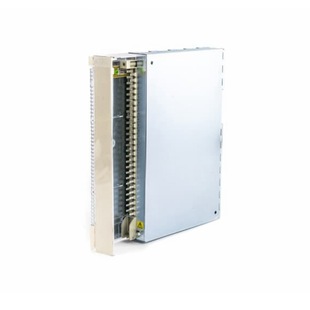
The ABB IMDS003 digital output slave module is a crucial component of industrial automation network architecture, mainly used to expand the digital output capability of control systems. It can work in conjunction with various main controllers, accurately converting control instructions from the main station into corresponding digital output signals, and then driving numerous external loads. It is widely used in scenarios such as automated production lines, smart factories, and complex industrial control systems, laying a solid foundation for achieving refined and intelligent industrial control.
Technical principles and core characteristics
Digital signal processing and output mechanism: This module integrates high-performance digital signal processing circuits internally, which can quickly parse and process digital control signals from the main station. It supports standard industrial communication protocols such as Profibus DP, Modbus TCP, etc., and can seamlessly integrate with different brands and models of main controllers. Once receiving instructions from the main station, the module quickly decodes the signal and then converts the digital signal into a level signal output with sufficient driving capability through its internal driving circuit to control external loads. For example, when the main station sends the command to “turn on a certain device”, the IMDS003 module can complete signal processing and output in microseconds, quickly drive load actions such as relays and contactors, and achieve precise control of the device.
High reliability design: In terms of hardware, high-quality electronic components are used, which undergo strict screening and aging testing to ensure the stability of the module in complex industrial environments. The design of its printed circuit board (PCB) fully considers electromagnetic compatibility (EMC), effectively reducing the impact of external electromagnetic interference on the internal circuits of the module through reasonable wiring and shielding measures. At the software level, it is equipped with comprehensive self checking and fault tolerance mechanisms. The module will regularly check its own working status. Once abnormalities are detected, such as signal transmission errors, hardware failures, etc., corresponding fault-tolerant measures can be taken immediately, such as automatically restarting relevant functional modules, sending fault alarm signals to the main station, etc., to ensure the continuous operation of the system and reduce the risk of downtime caused by module failures.
Flexible configuration capability: Supports multiple configuration methods, allowing users to flexibly configure modules based on actual application needs through software tools or hardware dip switches. For example, the initial state (high or low) of the output channel can be set to meet specific requirements for starting different devices; It can also adjust the response time of the output signal. In some application scenarios that require extremely high control speed, the response time can be shortened to the millisecond level. However, in scenarios that require relatively low speed and focus more on stability, the response time can be appropriately extended to improve anti-interference ability. In addition, the module supports hot swapping function, which allows for direct plugging and replacement of modules during system operation without affecting the overall system operation, greatly improving the convenience of system maintenance.
Performance parameters
Number of output channels: With 16 digital output channels, it can simultaneously control multiple external loads to meet diverse control needs. On an automated production line, these 16 channels can be used to control indicator lights, solenoid valves, small relays, and other equipment at different workstations, achieving comprehensive monitoring and control of the production line.
Output voltage and current: The output voltage range is 24V DC ± 10%, which is a common DC voltage level in the field of industrial automation, matching the power supply voltage of most industrial equipment and facilitating system integration. The maximum load current of each output channel is 0.5A, which can directly drive some small power loads, such as common 24V DC relays, indicator lights, etc. For higher power loads, expansion can be achieved through external intermediate relays and other means.
Signal transmission rate: Supports high-speed signal transmission, with a maximum data transmission rate of 12Mbps (in Profibus DP networks). Such a high transmission rate enables the module to quickly respond to control instructions from the main station, ensuring the timeliness and accuracy of equipment actions on high-speed automated production lines and effectively improving production efficiency. For example, in the control system of a high-speed packaging machine, the IMDS003 module can quickly receive instructions from the main station, accurately control each link of the packaging action, and achieve efficient packaging.
Protection level: The protection level reaches IP20 (IEC 60529 standard), which can effectively prevent solid foreign objects larger than 12mm from entering, such as human fingers, and also resist vertically dripping water droplets. It is suitable for general indoor industrial environments, such as inside control cabinets. In relatively clean and dry industrial environments, reliable protection can be provided for modules to ensure their stable operation.
Application Fields
Industrial automation production line: The IMDS003 module plays a key role in automated production lines in industries such as automotive manufacturing and electronic equipment manufacturing. Taking the automobile assembly production line as an example, it can be used to control the movement of robotic arms, the start and stop of conveyor lines, and the clamping and releasing of fixtures and jigs. By cooperating with the main controller and accurately controlling the status of each output channel according to production process requirements, the automated operation of the production line can be achieved, improving production efficiency and product quality. According to actual case statistics, after introducing the IMDS003 module to optimize the production line in a certain automobile manufacturing enterprise, production efficiency increased by 20% -30%.
Intelligent warehousing and logistics system: In an intelligent warehousing and logistics system, it is used to control the operation of equipment such as stacker cranes, shuttle cars, and conveyor lines. For example, automatic storage and retrieval of goods can be achieved by controlling the forward and reverse rotation and lifting actions of the stacker crane’s motor; Control the start stop and speed of the conveyor line to ensure smooth transportation of goods between different workstations. In a large logistics warehouse, multiple IMDS003 modules working together can effectively improve the automation and operational efficiency of the warehousing and logistics system, and reduce labor costs.
Process control system: Participate in the control of various process equipment in the chemical, power, petroleum and other process control industries. For example, in the chemical production process, controlling the opening and closing of the feed valve and discharge valve of the reaction kettle, as well as the start and stop of the stirring motor; In the power system, it controls the opening and closing operations of high-voltage switchgear, as well as the display of alarm indicator lights. By precise digital output control, ensure the safe and stable operation of the production process, and avoid production accidents and quality problems caused by improper equipment control. After using the IMDS003 module in the production process control system of a chemical enterprise, the stability of the production process was significantly improved, and the product defect rate was reduced by 10% -15%.
Product advantages
Easy to integrate: With support for multiple mainstream industrial communication protocols and standardized interface design, the IMDS003 module can be easily integrated into automation control systems of different brands and architectures. Whether it is building a new automation project or upgrading an existing system, it can quickly achieve interconnectivity with the main controller and other devices, reducing the workload and cost of system integration.
Precise control: With high-precision digital signal processing capability and fast response speed, it can achieve precise control of external loads. In some application scenarios that require extremely high control accuracy, such as the manufacturing process of precision electronic equipment, the accuracy and consistency of equipment actions can be ensured, and the yield rate of products can be improved.
Economically efficient: Compared to some module products with similar functions but expensive prices, ABB IMDS003 module has a higher cost-effectiveness. It brings significant economic benefits to enterprises with relatively low cost investment while meeting industrial control needs. At the same time, its low-power design also helps to reduce the operating costs of the system, which is in line with the development concept of energy conservation and emission reduction for enterprises.
Selection and usage suggestions
Selection key points: When selecting, the first step is to choose according to the required number of output channels in the actual application scenario. If there are many external loads to be controlled, it is necessary to ensure that the number of output channels of the module can meet the requirements. For example, if an automation project needs to control 20 digital output devices, one IMDS003 module (16 channels) can be considered, along with another module with 4 output channels. At the same time, it is necessary to combine the working voltage and current parameters of the load to ensure that the output capability of the module can meet the load requirements. For some special application scenarios, such as environments with strong electromagnetic interference, it is also necessary to pay attention to the electromagnetic compatibility indicators of the module.
Installation and maintenance: During installation, strictly follow the requirements of the product manual for operation. Ensure that the module is securely installed and avoid loosening due to vibration or other reasons during operation. In terms of electrical connections, carefully check whether the wiring is correct and secure to prevent problems such as short circuits and open circuits. In daily maintenance, regularly check the working status of the module, and check whether the output channel status is normal through the indicator lights or related monitoring software on the module. If any abnormalities are found, promptly investigate the cause of the malfunction. It is recommended to conduct a comprehensive inspection of the module every quarter, including cleaning the surface dust of the module, tightening the wiring terminals, etc., to ensure long-term stable operation of the module.
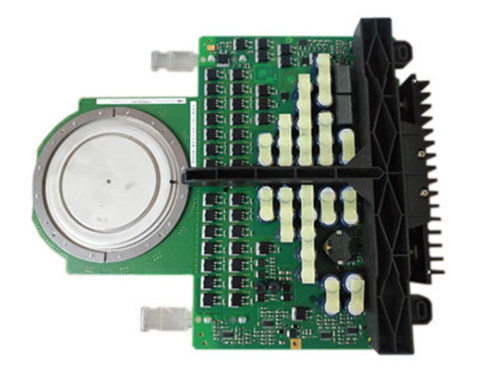
ABB 5SHX08F4502 is an integrated gate commutated thyristor (IGCT) module, which is a key component for achieving high-performance power control in the fields of industrial automation and power systems. It cleverly integrates the advantages of IGBT (Insulated Gate Bipolar Transistor) and IGCT technology, and performs excellently in voltage and current processing, switching speed, and power management, providing reliable and efficient solutions for harsh industrial application scenarios.
Technical principles and core characteristics
Advantages of IGCT technology: IGCT, as an advanced power semiconductor device, combines the high voltage and high current carrying capacity of thyristors with the fast turn off characteristics of transistors. The 5SHX08F4502 module utilizes IGCT technology and can operate stably under high voltage and high current conditions. For example, in high-voltage direct current transmission (HVDC) systems, it can withstand voltages of up to thousands of volts and currents of hundreds of amperes, ensuring efficient power transmission and precise control. It can also achieve fast shutdown with shutdown times as low as microseconds, greatly improving system response speed, effectively reducing switch losses, and enhancing power conversion efficiency.
High power density design: This module adopts a compact high power density design, integrating powerful power processing capabilities in a limited space. By optimizing the internal circuit layout and heat dissipation structure, higher power output per unit volume has been achieved. Compared to traditional thyristor modules, its power density can be increased by 30% -50%, which has significant advantages in space limited industrial equipment and power devices. For example, in subway traction converters, it can meet high-power requirements with a smaller volume, while reducing the overall weight of the equipment and lowering installation and maintenance costs.
Efficient heat dissipation mechanism: equipped with advanced heat dissipation system, the module adopts special heat dissipation materials and heat dissipation structure design inside. For example, using a ceramic substrate with high thermal conductivity and an optimized heat sink fin structure can quickly dissipate the heat generated during module operation. Under full load operation, the module junction temperature can be controlled within a safe range, ensuring long-term stable operation, extending the module’s service life, and improving system reliability. According to testing, under the same working conditions, its junction temperature can be reduced by 10-15 ℃ compared to ordinary modules.
Performance parameters
Voltage and current parameters: With a rated voltage of up to 4500V, it can meet the needs of various high-voltage application scenarios; The rated current is 800A, capable of driving high-power loads. In some large industrial motor drive systems, it is easy to cope with high current surges during motor start-up, ensuring smooth motor start-up and operation.
Switching frequency: The switching frequency can reach 50kHz, suitable for applications that require high switching speed, such as high-frequency induction heating equipment. In such devices, high switching frequency can make the heating process more precise and efficient, improving heating quality and production efficiency.
Conduction voltage drop: The conduction voltage drop is relatively low, with a typical value of 1.8V. A lower conduction voltage drop means that when the current is conducting, the power loss of the module itself is smaller, which helps to improve the energy utilization efficiency of the entire system. Taking an application scenario with a current of 1000A as an example, compared with similar products with high conduction voltage drop, it can save about 0.5-1 kWh of electricity per hour.
Application Fields
Industrial automation: Used in industrial automation production lines to control high-power motors such as water pumps, fans, compressors, etc. Taking the control of large-scale fans in a steel plant as an example, the 5SHX08F4502 module is used to accurately control the speed and operating status of the fan motor, achieving real-time adjustment of air volume according to production needs, while ensuring production process requirements and reducing energy consumption. According to actual case statistics, using this module for fan control can reduce energy consumption by 15% -20%.
Power system: In the field of high-voltage direct current transmission in the power system, as a key converter device, it achieves efficient conversion between alternating current and direct current, ensuring long-distance and high-capacity transmission of electricity. Meanwhile, in the Static Var Compensator (STATCOM), it is used to regulate the reactive power of the power grid, stabilize the grid voltage, and improve the quality of electrical energy. In the STATCOM project of a certain city’s power grid, the use of this module reduced the voltage fluctuation range from ± 5% to within ± 2%, effectively improving the stability of the power grid.
New energy: Used in the design of inverters in the field of new energy, such as wind and solar power generation systems. In the inverter of wind turbines, the unstable AC power generated by the wind turbine is converted into high-quality AC power that meets the requirements of the power grid and connected to the grid by precisely controlling the switch state of the IGCT module. In a 10MW wind farm, using a 5SHX08F4502 module inverter can improve power generation efficiency by about 3% -5%.
Product advantages
High reliability: Using high-quality materials and advanced manufacturing processes, and undergoing strict quality inspection processes, the module ensures long-term stable operation under complex working conditions. Its mean time between failures (MTBF) can reach over 100000 hours, far exceeding the industry average, greatly reducing equipment maintenance costs and downtime risks.
Strong flexibility: With flexible control interfaces and multiple protection functions, it can be easily integrated with various control systems. For example, its control interface supports multiple communication protocols such as Modbus, Profibus, etc., making it easy to achieve remote monitoring and control. At the same time, it has built-in functions such as overcurrent protection, overvoltage protection, and overheating protection, which can quickly act in abnormal situations to protect the safety of the module and the entire system.
Excellent efficiency: Through optimized circuit design and advanced semiconductor technology, extremely low power loss has been achieved, with an energy conversion efficiency of over 98%. This not only helps to reduce operating costs, but also conforms to the current environmental protection concept of energy conservation and emission reduction, providing strong support for the sustainable development of enterprises.
ABB RMIO-12C is a widely used control unit in the field of industrial automation, with many advantages such as high performance and high reliability.
Basic information
Belonging to the RMIO series, brand ABB, model RMIO-12C, weighing 0.6kg, module size 150 × 100 × 80mm, certified by CE, UL, CSA, etc., in compliance with industry quality standards.
Performance parameters
The working voltage is 120V AC or 24V DC (some data shows 220V), the working frequency is 50kHz, and the output frequency is also 50kHz. It can provide precise control for equipment that requires high response speed and control accuracy, such as high-speed motors. Supports communication protocols such as Modbus RTU/TCP for easy communication with other devices that support this protocol, enabling system integration and remote monitoring. There are 16 input channels and 16 output channels, which can connect various sensors and actuators to meet the control needs of different industrial scenarios.
Functional features
Adopting advanced microprocessor technology, built-in multiple control algorithms, customizable programming, able to design control strategies according to different industrial needs, such as controlling the operation process and parameters of equipment in industrial automation production lines. Supporting remote control and monitoring, with the help of communication interfaces, operators can remotely operate and monitor the status of equipment, improving the convenience and efficiency of production management. Equipped with comprehensive safety protection functions, it can monitor the operating status of equipment, and take timely protective measures in case of abnormalities such as overload and short circuit to ensure the safety of equipment and personnel. Equipped with a software library that includes rich pre-defined and user-defined control elements, it is easy to design various control strategies, covering continuous control, timing control, etc., to adapt to complex industrial control requirements.
Application areas
Widely used in industrial automation production lines, controlling the operation of various equipment, improving production efficiency and product quality; In robot control systems, precise control of robots is achieved to enable them to complete complex tasks; In industries such as manufacturing, energy, and process control, control and monitor equipment such as motors, generators, and transformers to ensure stable system operation.
Related configuration
As part of the control unit in ABB ACS800 frequency converter, it works in conjunction with rectifier unit, energy storage unit, inverter unit, etc. to achieve drive control of the motor and stable operation of the entire system. It can seamlessly integrate with various ABB products, build comprehensive automation solutions, and enhance the overall performance and compatibility of the system.
Connector type and parameters
There are various types of connectors, such as X20 (constant voltage output) with 2-pole detachable screw terminal blocks, etc. Different connectors are suitable for different wire specifications, torques, spacing, etc.
Constant voltage output (X20, X21:1): Voltage of+10 VDC, 0, -10 VDC ± 0.5% (full-scale range) (at 25 ° C), maximum temperature coefficient of ± 100 ppm/° C, maximum load of 10mA, suitable for potentiometers 1 to 10 kohm.
Analog inputs (X21): Two programmable differential current inputs and one programmable differential voltage input, with analog inputs grouped together for galvanic isolation, etc.
Analog output (X21): Two programmable current outputs with a resolution of 0.1% (10 bits), etc.
Digital input (X22): Six programmable digital inputs and one startup interlock input, internal digital input power supply (+24 VDC) with short-circuit protection, etc.
24 VDC power output (X23): Voltage 24 VDC ± 10%, with short-circuit protection, maximum output current 250 mA (when no optional module is inserted).
Relay outputs (X25, X26, X27): Three programmable relay outputs with corresponding specifications for switch capacity.
Slot 1 (X31), Slot 2 (X32): Used for connecting related expansion modules, etc.
DDCS (X33): Used to connect RDCO-0x (C) DDCS communication module.
24 VDC power input (X34): Voltage 24 VDC ± 10%, typical current consumption (without option module) 250 mA, maximum current consumption 1200 mA (with option module inserted), etc.
Control panel connection (X39): used to connect the CDP-312R control panel.
PPCS link (V57, V68): Fiber optic connection to inverter (or IGBT power supply) module, optical component type 10 MBd, protocol ABB PPCS.
The ABB XO08R1-B4.0 extended output module is a key component used in the field of industrial automation to expand the input/output (I/O) capabilities of ABB PLC, which can endow automation control systems with more powerful functions. It demonstrates extremely high reliability and stability with advanced technological architecture, and can operate continuously and stably for a long time, providing solid support for automation control requirements in complex industrial environments.
Core functions
I/O channel expansion: This module provides multiple additional output channels for ABB PLC, specifically with 8 digital output channels, greatly expanding the system’s output control points. Through these new channels, it is possible to connect and control more external loads, such as relays, contactors, indicator lights, solenoid valves, and other actuating components, to meet the diverse needs of automation control scenarios. For example, on an automated production line, it may be necessary to control numerous device actions, and the XO08R1-B4.0 module can help PLC easily achieve precise control of more devices.
Signal conversion and amplification: It can convert and amplify the digital signals output by PLC. The signals output by PLC are usually of low power, making it difficult to directly drive some high-power loads. And this expansion module can convert digital signals into output signals with sufficient driving capability to adapt to the working requirements of different loads. For example, it can convert the low-level digital signals output by the PLC into high voltage and high current signals that can drive the contactor coils, ensuring reliable contactor engagement and controlling high-power equipment such as motors.
Protocol communication support: Standard Modbus RTU communication protocol is used for communication. This protocol is widely used in the industrial field, with strong universality and good compatibility. Through this protocol, the XO08R1-B4.0 module can efficiently and stably exchange data with PLCs and other devices that support Modbus RTU protocol. Whether working with a single PLC in a small automation system or collaborating with numerous devices in a large complex industrial network, seamless integration can be achieved through this communication protocol, ensuring the accuracy and timeliness of data transmission.
Technical parameters
Output type: The output type is relay output, and the relay contacts support normally open or normally closed contact forms. This output method has the advantages of good isolation performance and strong load capacity, which can effectively isolate the control circuit from the load circuit, avoid mutual interference, and can withstand large currents and voltages. It is suitable for various types of load control.
Output current: Each channel can carry a maximum current of 2A, which can meet the driving requirements of common industrial loads. Whether it’s small indicator lights, buzzers, or slightly high-power relays, solenoid valves, and other devices, they can all work stably within their driving capabilities.
Rated voltage: The rated working voltage is 24V DC, which is a commonly used DC voltage level in industrial automation control systems. It matches the power supply voltage of most PLCs and other industrial equipment, making it easy to configure and connect power in the system.
Power consumption: The power consumption of the module during normal operation is about 5W, which is relatively low. While ensuring efficient operation, it helps to reduce the energy consumption of the entire system and improve energy utilization efficiency.
Protection level: The protection level reaches IP20 (IEC529). This protection level can prevent solid foreign objects larger than 12mm from entering, such as fingers, and also prevent vertical water droplets from affecting the module. It is suitable for general indoor industrial environments. When installed and used in some relatively clean and dry control cabinets, it can effectively protect the internal circuit of the module from external foreign objects and water droplets, ensuring stable operation.
Working temperature range: The working temperature range is -25 ° C to+55 ° C, with a wide temperature adaptability. This enables the module to operate normally in different industrial environment temperatures, whether in factories in cold regions or workshops in hot environments, providing possibilities for the application of industrial automation systems in different regions and working conditions.
Installation and maintenance
Installation method: Supports two common methods: panel installation or DIN rail installation. Panel installation is suitable for situations where there are specific requirements for the installation position and the module needs to be fixed on the control cabinet panel or other positions for easy observation and operation; DIN rail installation is simple and fast to operate. Simply insert the module into the standard DIN rail, which saves space, facilitates centralized installation and layout in the electrical control cabinet, and makes it easy for technicians to install and maintain the equipment.
Maintenance points: During daily maintenance, it is necessary to regularly check the working status of the module. By using the indicator lights on the module, the working status of each output channel can be intuitively judged. If the indicator lights are on or off normally, it indicates that the corresponding channel is working properly; If the indicator light is abnormal, such as not on or constantly on, it may indicate a fault in the channel. In addition, it is necessary to regularly check whether the wiring terminals are loose, ensure that the electrical connections are firm and reliable, and prevent problems such as heating and ignition caused by poor contact, which may affect the normal operation of the module and the entire system. When a module malfunction is detected, its modular design facilitates quick replacement of faulty modules, reduces downtime, and minimizes the impact on production.
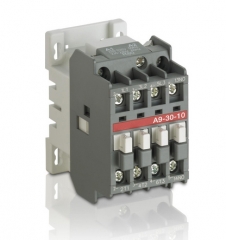
ABB 5SGX1060H0003 AC contactor, as a key equipment in the field of industrial electrical control, plays an important role in control and protection in many electrical systems. It can frequently connect and disconnect AC circuits, effectively control various AC loads, and is widely used in many fields such as manufacturing, energy industry, transportation, etc. that require extremely high electrical control reliability. With the profound foundation of ABB brand in the fields of power and automation technology, this AC contactor integrates advanced design concepts and exquisite manufacturing processes, providing solid guarantees for efficient and stable operation of industrial production.
Core functions
Circuit on-off control: This is the core function of AC contactors. When the electromagnetic coil is powered on, it generates a magnetic field that attracts the moving iron core, drives the contact to move, closes the main contact, and connects the circuit, thereby achieving power supply to the AC load; When the electromagnetic coil is powered off, the magnetic field disappears, and the moving iron core returns to its original position under the action of the reset spring, causing the main contact to disconnect and cutting off the circuit. Through this method, it is possible to efficiently and accurately control the on/off of AC circuits to meet the operational needs of different devices.
Undervoltage and Loss of Voltage Protection: Equipped with undervoltage and loss of voltage protection functions. When the circuit voltage drops to a certain level (usually below 70% of the rated voltage) or suddenly loses power, the electromagnetic attraction of the AC contactor weakens or disappears, the moving iron core is released, the main contact quickly disconnects, and the circuit is automatically cut off. When the voltage returns to normal, manual re operation is required to re engage the contactor and restore power supply to the circuit. This protection function can effectively prevent equipment damage and production accidents caused by abnormal voltage, ensuring the safety of equipment and personnel.
Remote control: Supports remote control function and can be operated remotely through control circuits. In an automated production system, operators can send control signals to the electromagnetic coil of the AC contactor through control buttons, PLC (Programmable Logic Controller) or other remote control devices in the control room, achieving remote control of the AC contactor and thus controlling the operation status of the equipment. This remote control function greatly improves the convenience and automation level of production operations, facilitating centralized management and scheduling of large-scale production processes.
Working principle
Working principle of electromagnetic mechanism: The electromagnetic mechanism of 5SGX1060H0003 AC contactor is mainly composed of electromagnetic coil, static iron core, dynamic iron core (armature) and other parts. When an electromagnetic coil is connected to a suitable AC power source, an alternating current will be generated in the coil. According to the Ampere’s law, the alternating current will generate an alternating magnetic field around it. This alternating magnetic field acts on both the stationary and moving iron cores, causing the moving iron core to experience electromagnetic attraction. When the electromagnetic suction force is greater than the reaction force of the reset spring, the moving iron core begins to move towards the stationary iron core, driving the contact system connected to the moving iron core to move.
Working principle of contact system: The contact system is divided into main contacts and auxiliary contacts. The main contact is used to connect and disconnect the main circuit, carrying a large current; Auxiliary contacts are used to control circuits, achieve signal transmission and interlocking control functions. When the moving iron core moves towards the stationary iron core under the action of electromagnetic attraction, the main and auxiliary contacts connected to it move accordingly. Close the main contact, connect the main circuit, and enable the load to obtain power and start working; The normally open contact of the auxiliary contact is closed, and the normally closed contact is disconnected, achieving the corresponding control signal switching. When the electromagnetic coil is powered off, the electromagnetic attraction disappears, and the moving iron core returns to its original position under the action of the reset spring. The contact system also resets accordingly, the main contact is disconnected, the main circuit is cut off, and the auxiliary contact returns to its initial state.
Technical parameters
Rated working voltage: Common rated working voltages include various specifications such as 220V AC and 380V AC, which can be selected according to different application scenarios and electrical system requirements. They can adapt to diverse power grid environments and ensure stable operation under different voltage conditions.
Rated working current: The rated working current has a wide range, such as 100A, 200A, and other different levels, which can meet the control requirements of various AC loads with different powers. Whether it is motor control for small equipment or electric drive for large industrial equipment, suitable specifications of 5SGX1060H0003 AC contactors can be found.
Rated insulation voltage: Generally, it has a high rated insulation voltage, such as 690V AC, which can effectively isolate high voltage in the circuit, prevent electric shock accidents, ensure the safety of operators and equipment, and enhance the adaptability and reliability of the product in complex electrical environments.
Rated voltage of coil: There are also multiple options for rated voltage of coil, such as 24V AC/DC, 110V AC/DC, 220V AC/DC, etc., which facilitate users to flexibly choose according to the power configuration of the control system and achieve precise control of the AC contactor.
Mechanical lifespan: Long mechanical lifespan, up to millions or even higher, means that under normal use, the mechanical components of AC contactors can withstand frequent actions without serious wear or failure, greatly reducing equipment maintenance frequency and replacement costs, and improving the stability and continuity of the production system.
Electrical lifespan: The electrical lifespan also performs well, reaching hundreds of thousands of times or more. During frequent circuit connections and disconnections, the contacts can maintain good conductivity and arc resistance, reducing contact erosion and adhesion, ensuring the long-term reliability of AC contactors in terms of electrical performance, and extending the overall service life of the product.
Precautions
Installation environment requirements: It should be installed in a dry, well ventilated, non corrosive gas and less dust environment. A humid environment may cause electrical components to short circuit, corrosive gases may corrode equipment components, excessive dust may affect heat dissipation, thereby reducing the performance of AC contactors and even damaging equipment. The installation location should be away from heat sources and strong electromagnetic interference sources to avoid excessive temperature affecting product life and electromagnetic interference causing AC contactor misoperation.
Electrical connection specifications: When making electrical connections, it is necessary to strictly follow the requirements of the product manual. Ensure that the wiring is secure and reliable to prevent poor contact from causing heating, sparking, or even burning out the equipment. Before wiring, carefully check the parameters such as power supply voltage and load current to ensure they match the rated parameters of the AC contactor. At the same time, attention should be paid to distinguishing the wiring between the main circuit and the control circuit to avoid short circuits or other electrical faults caused by incorrect wiring.
Daily maintenance: Regularly inspect and maintain the AC contactor, observe whether the contacts are burned or worn, whether the electromagnetic mechanism operates flexibly, and whether the wiring terminals are loose. If severe contact erosion is found, it should be polished or replaced in a timely manner; For loose wiring terminals, they should be tightened in a timely manner. Regularly clean the dust and debris on the surface of the communication contactor, keep the equipment clean, to ensure its normal heat dissipation and reliable operation. During maintenance, live operation is strictly prohibited. The power must be cut off first and necessary safety protection measures must be taken.
Application scenarios
Manufacturing: Widely used in the control of various motors on automated production lines in the manufacturing industry. In machine tool equipment, it is used to control the start, stop, and forward/reverse rotation of spindle motors and feed motors to ensure precise machining of the machine tool; In automated assembly equipment, control conveyor belt motors, robotic arm motors, etc. to achieve efficient assembly of products. By precisely controlling the operation of the motor, production efficiency is improved and product quality is ensured.
Energy industry: In power plants, motors are used to control various auxiliary equipment such as fans, pumps, and oil pumps. For example, in thermal power plants, controlling the motors of the air supply fan and induced draft fan ensures good ventilation in the furnace; In hydropower stations, control the cooling water pump motor to ensure the normal cooling of the generator set. In substations, it can be used to control the switching of capacitors and contactors, achieve reactive power compensation, improve the power factor of the power grid, and ensure the stable operation of the power system.
Transportation industry: In the field of rail transit, it can be used to control traction motors, auxiliary motors, etc. of electric trains. By controlling the on/off of the AC contactor, the switching of the train’s starting, accelerating, braking and other operating states can be achieved, ensuring the safe and smooth operation of the train. In electric vehicle charging stations, it is used to control the on/off of the charging circuit, achieving fast and safe charging of electric vehicles.
In the field of architecture, in the electrical control system of intelligent buildings, motors are used to control equipment such as air conditioning systems, lighting systems, and water supply and drainage systems. For example, controlling the start and stop of the air conditioning compressor motor to regulate indoor temperature; Control the contactors in the lighting distribution box to achieve centralized control and zoning control of lighting fixtures, achieving the goals of energy conservation and intelligent management.