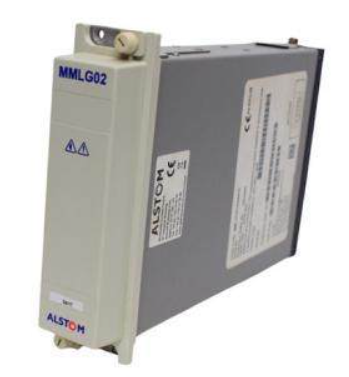
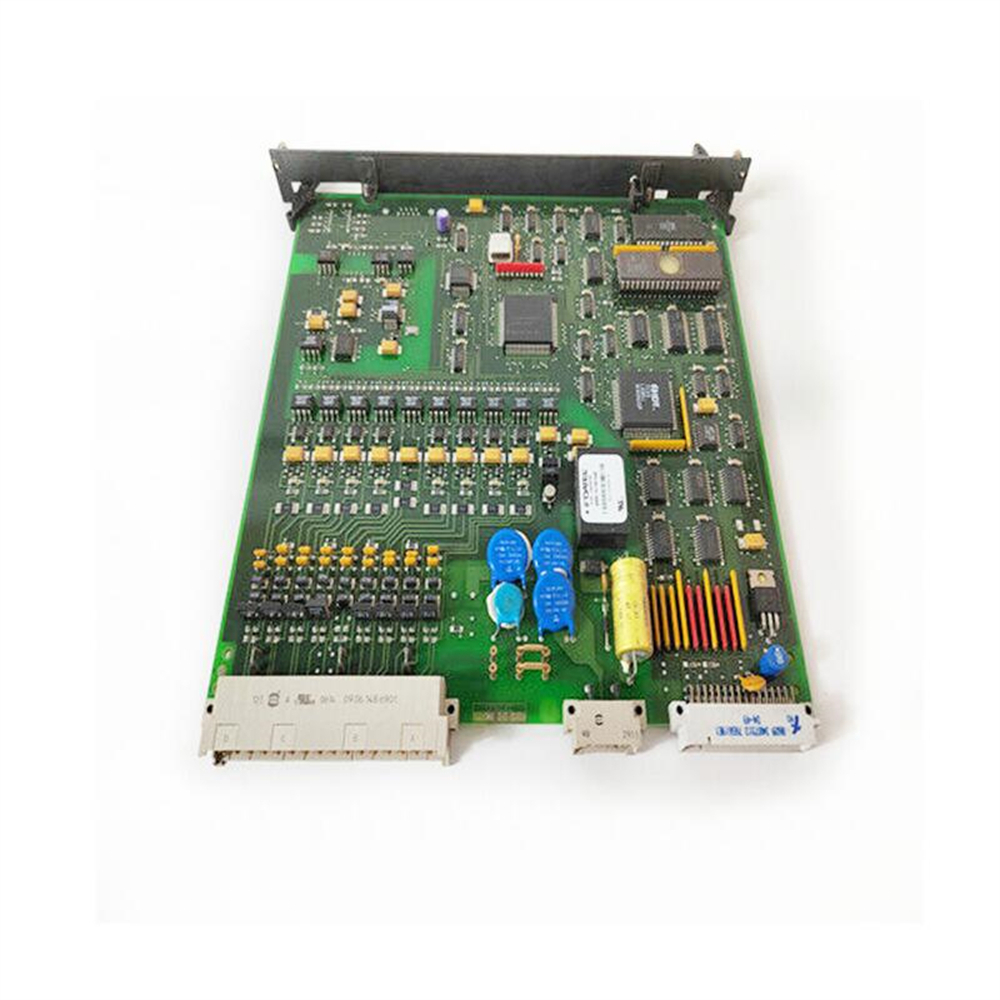
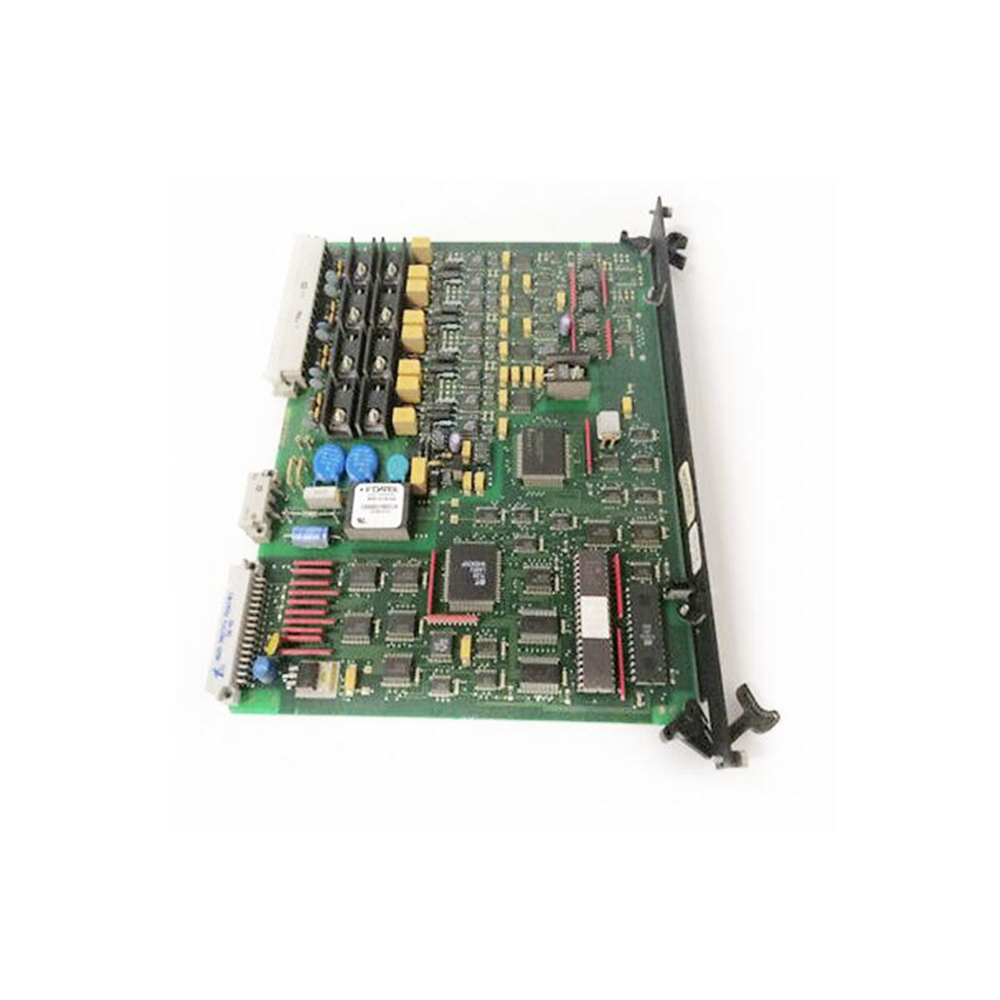
The Alstom PIB310 3BHB0190 control module occupies an important position in the field of industrial automation. As a key CPU module, it integrates advanced technology to provide stable and efficient support for various industrial control systems.
Technical highlights
Advantages of chipset: This module adopts advanced Intel 815E chipset technology. This chipset significantly alleviates bottlenecks on the PCI bus by separating high bandwidth I/O access (such as IDE or USB device related access) from PCI access, thereby greatly improving system performance. For example, in industrial scenarios with frequent data transmission, it can ensure fast and stable data transmission, reducing latency.
Integration and functional characteristics: The 815E chipset brings higher integration and optimizes the performance of the motherboard chipset. At the same time, it also has a standard interrupt architecture and comprehensive memory and I/O mapping capabilities. This enables the module to systematically store, call, and control equipment when processing complex industrial control instructions, ensuring the stable operation of the system.
Application scenarios
Gas turbine control system: In the gas turbine equipment, the Alstom PIB310 3BHB0190 control module plays a core role. It is responsible for precise monitoring and control of various parameters during the operation of the gas turbine. For example, by connecting various sensors, real-time data such as temperature and pressure can be obtained, and fuel supply and combustion conditions can be adjusted according to preset programs and algorithms to ensure efficient and stable operation of the gas turbine. In the application of gas turbine cards, it can accurately detect and control the flame state based on complex logical judgments.
Industrial automation production line: On an automated production line, this control module can serve as a central control unit to coordinate various production processes. For example, in the automobile manufacturing production line, it controls the motion trajectory of the robotic arm, the conveying rhythm of components, and the start stop of various processing equipment, ensuring efficient and coordinated operation of the entire production line, improving production efficiency and product quality.
Precautions for use
Flame fault testing: For application scenarios involving flame detection, such as gas turbine control, debugging engineers must conduct flame fault testing after programming the relevant scanners. This is a crucial step in ensuring safe and reliable testing. Engineers need to ensure that the scanner can accurately detect the target flame (flame on condition) and promptly identify the target flame off (flame off condition).
Trip diagnosis and register operation: The Phoenix scanner associated with this module can provide trip diagnosis for multiple advanced parameters, including power spectral density, average amplitude, best fit, single power supply, internal faults, or combinations of these parameters. When the scanner trips due to flame extinguishing or other reasons, the reason for the trip will be stored in the trip register. This register can store eight (8) trip events, with old events stored in the bottom position LED (1) and new events stored in the top position LED (8). It should be noted that once the register is filled, it must be manually reset to store subsequent trip events, and it will not automatically reset or scroll. For example, when performing equipment maintenance or troubleshooting, engineers need to accurately determine the sequence and cause of faults based on the records in the registers, in order to quickly solve the problem.
The Alstom PIB310 3BHB0190 control module plays an irreplaceable role in the industrial field with its advanced technology and reliable performance, providing a solid guarantee for the efficient operation of industrial automation
The Alstom PIB102A 3BEB0180 control board, as a key component in the field of industrial automation, plays a core role in various complex systems. It is a carefully designed and manufactured control module that can accurately control and adjust various devices and systems, ensuring the stable operation of the entire industrial process. Whether on large industrial production lines or in small automation equipment that requires extremely high control accuracy, this control board can demonstrate outstanding performance.
Specification parameters
Working voltage: The standard working voltage is set to 220V, which enables the control board to easily adapt to most conventional power supply environments worldwide. Whether in industrial plants powered by mains electricity or in automation equipment equipped with standard power supplies, it can be stably connected and operated, greatly improving its versatility and applicability.
Output frequency: The output frequency of this control board can reach up to 60KHZ, and its high-frequency output capability enables it to meet the operational requirements of devices with specific requirements for signal frequency. For example, in some application scenarios such as motor drive systems and communication signal processing equipment that require fast response and precise control, high output frequency can ensure the stability and accuracy of equipment operation, effectively improving the overall efficiency of the system.
Material code: Its material code is closely related to the PLC module and DCS module. This association means that it occupies an important position in the architecture of automation control systems and can seamlessly integrate and collaborate with other related modules. Through material coding, great convenience is provided in system integration, equipment maintenance, and product traceability, ensuring efficient management and operation of the entire automation control system.
Core functions
Fiber optic interface function: The PIB102A 3BEB0180 control board is commonly used as a fiber optic interface board, with high-speed and stable data transmission capabilities. Through fiber optic interfaces, it can achieve rapid exchange of large amounts of data with other devices, reduce latency and interference during data transmission, and ensure the accuracy and integrity of data transmission. This function is particularly important in communication, data processing, and other fields that require extremely high data transmission speed and quality. For example, in the internal data transmission network of a large data center, the fiber optic interface function of the control board can ensure high-speed data exchange between servers and maintain the efficient operation of the data center.
Flame control related functions: In application scenarios involving flame control, this control board has unique features. For example, in AIM and Learn Target Flames programs, when operating the “Target Flame Select” button, holding down the button can keep the flame relay contacts closed, allowing the burner to operate without bypassing the burner management system input. However, during this process, the operator must visually confirm the actual presence of the flame to ensure safety. When the “Target Flame Select” button is released, the status of the flame relay will be determined based on the actual flame signal strength. This precise control and monitoring function of flame state plays a key role in industrial combustion equipment, heat treatment furnaces and other equipment that require precise flame control, effectively ensuring the safety and stability of equipment operation.
Working principle
The working principle of this control board is based on its complex and precise internal circuit design and signal processing mechanism. When an external power source is connected to provide a working voltage of 220V to the control board, the internal power management circuit of the control board will stabilize and filter the input voltage to ensure stable and pure power supply for various functional modules. In terms of data transmission, when data is input through a fiber optic interface, the interface circuit converts the optical signal into an electrical signal and transmits it to the data processing module. The data processing module parses, processes, and forwards data according to preset programs and algorithms, and then transmits the processed data to other devices through corresponding output interfaces. In terms of flame control function, the flame scanner will collect real-time flame related signals (such as flame intensity, flame position, etc.) and transmit these signals to the control board. The microprocessor inside the control board analyzes and judges the flame signal, and controls the status of the flame relay based on the analysis results, thereby achieving precise control of the burner flame and ensuring the stability and safety of the combustion process.
Key advantages
High stability: Thanks to Alstom’s advanced manufacturing processes and strict quality control, the PIB102A 3BEB0180 control board can maintain stable operation in various complex working environments. Whether in harsh industrial production environments such as high temperature and humidity, or in areas with high electromagnetic interference and dense electrical equipment, this control board can effectively resist external interference, ensure its stability in operation, and provide solid guarantees for the reliable operation of the entire system.
Strong compatibility: Its material code is associated with PLC modules and DCS modules, making it highly compatible in automation control systems. The ability to collaborate with PLC and DCS modules of different brands and models greatly enhances the flexibility of system integration. When building an automated control system, users can freely choose other suitable modules to match with the control board according to their own needs, without worrying about compatibility issues, reducing the difficulty and cost of system construction.
Accurate functionality: In terms of core functions such as flame control, this control board exhibits extremely high precision. By accurately collecting, analyzing, and processing flame signals, precise control of the burner flame state can be achieved, avoiding situations such as flame instability and false tripping, effectively improving the safety and production efficiency of equipment operation, and having significant advantages in the field of industrial combustion control.
Precautions
Security function bypass operation: If it is necessary to bypass the security function, appropriate measures must be taken to avoid false tripping. Any operation on security functions requires careful risk assessment and is guided by strict security operating procedures to ensure that the security of the entire system is not affected.
Flame related operations: Extra caution must be taken when operating the “Target Flame Select” button in AIM and Learn Target Flames programs. During the press and hold of the button, the operator must confirm the actual presence of flames in real time with the naked eye to prevent the burner from continuing to operate in the absence of flames or abnormal flames, which may cause safety accidents. When conducting flame related tests, such as removing flames or interrupting the path between flames and scanners, removing the power supply of flame scanners, etc., it is necessary to strictly follow the prescribed steps. After the operation is completed, it is necessary to promptly restore the corresponding state to ensure that the system can operate normally and avoid system failures caused by improper operation.
ALSTOM PIB100G 3BE0226 Control Board is a professional control board launched by Alstom, playing a key role in industrial automation control and power system fields. This control board integrates multiple functions such as data processing, signal transmission, and logic control through a highly integrated design. It has powerful performance and high reliability, and can accurately and efficiently monitor and control industrial equipment. It is one of the core components that ensures stable and efficient operation of industrial production processes. Its modular design facilitates installation, debugging, and maintenance, and can be flexibly configured according to the needs of different industrial scenarios to meet diverse industrial control requirements.
Specification parameters
Input/output interface: equipped with rich input/output interfaces, including multiple analog input channels, can accurately collect analog signals such as voltage, current, temperature, pressure, etc., with a sampling accuracy of up to ± 0.1%; Having sufficient digital input/output channels, able to quickly respond to changes in the status of external devices and output accurate control instructions. In addition, there are communication interfaces such as Ethernet and RS-485, which support multiple communication protocols and facilitate efficient data exchange and networking with other devices and systems.
Working voltage: Supports a wide voltage input range of 18-36V DC, with a built-in high-efficiency voltage regulator circuit that can work stably in industrial sites with large voltage fluctuations, ensuring the reliability and stability of the control board operation.
Working temperature: It can operate stably within a wide temperature range of -40 ℃ to 85 ℃. Whether in harsh outdoor environments or high-temperature industrial production workshops, it can maintain good performance and adapt to various harsh industrial environmental conditions.
Data processing capability: Equipped with high-performance processors, it has powerful data processing and computing capabilities, with a data processing speed of over 100000 times per second. It can perform real-time filtering, analysis, conversion and other processing operations on collected data, providing timely and accurate data support for system control.
Size specifications: Adopting a compact design structure, the dimensions are approximately [specific length x width x height dimensions], occupying small space and making it easy to install in various control cabinets or equipment with limited internal space.
Core functions
Data collection and processing: It can collect various signals in the industrial production process in real time, and preprocess the collected data, such as filtering and denoising, range conversion, linearization processing, etc., effectively improving the quality and usability of the data. By using built-in algorithms for deep analysis of data, signal peak detection, trend prediction, and other functions can be achieved, providing powerful basis for system control decisions.
Precise logic control: Based on preset control logic and algorithms, precise control of external devices is achieved. In the power system, the tap changer of transformers and the opening and closing of circuit breakers can be automatically adjusted according to changes in grid parameters; In industrial automation production lines, it is possible to accurately control the start stop and speed adjustment of motors, as well as the execution of mechanical arm movements, to achieve automated and intelligent operation of equipment.
Efficient communication networking: With the help of communication interfaces such as Ethernet and RS-485, it supports multiple communication protocols such as Modbus RTU, Modbus TCP, Profibus, etc., and can achieve interconnection and intercommunication with devices and upper computers of different brands and types. Through network communication, the collected data can be uploaded in real time to the monitoring center, and control instructions issued by the monitoring center can be received to achieve remote monitoring and control.
Intelligent fault diagnosis and protection: Equipped with a comprehensive fault diagnosis system, it can monitor its own working status and the connection status of external devices in real time. When abnormal situations such as input signal exceeding the range, communication interruption, and high temperature of the control board are detected, an alarm signal is immediately issued, and protective measures such as cutting off output and entering safe working mode are automatically taken to prevent the fault from expanding and ensure the safe operation of the system.
Working principle
When the ALSTOM PIB100G 3BE0226 Control Board is working, the analog signals output by external sensors or devices are connected to the control board through the analog input channel. First, the signal conditioning circuit amplifies, filters, and processes them, and then converts them into digital signals through an analog-to-digital converter (ADC), which are transmitted to the built-in processor. The digital input signal directly enters the processor through the digital input interface. The processor performs logical operations and processes on input data based on programs and algorithms pre stored in internal memory, generating corresponding control instructions. These instructions are converted into analog signals through digital output channels or digital to analog converters (DACs), and then output to external actuators to achieve precise control of the device.
During the communication process, the communication interface module is responsible for transmitting and receiving data with external devices. When receiving data, decode and verify the signal before passing it to the processor; When sending data, encode and package the data processed by the processor, and send it out through a communication interface. At the same time, the clock circuit and power management circuit inside the control board provide stable clock signals and power supply for the entire system, ensuring that all functional modules work together normally.
Key advantages
High precision and high reliability: Advanced sensor technology and high-precision A/D and D/A converters are used to ensure high precision in data acquisition and control. High quality electronic components are selected and rigorously tested to demonstrate excellent resistance to electromagnetic interference and environmental adaptability. They can operate stably in complex electromagnetic environments and harsh weather conditions, significantly reducing equipment failure rates and maintenance costs.
Flexible scalability: Rich input and output interfaces and support for multiple communication protocols enable it to flexibly adapt to different industrial equipment and system requirements. Users can easily achieve functional expansion and system upgrades by adding expansion modules or adjusting software configurations according to actual application scenarios, meeting the changing needs of enterprise production development.
Efficient processing performance: The combination of high-performance processors and optimized data processing algorithms ensures that the control board can quickly and accurately process large amounts of data, respond to external signal changes in a timely manner, make control decisions quickly, and significantly improve system operating efficiency and production efficiency.
Convenient installation and maintenance: The compact design and standardized interface make the control board easy to install and can be quickly integrated into existing systems. The comprehensive self diagnostic function and clear fault indication facilitate technicians to quickly troubleshoot and repair faults, shorten equipment downtime, and improve production continuity.
Precautions
Installation environment requirements: It should be installed in a dry, well ventilated, non corrosive gas, and non violent vibration environment. Avoid installation in high temperature, humid, and dusty areas to prevent electronic components from being affected by moisture, oxidation, or dust blockage, which can affect performance and lifespan. The installation location should be far away from strong electromagnetic interference sources such as large motors and transformers to reduce the impact of electromagnetic interference.
Power connection specification: Before connecting the power supply, it is necessary to confirm that the input power supply voltage is consistent with the requirements of the control board, and ensure that the power supply polarity is correct. It is recommended to use a stable power supply and install appropriate fuses and filtering devices in the power line to prevent power fluctuations and surges from damaging the control board.
Key points for signal connection: When connecting input and output signal cables, ensure that the cables are firmly connected to avoid virtual connections and short circuits. For analog signals, shielded cables are used and the shielding layer is reliably grounded to reduce external interference. At the same time, pay attention to signal range matching to prevent input signals from exceeding the range and damaging the control board.
Software operation specifications: When configuring and programming software, strictly follow the product manual to avoid system failures or data loss caused by improper operation. Regularly backup the control board software for quick system recovery in case of malfunctions. Before upgrading software versions, conduct testing to ensure compatibility between the new version of software and hardware.
Similar model supplement
ALSTOM PIB101G 3BE0227 Control Board: It belongs to the same series as PIB100G 3BE0226 Control Board and has similar basic functions and interface layout. However, PIB101G 3BE0227 has significantly improved data processing speed, with a 30% faster data processing speed than PIB100G 3BE0226, and supports more communication protocols. It is suitable for complex industrial control systems with higher requirements for data processing speed and communication compatibility.
ALSTOM PIB99G 3BE0225 Control Board: This model focuses on digital signal processing. Compared to PIB100G 3BE0226, its number of digital input/output channels has increased by 50%, and its logic operation function is more powerful. It is suitable for industrial scenarios mainly based on digital signal control, such as automated production line logic control and power system switch monitoring and control. However, its analog signal processing capability is relatively weak.
Alstom BGTR8HE 24491276A1004 Industrial Control Module is an industrial control module developed by Alstom, which plays a key role in industrial automation and power system management. This module is designed with high performance and high reliability as its core, integrating advanced control technology and communication functions to achieve precise monitoring and efficient control of industrial equipment. Its modular design facilitates flexible deployment and system expansion, meeting the diverse needs of different industrial scenarios, and is an important component in ensuring stable and efficient operation of industrial production.
Specification parameters
Input/output interface: equipped with multiple types of input/output interfaces, including multiple analog input channels, can accurately collect analog signals such as voltage, current, temperature, pressure, etc., with a sampling accuracy of ± 0.1%; The number of digital input/output channels is sufficient to quickly respond to changes in the status of external devices and output accurate control instructions. In addition, there are communication interfaces such as Ethernet and RS-485, which support multiple communication protocols and facilitate data exchange and networking with other devices and systems.
Working voltage: Supports wide voltage input within a specific working voltage range, with an efficient built-in voltage regulator circuit that can work stably in industrial environments with large voltage fluctuations, ensuring the reliability of module operation.
Working temperature: It can operate stably within a wide temperature range of -40 ℃ to 85 ℃, and can maintain good performance in both harsh outdoor environments and high-temperature industrial production workshops.
Data processing capability: Equipped with high-performance processors, it has powerful data processing and computing capabilities, with a data processing speed of up to X times per second. It can filter, analyze, convert and process collected data in real time, providing timely and accurate data support for system control.
Size specifications: Adopting a compact modular design with dimensions of [specific length x width x height], it occupies a small space and is easy to install in various control cabinets or equipment with limited internal space.
Core functions
Data collection and processing: It can collect various signals in the industrial production process in real time, and preprocess the collected data, such as filtering and denoising, range conversion, linearization processing, etc., effectively improving the quality and usability of the data. By using built-in algorithms for deep analysis of data, signal peak detection, trend prediction, and other functions can be achieved, providing powerful basis for system control decisions.
Precise device control: Based on preset control logic and algorithms, precise control of external devices is achieved. In the power system, the tap changer of transformers and the opening and closing of circuit breakers can be automatically adjusted according to changes in grid parameters; In industrial automation production lines, precise control of motor start stop, speed adjustment, and action execution of robotic arms can be achieved to achieve automated and intelligent operation of equipment.
Efficient communication networking: With the help of Ethernet, RS-485 and other communication interfaces, it supports multiple communication protocols such as Modbus RTU, Modbus TCP, Profibus, etc., and can achieve interconnection and intercommunication with different brands, types of devices and upper computers. Through network communication, the collected data can be uploaded in real time to the monitoring center, and control instructions issued by the monitoring center can be received to achieve remote monitoring and control.
Intelligent fault diagnosis and protection: Equipped with a comprehensive fault diagnosis system, it can monitor its own working status and the connection status of external devices in real time. When abnormal situations such as input signal exceeding the range, communication interruption, and module high temperature are detected, an alarm signal is immediately issued, and protective measures such as cutting off output and entering safe working mode are automatically taken to prevent the fault from expanding and ensure the safe operation of the system.
Precautions
Installation environment requirements: It should be installed in a dry, well ventilated, non corrosive gas, and non violent vibration environment. Avoid installation in high temperature, humid, and dusty areas to prevent electronic components from being affected by moisture, oxidation, or dust blockage, which can affect performance and lifespan. The installation location should be far away from strong electromagnetic interference sources such as large motors and transformers to reduce the impact of electromagnetic interference.
Power connection specification: Before connecting the power supply, it is necessary to confirm that the input power supply voltage is consistent with the module requirements and ensure that the power supply polarity is correct. It is recommended to use a stable power supply and install appropriate fuses and filtering devices in the power line to prevent power fluctuations and surges from damaging the module.
Key points for signal connection: When connecting input and output signal cables, ensure that the cables are firmly connected to avoid virtual connections and short circuits. For analog signals, shielded cables are used and the shielding layer is reliably grounded to reduce external interference. At the same time, pay attention to matching the signal range to prevent the input signal from exceeding the range and damaging the module.
Software operation specifications: When configuring and programming software, strictly follow the product manual to avoid system failures or data loss caused by improper operation. Regularly backup module software for quick system recovery in case of failure. Before upgrading software versions, conduct testing to ensure compatibility between the new version of software and hardware.
Similar model supplement
Alstom BGTR8HE 24491276A1005: It belongs to the same series as BGTR8HE 24491276A1004 and has similar basic functions and interface layout. However, this model has increased data storage capacity and is suitable for industrial control systems with high data storage requirements, such as scenarios that require long-term recording of equipment operation data.
Alstom BGTR7HE 24491275A1004: Compared to BGTR8HE 24491276A1004, this model has relatively fewer input and output channels and slightly lower data processing speed, but it is more affordable and suitable for small industrial automation projects that are cost sensitive and have relatively simple control requirements.
Alstom LC105A-1 Industrial Control Module is a high-performance industrial control module launched by Alstom, dedicated to providing stable and reliable control and monitoring solutions for industrial automation systems. This module integrates multiple functional modules into one through highly integrated design, with powerful data processing, logic control, and communication capabilities. It can be widely used in multiple fields such as power, manufacturing, and energy management, and is an important component to ensure efficient and stable operation of industrial production.
Specification parameters
Input/output interface: Equipped with rich input/output interfaces and multiple analog input channels, it can accurately collect analog signals such as voltage, current, temperature, pressure, etc., with a sampling accuracy of ± 0.15%; At the same time, it has sufficient digital input/output channels, supports standard level signals, can quickly respond to external device status changes, and output precise control commands. In addition, there are dedicated communication interfaces such as RS-485 and Ethernet interfaces to meet the data exchange and networking needs with different devices and systems.
Working voltage: Supports a wide voltage input of 18-36V DC, with a built-in high-efficiency voltage regulator circuit, which can work stably in industrial sites with large voltage fluctuations, ensuring the stability and reliability of module operation.
Working temperature: The working temperature range is -40 ℃ to 80 ℃, which can adapt to harsh industrial environments such as severe cold and high temperature. Whether it is outdoor power facilities or high-temperature production workshops, it can maintain stable performance.
Data processing capability: Equipped with high-performance processors, it has powerful data processing and computing capabilities, with a data processing speed of over 100000 times per second. It can perform real-time filtering, analysis, conversion and other processing operations on collected data, providing timely and accurate data support for system control.
Size specifications: Adopting a compact modular design, the size is approximately [specific length x width x height dimensions], occupying small space and making it easy to install inside various control cabinets or devices with limited space.
Core functions
Data collection and processing: It can collect various signals in the industrial production process in real time, and preprocess the collected data, including filtering and denoising, range conversion, linearization processing, etc., effectively improving data quality and usability. By using built-in algorithms for deep analysis of data, signal peak detection, trend prediction, and other functions can be achieved, providing powerful basis for system control decisions.
Precise logic control: Based on preset control logic and algorithms, precise control of external devices is achieved. In the power system, transformer tap changer and circuit breaker opening and closing can be automatically adjusted according to changes in grid parameters; In industrial automation production lines, precise control of motor start stop, speed adjustment, and the execution of robotic arm actions can be achieved to achieve automated and intelligent operation of equipment.
Efficient communication networking: With the help of RS-485, Ethernet and other communication interfaces, it supports multiple communication protocols such as Modbus RTU, Modbus TCP, Profibus, etc., and can achieve interconnection and intercommunication with different brands, types of devices and upper computers. Through network communication, the collected data can be uploaded in real time to the monitoring center and control instructions issued by the monitoring center can be received, achieving remote monitoring and control.
Intelligent fault diagnosis and protection: Equipped with a comprehensive fault diagnosis system, it can monitor its own working status and external device connection in real time. When abnormal situations such as input signal exceeding the range, communication interruption, and module high temperature are detected, an alarm signal is immediately issued, and protective measures such as cutting off output and entering safe working mode are automatically taken to prevent the fault from expanding and ensure the safe operation of the system.
Working principle
When the Alstom LC105A-1 Industrial Control Module is working, the analog signals output by external sensors or devices are connected to the module through the analog input channel. The signal is first amplified, filtered, and processed by the signal conditioning circuit, and then converted into digital signals through an analog-to-digital converter (ADC), which is transmitted to the built-in processor. The digital input signal directly enters the processor through the digital input interface. The processor performs logical operations and processes on input data based on programs and algorithms pre stored in internal memory, generating corresponding control instructions. These instructions are converted into analog signals through digital output channels or digital to analog converters (DACs), and then output to external actuators to achieve precise control of the device.
During the communication process, the communication interface module is responsible for transmitting and receiving data with external devices. When receiving data, decode and verify the signal before passing it to the processor; When sending data, encode and package the data processed by the processor, and send it out through a communication interface. At the same time, the clock circuit and power management circuit inside the module provide stable clock signals and power supply for the entire system, ensuring that all functional modules work together normally.
Key advantages
High precision and high reliability: Advanced sensor technology and high-precision A/D and D/A converters are used to ensure high precision in data acquisition and control. High quality electronic components are selected and rigorously tested to demonstrate excellent resistance to electromagnetic interference and environmental adaptability. They can operate stably even in complex electromagnetic environments and harsh weather conditions, significantly reducing equipment failure rates and maintenance costs.
Flexible scalability: Rich input and output interfaces and support for multiple communication protocols enable it to flexibly adapt to different industrial equipment and system requirements. Users can easily achieve functional expansion and system upgrades by adding expansion modules or adjusting software configurations according to actual application scenarios, meeting the changing needs of enterprise production development.
Efficient processing performance: The combination of high-performance processors and optimized data processing algorithms ensures that the module processes large amounts of data quickly and accurately, responds to external signal changes in a timely manner, makes control decisions quickly, and significantly improves system operating efficiency and production efficiency.
Convenient installation and maintenance: The compact modular design and standardized interface make module installation easy and can be quickly integrated into existing systems. The comprehensive self diagnostic function and clear fault indication facilitate technicians to quickly troubleshoot and repair faults, shorten equipment downtime, and improve production continuity.
Precautions
Installation environment requirements: It should be installed in a dry, well ventilated, non corrosive gas, and non violent vibration environment. Avoid installation in high temperature, humid, and dusty areas to prevent electronic components from being affected by moisture, oxidation, or dust blockage, which can affect performance and lifespan. The installation location should be far away from strong electromagnetic interference sources such as large motors and transformers to reduce the impact of electromagnetic interference.
Power connection specification: Before connecting the power supply, it is necessary to confirm that the input power supply voltage is consistent with the module requirements and ensure that the power supply polarity is correct. It is recommended to use a stable power supply and install appropriate fuses and filtering devices in the power line to prevent power fluctuations and surges from damaging the module.
Key points for signal connection: When connecting input and output signal cables, ensure that the cables are firmly connected to avoid virtual connections and short circuits. For analog signals, shielded cables are used and the shielding layer is reliably grounded to reduce external interference. At the same time, pay attention to matching the signal range to prevent the input signal from exceeding the range and damaging the module.
Software operation specifications: When configuring and programming software, strictly follow the product manual to avoid system failures or data loss caused by improper operation. Regularly backup module software for quick system recovery in case of failure. Before upgrading software versions, conduct testing to ensure compatibility between the new version of software and hardware.
Similar model supplement
Alstom LC106A-1 Industrial Control Module: It belongs to the same series as LC105A-1 and has similar basic functions and interface layouts. However, LC106A-1 has a significant improvement in data processing speed, with data processing speed 30% faster than LC105A-1, and supports more communication protocols. It is suitable for complex industrial control systems with higher requirements for data processing speed and communication compatibility.
Alstom LC104A-1 Industrial Control Module: This model focuses on digital signal processing. Compared to LC105A-1, it has increased the number of digital input/output channels by 40% and has more powerful logic operation functions. It is suitable for industrial scenarios mainly based on digital signal control, such as automated production line logic control and power system switch monitoring and control. However, its analog signal processing capability is relatively weak.
Application scenarios
Power system: Used for real-time monitoring and control of the operating status of power equipment such as generators, transformers, and circuit breakers in power plants, substations, and other electrical facilities. By collecting parameters such as device voltage, current, and temperature, data analysis and processing are carried out to achieve fault diagnosis, protection control, and optimized operation of the power system, ensuring the safety and stability of power supply.
Industrial automation production line: widely used in industries such as automobile manufacturing, electronic equipment manufacturing, mechanical processing, etc. Responsible for coordinating and controlling the operation rhythm and actions of various equipment on the production line, such as controlling the robot arm to grasp and place, conveyor belt start stop speed regulation, processing equipment parameter settings, etc. Through communication and networking with other equipment and control systems, achieve production line automation and intelligence, improve production efficiency and product quality.
Energy management system: In industrial enterprise energy management, it is used to collect energy consumption data of energy consuming equipment such as motors, boilers, air conditioners, etc., such as electricity, water, gas, etc. Through data analysis and processing, real-time monitoring, statistical analysis, and optimization control of energy consumption can be achieved, helping enterprises understand energy usage, formulate energy-saving measures, and reduce energy costs.
Process control system: In process industries such as chemical, pharmaceutical, and food processing, it precisely controls and monitors process parameters such as temperature, pressure, flow rate, and liquid level in the production process. According to the preset process requirements, automatically adjust the valve opening, pump speed and other actuators to ensure stable production process, meet product quality standards, and promptly handle abnormal situations during production to ensure production safety.
Alstom AL132 control board module card is a professional control board module card launched by Alstom, mainly serving key links in industrial automation control and power systems. It is designed with high integration and high reliability as its core concept, integrating various functions such as data acquisition, signal processing, logical operation, and equipment control into one. In industrial production scenarios, whether it is complex production line automation control or stable operation monitoring of power equipment, AL132 can provide solid guarantees for the efficient operation of the system with its excellent performance, and is an indispensable core component for achieving industrial intelligence and automation.
Specification parameters
Input and output channels: With rich input and output interfaces, including multiple analog input channels, it can accurately collect analog signals such as voltage, current, temperature, pressure, etc., with a sampling accuracy of ± 0.2%; The number of digital input and output channels is sufficient, supporting standard level signals, able to quickly respond to external device status changes, and achieve precise control command output. In addition, it is equipped with dedicated communication interfaces such as RS-485 and Ethernet interfaces to meet the data exchange and networking requirements with different devices and systems.
Working voltage: Supports wide voltage input of 18-36V DC, with built-in high-efficiency voltage regulator circuit, capable of stable operation in industrial sites with large voltage fluctuations, ensuring the stability and reliability of module card operation.
Working temperature: The working temperature range is -40 ℃ to 85 ℃, suitable for harsh industrial environments such as severe cold and high temperature. Whether it is outdoor power facilities or high-temperature industrial plants, stable performance can be guaranteed.
Data processing capability: Equipped with high-performance processors, it has powerful data processing and computing capabilities, with a data processing speed of over 80000 times per second. It can filter, analyze, convert and process collected data in real time, providing timely and accurate data support for system control.
Size specifications: Adopting a compact card design, the size is approximately [specific length x width x height dimensions], occupying small space and making it easy to install inside various control cabinets or devices with limited space.
Core functions
Data collection and preprocessing: It can collect various signals in the industrial production process in real time, and perform preprocessing operations such as filtering and denoising, range conversion, and linearization on the collected data, effectively improving data quality and usability. At the same time, deep analysis of data is carried out through built-in algorithms to achieve signal peak detection, trend prediction, and other functions, providing strong basis for system control decisions.
Precise device control: Based on preset control logic and algorithms, precise control of external devices is achieved. In the power system, transformer tap changer and circuit breaker opening and closing can be automatically adjusted according to changes in grid parameters; In industrial automation production lines, it is possible to accurately control the start stop and speed of motors, as well as the execution of robotic arm movements, achieving equipment automation and intelligent operation.
Efficient communication networking: With the help of communication interfaces such as RS-485 and Ethernet, it supports multiple communication protocols such as Modbus RTU, Modbus TCP, Profibus, etc., and can achieve interconnection and intercommunication with devices of different brands, types, and upper computers. Through network communication, the collected data can be uploaded in real time to the monitoring center, and control instructions issued by the monitoring center can be received to achieve remote monitoring and control.
Intelligent fault diagnosis and protection: Equipped with a comprehensive fault diagnosis system, it can monitor its own working status and external device connection in real time. When abnormal situations such as input signal exceeding range, communication interruption, and module card temperature are detected, an alarm signal is immediately issued, and protective measures such as cutting off output and entering safe working mode are automatically taken to prevent the fault from expanding and ensure the safe operation of the system.
Working principle
When the Alstom AL132 control board module card is working, the analog signals output by external sensors or devices are connected to the module card through the analog input channel. The signal is first amplified, filtered, and processed by the signal conditioning circuit, and then converted into digital signals through an analog-to-digital converter (ADC), which is transmitted to the built-in processor. The digital input signal directly enters the processor through the digital input interface. The processor performs logical operations and processes on input data based on programs and algorithms pre stored in internal memory, generating corresponding control instructions. These instructions are converted into analog signals through digital output channels or digital to analog converters (DACs), and then output to external actuators to achieve precise control of the device.
During the communication process, the communication interface module is responsible for transmitting and receiving data with external devices. When receiving data, decode and verify the signal before passing it to the processor; When sending data, encode and package the data processed by the processor, and send it out through a communication interface. At the same time, the clock circuit and power management circuit inside the module card provide stable clock signals and power supply for the entire system, ensuring that all functional modules work together normally.
Key advantages
High precision and high reliability: Advanced sensor technology and high-precision A/D and D/A converters are used to ensure high precision in data acquisition and control. High quality electronic components are selected and rigorously tested to demonstrate excellent resistance to electromagnetic interference and environmental adaptability. They can operate stably even in complex electromagnetic environments and harsh weather conditions, significantly reducing equipment failure rates and maintenance costs.
Flexible scalability: Rich input and output interfaces and support for multiple communication protocols enable it to flexibly adapt to different industrial equipment and system requirements. Users can easily achieve functional expansion and system upgrades by adding expansion modules or adjusting software configurations according to actual application scenarios, meeting the changing needs of enterprise production development.
Efficient processing performance: The combination of high-performance processors and optimized data processing algorithms ensures that module cards can quickly and accurately process large amounts of data, respond to external signal changes in a timely manner, make control decisions quickly, and significantly improve system operating efficiency and production efficiency.
Convenient installation and maintenance: Compact design and standardized interfaces make module card installation easy and can be quickly integrated into existing systems. The comprehensive self diagnostic function and clear fault indication facilitate technicians to quickly troubleshoot and repair faults, shorten equipment downtime, and improve production continuity.
Precautions
Installation environment requirements: It should be installed in a dry, well ventilated, non corrosive gas, and non violent vibration environment. Avoid installation in high temperature, humid, and dusty areas to prevent electronic components from being affected by moisture, oxidation, or dust blockage, which can affect performance and lifespan. The installation location should be far away from strong electromagnetic interference sources such as large motors and transformers to reduce the impact of electromagnetic interference.
Power connection specification: Before connecting the power supply, it is necessary to confirm that the input power supply voltage is consistent with the requirements of the module card, and ensure that the power supply polarity is correct. It is recommended to use a stable power supply and install appropriate fuses and filtering devices in the power line to prevent power fluctuations and surges from damaging the module card.
Key points for signal connection: When connecting input and output signal cables, ensure that the cables are firmly connected to avoid virtual connections and short circuits. For analog signals, shielded cables are used and the shielding layer is reliably grounded to reduce external interference. At the same time, pay attention to matching the signal range to prevent the input signal from exceeding the range and damaging the module card.
Software operation specifications: When configuring and programming software, strictly follow the product manual to avoid system failures or data loss caused by improper operation. Regularly backup module card software for quick system recovery in case of failure. Before upgrading software versions, conduct testing to ensure compatibility between the new version of software and hardware.
Similar model supplement
Alstom AL133 control board module card: Same series as AL132, similar in basic functions and interface layout, but AL133 has significant improvements in data processing speed, with data processing speed 40% faster than AL132, and supports more communication protocols, suitable for complex industrial control systems with higher requirements for data processing speed and communication compatibility.
Alstom AL131 control board module card: focuses on digital signal processing, with a 50% increase in the number of digital input and output channels compared to AL132. It has more powerful logic operation functions and is suitable for industrial scenarios mainly based on digital signal control, such as logic control of automated production lines and monitoring and control of power system switch values. However, its analog signal processing capability is relatively weak.
Alstom IR139-1 module card is a powerful module card launched by Alstom, mainly used in industrial automation control, power system monitoring and management, and other fields. It relies on advanced technology and reliable performance to undertake important tasks such as data acquisition, signal processing, and equipment control in complex industrial environments, and is one of the key components to ensure the stable operation of industrial systems. This module card integrates multiple functions into one through highly integrated circuit design, featuring small size, easy installation, and strong adaptability, and can flexibly adapt to different industrial equipment and system architectures.
Specification parameters
Input/output interface: equipped with multiple analog input channels, it can accurately collect analog signals such as voltage, current, temperature, pressure, etc., with a sampling accuracy of up to ± 0.1%; Simultaneously equipped with digital input/output channels, supporting standard level signal input and output, capable of quickly responding to external device status changes and outputting control commands. In addition, it also has dedicated communication interfaces such as RS-485, Ethernet interfaces, etc., which facilitate data exchange and networking with other devices or systems.
Working voltage: Supports a wide voltage input range, usually 18-36V DC, which can adapt to the power supply conditions of different industrial sites, enhancing the versatility and stability of the module card. In environments with large voltage fluctuations, the built-in voltage regulator circuit can ensure the normal operation of the module card.
Working temperature: It can operate stably within a wide temperature range of -40 ℃ to 85 ℃, ensuring its performance is not affected in both harsh outdoor environments and high-temperature industrial plants, meeting the application needs of various harsh industrial environments.
Data processing capability: Built in high-performance processor with fast data processing and computing capabilities, capable of real-time filtering, analysis, conversion and other processing operations on collected data, with a processing speed of over 100000 times per second, ensuring the timeliness and accuracy of data.
Size specifications: Adopting a compact board card design, the size is approximately [specific length x width x height dimensions], occupying a small space and making it easy to install in various control cabinets or equipment in narrow spaces.
Core functions
Data acquisition and processing: It can collect various types of industrial signals in real time and preprocess the collected data, such as filtering and denoising, range conversion, linearization processing, etc., to improve the quality and usability of the data. By using built-in algorithms to analyze and calculate data, functions such as signal peak detection, average calculation, and trend prediction can be achieved, providing strong support for system control decisions.
Device control: Accurately control external devices based on preset control logic and algorithms. For example, in the power system, the position of transformer taps and the opening and closing of circuit breakers can be automatically adjusted according to changes in parameters such as grid voltage and current; In industrial automation production lines, it is possible to control the start stop and speed adjustment of motors, as well as the execution of mechanical arm movements, to achieve automated operation of equipment.
Communication and networking: Use communication interfaces such as RS-485 and Ethernet to communicate with other devices, controllers, or upper computers. Supports multiple communication protocols, such as Modbus RTU, Modbus TCP, Profibus, etc., enabling interconnectivity with devices of different brands and types, facilitating the construction of complex industrial automation control systems. Through network communication, the collected data can be uploaded in real time to the monitoring center, and control instructions issued by the monitoring center can be received to achieve remote monitoring and control.
Fault diagnosis and protection: Equipped with comprehensive fault diagnosis functions, it can monitor its own working status and external device connection in real time. When abnormal situations are detected, such as input signal exceeding range, communication interruption, or module card temperature being too high, an alarm signal can be promptly issued and corresponding protective measures can be taken, such as cutting off output, entering safe working mode, etc., to prevent the fault from expanding and ensure the safe operation of the system.
Working principle
When the Alstom IR139-1 module card is working, the analog signals output by external sensors or devices are connected to the module card through the analog input channel. After being amplified, filtered, and processed by the signal conditioning circuit, the analog signals are converted into digital signals by the analog-to-digital converter (ADC) and sent to the built-in processor for data processing and analysis. For digital input signals, they enter the processor directly through the digital input interface. The processor performs operations and logical judgments on input data based on pre written programs and algorithms stored in internal memory, and generates corresponding control instructions. These control instructions are converted into analog signals through digital output channels or digital to analog converters (DACs), and then output to external actuators to achieve device control.
During the communication process, the communication interface module is responsible for transmitting and receiving data with external devices. When receiving data, decode and verify the received signal, and then pass it on to the processor; When sending data, encode and package the data processed by the processor, and send it out through a communication interface. At the same time, the clock circuit and power management circuit inside the module card provide stable clock signals and power supply for the entire system, ensuring the normal operation of each functional module.
Key advantages
High precision and reliability: Advanced sensor technology and high-precision A/D and D/A converters are used to ensure the accuracy of data acquisition and control. After rigorous testing and verification, high-quality electronic components are selected with excellent anti-interference ability and environmental adaptability. They can operate stably in complex electromagnetic environments and harsh weather conditions, reducing equipment failure rates and maintenance costs.
Flexibility and Scalability: Rich input and output interfaces and support for multiple communication protocols enable it to flexibly adapt to different industrial equipment and system requirements. Users can easily achieve functional expansion and system upgrades by adding expansion modules or adjusting software configurations according to actual application scenarios, meeting the constantly evolving production needs of enterprises.
Efficient data processing capability: High performance processors and optimized data processing algorithms ensure that module cards can quickly and accurately process large amounts of data, meeting the requirements of real-time control in industrial automation. Being able to respond to external signal changes in a timely manner, make control decisions quickly, and improve the operational and production efficiency of the system.
Convenient installation and maintenance: The compact design and standardized interface make module card installation easy and can be quickly integrated into existing systems. At the same time, it has a complete self diagnostic function and clear fault indication, which facilitates technical personnel to troubleshoot and repair faults, shortens equipment downtime, and improves production continuity.
Precautions
Installation environment: It should be installed in a dry, well ventilated, non corrosive gas, and non violent vibration environment. Avoid installing module cards in high temperature, humid, or dusty areas to prevent electronic components from getting damp, oxidized, or clogged with dust, which can affect their performance and service life. At the same time, the installation location should be far away from strong electromagnetic interference sources, such as large motors, transformers, etc., to reduce the impact of electromagnetic interference on the normal operation of the module card.
Power connection: Before connecting the power supply, be sure to confirm that the input power supply voltage is consistent with the voltage range required by the module card, and ensure that the power supply polarity is correct. It is recommended to use a stable power supply and install appropriate fuses and filtering devices on the power line to prevent abnormal situations such as power fluctuations and surges from damaging the module card.
Signal connection: When connecting input and output signal cables, ensure good cable contact to avoid virtual connections, short circuits, and other situations. For analog signals, shielded cables should be used and the shielding layer should be reliably grounded to reduce the impact of external interference on signal quality. At the same time, pay attention to the range matching of the signal to avoid the input signal exceeding the rated range of the module card and damaging the module card.
Software operation: When configuring and programming software, it is necessary to strictly follow the requirements of the product manual to avoid system failures or data loss caused by improper operation. Regularly backup the software of the module card so that the system can be quickly restored in case of any issues. Before upgrading the software version, testing should be conducted to ensure that the new version is compatible with the hardware and can work properly.
Similar model supplement
Alstom IR139-2 module card: belonging to the same series as IR139-1, it has similar basic functions and interface layout, but has improved data processing capabilities and communication performance. The IR139-2 adopts a higher performance processor, with a 30% increase in data processing speed compared to the IR139-1, and supports more communication protocols, making it suitable for complex industrial control systems with higher requirements for data processing speed and communication compatibility.
Alstom IR138 module card: This model of module card focuses on digital signal processing. Compared to IR139-1, it has doubled the number of digital input/output channels and has more powerful logical operation functions. Suitable for industrial scenarios dominated by digital signal control, such as logic control of automated production lines, switch monitoring and control of power systems, but relatively weak in analog signal processing capabilities.
Alstom AM164 control board is a device that plays an important role in the field of industrial automation control. It provides precise and efficient control support for various industrial systems and is widely used in complex industrial environments. It is a key component to ensure the stable operation of industrial processes. The control board has a compact design and highly integrated circuit layout, which can effectively respond to various complex working conditions and control requirements in industrial sites.
Brand background
Alstom is a globally renowned multinational company with deep technological accumulation and excellent reputation in fields such as power and rail transit. For many years since its establishment, the company has been committed to driving industry development through innovative technology and providing advanced solutions to global customers. Alstom has invested a significant amount of resources in the research and development of industrial control products. With rich industry experience and a professional R&D team, Alstom’s products are renowned for their high quality and reliability. The Alstom AM164 control board is an outstanding product under this brand philosophy.
Specification parameters
Input/output channels: Equipped with multiple digital input (DI) and digital output (DO) channels, it can flexibly connect various sensors and actuators to meet the data acquisition and control command output requirements of different industrial scenarios. At the same time, it is equipped with a certain number of analog input (AI) and analog output (AO) channels, which can process continuously changing signals and achieve precise control of analog quantities.
Working voltage: Supports wide voltage input within a specific working voltage range, adapts to power supply conditions in different industrial sites, and enhances product versatility and stability.
Communication interface: It has multiple communication interfaces, such as Ethernet interface, which can achieve high-speed and stable data transmission, facilitating network communication with other devices or systems; In addition, it also has serial communication interfaces such as RS-485, which facilitates the connection of some traditional devices and expands its application range.
Size specifications: [Detailed length, width, and height dimensions], compact design makes it easy to install in various control cabinets or equipment with limited space.
Core functions
Logic control function: It can analyze and process input signals according to preset logic rules, and output corresponding control signals to achieve automation control of industrial equipment. For example, in the production line, the start stop of equipment and the transfer of materials can be controlled based on the detection signals of the products.
Data collection and processing: Through its input channel, it quickly and accurately collects data from various sensors, such as temperature, pressure, flow rate, etc., and performs preliminary processing and analysis on these data to provide a basis for subsequent control decisions.
Communication and networking: Utilizing rich communication interfaces to communicate with upper computers, other controllers, or intelligent devices, achieving data sharing and collaborative work. The collected data can be uploaded to the monitoring system in real time, and control instructions sent by the upper computer can be received to achieve remote monitoring and control.
Working principle
The operation of Alstom AM164 control board is based on the principles of digital signal processing and logical operations. When the signal (analog signal or digital signal) transmitted by external sensors is connected to the input channel of the control board, the analog signal is first converted into a digital signal through an analog-to-digital converter module (A/D converter), and then these digital signals are sent to the central processing unit (CPU). The CPU performs logical operations and processing on input signals based on pre written and stored control programs in internal memory, determines the current operating status of the device, and generates corresponding control decisions. The decision results are output in the form of digital signals. For digital signals that need to drive external actuators, they are converted into analog signals through a digital to analog conversion module (D/A converter) (if the actuator is driven by analog signals), or directly output digital signals through digital output channels to drive relays, solenoid valves, and other actuators, thereby achieving precise control of industrial equipment. Throughout the process, the communication module is responsible for data exchange with external devices, ensuring smooth information flow between the control board and other devices or systems.
Key advantages
High reliability: Using high-quality electronic components and advanced manufacturing processes, and undergoing strict quality testing, it can operate stably in harsh industrial environments such as high temperature, high humidity, strong electromagnetic interference, etc., reducing equipment failure downtime and ensuring the continuity of industrial production.
Flexibility and Scalability: With rich input and output channels and multiple communication interfaces, it can easily adapt to different industrial control needs. At the same time, by expanding modules and other means, the number of input and output points can be further increased or communication functions can be expanded to facilitate system upgrades and renovations.
Precise control: With high-precision data acquisition and processing capabilities, as well as fast logical operation speed, it can achieve precise control of industrial equipment, improve production efficiency and product quality. For example, in industrial processes that require strict parameters such as temperature and pressure, it is possible to precisely control the parameters within the set range.
Precautions
Installation environment: It should be installed in a dry, well ventilated environment without severe vibration and away from strong electromagnetic interference sources. Avoid installing in areas with high humidity to prevent electronic components from being damaged by moisture; Stay away from large motors, transformers, and other equipment that generate strong electromagnetic interference to avoid affecting the normal operation of the control board.
Power connection: Ensure the correct connection of the working power supply, paying attention to the polarity and voltage range of the power supply. Before connecting to the power supply, carefully check whether the power parameters are consistent with the requirements of the control board to avoid damage to the control board due to power issues.
Maintenance: Regularly inspect and clean the control board, remove surface dust and dirt, and prevent dust accumulation from affecting heat dissipation and electrical performance. At the same time, regularly check whether the connecting cables are loose, aged, etc., and replace them in a timely manner if there are any problems. When performing maintenance operations, be sure to cut off the power first to ensure personal safety.
FS300R17KE3/AGDR-76C S is a high-performance IGBT module kit launched by ABB, with product number 68569362. This kit integrates Infineon’s advanced high-voltage IGBT chips with ABB customized driver boards, designed specifically for medium to high voltage and high-power scenarios. It features high voltage tolerance, high reliability, and efficient conversion, and is widely used in industrial transmission, new energy, and high-end equipment fields.
Core components:
IGBT module (FS300R17KE3): using Infineon E3 technology platform, supporting 1700 V high voltage and 300 A rated current, suitable for industrial scenarios that require high voltage isolation, such as medium voltage converters, power electronic transformers, etc.
Drive board (AGDR-76C): ABB’s drive solution designed specifically for high-voltage IGBT, integrating multi-level protection circuits (overcurrent, overheating, gate voltage monitoring), supporting optocoupler isolation and digital signal input, with strong anti-interference ability, ensuring stable operation of the module in harsh environments.
Product specifications
Power parameters:
IGBT module:
Rated voltage (Vces): 1700 V
Rated current (Ic, RMS): 300 A
Pulse current (Icm): 600 A (10 ms pulse width, duty cycle ≤ 1%)
Saturation voltage drop (Vce (sat)): Typical value 2.2 V (@ Ic=300 A, Tj=25 ° C)
Driver board:
Power supply voltage:+15 V DC (on)/-7 V DC (off), isolated power supply design
Signal input: Optocoupler isolation, compatible with 3.3 V/5 V TTL signals, supports programmable dead time (0.5-5 μ s)
Protection functions: DESAT short circuit detection (response time<1 μ s), over temperature protection (OT, threshold 150 ° C), gate undervoltage protection (UV, detection voltage<10 V)
Physical characteristics:
Weight: The net weight of the kit is approximately 2.3 kg (including modules and driver boards).
Size:
Module size: 160 mm x 65 mm x 20 mm (length x width x height)
Driver board size: compatible with module design, supports rail installation or direct fixation to heat sink, with dimensions of 120 mm × 80 mm × 30 mm
Heat dissipation design:
Thermal resistance (Rth (j-c)): 0.055 K/W (from junction to shell), recommended to be paired with water-cooled radiators (such as ABB original water-cooled plates) or high wind speed air-cooled systems (wind speed ≥ 10 m/s) to ensure junction temperature ≤ 125 ° C.
Application Fields
Medium and high voltage industrial transmission:
Medium voltage frequency converter: compatible with ABB ACS580MV series, drives 250-400 kW medium voltage motors (such as fans in cement plants and rolling mills in steel plants), supports direct torque control (DTC) and grid harmonic suppression (THD<3%).
Power Electronic Transformer (PET): Used for AC/DC voltage conversion in smart grids, supporting efficient energy conversion from 10 kV input to 400 V output, and adapting to the needs of distributed energy grid connection.
Static Var Compensator (SVC): Used in the steel and chemical industries for dynamic reactive power compensation and voltage stability, it improves the power factor of the power grid to above 0.95.
New energy and power grid:
Photovoltaic inverter (centralized): suitable for large photovoltaic power stations (1 MW or more) with 1500 V DC bus, achieving high voltage input
ABB IGBT MODULE KIT FS225R17KE3/AGDR-76C S 68569583
Product overview
FS225R17KE3/AGDR-76C S is a high-performance IGBT module kit launched by ABB, with product number 68569583. This kit integrates Infineon’s advanced IGBT chips with ABB customized driver boards, designed specifically for medium to high voltage and high-power scenarios. It features high voltage tolerance, high reliability, and efficient conversion, and is widely used in industrial transmission, new energy, and high-end equipment fields.
Core components:
IGBT module (FS225R17KE3): using Infineon E3 technology platform, supporting 1700 V high voltage and 225 A rated current, suitable for industrial scenarios that require high voltage isolation, such as medium voltage converters, power electronic transformers, etc.
Drive board (AGDR-76C): ABB’s drive solution designed specifically for high-voltage IGBT, integrating multi-level protection circuits (overcurrent, overheating, gate voltage monitoring), supporting optocoupler isolation and digital signal input, with strong anti-interference ability, ensuring stable operation of the module in harsh environments.
Product specifications
Power parameters:
IGBT module:
Rated voltage (Vces): 1700 V
Rated current (Ic, RMS): 225 A
Pulse current (Icm): 450 A (10 ms pulse width, duty cycle ≤ 1%)
Saturation voltage drop (Vce (sat)): Typical value 2.3 V (@ Ic=225 A, Tj=25 ° C)
Driver board:
Power supply voltage:+15 V DC (on)/-7 V DC (off), isolated power supply design
Signal input: Optocoupler isolation, compatible with 3.3 V/5 V TTL signals, supports programmable dead time
Protection functions: DESAT short circuit detection (response time<1 μ s), over temperature protection (OT), gate under voltage protection (UV)
Physical characteristics:
Weight: The net weight of the kit is approximately 2.1 kg (including modules and driver boards).
Size:
Module size: 150mm x 60mm x 18mm (length x width x height)
Driver board size: compatible with module design, supporting rail installation or direct fixation next to the heat sink
Heat dissipation design:
Thermal resistance (Rth (j-c)): 0.07 K/W (shell to shell), recommended to be paired with a water-cooled radiator or a high wind speed air-cooled system (wind speed ≥ 8 m/s).
Application Fields
Medium and high voltage industrial transmission:
Medium voltage frequency converter: compatible with ABB ACS580MV series, drives 200-350 kW medium voltage motors (such as mining fans and industrial water pumps), supports vector control and grid harmonic suppression.
Power Electronic Transformer (PET): Used for energy conversion in smart grids, supporting AC/DC hybrid distribution systems, and achieving efficient conversion from high voltage input to low voltage output.
Static Var Compensator (SVC): Used in industries such as metallurgy and chemical engineering for dynamic reactive power compensation and voltage stability, improving the power factor of the power grid.
New energy and power grid:
Photovoltaic inverter (centralized): Suitable for large-scale photovoltaic power stations with 1500 V DC bus, achieving efficient MPPT tracking and grid connected power generation under high voltage input.
Energy Storage Converter (PCS): The core module of high-voltage energy storage systems, supporting bidirectional power flow and adapting to the high voltage requirements of grid level energy storage (such as 10 kV energy storage converters).
Hydrogen electrolysis equipment: In the alkaline electrolysis cell power supply, it provides high voltage and high current output, supporting efficient electrolysis of water to produce hydrogen.
High end equipment and special power supply:
Rail transit traction system: traction inverter module for high-speed trains and subways, supporting 3300 V high voltage input to meet the high power density requirements of high-speed trains.
Pulse power supply: Pulse power module for radar, particle accelerator and other equipment, supporting high-frequency switching (up to 15 kHz) and fast energy release.
Product advantages
High voltage reliability:
The module adopts Infineon’s advanced trench gate technology, which enhances the insulation reliability under high voltage and meets the requirements of pollution level 2 in IEC 60664-1 standard.
The driver board is equipped with an active Miller clamp circuit to suppress oscillations during high-voltage switching, reduce electromagnetic interference (EMI) and device stress.
High efficiency and low loss:
The E3 technology platform has optimized the conduction loss and switching loss, resulting in an efficiency improvement of about 4% compared to previous generation products, making it particularly suitable for industrial scenarios that operate at full load for long periods of time.
Support soft switching technology (such as zero current switching ZCS) to further reduce switching losses and improve system efficiency.
Flexible adaptation and easy maintenance:
Modular design supports parallel applications and can expand current capacity through multi module parallel connection to meet megawatt level power requirements.
The driver board provides standardized fault feedback interfaces (such as OC and OT signals), which can be directly connected to PLC or SCADA systems to achieve remote monitoring and fault warning.
Compliance and Security:
Passed CE, UL, RoHS certification, compliant with EN 61800-5-1 industrial drive safety standard and EN 50155 (rail transit electronic equipment standard).
Equipped with anti electric shock protection (IP20) and dual grounding design (PE terminal and metal shell), meeting the industrial safety level SIL2 requirements.