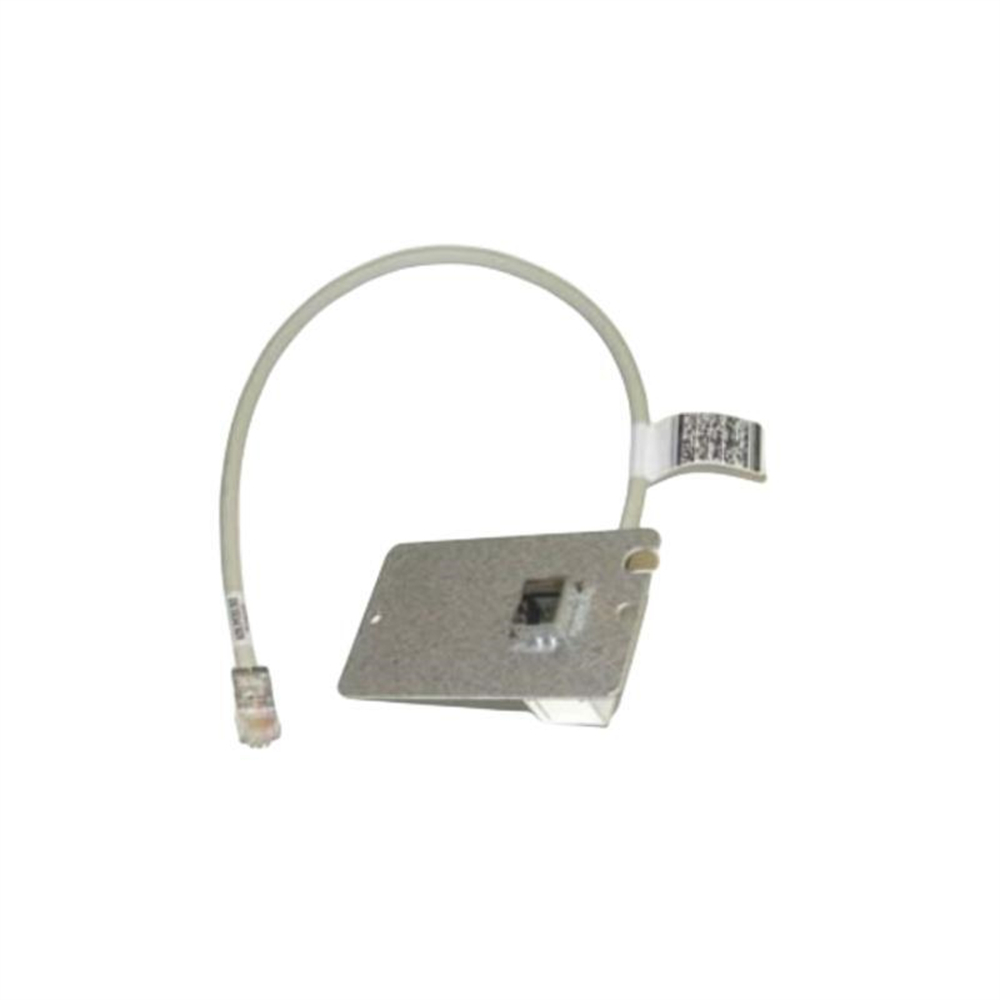
This document is the user manual (system version V7.0) for the MLink interface module (model 1TGE120021) in the ABB MNS iS system. It mainly introduces its hardware features, software modules, communication interfaces, and operation and maintenance. The following is a detailed summary:
Product positioning and target users
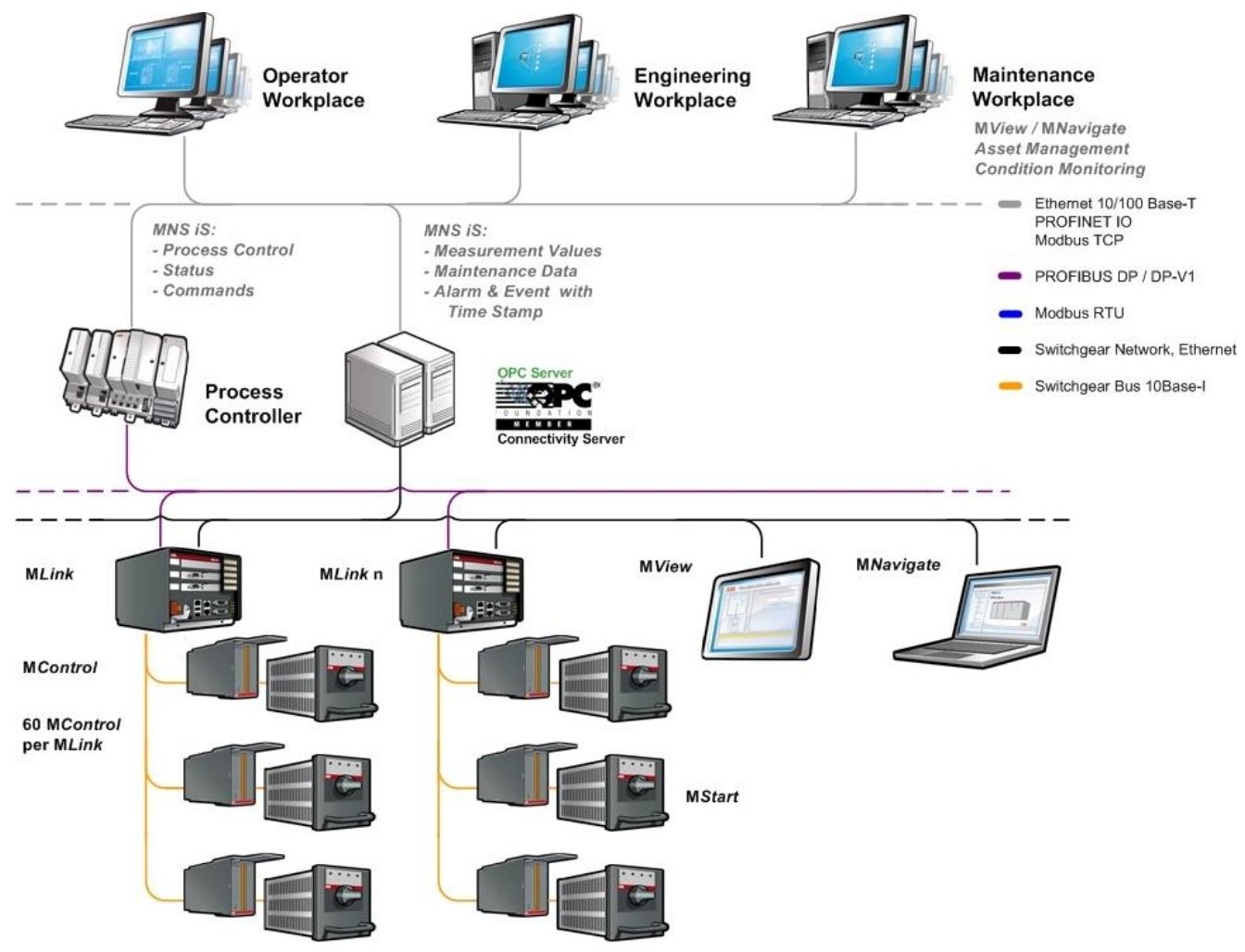
Positioning: MLink is an industrial PC module that serves as the core communication interface for MNS iS systems, connecting internal motor control units (MControl) and external control systems (such as DCS, PLC), supporting data exchange, status monitoring, and system integration.
Target users: System engineers, control engineers, familiar with fieldbus (such as PROFIBUS, Modbus) and industrial communication basics.
Power supply: 24V DC (19-31V DC), typical power consumption 800mA
Size: 140 × 160 × 165mm, weight 2.5kg
Working temperature: 0 ° C~55 ° C, protection level IP51
Mean Time Between Failures (MTBF): 46 years (40 ° C environment)
2. Interface and Connection
Front board interface:
Internal communication: Blue Sub-D 9-pin interface (Switchgear Bus), connected to MControl, supports redundant configuration.
External communication:
PROFIBUS DP: Black interface with communication status LED (yellow running, green ready).
Modbus RTU: RS485 interface (Serial 2).
Ethernet (LAN1/LAN2): LAN1 is used for Modbus TCP or PROFINET, while LAN2 connects to the control network (10/100 Base-T).
Other interfaces: reset button, CF card slot (supporting hot swappable protection), power terminal (+24V/GND).
Software modules and functions
Core module:
Web Server: Access the MView interface through a browser to monitor system status (activation required).
OPC Server: Supports data acquisition (DA) and alarm events (AE), requiring separate software installation.
Fieldbus module: Implement protocol conversion with DCS, depending on hardware model (such as PROFIBUS/Modbus).
Time synchronization: Supports NTP protocol and can provide timestamps through GPS or internal RTC to ensure event recording accuracy.
Redundancy support: Dual MLink modules are synchronized through redundant cables, with primary and backup switching to ensure system reliability.
Communication network configuration
1. Internal network (Switchgear Bus)
Function: Connect MLink and MControl (up to 60), the cable shielding layer needs to be grounded at both ends, and supports bus topology and terminal resistance configuration.
Features: Plug and play, no additional configuration required, communication status monitored through LED (Swg Bus Rx/Tx).
2. Switchgear Control Network
Architecture: Based on standard Ethernet (LAN2), supporting direct connection (cross cable) or connecting multiple MLinks, MView (human-machine interface), and engineering tools (MNavigate) through switches.
Security requirements: If you need to access the factory network, you need to configure a firewall and router to prevent unauthorized access.
Time synchronization scheme:
Option 1: Third party NTP servers (such as switches with GPS) provide time signals.
Option 2: MLink acts as an NTP server to synchronize time with other devices (with a built-in RTC that can cache for 3 hours).
Operation and maintenance
1. Initial setup
Tool: Use MNavigate software to configure parameters such as IP address, subnet mask, time server, etc. The parameters need to be written to the CF card and restarted to take effect.
Default value:
LAN2 IP:192.168.200.100,LAN1 IP:192.168.100.100
DHCP is not supported, network parameters need to be manually configured.
2. Installation steps
Physical installation: Installed in the control cable compartment of the MNS iS cabinet, fixed with metal brackets and supporting quick insertion and removal.
CF card operation: When inserting, pay attention to the direction (mechanical coding to prevent reverse insertion), and the configuration file needs to be written through MNavigate.
3. Fault diagnosis
LED indicator light: It displays the operating status, communication faults, and redundancy status through 8 LEDs (such as LED2 indicating system faults and LED6 indicating DCS communication activation).
Common problem handling:
Network failure: Check IP configuration, ping test connectivity, and rewrite CF card configuration.
MControl offline: Confirm internal bus connection and MControl online status settings.
Documentation and Compatibility
Related documents: The accompanying manual covers the web interface PROFIBUS、Modbus、 Special content such as redundant configuration.
System compatibility: Only applicable to MNS iS System Release 7.0, please refer to the latest system guidelines for functional implementation.
Summarize
The MLink module is the communication hub of ABB MNS iS system, which seamlessly integrates motor control with upper level systems in industrial environments through flexible protocol support and reliable hardware design. Its core advantages include multi protocol compatibility, high time synchronization accuracy, and strong redundancy reliability, making it suitable for automation control systems that require high real-time performance and stability. Operation and maintenance rely on the specialized tool MNavigate, and attention should be paid to network configuration specifications and hardware installation details.
Strictly follow the “Seven Step Life Saving Rule”, including risk assessment, power outage lockout (LOTO), voltage detection, grounding short circuit and other processes, to ensure operational safety.
The equipment poses risks of high voltage, high temperature, and electromagnetic fields. Maintenance personnel need to wear protective equipment to avoid contact with live parts and high-temperature surfaces.
Residual risks include electromagnetic interference with pacemakers, accidental movement, contact voltage, etc. It is necessary to ensure that the equipment operates within the specified parameter range.
special tools
Converter service toolbox: includes expansion tools for disassembling semiconductor stacks, stabilizing boards, etc., used to release stack pressure and replace components.
Debugging tools: such as RCI Box XU D194 (signal monitoring), PCS6000 HMI (human-machine interface), FADEC 3 (semiconductor testing equipment).
Replacement tools: including foundation beam jacks, chain hoists, pump maintenance platform kits, etc., used for dismantling and installing heavy components.
Preventive maintenance
Maintenance cycle and tasks
Daily/quarterly: visually inspect for dust and signs of overheating, clean cabinets, check bolt tightness and cable wear.
Year: Test the tripping circuit, insulation resistance, and grounding resistance of the main circuit breaker (MCB), and replace aging components such as batteries and fans.
Specific inspection:
Semiconductor stacking: Use FADEC 3 to detect IGCT and diodes, check stack alignment and clamping force.
Cooling system: Check the conductivity of the coolant, replace the ion exchange resin and filter, and inspect the function of the pump and valve.
Filter components: measure resistance and capacitance values to verify filtering performance.
Maintain records
Use the Preventive Maintenance Report to record component replacements, parameter adjustments, and abnormal situations to ensure traceability.
Component replacement and repair
1. Replacement of control components
AC 800PEC controller: Replace after power failure, pay attention to firmware version matching, and verify LED status after reconnecting the cable.
UPS and battery: When replacing, power off and release residual voltage. Pay attention to matching battery polarity and model, and test the charging and discharging function.
Fiber optic cable: Cut and polish with specialized tools to ensure that the connection loss meets the standard and avoid contaminating the fiber optic end face.
2. Replacement of power and cooling components
IGCT and diode:
Release the stacking pressure, use the expansion tool to separate the heat sink, replace it, realign the stack and tighten it.
Check the polarity and clean the contact surface, avoid using grease, and ensure even clamping force.
Cooling system components:
Pump: Drain the coolant, remove the flange and electrical connections, replace with a dedicated bracket, pay attention to the direction and sealing of the impeller.
Ion exchanger and filter: After replacement, the system needs to be flushed to test flow rate and conductivity.
Valves and sensors: After replacement, pressure and temperature sensors need to be calibrated to ensure that the control system is functioning properly.
3. Module level replacement
Voltage Limiting Module (VLM): After power failure, remove the cables and cooling pipelines, replace them, and test the voltage relief function.
Grid Circuit Breaker Unit (GBU): Use a dedicated trolley to disassemble the circuit breaker, check the wear of the contacts, reinstall and test the opening and closing time.
Dv/dt filter: When replacing reactors, resistors, and capacitors, it is necessary to match the model and parameters to ensure EMI suppression performance.
4、 Troubleshooting process
diagnostic procedure
Read the fault code through HMI or debugging tools, analyze the first fault (FF) and related alarms, check the LED status and historical records.
Check the power supply, communication links, sensors, and semiconductor components, and use tools such as multimeters and oscilloscopes to measure voltage and resistance values.
Typical fault handling
IGCT fault: Conduct characteristic detection through FADEC 3, replace and recalibrate trigger signal.
Cooling system leakage: locate the leakage point, replace the seals or pipelines, and test whether the pressure and flow are normal.
Communication interruption: Check the fiber optic connection, module power supply, and address settings, and replace the faulty S800 I/O module or communication board.
5、 Special precautions
Static Electricity Protection (ESD)
When operating the control board and semiconductor, it is necessary to wear a grounding wristband and use anti-static pads to avoid direct contact with circuit contacts.
Heavy component operation
Components weighing over 25 kg, such as reactors and circuit breakers, require the use of lifting tools, with two people working together to avoid the risk of falling.
Documentation and Compliance
Replacing serialized components (such as IGCT and capacitors) requires updating the ABB database and recording the new serial number.
Follow environmental requirements, dispose of waste components (such as batteries and circuit boards) correctly, and avoid environmental pollution.
The relevant models and component models of ABB PCS6000 are as follows:
Main device model
PCS6000
The medium voltage frequency converter models covered by the core of the manual are suitable for industrial scenarios such as large wind turbines and tidal energy, and support 1CL (single conversion line) and 2CL (dual conversion line) configurations.
Core component model
1. Power Unit (POU)
IGCT model:
5SHY 3545L0016 (old generation)
5SHY 4045L0006 (new generation, can replace old models one-on-one)
DC capacitor:
DCMKP 2.6kV/2×1.5mF(3BHB006617R0013)
DCMKP 3.15kV/2×1.01mF(3BHB006617R0014)
2. DC Link Unit (DLU)
Neutral Connection Module (NCM):
Includes resistors – R461, – R462_1/- R462_2, and capacitor – C461.
Voltage Limiting Module (VLM):
VLM30 (weighing approximately 50kg), VLM70 (weighing approximately 60kg).
Dv/dt filtering module (VFM):
Reactors, resistors, and capacitors components (such as – R581 to – R586, – C581 to – C587).
3. Grid Circuit Breaker Unit (GBU)
Circuit breaker model:
GEB (Generator Circuit Breaker), GRI (Grid Circuit Breaker), weighing approximately 160kg, compatible with VD4 series.
Dv/dt filter component:
Reactors, resistors, capacitors (such as – R581 to – R586, – C581 in GBU).
4. Water cooling unit (WCU)
Pump model:
Sweden water series: such as 300l/min pump (3BHE038551R0001, weight 77kg), 565l/min pump (3BHE043674R0001, weight 90kg).
ARMATEC series: Please refer to the accompanying service manual (such as Appendix B06).
Ion exchanger: For resin model adaptation, please refer to Safety Data Sheet (SDS) 81000-193.
5. Filter Unit (FIU)
High pass filtering module (HFM):
Reactors (such as 3BHE035425R0001, weighing 25kg) and capacitors (- C541 to – C544, weighing 41kg).
Filter Reactor Module (FRM):
For FRM70 (weighing 900kg), a dedicated replacement kit (3BHE039651R0001) is required.
6. Braking resistor unit (BRU)
model:
BRU50 (200kg), BRU51 (235kg), BRU70 (400kg), etc., suitable for different power requirements.
Adhere to standards: The manual strictly follows international standards such as ANSI Z535.6 (Safety Information Standard), ISO 3864-2 (Safety Label Design), EN 50110 (Electrical Safety Code), etc., to ensure the safety of equipment during design, installation, and operation.
Warning label classification:
DANGER: Refers to a dangerous situation that, if not avoided, could result in death or serious injury (such as high-voltage electric shock).
Warning: Potential risk of serious injury or equipment damage (such as high temperature surfaces, mechanical compression).
CAUTION: Possible situations that may cause minor injury or equipment malfunction (such as electrostatic discharge, misoperation).
Notice: Non safety related but important operating precautions (such as dust accumulation affecting equipment performance).
Special warning: The electromagnetic field generated during equipment operation may interfere with pacemakers. Warning signs should be marked near the equipment to restrict access by relevant personnel.
2. Seven step safety operation process
To prevent electric shock and arc damage during electrical operations, the manual defines a strict “seven step life-saving principle”:
Homework preparation: Conduct on-site risk assessment, confirm work permit, and equip appropriate personal protective equipment (PPE, such as insulated gloves and arc protective clothing).
Equipment identification: Confirm the equipment status through visual and auditory inspection, set up physical isolation barriers to avoid interference from unrelated personnel.
Power off locking (LOTO): Disconnect all energy supplies, use locks and labels to prevent accidental closing, and implement group LOTO for multi person operations.
Voltage detection: Use qualified voltage detection equipment to verify that there is no voltage after power failure, and calibrate the equipment on a known power source before and after the detection.
Grounding and short circuit: Close the grounding switch or use a portable grounding device to ensure safe discharge of fault current.
Protection of adjacent live parts: Maintain a safe distance, use insulated shielding tools, and avoid contact with exposed conductors.
License confirmation: Check the isolation points and grounding status to ensure that all operators understand the risks before signing the license document.
3. Safety requirements for main circuit breakers (MCBs)
Functional positioning: MCB is the core protection device of the frequency converter, which needs to quickly cut off the main power supply in case of a fault to prevent personnel injury and equipment damage.
Technical parameters:
Breaking time: Protection tripping time ≤ 75 ms (to limit equipment damage), safety tripping time ≤ 500 ms (to ensure personnel safety).
Control mode: The MCB disconnection command needs to come directly from the frequency converter. If it is transferred through PLC/DCS, the system needs to pass SIL 3 certification, and the use of local remote switch interruption disconnection commands is prohibited.
Redundant design: It is recommended to equip with dual independent trip coils or undervoltage coils, combined with the “Circuit Breaker Failure Protection (ANSI 50BF)” function of the upstream circuit breaker, to ensure reliable disconnection in case of a fault.
Product Architecture and Modular Design
1. Application scenarios and configuration selection
Core application: PCS6000 is a medium voltage frequency converter (3.3 kV level) designed specifically for large wind turbines and tidal energy equipment, supporting full power conversion and suitable for grid connected and off grid applications.
Topology structure:
1CL (single conversion line): Compact structure, suitable for conventional working conditions.
2CL (Dual Conversion Line): Supports “Restricted Mode”, which allows for single line operation when one line fails, improving system availability and reducing downtime.
2. Detailed explanation of modular components
(1) Power Unit (POU)
Function: Implement AC-DC-AC conversion of electrical energy, including three 3-level neutral point clamp (NPC) phase bridge arms, using integrated gate commutated thyristors (IGCT), supporting high voltage and high current operating conditions.
Design features:
Semiconductor devices are integrated into a single stacked structure to improve heat dissipation efficiency.
The main circuit interface board is responsible for controlling signal processing and status monitoring, and supports real-time fault diagnosis.
(2) DC Link Unit (DLU)
Core module:
Neutral Connection Module (NCM): Grounding the neutral point through an RC network, limiting the rate of change in ground voltage (dv/dt), allowing for short-term operation under single ground faults, and rapid shutdown after fault detection.
Voltage limiting module (VLM): When the DC link voltage exceeds the threshold, energy is released through the braking resistor, and the capacitor is discharged during shutdown to ensure maintenance safety.
Dv/dt filtering module (VFM): suppresses high-frequency oscillations generated by IGCT switches, protects transformer and generator windings, and reduces electromagnetic interference (EMI).
Generator Isolation Switch Module (GDM): Three position electric isolation switch (closed/open/grounded), supports manual operation (equipped with a rotating handle), isolates the generator in case of a fault.
(3) Grid Circuit Breaker Unit (GBU)
Function integration:
Circuit breaker: It realizes the on/off and short-circuit protection of the grid side circuit, and supports vacuum circuit breakers or SF ₆ circuit breakers.
Three position switch: including “connection”, “test”, and “grounding” positions. When grounding, it is necessary to operate under zero current to ensure personnel safety.
Operation method: Manually operated by hand crank, equipped with mechanical interlocking to prevent misoperation.
(4) Other key units
Water cooling unit (WCU): maintains constant water temperature (≥ 0 ° C) and flow rate, supports external heat exchanger connection, built-in ion exchanger purifies cooling medium, and pump set supports soft start to reduce impact.
Filter Unit (FIU): It includes a High Pass Filter Module (HFM) and a Filter Reactor Module (FRM), which meet the harmonic limit standards of the power grid (such as IEC 61000-3-6).
Braking Resistance Unit (BRU): Modular design, supports roof installation, maximum cable length of 10 meters, monitors heat dissipation through temperature models, optional BRU51/52/72 models, thermal capacity 7.5-15 MJ.
3. Cabinet design and protection
Mechanical structure:
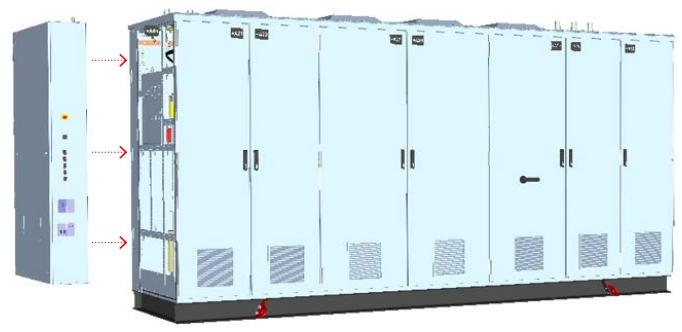
Galvanized steel frame+1.5mm powder coated steel plate, protection level IP54, resistant to dust and water spray.
Modular design supports back-to-back and series layout, saving installation space and suitable for narrow environments such as wind turbine cabins.
Electromagnetic compatibility (EMC):
The cabinet doors and side panels are sealed with conductive gaskets, and the internal panels are not painted to enhance the metal grounding effect.
The cable entry is equipped with EMC shielding strips to ensure that radio frequency interference (RFI) suppression complies with EN 61000-6-4 standard.
Environmental adaptability:
Working temperature: -10 ° C~+40 ° C (when the water cooling system is running), storage temperature: -25 ° C~+55 ° C.
Vibration protection: Compliant with IEC 60068-2-6 standard, suitable for the vibration environment of wind turbines.
Installation and commissioning process
1. Transportation and Storage Standards
Packaging requirements:
Land transportation: Wooden pallets (thickness 5 cm, length and width exceeding the cabinet by 30/60 cm)+polyethylene film (0.12 mm thickness), fixed with a winding machine applying 20-38 units of tension.
Sea freight: wooden box+aluminum foil moisture-proof film (three-layer structure, middle layer aluminum foil isolates water vapor), desiccant (in accordance with DIN 55474) placed inside, humidity indicator monitors environmental humidity.
Precautions for handling:
Using a crane or forklift, it is prohibited to directly lift the top of the cabinet, and force must be applied through the bottom lifting ring.
The fork distance of the forklift should be greater than 1500 mm, and the driving speed should be limited to walking speed to avoid tilting more than 30 degrees.
2. Mechanical and electrical installation
(1) Mechanical installation
Basic requirements: The cabinet is fixed to the horizontal floor with M16 bolts, and the bottom sealing plate can serve as a water collection tray to prevent internal water leakage from spreading.
Environmental control: The installation area should be dust-free, and the equipment should be covered with plastic sheeting during construction to prevent dust from entering; Paint damage needs to be repaired with polyurethane coating to ensure anti-corrosion and insulation performance.
(2) Electrical installation
EMC cabling principles:
Cable classification:
Class 1: Sensitive signals (such as 4-20 mA analog signals) require twisted pair shielding, with both ends of the shielding layer grounded.
Class 4: High interference lines (such as motor start stop signals), with a distance of ≥ 600 mm from other cables, laid vertically when crossing.
Shielding grounding: The shielding layer of the power cable needs to be connected to the grounding busbar near the frequency converter. If the cross-sectional area of the shielding layer is less than 50% of the phase conductor, equipotential bonding wires need to be laid in parallel.
High voltage connection:
Using Pfister ® PLUG P3 series connectors (such as P3SC straight type, P3EC1/2 curved type), code AF01 to ensure correct pairing, cable cross-sectional area of 70-240 mm ², maximum length of 150 m (grid side)/100 m (generator side).
When connecting, ensure that the plug is aligned with the socket and the torque meets the manufacturer’s requirements to avoid overheating caused by poor contact.
(3) Grounding system
Protective grounding (PE): The cabinet is connected to the main grounding grid through bottom M12 bolts, and the cross-sectional area of the grounding conductor is ≥ 95 mm ² (calculated based on a fault current of 16.2 kA and a breaking time of 0.5 seconds).
Functional grounding (FE): Used to discharge the common mode current generated by switch devices, separated from PE, and connected through an independent grounding bar to ensure EMC performance.
3. Debugging and Startup
prerequisite:
Complete mechanical alignment, bolt tightening, and cooling system water injection (deionized water+ethylene glycol).
The electrical connection is correct and the insulation test is qualified (the insulation resistance of cables, transformers, and generators meets the specifications).
Anti exposure activation sequence:
When the device is powered off for a long time and restarted, the control unit heater needs to be started first. When the internal temperature is ≥ 5 ° C and there is no condensation, the water-cooled pump is started for circulating heating. The entire process may last for 12 hours (in a low-temperature environment).
Pre startup inspection:
Confirm that all cabinet doors are closed, door lock switches are functioning properly, and there are no fault alarms (such as when the DC link grounding switch is in the “ungrounded” position and the LED indicator light is off).
Set the key switch to “ON”, the auxiliary power supply (3AC 400V/24VDC) is supplying power normally, and the pressure and flow rate of the water cooling system meet the standards.
Operation and Maintenance Guide
1. Daily operation interface
Local control device (located on the side of CCU):
Emergency stop button: Immediately disconnect the MCB after pressing, block the IGCT pulse, discharge the DC link through VLM, manually reset and clear the fault before recovery.
Key switch: controls the “start disable” or “local/remote” mode switching to prevent unauthorized operation.
Status indicator light: displays grid/generator voltage, grounding status, DC link status, etc. For example, if the “ISOLATOR CLOSED” light is on, it indicates that the DC link has been grounded and can be safely maintained.
Remote control: Connected to the higher-level control system through fieldbus (such as Profibus, Ethernet), supporting real-time monitoring of parameters such as voltage, current, temperature, etc., receiving start stop commands and fault alarms.
2. Maintenance strategy and cycle
Preventive Maintenance Plan (Refer to PCS6000 Preventive Maintenance Plan 3BHS600000 E88):
Daily: Check the operating status, cooling system leaks, and whether there are any abnormal noises or odors.
Quarter: Clean the dust inside the cabinet (blow with compressed air, avoid using damp cloth), check the tightness of bolts and cable wear.
Year: Test MCB trip circuit, insulation resistance, grounding resistance, replace aging components (such as capacitors and fans), and record maintenance logs.
Key maintenance tasks:
Water cooling system: Replace ion exchange resin annually, check the conductivity of the coolant (≤ 5 μ S/cm), and clean the surface dirt of the heat exchanger.
IGCT inspection: Dynamic testing is conducted every two years to confirm that the switch characteristics meet the factory standards and avoid faults caused by device aging.
3. Fault diagnosis and handling
Fault classification:
Alarm: Do not interrupt operation. If the cooling water temperature is too high or the fan fails, the cause should be promptly investigated.
Fault: Forced shutdown, such as overvoltage, short circuit, IGCT fault, should be reset and repaired according to the “Fault Manual” (Appendix A09).
Processing procedure:
Record fault code: Obtain fault information through remote interface or local display screen, such as “F001: DC Link Overvoltage”.
Preliminary investigation: Check the power supply voltage, brake resistor connection, VLM function, and confirm whether it is caused by power grid fluctuations or sudden load changes.
Professional maintenance: If it is a hardware failure (such as capacitor rupture, IGCT damage), ABB authorized personnel must replace the components. Non professionals are prohibited from disassembling high-voltage components.
Spare parts management: Key spare parts (such as IGCT and control board) need to be stored in anti-static packaging, with a storage environment temperature of 5 ° C~40 ° C and humidity ≤ 60%.
Documentation and Compliance
1. Supporting documents
Manual and drawings:
PCS6000 Service Manual (3BHS600000 E80): Detailed disassembly steps and component replacement guide.
EMC and Grounding Plan (3BHS856856 E62): Guide cable layout and grounding system design.
Electrical Drawings (Appendix A03): Includes schematic diagrams, wiring diagrams, and terminal block definitions.
Electronic documents: USB storage devices are provided with the device, including interface files, firmware upgrade programs, and fault diagnosis tools.
2. Compliance and Certification
Safety certification: CE certification (compliant with Low Voltage Directive, EMC Directive), some markets require UL/cUL, T Ü V and other certifications.
Standard compliance:
EMC: The emission limit complies with EN 61000-6-4, and the immunity complies with EN 61000-6-2.
The ABB PCS6000 user manual focuses on safety and ensures the reliable operation of medium voltage inverters in the field of renewable energy through modular design, strict installation procedures, and full lifecycle maintenance strategies. Users need to strictly follow the safety regulations in the manual, combined with professional training and regular maintenance, to maximize the energy efficiency and service life of the equipment. If further support is needed, technical support and spare parts supply can be obtained through ABB’s global service network.
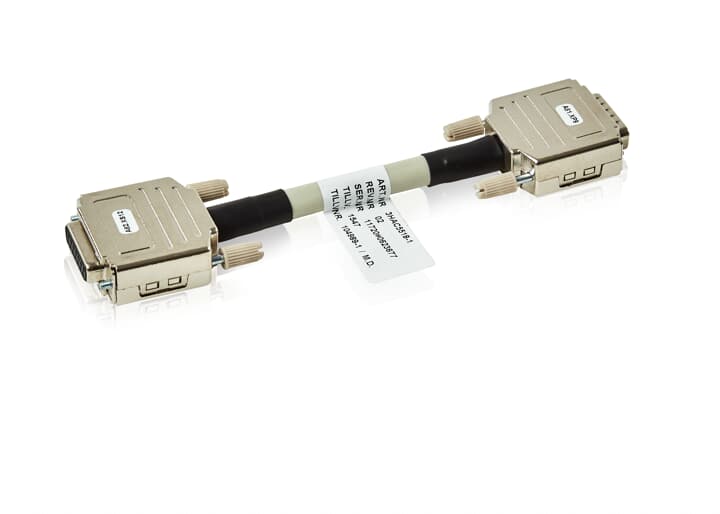
ABB 3HAC5518-1 Industrial Control Module is a professional equipment that focuses on the efficient and precise control needs of industrial automation. It undertakes the core functions of data processing, logical operation, and equipment collaborative control in complex industrial scenarios. It can quickly respond to signals collected by various sensors, accurately output control instructions according to preset programs, drive actuators to complete complex tasks, and is a key component to ensure stable and efficient operation of industrial production processes. It is widely used in automation upgrade projects in multiple fields such as manufacturing, energy, and logistics.
Brand background
ABB, as a leading global enterprise in the fields of power and automation technology, has set an industry benchmark in industrial automation with over 130 years of technological accumulation and innovative practices. Its profound research and development background, strict quality control system, and global service network ensure that products are always at the forefront of technology. The 3HAC5518-1 industrial control module inherits ABB’s consistent high-quality standards, integrates advanced technology and industry experience, and provides users with reliable automation control solutions.
Specification parameters
working voltage
Supports 24V DC wide voltage input, can adapt to a certain range of voltage fluctuations, ensuring stable operation in complex industrial power supply environments
communication interface
Equipped with Ethernet interfaces (supporting Profinet, Ethernet/IP protocols), RS-485, CAN bus, etc., to achieve seamless communication among multiple devices
I/O channel configuration
12 digital input channels, 10 digital output channels, 6 analog input channels, 4 analog output channels, suitable for diverse control scenarios
Working temperature range
-From 20 ℃ to+60 ℃, it can work continuously and stably in harsh industrial environments such as high and low temperatures
protection grade
IP20, Capable of basic dust prevention, effectively preventing objects with a diameter greater than 12mm from entering and protecting internal circuits
Certification standards
Through international authoritative certifications such as CE and UL, we comply with global industrial safety and quality standards to ensure product reliability
Core functions
High precision control: Equipped with advanced PID, fuzzy control and other algorithms, the adjustment accuracy of parameters such as motor speed, valve opening, temperature and pressure can reach ± 0.1%, meeting the high demand for control accuracy in precision manufacturing, semiconductor production and other scenarios.
Multi device collaborative management: With rich communication interfaces and strong protocol compatibility, it can simultaneously connect multiple devices such as robotic arms, conveyor belts, and detection instruments, accurately coordinate equipment working timing and actions, and improve the overall efficiency of automated production lines.
Real time data processing: It has the ability of high-speed data acquisition and edge computing, can filter, analyze and store sensor data in real time, optimize production process in advance through data trend prediction, and prevent equipment failures.
Intelligent fault diagnosis: Built in fault diagnosis system, real-time monitoring of module and connected device operation status. When communication interruption, overload, abnormal data and other faults occur, sound and light alarms are immediately triggered and detailed fault information is uploaded to assist technical personnel in quickly locating and troubleshooting.
Working principle
When the 3HAC5518-1 is working, the input channel first receives analog or digital signals from temperature, pressure, position and other sensors. After the analog signals are converted into digital signals through the A/D converter, they are transmitted to the internal processor together with the direct input digital signals. The processor performs logical operations and analysis on data based on preset control programs and algorithms, determines the production process status, and generates corresponding control instructions. The instructions are sent to actuators such as motors, solenoid valves, and regulating valves through D/A converters (for analog outputs) or digital output channels to drive the equipment to perform actions. The communication module is responsible for exchanging data with the upper computer, other control modules, and devices, uploading operational data, and receiving parameter adjustment instructions; The fault diagnosis module continuously monitors the status of various parts of the system, and promptly activates the alarm and handling mechanism in case of abnormalities to ensure the stable operation of the system.
Key advantages
High reliability and stability: Using high-quality components and redundant design, after rigorous aging, high and low temperature, and vibration testing, the mean time between failures (MTBF) exceeds 100000 hours, and it can still operate stably in harsh environments such as strong electromagnetic interference and high dust.
Flexibility and Scalability: The modular structure supports on-demand configuration of I/O channels and functional modules, facilitating system upgrades and renovations; Support hot swapping function, modules can be replaced during device operation, reducing maintenance downtime.
Convenient and easy-to-use: Supports multiple programming languages such as ladder diagrams and structured text, making it easy for engineers to program and debug; Equipped with intuitive graphical user interface and configuration software, reducing operational learning costs and improving debugging efficiency.
Wide compatibility: Not only seamlessly integrated with other ABB industrial equipment, but also compatible with mainstream third-party brand equipment, making it easy for users to build personalized industrial automation solutions.
Precautions
Installation environment: Choose a dry, ventilated and away from strong electromagnetic interference sources for installation, avoid high temperature, humidity, corrosive gases or high dust places, and ensure that the environmental temperature and humidity are within the working range.
Wiring operation: strictly follow the product manual for wiring, distinguish the positive and negative poles of the power supply from the input and output signal lines, and prevent misconnection; Different types of signal lines are wired separately, and the grounding wire is reliably grounded and the resistance meets the requirements.
Parameter setting: Before use, configure the software to accurately set communication protocol, baud rate, device address, I/O type and other parameters based on the actual application scenario, and conduct functional testing.
Regular maintenance: Regularly check the appearance of the module, the tightness of the wiring terminals, and the operation status of the cooling fan; Clean the dust on the surface of the module, calibrate the performance according to the prescribed cycle, and ensure control accuracy.
Similar model supplement
ABB 3HAC5518-2 Industrial Control Module: Compared to 3HAC5518-1, this model increases the number of analog input channels and reduces the number of digital output channels, making it more suitable for monitoring scenarios such as chemical and energy industries that require large amounts of analog signals such as temperature and pressure.
ABB 3HAC5519-1 Industrial Control Module: Upgraded in data processing and communication performance, equipped with higher performance processors, faster data processing speed, support for more industrial communication protocols and higher transmission rates, suitable for systems with extremely high real-time requirements such as central control in smart factories and large-scale power dispatch.
Application scenarios
Manufacturing industry: controlling robot welding and assembly in automobile manufacturing; Manage SMT surface mount machines and semiconductor packaging equipment in electronic manufacturing to improve production accuracy and efficiency.
Energy industry: monitoring and controlling generator parameters in thermal power plants; Regulating power generation equipment in wind and solar power plants to ensure stable energy production and efficient conversion.
Transportation: control signal timing and monitor road equipment in the intelligent transportation system; Control train signals and platform screen door systems in rail transit to ensure transportation safety.
Food and medicine: precise control of process parameters such as temperature and pressure in food processing; Ensure the accuracy of equipment operation and sterile environment in pharmaceutical production, and guarantee product quality and safety.
The ABB 3HAC5497-1 industrial control module is a high-performance control core equipment designed specifically for complex industrial automation scenarios. In the industrial production process, it is like the “nerve center” of the entire automation system, undertaking key tasks such as data processing, logical operations, and equipment coordination and control. By accurately analyzing signals collected by various sensors and generating control instructions based on preset programs and algorithms, the actuators are driven to complete corresponding actions, ensuring efficient, stable, and precise operation of industrial production. It is widely used in automation upgrading and transformation projects in multiple fields such as manufacturing, energy, and transportation.
Specification parameters
working voltage
Supports 24V DC wide voltage input, adapts to voltage fluctuations within a certain range, and ensures stable operation in complex industrial power supply environments.
Data processing capability
Equipped with Ethernet interfaces (supporting Profinet, Ethernet/IP protocols), RS-485 interfaces, CAN bus interfaces, etc., to achieve seamless communication with various devices and systems.
Input/output channel
It has 16 digital input channels, 12 digital output channels, 8 analog input channels, and 4 analog output channels to meet diverse industrial control needs.
Working temperature range
-From 20 ℃ to+60 ℃, it can work continuously and stably in harsh industrial environments such as high and low temperatures.
protection grade
IP20, Capable of basic dust prevention, preventing objects with a diameter greater than 12mm from entering and providing effective protection for internal circuits.
Certification standards
Through international authoritative certifications such as CE and UL, it complies with global industrial safety and quality standards, ensuring product reliability and safety.
Core functions
Precision control: Equipped with advanced PID control, fuzzy control and other algorithms, it can achieve high-precision adjustment of industrial equipment parameters such as motor speed, valve opening, temperature, pressure, etc. The control accuracy can reach ± 0.1%, meeting the extremely high requirements for control accuracy in industrial production processes.
Multi device collaborative control: Through rich communication interfaces and strong protocol compatibility, multiple industrial devices can be connected and managed simultaneously, achieving collaborative operations between devices. For example, on an automated production line, the work sequence and rhythm of robotic arms, conveyor belts, detection equipment, etc. can be accurately coordinated to improve production efficiency and product quality.
Data collection and processing: Quickly and accurately collect real-time data from various sensors, and perform filtering, analysis, storage, and other processing. Trend analysis can be conducted on the collected data to provide data support for production process optimization and fault prediction, helping enterprises achieve intelligent production management.
Fault diagnosis and alarm: equipped with comprehensive self diagnosis function, real-time monitoring of the operation status of the module itself and connected devices. Once a fault is detected, such as communication interruption, abnormal input and output, equipment overload, etc., it can immediately trigger an audible and visual alarm, and send detailed fault information to the upper computer through the communication interface, making it convenient for technicians to quickly locate and troubleshoot the fault, reducing downtime.
Working principle
When the 3HAC5497-1 industrial control module is working, it first receives analog or digital signals from devices such as temperature sensors, pressure sensors, and position sensors through input channels. After the analog signal is converted into digital signal by the A/D converter, it is transmitted to the high-performance processor inside the module together with the direct input digital signal. The processor performs logical operations and analysis on these data based on pre written control programs and algorithms to determine the current state of the industrial production process. Then, based on the judgment results, corresponding control instructions are generated and sent to actuators such as motors, solenoid valves, and regulating valves through D/A converters (for analog outputs) or directly through digital output channels to drive the actuators to perform corresponding actions and achieve control of industrial equipment. At the same time, the communication module is responsible for data exchange with the upper computer monitoring system, other control modules or devices, uploading equipment operation data, and receiving control parameter adjustment instructions to ensure the coordinated operation of the entire industrial automation system. The fault diagnosis module continuously monitors the operating status of various parts of the system, and once any abnormalities are detected, immediately activates the alarm and fault handling mechanism.
Key advantages
High performance and reliability: Using high-quality electronic components and advanced manufacturing processes, it has undergone rigorous aging testing, high and low temperature testing, vibration testing, etc. It has excellent anti-interference ability and stability, with an average time between failures (MTBF) of over 100000 hours, and can operate reliably in harsh industrial environments for a long time.
Flexibility and Scalability: Modular design enables flexible configuration of input/output channels and functional modules according to actual application needs, facilitating system upgrades and modifications. Support hot swappable function, allowing for module replacement or addition without interrupting system operation, improving the convenience of system maintenance.
Intelligence and convenience: Supports multiple programming languages, such as ladder diagram, structured text, etc., making it convenient for engineers to write and debug programs. Provide an intuitive and user-friendly interface and configuration software, which can complete module parameter settings, program downloads, and operation monitoring through graphical operations, reducing the threshold for use and learning costs.
Good compatibility: Not only can it seamlessly integrate with other industrial equipment and control systems under ABB, but it can also be compatible with third-party brand equipment and systems, making it easy to build diversified industrial automation solutions and meet the personalized needs of different enterprises.
Precautions
Installation environment: During installation, a dry, well ventilated environment away from strong electromagnetic interference sources should be selected to avoid installation in places with high temperature, humidity, corrosive gases or dust. Ensure that the environmental temperature and humidity at the installation location are within the specified working range of the module.
Wiring specifications: Strictly follow the wiring diagram in the product manual for wiring operations, distinguish the positive and negative poles of the power supply, input and output signal lines, and avoid module damage or system failure caused by wrong wiring. Different types of signal lines should be wired separately to prevent signal interference; The grounding wire should be reliably grounded, and the grounding resistance should meet the requirements.
Parameter configuration: Before use, it is necessary to correctly set the communication protocol, baud rate, device address, input/output type and other parameters of the module through configuration software according to the actual industrial application scenario. After the parameter settings are completed, functional testing should be conducted to ensure that the module is working properly.
Regular maintenance: Regularly inspect the module, including visual inspection, wiring terminal tightening inspection, cooling fan operation status inspection, etc. Regularly clean the dust on the surface of the module to prevent dust accumulation from affecting heat dissipation and electrical performance. Perform performance calibration on the module at regular intervals to ensure control accuracy.
Similar model supplement
ABB 3HAC5497-2 Industrial Control Module: Compared with 3HAC5497-1, 3HAC5497-2 has adjusted the number of input/output channels, increasing the number of analog input channels and reducing the number of digital output channels. It is more suitable for industrial scenarios that require the collection of a large number of analog signals (such as temperature, pressure, flow, etc.), such as chemical production process monitoring, environmental monitoring systems, etc.
ABB 3HAC5498-1 Industrial Control Module: This model has been upgraded in terms of data processing capability and communication performance, equipped with a higher performance processor, faster data processing speed, and supports more industrial communication protocols and higher data transmission rates. It is suitable for large-scale industrial automation systems that require extremely high real-time and data processing requirements, such as central control systems for smart factories, large-scale power dispatch systems, etc.
The ABB 3HAC7344-1 mainline filter unit is a high-performance electromagnetic interference (EMI) suppression device developed specifically for industrial automation scenarios. It is deeply integrated with the Corcom EMI Filter Unit and is a key component to ensure the stable operation of industrial control systems. In industrial environments, electromagnetic interference generated by the operation of electrical equipment can affect the accuracy of signal transmission and the normal operation of equipment. This filter unit filters noise and interference signals in the power grid, purifies the power supply, and provides stable and pure power for precision equipment such as robot IRC5 controllers, effectively improving the reliability and stability of the system. It is widely used in industrial scenarios that require extremely high electromagnetic compatibility.
Specification parameters
rated voltage
220V/380V AC, Compatible with common single-phase and three-phase AC power supply voltages in industry, suitable for power supply needs in different industrial scenarios
Frequency range
50/60Hz, Match the power supply frequency of most regions around the world
Working temperature range
-20 ℃ -+60 ℃, suitable for harsh industrial environments such as high and low temperatures, ensuring stable operation of equipment
Protection grade
IP20, Dustproof and prevent objects with a diameter greater than 12mm from entering, providing basic protection for internal circuits
Certification standards
Through international certifications such as CE, UL, FCC, etc., it meets the safety and electromagnetic compatibility standards of mainstream markets worldwide
Core functions
Electromagnetic interference suppression: By designing efficient filtering circuits, common mode and differential mode electromagnetic interference in the power grid can be effectively suppressed. It can filter out high-frequency noise, surge voltage and other interference signals on the power line, prevent interference signals from affecting the equipment, and also prevent the interference signals generated by the equipment itself from feedback to the power grid, ensuring the electromagnetic compatibility of the entire industrial system.
Power purification: Optimize power quality, stabilize voltage output, reduce voltage fluctuations and distortions. Provide pure and stable power supply for connected devices, reduce the risk of equipment failure caused by power issues, extend the service life of equipment, and ensure the normal operation and performance of equipment.
Signal protection: In industrial automation systems, it prevents electromagnetic interference from interfering with control signals and data signals, ensuring the accuracy and integrity of signal transmission. For example, in robot control systems, ensuring the accuracy of robot receiving and executing control instructions, and avoiding action deviations or errors caused by signal interference.
Working principle
The 3HAC7344-1 main line filter unit is mainly composed of electronic components such as inductors and capacitors to form the filtering circuit. When a current containing electromagnetic interference passes through a filter, the filtering circuit processes it based on the difference in frequency between the electromagnetic interference signal and the normal power signal. For high-frequency electromagnetic interference signals, inductors exhibit high impedance characteristics, hindering their passage; Capacitors provide a low impedance path for high-frequency interference signals, allowing them to bypass to ground and filter out the interference signals. For normal frequency power signals (such as 50/60Hz), inductors and capacitors exhibit lower impedance, allowing the power signal to pass smoothly and ultimately outputting a pure and stable power supply, achieving suppression of electromagnetic interference and purification of the power supply.
Key advantages
Efficient filtering performance: With excellent insertion loss performance over a wide frequency range, it can effectively suppress various types of electromagnetic interference and ensure stable operation of equipment in complex electromagnetic environments. Compared to similar products, it can reduce electromagnetic interference by [X]% and significantly improve system stability.
High reliability: Equipped with high-quality electronic components and sturdy casing design, it undergoes rigorous aging testing, high and low temperature testing, vibration testing, etc. to ensure long-term stable operation in harsh industrial environments. The mean time between failures (MTBF) exceeds [X] hours, reducing the frequency of equipment maintenance and replacement.
Easy to install and adapt: Standardized interface design, supports multiple installation methods (such as panel installation, rail installation), and can be easily integrated into existing industrial control systems. At the same time, it has good compatibility and can seamlessly cooperate with ABB and other brands of equipment and controllers, reducing the difficulty of system integration.
Energy saving and environmental protection: Low power design, while effectively suppressing electromagnetic interference, has low energy consumption, conforms to the concept of green industrial development, and reduces the operating costs of enterprises.
Safety compliance: Strictly following international safety and electromagnetic compatibility standards, controlling the entire process from design to production, ensuring product safety and compliance, and eliminating safety hazards and compliance risks for enterprises.
Precautions
Installation environment: It should be installed in a dry and well ventilated environment, avoiding installation near high temperatures, humidity, corrosive gases, or strong electromagnetic interference sources. The installation location should be far away from large motors, transformers, and other equipment to prevent external electromagnetic interference from affecting the performance of the filter.
Installation specifications: During installation, it is necessary to strictly follow the product manual for wiring to ensure correct connection of power input and output, and avoid reverse connection or short circuit. Lines with different phases should be routed separately to prevent mutual interference; The grounding wire should be reliably grounded, and the grounding resistance should meet the requirements to ensure the normal operation and safety performance of the filter.
Usage and maintenance: During use, avoid overloading the filter and ensure that the actual working current does not exceed the rated current. Regularly check the appearance of the filter, whether the wiring terminals are loose, and whether there is overheating. If any abnormalities are found, power should be cut off for inspection in a timely manner, and professional personnel should be contacted for repair or replacement.
Parameter matching: When selecting and using this filter unit, it is necessary to choose a filter of appropriate specifications based on the power, voltage, current, and electromagnetic interference characteristics of the equipment to ensure that the filter matches the equipment and achieves the best filtering effect.
Similar model supplement
ABB 3HAC7345-1 Main Line Filter Unit: Compared to 3HAC7344-1, 3HAC7345-1 has a higher rated current and is suitable for higher power industrial equipment or systems. In some automated production lines of large factories, if the total power of the equipment is large, the current carrying capacity of the power filter is required to be higher. 3HAC7345-1 can better meet the demand, and the filtering performance has also been optimized for the interference characteristics of high-power equipment.
ABB 3HAC7343-1 Mainline Filter Unit: This model of filter unit has a more compact size and is suitable for installation environments with limited space, such as small control cabinets or equipment with narrow internal space. Although the size has decreased, the filtering performance in key frequency bands can still meet the requirements of general industrial equipment, providing electromagnetic interference suppression solutions for small industrial automation systems.
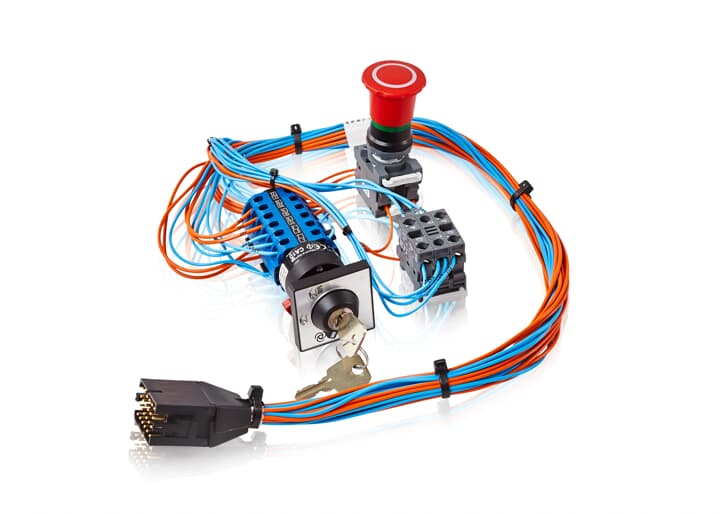
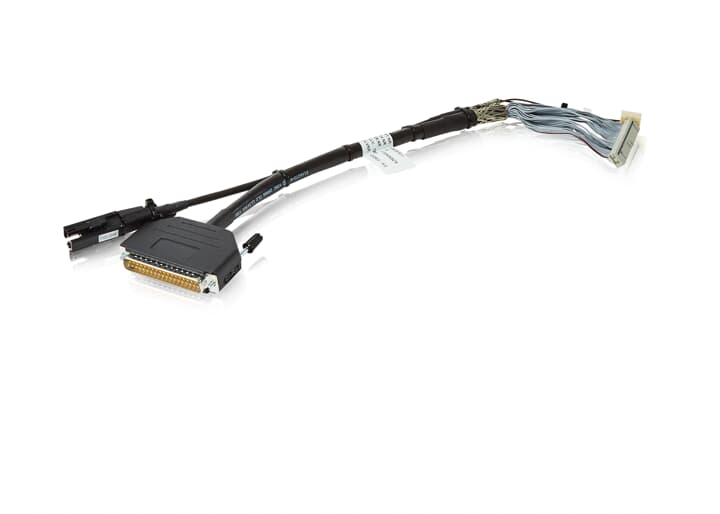
The ABB 3HAC7681-1 connection harness is a specialized cable component designed for industrial automation equipment. It serves as a bridge in industrial control systems, enabling signal transmission and power supply between different devices and modules, ensuring stable and efficient communication and collaborative work between devices. It has been professionally designed and rigorously tested to adapt to complex industrial environments, and is an important component for ensuring the stable operation of automation systems.
Specification parameters
Cable type: Multiple high-quality cable combinations are used, including shielded cables, twisted pair cables, etc., to meet different signal and power transmission needs. Shielded cables can effectively resist electromagnetic interference and ensure the accuracy of signal transmission; Twisted pair cables are suitable for data communication, ensuring the stability of data transmission.
Interface type: Equipped with standardized interfaces, it can be perfectly adapted to ABB related equipment and modules, such as specific models of industrial control modules, robot body interfaces, etc. The interface design complies with industrial standards and has good plug-in performance and electrical connection stability.
Working temperature range: able to work stably within the temperature range of -20 ℃ to+60 ℃, adapt to temperature changes in most industrial environments, and ensure that connection performance is not affected by environmental temperature.
Protection level: It has a protection level of IP20 or above, which can prevent dust and small foreign objects from entering, provide basic protection for internal cables and interfaces, and extend the service life of the product.
Core functions
Signal transmission: Accurately and stably transmit various industrial signals such as control signals and data signals to ensure smooth communication between devices. Whether it is complex control instruction transmission or real-time interaction of large amounts of data, it can be efficiently completed to ensure the precise operation of industrial automation systems.
Power supply: Provide stable power transmission for connected devices to meet the power requirements for device operation. Its cables have good conductivity and current carrying capacity, which can safely and reliably transmit electricity, avoiding equipment failures caused by power transmission problems.
Convenient installation: Standardized interfaces and pre assembly design make the installation process simple and convenient. Technicians can quickly connect it to the corresponding equipment and modules, reducing installation and debugging time and improving work efficiency. At the same time, clear labeling and reasonable wiring design on the cables also facilitate later maintenance and troubleshooting.
Working principle
When the ABB 3HAC7681-1 wiring harness is in operation, power transmission and signal transmission are achieved through the conductive core wires of the internal cables. For power transmission, current is transmitted from the power source to the electrical equipment through conductive core wires, providing the energy required for the equipment to operate; In terms of signal transmission, various types of electrical signals (such as digital signals and analog signals) are transmitted in the form of current or voltage changes in the core wire. Through shielding layers and cable structure design, external interference is reduced to ensure that the signal accurately reaches the receiving end equipment. After the signal is transmitted to the receiving device, the device parses and processes the signal, executes corresponding operation instructions, and thus achieves collaborative work between devices.
Key advantages
High reliability: Using high-quality materials and advanced manufacturing processes, and undergoing strict quality testing, to ensure the long-term stable operation of the connecting wire harness in industrial environments. Its wear-resistant and corrosion-resistant characteristics can effectively cope with harsh conditions such as mechanical friction and chemical corrosion in industrial sites, reducing the risk of system shutdown caused by cable failures.
Strong compatibility: Highly compatible with various ABB devices and modules, seamlessly integrated into ABB industrial automation systems. At the same time, while meeting certain electrical parameter requirements, it can also be connected to some third-party devices, improving the product’s versatility and application flexibility.
Customized services: We can provide customized cable lengths, interface types, and cable combination solutions according to customers’ specific needs, meeting the special requirements of different industrial projects and providing customers with more practical solutions.
Efficient maintenance: Modular and standardized design enables quick location and replacement of faulty cable segments or interfaces in the event of a malfunction, reducing maintenance time and costs. In addition, detailed product documentation and technical support also provide convenience for technical personnel’s maintenance work.
Precautions
Installation environment: During installation, avoid operating in harsh environments such as high temperature, humidity, and strong electromagnetic interference. Ensure a dry and well ventilated installation environment, away from strong electromagnetic interference sources such as large motors and transformers, to prevent interference with signal transmission and damage to cables.
Installation specifications: Strictly follow the product manual and installation guide for installation operations, ensuring firm interface connections and neat cable wiring. Different types of cables (such as power lines and signal lines) should be wired separately to avoid mutual interference; At the same time, attention should be paid to the bending radius of the cable to prevent excessive bending and damage to the internal core wire.
Usage and maintenance: During use, avoid excessive pulling or squeezing of cables to prevent mechanical damage. Regularly inspect the connecting harness to check for loose interfaces and damaged cable sheaths, and promptly address any issues found. If cable replacement is required, products of the same specifications and models should be selected to ensure connection performance and system compatibility.
Similar model supplement
ABB 3HAC7682-1 connection harness: Compared with 3HAC7681-1, 3HAC7682-1 has differences in interface types and cable combinations. It may have adopted different interface designs, suitable for connecting with specific series of ABB equipment; Cable combinations are also more focused on the transmission of certain types of signals, such as high-speed data signal transmission, and are suitable for industrial scenarios that require high data transmission rates, such as industrial visual inspection systems.
ABB 3HAC7683-1 wiring harness: This model has been upgraded in terms of protection performance, with a protection level of IP65 and stronger dust and water resistance. It can be used in more harsh industrial environments, such as outdoor work equipment, humid food processing workshops, etc. It can effectively protect internal cables and interfaces, ensuring stable operation of equipment in harsh environments.
The ABB 3HAC6428-1/04 high-performance control module is the core product of ABB’s industrial automation product line, developed specifically to meet the high-precision and high reliability control requirements in complex industrial scenarios. It can serve as the “brain” of industrial control systems, undertaking key tasks such as data processing, logical operations, and equipment control. Through precise instruction output and efficient data interaction, it ensures stable and efficient operation of industrial production processes, and is widely used in intelligent upgrades in various fields from production line automation to energy management.
Specification parameters
working voltage
Integrated Ethernet (supporting Profinet, Ethernet/IP), RS-485, CAN bus and other interfaces, suitable for multi protocol communication
Working temperature range
-40 ℃~+70 ℃, suitable for extreme industrial environments such as high and low temperatures
protection grade
IP20 (customizable with higher protection level), dustproof and resistant to objects with a diameter greater than 12mm from entering
Certification standards
Compliant with global industrial safety and quality standards through international certifications such as CE, UL, ISO 9001, etc
Core functions
Precision control: Equipped with advanced PID, fuzzy control and other algorithms, it supports microsecond level response speed and can adjust parameters such as motor speed, valve opening, temperature and pressure with an accuracy of ± 0.1%, meeting the high precision control requirements of semiconductor manufacturing, precision machining and other scenarios.
Fault diagnosis and self-healing: Built in intelligent diagnostic system, real-time monitoring of module temperature, voltage, communication status and other parameters through sensors. Once an abnormality is detected, an alarm can be triggered within 100ms and automatic fault isolation or backup module switching can be performed to reduce the risk of shutdown.
Working principle
When the module is working, it first receives analog or digital signals collected by sensors (such as temperature and pressure sensors) through input channels, converts the analog signals into digital signals through A/D converters, and transmits them to the processor. The processor performs logical operations and analysis on data based on preset control programs (such as ladder diagrams and algorithms written in C language) to generate control instructions. The instruction is sent to the actuator (such as motor, solenoid valve) through a D/A converter (for analog signal output) or directly through a digital output channel to execute the action. At the same time, the communication module is responsible for data exchange with the upper computer and other devices, achieving remote monitoring and parameter adjustment; The diagnostic module continuously monitors the system status to ensure safe operation.
Key advantages
High reliability: adopting redundant design, key components (such as power supply and communication module) support hot backup, with an average time between failures (MTBF) of over 100000 hours; The shell is made of high-strength flame-retardant materials and has passed a 1000 hour salt spray test to adapt to humid and corrosive environments.
Flexible Scalability: Supports modular expansion, allowing users to add communication, I/O, and other functional modules according to their needs; At the software level, it is compatible with control systems such as ABB AC 800M, making it easy to integrate into existing automation architectures.
Intelligent operation and maintenance: Supports OPC UA protocol, seamlessly integrates with industrial IoT platforms, and achieves device health prediction and remote firmware upgrades; The fault code is visually displayed on the LCD screen or communication interface, reducing the difficulty of operation and maintenance.
Energy saving and efficiency improvement: Optimize power management technology, reduce standby power consumption by 30%; The dynamic adjustment algorithm can automatically adjust the output power according to load changes, helping enterprises achieve green production.
Precautions
Installation environment: Avoid installing in places with strong electromagnetic interference (such as near high-frequency welding machines), flammable and explosive materials, or high dust concentration; Maintain a module spacing of ≥ 5cm during installation to ensure good heat dissipation.
Wiring specifications: Strictly distinguish between power, signal, and grounding lines, and use shielded cables to reduce signal interference; Disconnect the power supply before wiring to prevent short circuit damage to the module.
Parameter configuration: For the first use, communication protocols, I/O channel functions, and other parameters need to be configured through ABB Control Builder software. After configuration, functional testing should be conducted to ensure normal operation.
Regular maintenance: Check the operation status of the module cooling fan and the tightness of the wiring terminals every quarter; Perform annual energy calibration to extend the service life.
Similar model supplement
ABB 3HAC6429-1/01: positioned as a high-end model, it integrates AI edge computing chips, supports machine learning algorithm real-time optimization control strategies, and is suitable for semiconductor wafer manufacturing, new energy battery production and other fields with high requirements for intelligence.
The ABB 3HAC6157-1 control module is designed specifically for industrial automation systems, playing a critical role in reliable control and monitoring in manufacturing environments, providing solid support for efficient production operations.
Product basic information
Brand: ABB, as a globally renowned enterprise in the field of electrical and automation technology, is known for its excellent technology and reliable quality.
Model: 3HAC6157-1, this specific model represents its unique positioning and functional characteristics in the ABB product line.
Type: Industrial control module, focusing on various control tasks in industrial scenarios.
Voltage range: 220V AC, suitable for common industrial AC power supply environments.
Frequency range: 50Hz, matching the power supply frequency of most regions.
Working temperature: -40 ° C to+85 ° C, with a wide range of working temperatures, able to adapt to extreme industrial environments such as steel smelting, cold storage, etc.
Certification: By obtaining authoritative certifications such as CE, UL, IECEx, etc., it means that the module complies with international safety, quality, and environmental standards, and can be used with confidence in both domestic and international markets.
Product advantages
Accurate and Reliable: Carefully designed to achieve high-precision and high reliability control in industrial automation systems. The module core adopts advanced microprocessors with excellent computing speed and control accuracy, which can accurately execute various complex control instructions, ensure stable system operation, and reduce the risk of production failures caused by control deviations.
Easy to integrate: It can seamlessly integrate into existing control architectures, whether it is upgrading old systems or building new automated production lines, it can be easily adapted, reducing the difficulty and cost of system integration, improving overall system efficiency, reducing downtime, and ensuring production continuity.
Adapt to harsh environments: With a wide working temperature range and high protection level, it can work stably in harsh industrial environments such as dust, humidity, and strong electromagnetic interference. For example, in harsh scenarios such as coal mining and chemical production, the equipment can still operate reliably and maintain normal operation.
Space saving: The compact size design can effectively reduce the occupied space within the limited control cabinet space, making it easy to install and layout. It is particularly suitable for industrial equipment with limited space or scenarios that require equipment miniaturization.
Strong communication compatibility: Supports multiple communication protocols such as Ethernet/IP, DeviceNet, Profinet, etc., allowing for convenient communication with various control systems and intelligent devices, achieving data exchange and collaborative work, and enhancing the overall intelligence and integration level of industrial automation systems.
Convenient to use: The wiring and setup are simple and easy to understand, even non professional technicians can quickly get started, greatly shortening the equipment installation and debugging cycle, accelerating project implementation progress, and reducing technical barriers and training costs.
Application scenarios
Automobile manufacturing: In the automobile production line, it is used to control the precise movements of robots, such as welding, assembly and other process links of automobile parts. With its precise control performance, it ensures the accuracy and repeatability of robot actions, improving the quality and efficiency of automobile production.
Electronic manufacturing: applicable to the production and testing equipment of electronic products, such as circuit board mounting, plug-in, and product performance testing processes. Being able to accurately control the operating speed and position of equipment, meeting the production requirements of the electronic manufacturing industry for high precision and high speed.
Food and beverage processing: plays a role in the production process of food and beverage filling, packaging, etc. It can accurately control key parameters such as filling volume, packaging speed, and sealing quality, ensuring the quality, safety, and production efficiency of food and beverage products, while adapting to the special requirements of hygiene and cleanliness in the food and beverage industry.
Logistics warehousing: used for controlling automated warehousing equipment such as stackers, shuttle cars, etc. Realize fast and accurate operation of equipment in the warehouse, improve the efficiency of goods storage and handling, and optimize the logistics warehousing process.
The ABB 3HAC10847-1 industrial control module plays a key role in the field of industrial automation, providing strong support for the stable operation and efficient control of various complex industrial systems.
Functional characteristics
Sequence and Logic Control: With powerful sequence control and ladder logic control capabilities, it can accurately and orderly control the operation process of industrial equipment based on preset programs and logic rules. Whether it is simple equipment start stop sequence or complex production process step coordination, reliable control can be achieved, effectively reducing the demand for external PLC capacity, greatly simplifying the complexity of the motor control system, and reducing costs. For example, in material handling applications, the motor can be precisely controlled to complete the material handling operation based on sensor and limit switch signals, ensuring the smooth progress of the production process.
Signal processing: With excellent processing capabilities for input/output signals, it can quickly and accurately collect signals from various sensors, actuators, and other devices, and efficiently process and convert them. At the same time, it can accurately output the processed control signal to drive the actuator to perform the corresponding action. In addition, the module has a digital to analog conversion function, which can achieve stable and accurate conversion between analog signals and digital signals, meet the diverse needs of different industrial equipment for signal types, and ensure efficient information exchange and collaborative work between various devices in the industrial system.
Flexible programming and user interface: Supports flexible programming methods, facilitating engineers to personalize programming according to specific industrial application scenarios to meet the complex control requirements of different production processes. The user interface design fully considers the convenience and flexibility of user operation. The control panel is only required for debugging or troubleshooting, and the standard configuration of the frequency converter does not include a panel. Users can choose the basic or assistant detachable panel according to their actual needs, which can be exchanged and used between multiple drives, bringing great convenience to users and reducing usage costs.
Technical parameters
Power related parameters: This module has a complete 24V DC output product line, with a power range from 72W to 960W, and can be widely used in various industries, especially in the OEM field. Its rated output voltage is 24V DC, with a regulating range between 24-28V DC, which can adapt to voltage fluctuations within a certain range and ensure stable operation of the equipment. The rated output current comes in various specifications such as 3A, 5A, 10A, 20A, and 40A, which can meet the power supply needs of different power devices. For example, for some small industrial equipment, a configuration with 3A or 5A output current can be selected; For devices with higher power, output currents of 10A, 20A, or even 40A can be selected.
Other key parameters: In terms of communication, this module adopts a fully functional fieldbus and is equipped with a small enclosed plug-in adapter, which can achieve high-speed communication, ensure fast and stable data transmission with other devices, and meet the strict real-time requirements of industrial automation systems. In terms of size and installation, its design is compact and reasonable, making it easy to install in various industrial control cabinets or equipment, providing convenient conditions for the integration of industrial systems.
Application Fields
Industrial automation production line: On the factory automation production line, ABB 3HAC10847-1 industrial control module can accurately control various equipment on the production line, such as robots, conveyors, processing machinery, etc., to achieve automation and intelligence of the production process, improve production efficiency and product quality. For example, on the automobile manufacturing production line, it can accurately control robots to complete operations such as welding and assembly of parts, ensuring high precision and efficiency in automobile production.
Process industry: In the fields of petroleum, chemical, power and other process industries, this module can be used to monitor and control various parameters in the production process, such as temperature, pressure, flow rate, etc., to ensure the safe and stable operation of the production process. For example, in petrochemical production, by processing and analyzing signals such as temperature and pressure collected by various sensors, the operating status of production equipment can be adjusted in a timely manner to avoid production accidents and ensure the smooth progress of the production process.
Intelligent buildings and building automation: In the intelligent building control system, this module can achieve centralized control and management of various equipment in the building, such as elevator operation control, lighting system control, air conditioning system adjustment, etc., improving the intelligent management level of the building and providing users with a more comfortable, convenient, and energy-saving living and working environment. For example, by collecting and analyzing elevator operation data, scheduling elevator operations reasonably and reducing passenger waiting time; Automatically adjust the air conditioning system based on indoor and outdoor environmental parameters to achieve energy conservation and consumption reduction.
Water treatment system: In a water treatment system, it can be used to monitor and control parameters such as water level, water flow rate, and water quality, achieving automated control of the water treatment process and ensuring that water quality meets standards. For example, by processing the signal from the water level sensor, the start and stop of the water pump can be automatically controlled to achieve precise control of the water level in the water tank; According to water quality monitoring data, automatically adjust the dosage of water treatment agents to ensure that the treated water quality meets the requirements.