
Call us 24/7uaedcs@163.com
Welcome to the official website of CNIACS Automation Technology Co., Ltd!
Call us 24/7uaedcs@163.com

ABB S503X Circuit Breaker

The following is a comprehensive introduction to ABB S503X circuit breaker, combined with the S500 series characteristics and industrial application scenarios in the document:

Product positioning and overview

S503X belongs to ABB S500 series miniature circuit breakers (MCBs), designed for three poles (3P), mainly used for overload and short circuit protection in industrial and commercial circuits, especially suitable for three-phase alternating current (AC) or direct current (DC) systems. Its design is compact, supports DIN rail installation, complies with standards such as UL 1077 and IEC 60947, and is suitable for scenarios such as motor control, power distribution systems, and automation equipment.

​Core technical parameters 

Electrical parameters

Voltage range:

AC model (such as S503-K): 600V AC (UL)/690V AC (IEC).

DC models (such as S503UC-K/B): 250V DC (single pole)/750V DC (four pole).

Current range: 0.1-45 A (K-curve, inductive load) or 6-63 A (B-curve, DC load).

Breaking capacity: up to 30 kA (UL/CSA/IEC standards).

Physical specifications

Number of poles: 3 poles (3P), with a width of approximately 52.5mm (single pole 17.5mm x 3).

Installation method: 35mm DIN rail installation, supporting vertical or horizontal installation.

Terminal type: Anti electric shock design, supporting wire cross-sectional area of 1.5-10mm ² (M4 screw, torque 1.7N · m).

Release characteristics

K-curve: Suitable for inductive loads such as motors and transformers, allowing for high surge currents during startup (such as 8-12 times the rated current).

B curve (DC model): suitable for DC circuits, more sensitive to overload and short circuit reactions.

Function and application scenarios

Core functions

Thermal magnetic trip protection:

Thermal trip: For overload current, the trip is triggered by heating and bending of a bimetallic strip.

Magnetic trip: For short-circuit current, it trips instantly through an electromagnetic mechanism.

Quick disconnection: The disconnection time is 2.3-2.5ms, reducing the duration of faults and lowering the risk of equipment damage.

Status feedback: Supports auxiliary contacts (optional) and outputs circuit breaker on/off status signals.

Typical applications

Industrial automation: three-phase motor control (such as conveyor belts, fans), PLC system power supply protection.

Energy and Infrastructure: DC Circuit Protection for Photovoltaic Inverters and Energy Storage Systems (DC Models).

Commercial buildings: Overload protection for three-phase circuits in distribution boxes and lighting systems.

Motor starter matching: Combined with contactors and soft starters, it forms a complete motor control circuit.

Model and Selection Reference

Model, prefix, type, number of poles, current range, typical applications

S503-K AC circuit breaker 3P 0.1-45 A three-phase AC motor, transformer

S503UC-K DC Circuit Breaker 3P 0.1-45 A DC Motor and Battery System

S503UC-B DC circuit breaker 3P 6-63A high current DC load (such as welding machine)

Example:

S503-K4.2: Three pole AC circuit breaker, current 2.8-4.2 A, suitable for small three-phase motor protection

S503UC-K45: Three pole DC circuit breaker, current 38-45 A, suitable for industrial DC distribution systems.

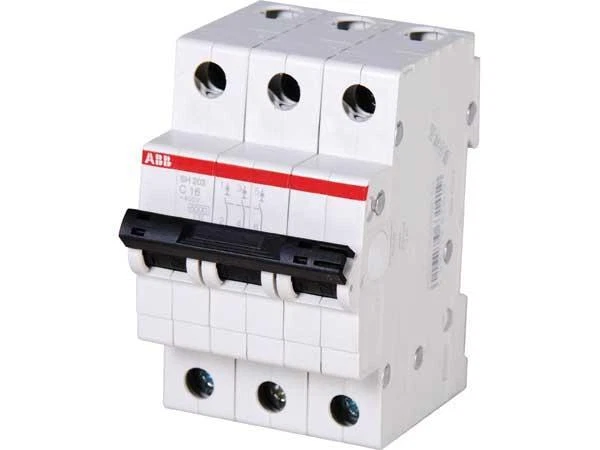
ABB S503-K26 Circuit Breaker,26A: Amazon.com: Tools & Home Improvement

ABB S500 series miniature circuit breaker

product overview

Positioning: The S500 series is a high-performance miniature circuit breaker (MCB) that complies with UL 1077 standards and is used for circuit protection, supporting both alternating current (AC) and direct current (DC) systems.

Core function: Provides thermal magnetic trip protection, with high breaking capacity and fast breaking time (2.3-2.5s), suitable for overload and short circuit protection of industrial and commercial circuits.

Model and Technical Parameters

S500 (AC model)

Voltage range:

UL standard: 600Y/277 VAC

IEC standard: 690 VAC

Current range: 0.1-45 A (unipolar/bipolar/triode)

Tripping characteristics: Only K-curve (applicable to inductive loads, allowing high surge currents during startup, such as motors and transformers).

Breaking capacity: up to 30 kA (UL 1077/CSA C22.2).

​S500UC (DC model)

Voltage range:

Single pole: 250 VDC

Quadrupole: 750 VDC

Current range: 0.1-63 A (unipolar/bipolar/triode/quadrupole)

Release characteristics: B curve (applicable to DC inductive loads) and K curve (optional).

Breaking capacity: up to 30 kA (UL 1077/CSA C22.2).

Core features

Design and Installation

Rail installation: Supports 35mm DIN rail installation, saving space.

Safe terminals: designed to prevent electric shock (Finger safe terminals), supporting multi-functional terminal connections.

Compact size: The width of a single pole is about 17.5mm, and the width of a multi pole model increases proportionally (such as 35mm for 2-pole and 52.5mm for 3-pole).

Protection function

Thermal magnetic trip: Combined with overload (thermal) and short circuit (magnetic) protection, it responds quickly.

Adjustable trip unit: supports current regulation and adapts to different load requirements.

Certification and Compliance

Compliant with UL 1077, CSA C22.2, IEC 60497-2 and other standards, with CE certification.

Model specifications and prices (some examples)

Model, Pole, Current Range, Catalog Number, Price (Example)

S500-K 1 2.8–4.2 A S501-K4.2

S500UC-B 1 6 A S501UC-B6

S503-K4.2 3 2.8–4.2 A S503-K4.2

S504UC-K4.2 4 2.8–4.2 A S504UC-K4.2

Attachments and extensions

Auxiliary contacts

Provide status feedback (such as on-off signals), supporting 1 normally open/1 normally closed (S500-H11) or 2 normally open (S500-H20)

Bell alarm

Trigger alarm when tripping, with test button (such as S500-S11)

Handle mechanism

Used for manual operation (S500-RD3)

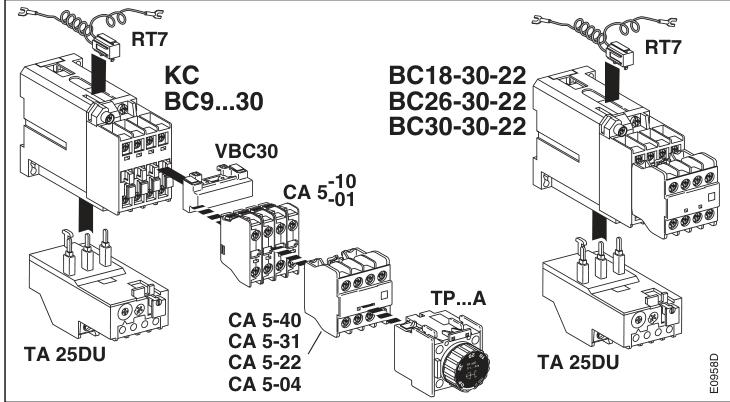
ABB BC25-30-10-01 CONTACTOR

Product basic information

Model positioning: Belonging to ABB BC series contactors, suitable for on/off control of industrial circuits, commonly used in scenarios such as motor drives and power distribution systems.

Category: Contactor, mainly used for frequent connection and disconnection of load circuits, with arc extinguishing capability.

Key technical parameters

Electrical parameters

Rated voltage:

Control coil voltage (U c): Supports 24V DC~250V DC (please refer to the specific nameplate).

Main circuit voltage: suitable for industrial standard voltage levels such as 480V AC and 600V AC.

Breaking ability:

At 480V AC, the breaking current can reach 18kA (requires 50A MCCB protection);

At 600V AC, the breaking current is 5kA (requires 90A K5 fuse or 70A MCCB).

Contact configuration:

Main contact: usually 3 poles (1L1, 3L2, 5L3 input; 2T1, 4T2, 6T3 outputs).

Auxiliary contacts: may include normally open (NO)/normally closed (NC) contacts (such as 13/14 being NO contacts).

Physical specifications

Dimensions: Width B=54mm, height H=81mm, depth reference for similar models is approximately 100mm.

Installation method: DIN Rail installation, supporting vertical or inclined installation (angle ≤± 30 °).

Terminal type: Main circuit: M4 screw terminal, supporting wire cross-sectional area of 1.5-6mm, torque requirement of 1.7N · m.

Control circuit: M3.5 screw terminal, supporting wire cross-sectional area of 0.75-2.5mm, torque requirement of 1N · m.

Function and application scenarios

Core functions

Motor control: used for the start stop and forward/reverse control of industrial motors, and the adapted power range needs to be calculated in conjunction with the motor current (refer to the breaking capacity parameters).

Load protection: Cooperate with fuses or circuit breakers (such as MCCBs) to achieve overload and short circuit protection.

Signal feedback: Feedback the status of the contactor (such as operation or malfunction) to the control system through auxiliary contacts (NO/NC).

Typical applications

Manufacturing industry: control of conveyor belt motors and start stop of fans in automated production lines.

Energy industry: power on/off control in power switchgear, compatible with photovoltaic inverters or energy storage systems.

Building equipment: motor drive and protection for elevators and air conditioning systems.

Installation and operation points

Installation environment

Temperature range: -20 ° C~+55 ° C. Ensure good ventilation to avoid contact oxidation in high temperature environments.

Protection level: IP20 (preventing solid foreign objects), needs to be installed inside the control cabinet to avoid direct exposure to dust or humid environments.

Wiring specifications

Main circuit: When connecting the motor or load, it is necessary to connect the 1L1/3L2/5L3 input terminals in phase sequence, and connect the 2T1/4T2/6T3 to the load terminal.

Control circuit: The coil terminals (A1/A2) must be strictly matched with voltage levels (such as 24V DC or 230V AC) to avoid reverse connection or overvoltage.

Grounding: The metal casing must be reliably grounded, comply with EMC standards, and reduce electromagnetic interference.

Maintenance suggestions

Regularly check the wear of the contacts and remove any signs of arc erosion.

Test whether the coil resistance meets the nominal value to avoid contactor refusal due to coil aging.

ABB BC25-30-10-01 CONTACTOR 40 AMP 3 POLE 1 N.O. 24VDC BC25301001 — PremiumPLC

ABB Contactor Series Operating Instructions

ABB Contactor Series Operating Instructions

Product model and category

Model range: covering (T) BC9, (T) BC16, (T) BC18, (T) BC25, (T) BC26, (T) BC30, (T) KC22E, (T) KC31E, (T) KC40E, (T) KC44E, (T) KC62E, KBC30G, KTBC30G, etc.

Category: Belonging to contactors or contactor relays, used for on-off control of industrial circuits.

Technical parameters and performance

Electrical parameters

Voltage range: Control voltage U c to cover 6VDC~250VDC (some models support wide voltage).

Current and breaking capacity:

At 480VAC, the breaking capacity can reach up to 18kA (such as BC9, BC16, etc.);

At 600VAC, the breaking capacity can reach up to 5kA (such as BC25, BC30, etc.).

Protection type: Supports MCP (motor control protection), MCCB (molded case circuit breaker), K5/RK5 fuses, Type J fuses, etc.

Physical specifications

Size:

(T) BC9/(T) BC16: Width B=44mm, Height H=81mm;

(T) BC30: Width B=54mm, height H=90mm.

Installation method: DIN Rail, supports installation in multiple positions (Pos.1-6), and some models require attention to angle limitations (such as ± 30 °).

Terminal specifications: small models (such as BC9): using M3.5 screws, wire cross-sectional area 0.75-2.5mm;

Large models (such as BC30): using M5 screws, with a wire cross-sectional area of 2.5-10mm

Installation and operation points

Installation specifications

Environmental temperature: The allowable working temperature is -20 ° C~+55 ° C (some models need to refer to specific specifications).

Protection level: IP20 (prevents solid foreign objects, no waterproofing).

Wiring requirements:

The control coil should be wired according to the marked voltage (such as U c, which should be consistent with the coil nameplate to avoid burning);

The main circuit wire needs to be matched with the current load to ensure firm contact (torque reference: M3.5 screw is 1N · m, M4 screw is 1.7N · m).

Precautions for operation

Prohibited live operation: Installation and maintenance require disconnecting the power supply to avoid the risk of electric shock.

Polarity and voltage matching: DC coils need to pay attention to positive and negative poles, and AC coils need to confirm frequency (50/60Hz).

Redundancy protection: It is recommended to use fuses or circuit breakers to prevent overload or short circuit.

Security Warning

Professional personnel operation: Installation, commissioning, and maintenance must be carried out by qualified electricians, following local safety regulations.

Voltage verification: Before powering on, check that the control voltage is consistent with the nominal value of the coil, otherwise it may burn out the coil.

Anti electric shock: Avoid contact with live parts during operation and ensure good grounding of the equipment.

Model differences and application scenarios

(T) BC series: universal contactor, suitable for industrial scenarios such as motor start stop and pump control.

(T) KC series: possibly a contactor with auxiliary contacts, used in complex systems that require signal feedback (such as automated production lines).

KBC30G/KTBC30G: It may be customized for specific industries (such as wind power, heavy machinery), and needs to be confirmed with specific manuals.

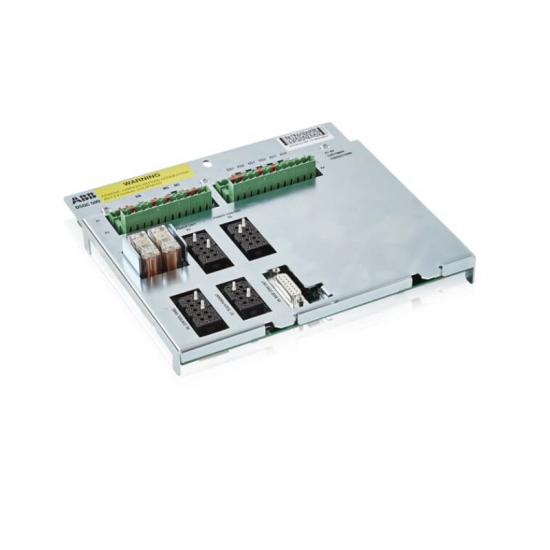
ABB DSQC504 connector unit board

Product positioning and functional overview

DSQC504 is a connector unit board in ABB industrial automation systems, which is a supporting hardware module for robots or controllers. It is mainly used for signal conversion and electrical connection management. Its core function is to provide standardized interface extensions for industrial control systems, enabling signal transmission and electrical adaptation between different devices, commonly found in robot controllers, PLC systems, or distributed I/O architectures.

Core features

Multi interface integrated design

Provide multiple electrical interfaces (such as terminal blocks and cable interfaces), supporting the access and distribution of digital signals (DI/DO) and analog signals (AI/AO).

Compatible with mainstream ABB controllers (such as IRC5 series), it can be combined with DSQC series I/O modules (such as DSQC346B, DSQC509) to build a complete automation control network.

High reliability connection

Adopting anti misconnection design (such as unique interface shape or coding) to avoid system failures caused by wiring errors.

The terminal supports high current loads (such as 24V DC, with a maximum current of 5A) and is suitable for driving actuators such as relays and solenoid valves.

Flexible system expansion

As an intermediate transfer layer, it can distribute the controller’s signals to multiple peripheral devices or aggregate multiple sensor signals to a single controller, simplifying wiring complexity.

Support hot swapping (some models) for easy system maintenance and upgrades, reducing downtime.

Industrial grade protection

Compliant with IP20 protection level, suitable for dust and slight splashing scenarios in industrial environments.

Anti electromagnetic interference (EMC) design ensures stable operation in strong electromagnetic environments, such as near frequency converters.

Typical application scenarios

Robot system integration

In industrial robot workstations, DSQC504 is used to connect robot controllers with end effectors (such as grippers and welding guns), transmitting control signals and feedback signals. For example:

Connect sensors (such as force sensors) to the controller to achieve force control feedback for robot operations.

Transfer the electromagnetic valve signal to control the opening and closing action of the pneumatic fixture.

Electrical cabinet for automated production line

As the signal center of the electrical cabinet in the production line, it distributes the control signals of the PLC to the executing equipment at each workstation (such as motor drivers and indicator lights), while collecting sensor signals (such as proximity switches and encoders) and transmitting them back to the PLC.

Typical scenario: In the automobile assembly line, the signals from the vehicle positioning sensor and the robotic arm controller are transferred to ensure assembly accuracy.

Process control equipment connection

In the control systems of the chemical and food industries, it is used to connect distributed I/O modules with field instruments (such as temperature transmitters and pressure switches) to achieve centralized processing of analog signals.

Support redundant connections (such as dual power inputs) to enhance the reliability of critical processes.

Testing and Development Platform

In laboratory or R&D scenarios, as a flexible signal testing interface, it facilitates engineers to access temporary sensors or debug equipment, accelerating system development and verification.

Technical Parameter

Typical parameter values

Interface type: Terminal block (such as Phoenix terminal), M12 circular connector

Support signal types: digital quantity (24V DC), analog quantity (4-20mA/0-10V)

Maximum current/channel: Digital output: 5A; Analog output: 20mA

Working voltage: 24V DC (± 10%)

Working temperature: -20 ° C~+60 ° C

Installation method: DIN Rail installation

Certification: CE, UL, RoHS

USED ABB 3HAC5689-1/04 DSQC-504 CONNECTION BOARD DSQC504 3HAC5689-1 ...

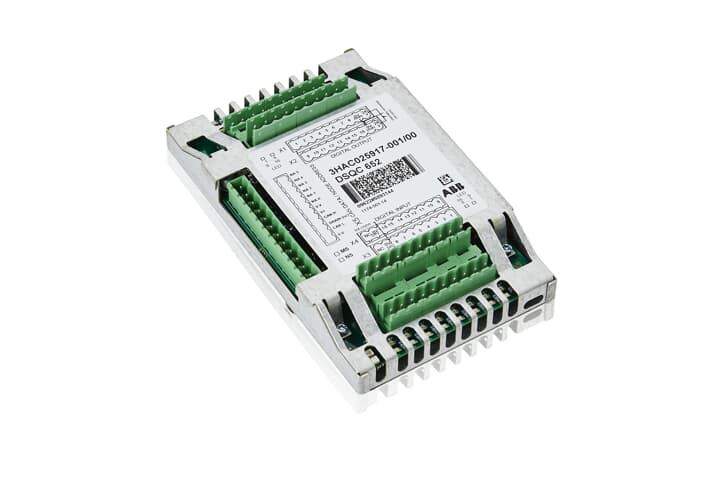
ABB DSQC509 Industrial Automation Module

Product positioning and overview

DSQC509 is a modular I/O module under ABB, suitable for the industrial automation field, and is a key component of robot controllers or industrial control systems. Its design focuses on high-precision signal processing and system integration flexibility, commonly used in scenarios such as robot arms, automated production lines, and process control equipment. It can achieve the acquisition, processing, and control output of digital/analog signals, supporting efficient collaboration with upper computers, sensors, and actuators.

Core functional characteristics

Multi type signal processing

Supports digital input/output (DI/DO): adapts to switch signals (such as button and relay status), with a response speed of milliseconds, used for logical control of equipment start stop, safety interlock, etc.

Supports analog input/output (AI/AO): can connect continuous signals such as temperature, pressure, current, etc. (such as 4-20mA, 0-10V), built-in high-precision ADC/DAC conversion module, with an accuracy of ± 0.1% FS.

Pulse signal processing: Supports encoder pulse counting, suitable for motor speed monitoring or position feedback.

Modularity and Scalability

Adopting standardized guide rail installation, supporting parallel combination of multiple modules, and expanding the number of I/O points (such as 16 point DI/16 point DO or 8-point AI/8-point AO configurations).

Compatible with mainstream ABB controllers such as IRC5 and AC800M, and enables fast data exchange through bus interfaces such as PROFIBUS DP and EtherCAT.

High reliability design

Electrical isolation: Optoelectronic isolation technology is used between channels, which has strong anti-interference ability and is suitable for strong electromagnetic environments (such as steel and chemical industries).

Fault diagnosis: Built in self diagnostic function, supports channel level fault detection (such as disconnection, short circuit), and provides real-time feedback on status (power supply, communication, fault) through LED indicator lights.

Wide temperature operation: The working temperature range is -20 ° C to+60 ° C, suitable for harsh industrial environments.

Communication and integration capabilities

Supports PROFIBUS DP V1 (maximum transmission rate of 12 Mbit/s), Ethernet/IP or Modbus TCP, seamlessly integrated into industrial Ethernet or fieldbus networks.

Support seamless integration with ABB robot systems (such as RobotStudio) to achieve collaborative control between robots and peripheral devices (such as fixture opening and closing, sensor triggering).

Typical technical parameters

Structural form: Modular (rail mounted)

I/O points: 16 digital quantities+8 analog quantities (expandable)

Working voltage: 24V DC (± 10%)

Communication interface: PROFIBUS DP, EtherCAT

Processing speed: Response time per channel<1ms

Protection level: IP20 (indoor industrial environment)

Certification: CE, UL, ISO 13849 (safety related)

​Application scenarios

Robot automation

Used for signal control of end tools of industrial robots, such as welding guns and grippers, to achieve tool status feedback and action triggering.

Typical case: In the automotive welding production line, DSQC509 collects sensor signals to control the lifting of the welding gun and adjust the welding parameters.

Automatic production line

Connect conveyor belts, detection equipment, and actuators to achieve logical control of material sorting and assembly processes.

For example, in an electronic assembly line, the material arrival signal is monitored through digital input to drive the robotic arm to complete component picking and placement.

Process Control and Monitoring

In the chemical, food and beverage industries, it is used to monitor analog signals such as temperature and pressure, and output control instructions to regulate equipment such as valves and pumps.

Support integration with DCS (Distributed Control System) to achieve real-time closed-loop control of process parameters.

Buy ABB Robot DSQC509 3HAC5687-1 Panel Unit,ABB Robot DSQC509 3HAC5687 ...

ABB DSQC346B – Modular I/O System

product overview

ABB DSQC346B is an advanced modular I/O system that plays a critical role in the field of industrial automation. It has become an ideal choice for many industrial enterprises to build efficient automation control systems due to its excellent performance, high flexibility, and outstanding reliability. This system can achieve precise acquisition and control of various industrial signals, effectively improving the automation level and stability of the production process.

Function characteristics

1. Diversified I/O interfaces

The DSQC346B is equipped with a wide range of I/O interfaces, including digital input/output and analog input/output interfaces. The digital interface can easily connect digital signal devices such as buttons and relays, quickly and accurately sensing device status and executing control instructions. For example, in an automated production line, it can quickly respond to various switch signals and control the start stop and operation of equipment. Analog interfaces are suitable for connecting sensors, industrial operation interfaces, etc. They can accurately convert received analog signals into digital values, meeting the collection and processing needs of continuous changing signals such as temperature, pressure, flow, etc. They are widely used in scenarios that require precise process control.

2. Efficient data processing capability

It has a powerful data processing core internally, capable of processing large amounts of I/O data at extremely high speeds. With a processing speed of up to 50MHz, the system can ensure timely response to various input signals in complex industrial environments and quickly generate accurate control outputs. Whether it is high-speed automated equipment or large-scale data collection tasks, it can handle them with ease, effectively improving the real-time performance and response speed of the entire control system.

3. Flexible module combinations

The system adopts a modular design concept, and users can freely choose different types and quantities of I/O modules to combine according to their actual application needs. This flexible configuration method enables the system to perfectly adapt to various complex and ever-changing industrial automation scenarios. Whether it is simple single machine automation control or large-scale factory automation production lines, the best control effect can be achieved through reasonable module combinations, while reducing system construction costs.

Reliable communication function

DSQC346B supports multiple communication protocols, such as PROFIBUS DP, Ethernet, etc. Among them, the PROFIBUS DP transmission rate can be extended to 12 Mbit/s, specifically optimized for interaction with remote I/O, drive, and motor control devices, ensuring fast and stable data transmission in industrial networks. Through Ethernet interface, the system can easily exchange and share data with the upper computer and other intelligent devices, achieving factory level information management and collaborative control, laying a solid foundation for building an intelligent factory.

Technical Parameter

Structural form: modular

LD instruction processor: hard PLC

I/O points: 3

Working voltage: 24V

Output frequency: 10/100 Mbps

Processing speed: 50MHz

Program capacity: 16MB

Data capacity: 256MB

Environmental temperature: 0 to 60 degrees Celsius

Environmental humidity: 5 to 95%, non condensing

Product certification: CE

Weight: 0.2 kilograms

Dimensions: 114mm, 257mm, 80mm

Application scenarios

1. Industrial automation production line

In industrial automation production lines such as automobile manufacturing and electronic equipment production, DSQC346B can collect real-time operation status signals of various equipment on the production line, such as equipment start stop, position detection, etc., and accurately control the operation of the equipment according to preset programs, realizing a series of automated operations such as material handling, processing, assembly, etc., effectively improving production efficiency and product quality, and reducing labor costs.

2. Process control field

In the process control industries such as chemical, power, and metallurgy, this system can accurately collect and control key process parameters such as temperature, pressure, and flow rate. For example, in chemical production, real-time monitoring and adjustment of temperature and pressure inside the reaction vessel ensure that the chemical reaction proceeds under optimal conditions, improve product yield and quality, and ensure the safe and stable operation of the production process.

3. Intelligent warehousing and logistics

In the intelligent warehousing and logistics system, DSQC346B can collaborate with automated three-dimensional warehouses, stackers, conveyors, and other equipment. By collecting information such as the location of goods and the operating status of equipment, automatic storage, retrieval, and handling of goods can be achieved, improving the operational efficiency of warehousing and logistics, and reducing errors during the storage and transportation of goods.

ABB 3HAB8859-1/03A Industrial Control Module

Product overview

ABB 3HAB8859-1/03A is a high-performance control module designed specifically for industrial automation systems. It has precise control capabilities and can operate stably in complex industrial environments, providing reliable support for various industrial applications and occupying a key position in the process of industrial automation.

Brand background

ABB, as a globally renowned electrical and automation technology enterprise, has a history of over 130 years and operates in more than 100 countries, achieving excellence in various fields such as energy management, industrial automation, and motion control. It adheres to the concept of innovation, relies on profound technological accumulation and global service network, and continuously launches high-quality products. The 3HAB8859-1/03A module is the crystallization of ABB’s technological strength and innovative spirit.

Specification parameters

parameter

details

Input Voltage

Adapt to a wide voltage range, customized according to actual working conditions to ensure normal operation in different power environments

protection grade

Reaching IP20, dustproof, providing basic protection for internal circuits

size

Compact design, conducive to installation and integration in limited space, reducing equipment space occupation

weight

Lightweight, convenient for transportation and installation operations

communication interface

Equipped with multiple interfaces, such as RJ45 Ethernet ports for controlling network connections and supporting high-speed data transmission; Serial ports are used to connect configuration tools and adapt to different communication requirements

Core functions

Precise control signal output: Through precise engineering design, it can continuously and accurately output control signals, accurately regulate motor speed, equipment operating status, etc., improve the overall control accuracy and stability of the system, and meet the strict requirements for control accuracy in industrial scenarios.

Multi protocol compatibility: Compatible with multiple industrial automation protocols, such as common Modbus, Profibus, etc., facilitating integration in different automation system architectures, enabling data exchange and collaborative work with other devices and systems, enhancing system compatibility and scalability.

Real time monitoring and feedback: Real time monitoring of the working status and operating parameters of the controlled equipment, such as temperature, current, voltage, etc. Once the parameters are abnormal, they are quickly fed back to the control system, triggering corresponding protective actions or alarm prompts to ensure the safe operation of the equipment and reduce the risk of faults.

Working principle

This module is based on a built-in microprocessor and synchronizes system time accurately through a real-time clock. The microprocessor processes and analyzes the preset program and received external signals to generate control instructions. The instructions are transmitted to the corresponding output ports through the data bus and converted into driving signals to control external devices. For example, in the motor control scenario, the module receives a speed setting signal, and after internal algorithm calculation, outputs a PWM (Pulse Width Modulation) signal to adjust the motor speed. At the same time, it uses sensor feedback signals to adjust the control strategy in real time to ensure stable operation of the motor.

Key advantages

High reliability: The sturdy design can withstand harsh industrial environments such as high temperature, high humidity, strong electromagnetic interference, etc., ensuring long-term stable operation, reducing equipment failure downtime, and improving production efficiency.

Easy to integrate: Compact and lightweight, with design that fully considers integration requirements in terms of size, interface, communication protocol, etc., it can easily integrate into existing industrial automation systems without significant modifications, reducing system upgrade costs and difficulties.

Efficient and energy-saving: precise control functions prevent equipment from running excessively or idling, optimize energy utilization, achieve energy conservation and consumption reduction, conform to the trend of green industry development, and reduce enterprise operating costs.

Precautions

Installation environment: It should be installed in a dry, well ventilated, and temperature appropriate place, avoiding direct sunlight and strong corrosive gas environment to prevent module damage and affect performance and lifespan.

Electrical connection: Strictly follow the instructions for electrical connection, ensure that the wiring is firm and correct, prevent short circuits, open circuits and other problems, and ensure the normal operation of the module and the safety of personnel and equipment.

Software configuration: When configuring software parameters, professional personnel are required to operate and set them reasonably according to actual application needs to avoid abnormal device operation caused by parameter errors.

Similar model supplement

3HAB8101-19 DSQC545A: ABB’s high-performance servo drive focuses on the field of motor servo control, with stronger driving capabilities and more precise position control functions. It is suitable for industrial robots, CNC machine tools, and other equipment that require extremely high motor motion control accuracy and response speed.

PFSK164 3BSE021180R1: ABB signal concentrator board module, mainly used for signal centralized processing and transmission, plays a key role in large-scale data acquisition and monitoring systems, can efficiently integrate dispersed signals, achieve centralized management and transmission, and has different functional focuses from 3HAB8859-1/03A, but can work collaboratively in complex automation systems.

ABB变频器ACS355系列ACS355-03E-03A3-4 1.1KW

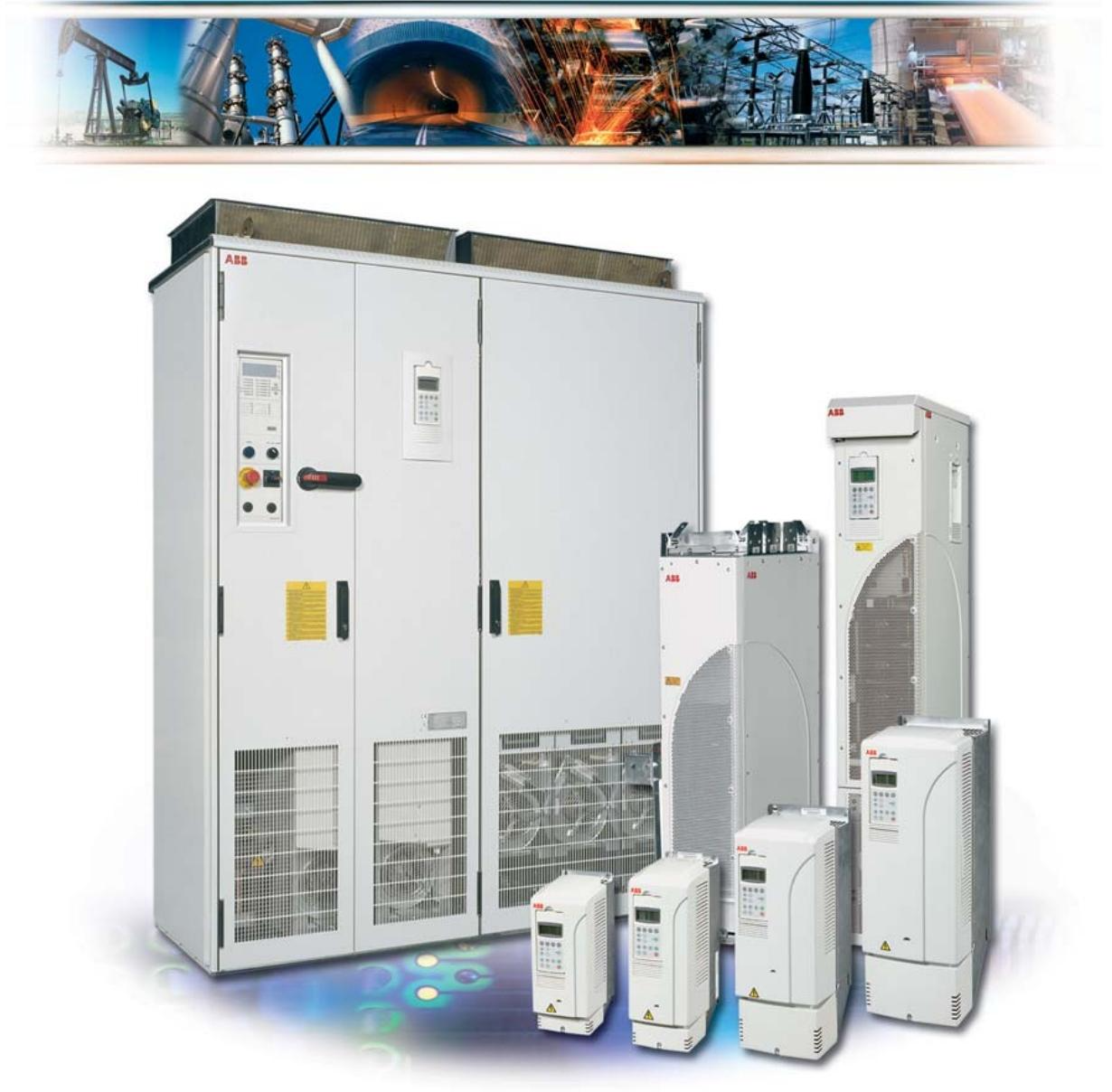
ABB ACS800 Standard Control Procedure 7. x

Product Overview

Scope of application: The firmware manual for the standard control program of ACS800 frequency converter is suitable for motor drive control in the field of industrial automation, supporting multiple control modes and communication protocols.

Core functions: including startup configuration, control panel operation, parameter setting, fault diagnosis, communication interface, and various application macros (such as factory macros, PID control macros, torque control macros, etc.).

Startup and control mode

Start the process

Startup Wizard: Guide users to complete motor parameter settings (such as voltage, current, frequency, etc.) and identification run (ID Run), supporting both standard and simplified identification modes to ensure motor control accuracy.

Basic startup: Manually input parameters, suitable for quick configuration scenarios without the need for a wizard.

control model 

Local control: Directly operated through the control panel, supporting start, stop, steering, and speed settings.

External control: Receive commands through digital/analog inputs or fieldbus (such as PROFIBUS, Modbus), supporting dual control switching between EXT1 and EXT2.

Core functional modules

Program Function

Given signal processing: supports multi-source given signals such as analog input, digital input, fieldbus, etc., and can combine given signals through mathematical operations (such as addition, subtraction, multiplication, division, and taking the maximum value).

Speed and torque control:

Speed control: supports PID regulation, acceleration/deceleration ramp setting, and dangerous speed avoidance.

Torque control: Suitable for scenarios that require precise torque output, such as elevators and conveyor belts.

Braking control: Supports DC brake, magnetic flux brake, and mechanical brake, with configurable braking delay and torque threshold.

Application Macro Program

Factory macro: default mode, suitable for general speed control scenarios, supports 3 constant speed options.

PID control macro: used for process control (such as pressure and flow closed-loop), integrating sleep function to optimize energy consumption.

Torque control macro: directly controls motor torque, supports switching with speed control mode.

User macro: allows storage of two sets of custom parameters, facilitating quick switching between different motors or operating conditions.

Communication and Interface

Fieldbus support: compatible with protocols such as PROFIBUS, Modbus RTU/TCP, PROFINET, etc., and supports redundant communication configurations.

I/O expansion module: can connect digital/analog expansion modules, expand input and output channels, support motor temperature measurement, encoder interface, etc.

Parameters and actual signals

Parameter group division:

Startup data (99 sets): motor nameplate parameters, control mode, identification of operating configuration.

Given options (11 groups): Define the source of speed/torque given (such as analog input, fieldbus).

Limit values (20 sets): Setting operating limits such as speed, current, torque, etc.

Fault function (30 sets): Protection parameters for overcurrent, overvoltage, underload, etc., supporting automatic reset and alarm threshold setting.

Actual signal monitoring: Real time display of speed, current, torque, DC bus voltage, etc., supporting custom display combinations and filtering processing.

Fault diagnosis and maintenance

Fault codes and reset

Locate faults through control panel LED indicators or fault codes (such as overcurrent, overheating, communication interruption), and support manual or automatic reset (parameter configuration required).

Fault records store the last 6 events, including timestamps and fault types, to assist in quick troubleshooting.

Maintenance suggestions

Regularly check the matching of motor parameters, encoder connections, and the operating status of the cooling fan.

The communication module should pay attention to grounding and anti-interference, and avoid parallel wiring of high-voltage lines and signal lines.

​Safety and Standards

Electrical safety: Ensure that grounding complies with NEC standards, avoid modifying parameters with motors, and prevent accidental start-up.

Electromagnetic compatibility (EMC): Sensor cables need to be shielded and grounded at one end, and isolated from high-voltage lines.

Compliance certification: Complies with IEC standards and supports explosion-proof applications in hazardous environments (requires corresponding module configuration).

Common faults and solutions of MLink interface module

LED indicator light fault diagnosis

LED status fault description, possible causes, and solutions

LED2 is always on:

System malfunction (Internal MLink error)

Internal database creation failed

1. Restart MLink;

2. Use MNavigate to re download the configuration file.

LED2 flashing:

Missing or incorrect XML file

Configuration file download interrupted or damaged

1. Download the configuration file again through MNavigate;

2. Check if CF card reading and writing are normal.

LED6 is turned off:

DCS communication interruption protocol configuration error, hardware mismatch, or data mapping error

1. Verify that the MLink hardware model matches the project protocol (e.g. PROFIBUS card corresponds to PROFIBUS project);

2. Download the data mapping file again.

LED8 abnormality (redundant system):

Redundant faults, disconnected redundant links, or inconsistent configurations

1. Check the redundant cable connections;

2. Generate redundant status reports and synchronize configurations through MNavigate.

LED1、 3. 5-7 Extinguish Application Files Missing CF Card Files Damaged or Download Interrupted

Use MNavigate to re download the application to the CF card and ensure that the download process is interference free.

Network communication failure

1. Unable to access MLink() through web interface or MNavigate

Possible reasons:

IP address configuration error or network parameter conflict.

MLink is not powered on or there is a hardware malfunction (such as LED7 not lighting up).

The web server is not activated or the network link is interrupted.

resolvent:

Check the power and hardware status: Confirm that LED7 (power indicator light) is always on and there are no other fault LED alarms.

Verify network configuration:

Check whether the LAN2 IP address and subnet mask are correct through MNavigate (default: 192.168.200.100/24).

Use the ping command to test connectivity (such as ping 192.168.200.100), and if it fails, check the network cable connection or switch status.

Activate the web server: Confirm through MNavigate that the web service is enabled and restart MLink.

2. Communication with MControl failed (unable to download configuration) ()

Possible reasons:

The internal bus (Switchgear Bus) connection is loose or the terminal resistance is not configured.

MControl is not online or bus communication is interrupted (such as MControl’s LED flashing indicating offline).

resolvent:

Check physical connections: Ensure that the blue Sub-D 9-pin interface is secure, the bus cable shielding layer is well grounded, and the terminal resistance meets the topology requirements.

Activate MControl: Set MControl to “online” status through MNavigate and confirm that its LED status is normal.

Time synchronization failure

1. Inaccurate or missing timestamp ()

Possible reasons:

NTP server address error or network unreachable.

MLink internal RTC battery failure or no time synchronization mode configured.

resolvent:

Configure NTP server:

Set the correct NTP server IP address (such as 192.168.200. xxx) through MNavigate to ensure that it is on the same subnet as MLink.

If using MLink itself as an NTP server, it is necessary to manually set the time zone and time (through the web interface).

Check RTC function: Replace the CF card or contact technical support to confirm the status of the hardware RTC module.

Redundant system failure

1. Main/backup MLink synchronization failed ()

Possible reasons:

Redundant cables are not connected or damaged.

The configuration of the primary and backup modules is inconsistent (such as IP address conflicts).

resolvent:

Physical connection check: Confirm that the redundant cable (Serial 1 interface) is correctly connected and that the plugs at both ends are not loose.

Synchronous configuration: Generate redundant reports through MNavigate to ensure that the IP addresses and protocol parameters of the primary and backup modules are completely consistent.

CF card related faults

1. CF card cannot be recognized or configuration is lost ()

Possible reasons:

The CF card is not inserted correctly or has poor contact.

The card file is damaged (such as missing XML configuration file).

resolvent:

Re insert and unplug the CF card: Ensure that the card is oriented correctly (with the metal contacts facing upwards), and close the metal shield after insertion.

Rewrite configuration: Use a card reader to rewrite the configuration file generated by MNavigate to the CF card, avoiding interruptions in the download process.

General solution process

Restart MLink: Clear temporary software faults by pressing the front panel reset button or restarting after power failure.

Restore default settings: Use MNavigate to load factory default parameters such as IP address and subnet mask.

Hardware replacement test: If there is suspicion of hardware failure (such as continuous LED alarm), replace the CF card or MLink module and reconfigure.

Search for products

Back to Top
Product has been added to your cart