

product overview
1. Model and positioning
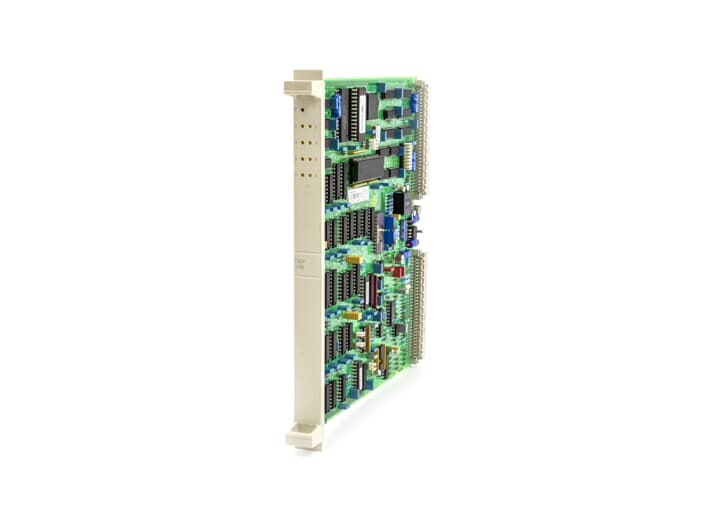
Model name: ABB 57160001-ACX DSDP 140B Counting Board Product positioning: Industrial grade high-precision counting and measurement module, designed for automation control systems, supports multi-channel high-speed pulse counting, frequency measurement, and event triggering, suitable for motor speed monitoring, production line counting, energy metering and other scenarios, can accurately capture dynamic signals and provide real-time data output.
2. Core values
High precision measurement: supports nanosecond pulse resolution to meet precision counting requirements
Multi mode adaptation: compatible with multiple signal sources such as incremental encoders, proximity switches, sensors, etc
Industrial grade reliability: designed to resist electromagnetic interference and adapt to harsh industrial environments
Flexible configuration: Through software defined counting logic, support custom triggering conditions
Core functions
1. Multi channel counting capability
Number of channels: 4 independent counting channels (CH1-CH4), supporting differential/single ended input
Counting types: forward counting, reverse counting, bidirectional counting, frequency measurement (0-10MHz)
Input signal: 5V/24V TTL/CMOS level, supports incremental encoder A/B/Z phase (orthogonal decoding)
Count range: 32-bit unsigned integer (0-4294967295), supports overflow interrupt
2. High speed pulse processing
Maximum counting frequency: Single channel 10MHz (differential input)/5MHz (single ended input)
Edge detection: Rising edge/falling edge/double-sided edge triggering, trigger delay ≤ 50ns
Orthogonal decoding: supports 1x/2x/4x multiplier counting, suitable for high-precision encoder applications
3. Intelligent triggering and event response
Trigger modes: software trigger, external signal trigger, threshold comparison trigger
Event output: 8-channel digital output (DO), supporting event driven counting of arrivals, overflows, signal anomalies, etc
Synchronized clock: Supports IEEE 1588 precision timing, with multi board time synchronization error ≤ 1 μ s
4. Status monitoring and diagnosis
Real time monitoring: Real time display of channel signal status, counting rate, overflow times and other parameters
Fault diagnosis: Detection of abnormal input signals (disconnection, noise) and automatic generation of diagnostic reports
Data recording: Supports storing the logs of the last 1000 events (without loss in case of power failure)
Technical parameters
1. Hardware specifications
Processor: ARM Cortex-M4 32-bit processor (168MHz) with built-in floating point unit (FPU)
Memory configuration: 256KB Flash program storage+64KB SRAM data cache
Communication interface: Ethernet: 10/100Mbps (supports Modbus TCP, Profinet IO) – Serial port: RS485 (supports Profibus DP) – Expansion interface: SPI/I2C (for external module cascading)
Input characteristics
-Input impedance: 10k Ω (single ended)/100 Ω (differential) – Common mode rejection ratio: ≥ 60dB (50kHz)
Output characteristics: Digital output: 24V DC/0.5A (relay isolation) – Analog output: 4-20mA (optional module)
Working power supply: 24V DC (± 15%), power consumption ≤ 5W (no-load)
Environmental adaptability
Temperature: -40 ℃~+70 ℃ (without fan) – Humidity: 5%~95% (without condensation) – Protection level: IP20 (panel installation)
2. Software functions
Configuration tool: ABB Control Studio graphical programming software, supporting drag and drop logic configuration
Protocol support: Modbus RTU/TCP, Profinet, EtherCAT (firmware upgrade required)
Development Interface: Provides C++/Python SDK, supports third-party system integration
Working principle
Typical working mode
Encoder mode: Receive A/B/Z phase pulses, calculate speed (RPM), position (number of pulses), and steering (forward/reverse)
Frequency measurement mode: Measure the input signal frequency using the periodic/pulse method, with a resolution of 0.01Hz (1s sampling period)
Event counting mode: Count the number of external triggering events and support preset threshold alarms
Typical application scenarios
1. Motor speed monitoring system
Configuration: Connect 2 servo motor encoders (CH1/CH2) to a single counting board
Function:
Real time calculation of motor speed (accuracy ± 0.1RPM)
Speed over limit alarm (DO output driven sound and light alarm)
Historical speed curve storage (supports USB export)
2. Automated counting of production lines
Configuration: Connect 4 sensors to each of the 4 channels (counting product pass rates)
Function:
Multi channel independent counting, real-time display of production line output
Automatic triggering of packaging machine startup when production meets standards (event linkage)
Save current count status (power down memory) during abnormal shutdown
3. Energy metering and monitoring
Configuration: Connect the pulse output of the electric energy meter (1 pulse=1kWh)
Function:
Accumulated energy consumption statistics (supporting peak and valley time differentiation)
Power factor calculation (in conjunction with voltage and current signals)
Abnormal energy consumption alarm (triggering DO output when exceeding the preset threshold)
Key advantages
1. Technological leadership
High precision counting: nanosecond level edge detection technology, meeting the measurement needs of servo motors and precision encoders
Multi protocol compatibility: Supports mainstream industrial communication protocols, seamlessly integrates ABB and third-party control systems
Orthogonal decoding optimization: Built in hardware decoding circuit reduces CPU load and improves system real-time performance
2. Engineering convenience
Plug and play: supports hot swapping (channels need to be disabled first), module replacement does not require reconfiguration
Visual configuration: Use Control Studio to intuitively configure counting logic, reducing programming difficulty
Batch calibration: supports calibrating multiple devices at once through USB, improving engineering debugging efficiency
3. Reliability design
Electromagnetic compatibility: Compliant with IEC 61000-6-2 industrial anti-interference standard, suitable for strong interference environments such as frequency converters and welding machines
Redundant design: Dual backup of critical circuits (such as clock and power monitoring), automatically switching to backup channels in case of failure
Wide temperature operation: -40 ℃ low-temperature start-up technology, suitable for applications in northern cold regions and outdoor equipment
Installation and maintenance
1. Wiring specifications
Signal wiring: Use twisted pair shielded wires, and it is recommended to use differential input for encoder signals (to reduce common mode interference)
Grounding requirement: The module casing and system are grounded together, with a grounding resistance of ≤ 1 Ω
Power protection: Install surge protector at the input end (recommended ABB MS112-1.6)
2. Regular maintenance
Signal accuracy verification: 1 year, use a signal generator to input 1MHz pulses and verify that the counting error is ≤ 0.01%
Firmware upgrade: On demand/online upgrade through Control Studio, backup the current configuration file before upgrading
Wiring inspection: 6 months, check the torque of the terminal block screws (recommended 2.5N · m) to prevent poor contact
3. Fault handling
E001: Channel input exception
1. Check if the sensor wiring is loose
2. Measure whether the amplitude of the input signal meets the specifications
3. Change the channel for testing
E003: Communication timeout
1. Restart the module
2. Check IP address/baud rate configuration
3. Test the connectivity of communication cables
E005: Counter overflow
1. Check the counting range setting
2. Enable overflow interrupt auto reset function
3. Upgrade 32-bit extended counting mode
Leave a comment
Your email address will not be published. Required fields are marked *