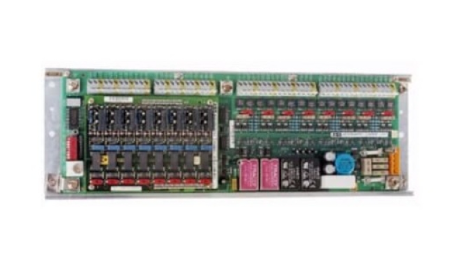
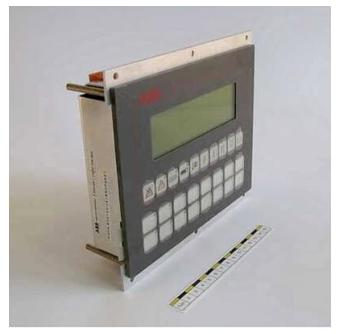
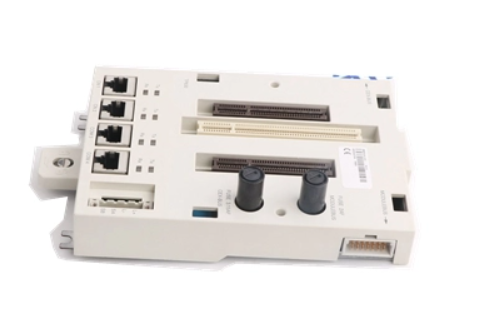
PNI800 is a Plant Network Interface device launched by ABB, belonging to ABB Ability ™ Symphony ® Plus hardware series. It is mainly used to achieve real-time bidirectional communication between SD series controllers and PC workstations running S+Engineering, HMI (such as SPO or 800xA Operations) or general interface software (such as Harmony OPC Server). It is also an important component of PN800 real-time control network, supporting data exchange with PC workstations running SPE (Engineering), HMI or SCADA software applications.
Core functions and features
Real time communication: As a real-time data server, it supports bidirectional real-time communication between SD series controllers and various software applications, with a transmission speed of up to 100 MBps.
Redundancy support: PN800 factory network redundancy is implemented based on the Parallel Redundancy Protocol (PRP) of IEC 62439, consisting of two topologically identical local area networks (PN800A and PN800B), eliminating single point of failure and achieving zero switching time in case of network component failure; As a dual connection node (DANP), it connects to two local area networks and provides line redundancy.
Connectivity: Supports up to 10 SPE client connections and can handle up to 30000 HMI tags; Communication connection is achieved through two Ethernet RJ45 connectors on the MB805 base, and there is one mini USB diagnostic port at the front end of the module.
Flexibility and maintainability: Supports hot swapping, making it easy to replace and maintain online; The functionality can be virtualized as “VPNI” optional software, suitable for various software applications, but performance and capacity may differ from PNI800.
Specification parameters
Basic Information Product Number: PNI800K01; Lifecycle status: Active; Protocol: Harmony API (based on Ethernet TCP); Module redundancy: none; Exterior specifications: xA Style (186mm); Installation method: Horizontal arrangement
Power Requirements Module Power Requirements: 200 mA @ 24 VDC ± 10%; Power connection: TB1 on MB805 base; Overvoltage category: Power supply is Class 1 (tested according to IEC/EN 61010-1)
Environmental parameters: Operating temperature: 0 to+55 ° C; Storage temperature: -40 to+85 ° C; Relative humidity: 20% to 95% at 40 ° C (no condensation, tested according to relevant standards); Protection level: IP20 (according to EN 60529, IEC 529)
Reliability index MTBF (based on MIL-HDBK-217-FN2): PNI800 PR is 135873 hours, MB805 PR is 2583516 hours; MTTR: PNI800 is 1 hour, MB805 is 8 hours
Compliance with multiple electromagnetic compatibility standards (such as ESD, surge, electrical fast transient, etc. immunity testing, radiation and conducted emission testing); CSA certification: applicable to ordinary (non hazardous) locations, as well as Class 1, Zone 2, Groups A, B, C, and D hazardous non flammable locations; Equipped with CE mark, compliant with EMC directive and low voltage directive; Compliant with RoHS Directive (2015/863) and WEEE Directive (Directive/2012/19/EU), etc
Key advantages
High reliability: With the help of PRP redundancy protocol and dual connection design, the reliability of the control network is greatly improved, reducing the risk of system interruption caused by network failures.
Efficient communication: With a transmission speed of 100 MBps and powerful connectivity, it can meet the needs of large-scale real-time data transmission and ensure rapid system response.
Good compatibility: Supports multiple software applications and communication protocols, seamlessly integrates with ABB’s multiple systems and software (such as 800xA, Symphony Plus, etc.).
Strong environmental adaptability: Through multiple environmental and electromagnetic compatibility tests, it can work stably in a wide range of temperature, humidity, and complex electromagnetic environments.
Precautions
During installation, it is necessary to follow the prescribed installation details (MB805, 1=E, 2=C) to ensure a stable installation.
Although hot plugging is supported, the correct operating procedures must still be followed during the replacement process to avoid equipment damage or communication interruption caused by improper operation.
The use of equipment must comply with the requirements of its certified location and cannot be used in hazardous areas or environmental conditions beyond the prescribed limits.
When virtualizing as “VPNI” software, it is important to pay attention to the performance and capacity differences between it and PNI800, and choose the appropriate application form based on actual needs.
Application scenarios
It is mainly used in the field of industrial automation, especially in scenarios that require high reliability real-time control networks, such as large-scale industrial control systems in the power, chemical, metallurgical and other industries. As a key interface connecting the controller with various engineering and monitoring software, it ensures the efficient and stable operation of the entire system. For example, in the control system of a power plant, real-time data exchange between SD series controllers, HMI operating interfaces, and engineering software is implemented to ensure real-time monitoring and parameter adjustment of the power generation process.
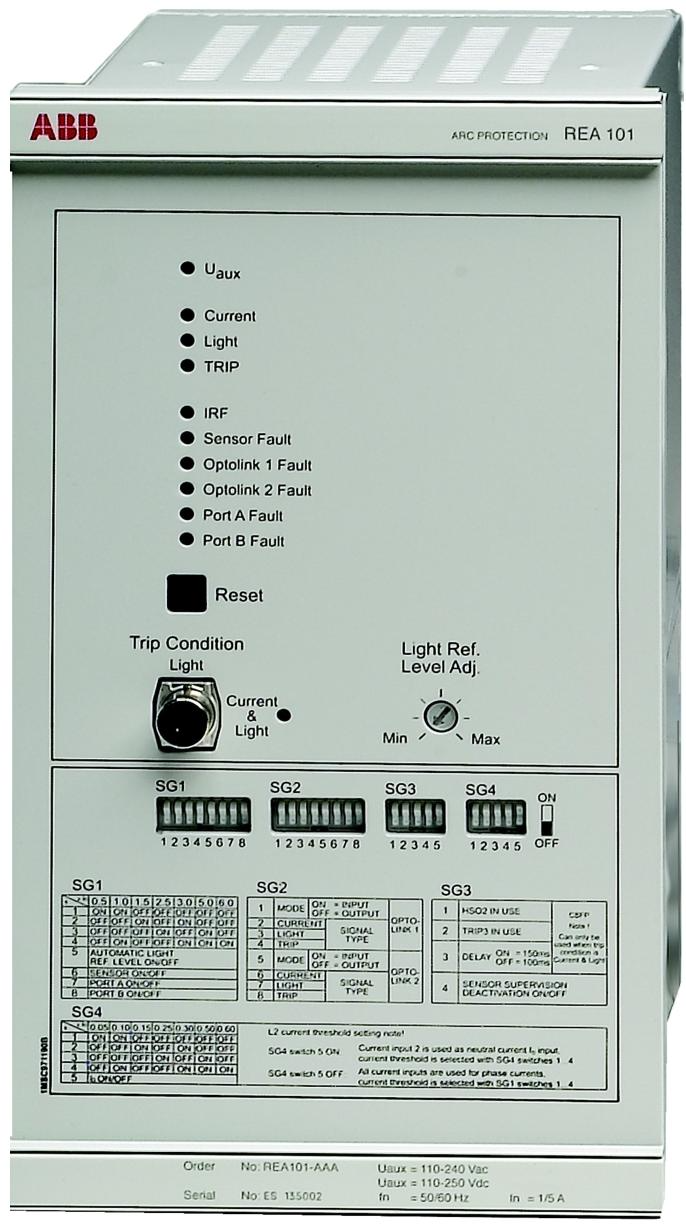
REA 101 is an arc protection relay (central unit) launched by ABB, which is the core component of REA 10_ arc protection system. It is mainly used in low-voltage or medium voltage air insulated metal enclosed switchgear, and can quickly send tripping commands to all circuit breakers that may supply power to arc faults, in order to minimize the damage caused by arc faults.
Brand background
REA 101 is produced by ABB company. ABB is a leading global enterprise in electrical and automation technology, with business covering multiple fields such as power, industry, transportation, and infrastructure. It has over 130 years of technological accumulation and innovative experience. Its products are renowned for their high quality, performance, and reliability, and have a wide influence in the field of industrial automation control. REA 101 is a reflection of its technical strength in the field of arc protection.
Specification parameters
Current input rated current 1A/5A; Continuous load current 4A/20A; Instantaneous current of 100A/500A per second; Dynamic withstand current (half wave value) 250A/1250A; Input impedance<100m Ω/<20m Ω; rated frequency 50/60Hz
Output HSO1 and HSO2: rated voltage of 250V DC/AC, continuous carrying of 1.5A, on-off of 30A in 0.5 seconds, on-off of 15A in 3 seconds, DC breaking capacity (when L/R<40ms) of 5A/3A/1A at 48V/110V/220V, respectively
TRIP3: Rated voltage 250V DC/AC, continuous load capacity 5A, on-off 30A in 0.5 seconds, on-off 15A in 3 seconds, DC breaking capacity (when L/R<40ms) 5A/3A at 48V/110V/220V respectively
IRF signal contact: rated voltage 250V DC/AC, continuous load 5A, on-off 10A in 0.5 seconds, on-off 8A in 3 seconds, DC breaking capacity (when L/R<40ms) 1A/0.25A/0.15A at 48V/110V/220V respectively
Control input (reset) rated voltage: 24/48/60/110/220/250V DC, 110/120/220/240V AC; Scope of work: 18-300V DC, 18-265V AC; Control current of 1.5-20mA; minimum pulse length of 1s
The optional action delay for circuit breaker failure protection is 100ms/150ms; The accuracy of HSO2 action time is ± 5% of the set value; TRIP3 is ± 5% of the set value+5-15ms
Rated voltage of power supply: 110/120/220/240V AC, 110/125/220/250V DC; REA101-CAA and REA101-CAAG are 24/48/60V DC
Voltage variation range: AC is 85-110% Ur, DC is 80-120% Ur
Power consumption is about 9W/12W in static/working state; The maximum output power of the port is about 19W; the maximum power consumption when connecting 10 expansion units is less than 50W
The maximum length of the sensor fiber is 60m when there is no connector or 1 connector; 50m when there are 2 connectors; 40m when there are 3 connectors; the working temperature range is -35-+80 ° C; the minimum bending radius is 50mm
The maximum total length of the connecting chain between the central unit and the expansion unit of the connecting cable is 40m
Optolink communication plastic fiber maximum length 40m; glass fiber maximum length 2000m
Set the current range with step sizes of 0.5, 1.0, 1.5, 2.5, 3.0, 5.0, and 6.0 times the rated current; Neutral line current setting step size 0.05, 0.10, 0.15, 0.25, 0.3, 0.5, 0.6 times rated current; Action accuracy is ± 5% of the set value or ± 2% of the rated current
Total action time HSO1 and HSO2<2.5ms; TRIP3<15ms
Environmental testing operating temperature range -10-+55 ° C; transportation and storage temperature range -40-+70 ° C; meets multiple environmental testing standards
The protection level of the shell is IP20; Weight approximately 4.6kg
Insulation test dielectric test 2kV, 50Hz, 1min; Impulse voltage test 5kV, 1.2/50 µ s, 0.5J; Insulation resistance>100M Ω (500V DC)
Electromagnetic compatibility meets multiple EMC testing standards, such as 1MHz pulse interference, electrostatic discharge, radio frequency electromagnetic field interference, etc
Core functions
Overcurrent detection: It can perform three-phase or two-phase neutral line overcurrent detection, with adjustable current threshold, and can quickly respond to fault currents.
Arc light detection: Detect arc light through fiber optic sensors or lens sensors, activate when the light signal exceeds the set reference level, and support automatic or manual backlight compensation.
Trip output: Equipped with two high-speed solid-state (IGBT) outputs (HSO1, HSO2) and one overload relay output (TRIP3), used for circuit breaker tripping. The tripping condition can be set to meet both the optical signal and overcurrent signal or only the optical signal.
Expansion unit connection: Connect expansion units (such as REA103, REA105, REA107) through ports A and B. Each port can cascade up to 5 expansion units to expand protection range and selectivity.
Optolink communication: Two Optolink communication links can transmit optical signals, overcurrent signals, trip signals, etc. between central units to achieve collaborative protection.
Circuit breaker failure protection: When the circuit breaker fails to successfully disconnect the fault current, a trip command is issued to the upstream circuit breaker after a set delay.
Self monitoring: Continuously monitor the sensor fiber optic circuit, operating voltage, wiring between the central unit and expansion unit, etc. When a fault occurs, activate the corresponding indicator light and reset the IRF relay.
Working principle
REA 101 monitors fault current through overcurrent detection unit, and detects the light signal generated by arc light through arc light detection unit. When both overcurrent signal and optical signal are received simultaneously (and there is no working voltage fault signal), the tripping output is triggered, causing the circuit breaker to operate and cut off the fault circuit. Through Optolink communication, information exchange between central units can be achieved, and combined with extension units, the protection range can be expanded and selective tripping can be achieved. The self-monitoring unit monitors the equipment status in real-time to ensure the reliable operation of the system.
Key advantages
Quick response: The total action time is short (HSO1 and HSO2<2.5ms, TRIP3<15ms), which can quickly cut off faults, reduce equipment damage and personnel injury risks.
High reliability: equipped with comprehensive self-monitoring function, timely detection and indication of faults; Adapt to complex industrial environments through multiple rigorous insulation and electromagnetic compatibility tests.
Strong flexibility: Supports multiple sensors (fiber optic sensors, lens sensors), can operate independently or work in conjunction with other central units and expansion units to adapt to different protection needs.
Easy to expand: By connecting expansion units through ports, the protection range can be flexibly expanded according to the system size, improving system selectivity.
Accurate protection: dual detection of overcurrent and arc light to avoid misoperation and ensure reliable operation in the event of actual arc light failure.
Precautions
Safe operation: comply with national and local electrical safety regulations, only qualified electricians are allowed to carry out electrical installations; The equipment framework needs to be reliably grounded; The sensor fiber should be handled carefully to avoid sharp bends (minimum bending radius 50mm), and should not be placed on the ground during installation to prevent stepping on it; When changing settings and configurations, the auxiliary power supply needs to be disconnected.
Installation settings: The sensor fiber end needs to be protected to avoid unnecessary triggering; When connecting expansion units, pay attention to the port switch settings, and the last expansion unit needs to be connected to a terminal resistor; Settings and configuration changes need to be made with the auxiliary power disconnected.
Maintenance testing: Regularly check the current measurement function, optical signal transmission, etc; Follow the prescribed steps when testing the arc protection system to ensure its normal operation.
Environmental requirements: Use within the specified range of temperature, humidity, and other environmental parameters to avoid extreme environmental conditions affecting equipment performance.
Similar model supplement
REA103: Expansion unit that can add an arc light sensor circuit to expand the protection area and assist REA101 in achieving more comprehensive arc light monitoring.
REA105: Expansion unit with trip output, capable of selective tripping. When the arc fault is located behind a specific circuit breaker, it accurately controls the corresponding circuit breaker action, enhancing system selectivity.
REA107: Expansion unit with 8 lens sensor inputs, suitable for arc light monitoring of specific compartments, improving monitoring specificity.
Application scenarios
Mainly used for arc protection of low or medium voltage air insulated metal enclosed switchgear, such as power distribution systems in substations and industrial plants. A circuit breaker compartment that can protect busbars, outgoing feeders, cable terminals, etc. By cooperating with expansion units, it achieves comprehensive, fast, and reliable arc fault protection for complex distribution systems, suitable for electrical safety protection in fields such as power and industry.
Product description: CEX Bus terminal, equipped with a 25 pin DB25P male connector, fixed with screws; It must be installed on the last unit of the CEX bus.
Product type: Prefabricated_Cable
Ordering and Customs Information
HS code: 853690 (classified as electrical equipment for circuit switches, protections, or connections with a voltage not exceeding 1000 volts)
Customs tariff number: 85369095
Size and weight
Product net depth/length: 55mm
Product net height: 16mm
Product net width: 50mm
Net weight of product: 0.04kg
Cable length: 0m
Environment and Compliance
RoHS status: No declaration required
WEEE category: not within the scope of WEEE
Product category
Mainly classified as control system products, it involves multiple subcategories such as AC 800M series accessories, 800xA system controller hardware and software accessories, Compact Product Suite controller accessories, etc., all of which belong to prefabricated cable related products.
Core functions
Signal termination: The core function of TB850 is to terminate the CEX bus. In the CEX bus communication system, if the signal encounters an open circuit or mismatched impedance during transmission, reflection will occur, seriously affecting the communication quality. TB850 effectively absorbs signal energy, prevents signal reflection, and ensures stable unidirectional transmission of signals along the bus through specific circuit design and impedance matching, thereby improving the reliability of the entire communication system.
Stable Communication: By eliminating signal reflections, TB850 can significantly reduce communication error rates, minimize data transmission errors and losses, and ensure the accuracy and real-time data exchange between devices in industrial automation systems. This is crucial for application scenarios that require high communication stability, such as industrial production line control and automated warehouse management.
Working principle
When the signal is transmitted to TB850 on the CEX bus, its internal circuit will detect the arrival of the signal. The TB850 matches its impedance with the characteristic impedance of the CEX bus through a built-in matching resistor. According to circuit principles, when the load impedance is consistent with the characteristic impedance of the transmission line, all energy during signal transmission will be absorbed by the load without reflection. TB850 is based on this principle, which converts the signal energy transmitted over the bus into other forms of energy such as thermal energy, achieving effective termination of signals and ensuring the integrity and stability of the CEX bus communication link.
Key advantages
High reliability: ABB’s exquisite manufacturing process and strict quality control make TB850 have excellent reliability. In complex industrial environments, such as high temperature, high humidity, strong electromagnetic interference and other harsh conditions, it can still work stably, ensuring that CEX bus communication is not affected and providing solid support for the continuous operation of industrial automation systems.
Easy to install: The equipped 25 pin DB25P male connector and screw fixing method make the installation process of TB850 simple and fast. Even non professional technicians can easily complete the installation according to the operation manual, greatly saving the time and cost of equipment installation and maintenance.
Good compatibility: As a standard product of CEX Bus terminator, TB850 has good compatibility with many industrial automation equipment under ABB and third-party devices that comply with CEX bus standards. This enables users to easily select and integrate devices of different brands and functions when building complex industrial automation systems, enhancing the flexibility of system construction.
Precautions
Installation location: TB850 must be installed on the last unit of the CEX bus, which is crucial to ensure its proper functioning. Incorrect installation location may result in ineffective elimination of signal reflections, thereby affecting the performance of the entire communication system.
Environmental conditions: Although TB850 has certain environmental adaptability, it should be avoided to install it in extremely harsh environments as much as possible. For example, excessively high environmental temperatures may lead to a decrease in equipment performance or even damage, while highly corrosive gases may corrode the equipment casing and internal circuits. It is recommended to use within the environmental parameter range specified by the product, such as temperature and humidity.
Regular maintenance: To ensure the long-term stable operation of TB850, it should be inspected and maintained regularly. The inspection includes checking whether the connector is loose, whether the screws are tightened, and whether there is dust accumulation on the surface of the equipment. If any problems are found, they should be dealt with in a timely manner, such as re tightening the connectors, cleaning dust, etc.
BC810 unit: consists of a base board (TP857) and a power/logic board. The base plate is equipped with CEX Bus connectors and external power interfaces, which are grounded to the DIN rail through the metal components of the housing. It also has external power voting diodes and fuses; The power and logic board includes a+3.3V converter, logic circuits, CEX Bus interconnect drivers, and interconnect cable connectors.
Compatible products: Can be used with multiple models such as PM857, PM861A, PM862, etc.
System functions and features
Redundancy and availability: Supports redundant communication interface units, improves their availability by dividing CEX Bus into independent segments, suitable for systems with redundant communication interfaces; In a fully redundant system, it supports online replacement of the CPU motherboard without interfering with CEX communication, but replacing BC810 will stop all communication in the connected CEX segment.
Main features: Supports online CPU replacement, external power supply, and hot plugging.
The kit includes content
BC810 interconnect unit, 2 units;
TP857 base plate (width 60mm), 2 pieces;
TK851 interconnect cable (length 1.0m);
Two TB850 CEX Bus terminators.
Basic Information
Product Code: 3BSE031155R1 (BC810K02)
Redundancy: Support
High integrity: support
Performance: Supports hot swapping
Detailed parameters
Category specific information
The power input is L+and L -, with a nominal 24V and a voltage range of 19.2-30V DC; 24V power consumption typically 50mA, maximum 70mA; power consumption typically 1.2W
Environment and certification working temperature+5 to+55 ° C (+41 to+131 ° F), storage temperature -40 to+70 ° C (-40 to+158 ° F); Relative humidity 5-95% (no condensation); Protection level IP20 (compliant with EN60529, IEC 529); Has CE mark; Electrical safety complies with UL 61010-1 and UL 61010-2-201; Certification for hazardous locations: cULus Class 1, Zone 2, etc; Classification society certification ABS, BV, etc; Compliant with RoHS (EN 50581:2012) and WEEE (Directive/2012/19/EU)
Size and weight: Width 59mm (2.9 inches), height 185mm (7.3 inches), depth 127.5mm (5.0 inches); BC810K02 packaging with base weight of 1.5kg (3.31 pounds)
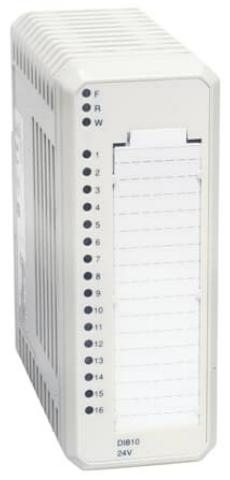
Channel configuration: 16 channels, supporting 24V DC input, using current sinking signal type.
Isolation design: 16 channels are divided into 2 groups (8 channels per group), and each group is isolated from the ground.
Protection and monitoring:
Each group is equipped with one process voltage monitoring input, and if the voltage disappears, an error signal can be fed back through the Modulus feedback channel.
The input circuit includes current limiting components and EMC protection components, and the sensor power supply can achieve current limiting through MTU.
Status indicator: The front is equipped with F (fault), R (operation), W (warning) indicator lights, and 16 channel “0”/”1″ status indicator lights.
Specification parameters
Electrical performance: Input voltage range: “0” state -30~+5 V, “1” state 15~30 V; Input impedance 3.5 k Ω; Filtering time can be selected from 2, 4, 8, 16 ms
Insulation and power consumption: rated insulation voltage of 50 V, dielectric test voltage of 500 V AC; Typical power consumption of 1.8 W;+5 V Modular Bus current consumption of 50 mA,+24 V bus and external no current consumption
Physical specifications: Width 45 mm, Depth 102 mm (including connector 111 mm), Height 119 mm; Weight 0.15 kg; Maximum on-site cable length 600 meters
Compatibility: Compatible with MTU models: TU810, TU812, TU814, TU818, TU830, TU833, TU838, TU850; Key control code AA
Environment and Certification
Working environment: Operating temperature 0~+55 ° C (certification range+5~+55 ° C), storage temperature -40~+70 ° C; relative humidity 5%~95% (no condensation); Pollution level 2, anti-corrosion level ISA-S71.04: G3; Protection level IP20.
Certification compliance: Possessing CE mark and complying with EN 61010 series and UL 61010 series electrical safety standards; Certified for hazardous locations such as C1 Div 2 cULus and ATEX Zone 2; Obtained certification from classification societies such as ABS and BV; Compliant with RoHS and WEEE directives.
Precautions
Installation environment
It needs to be installed in a temperature environment of 0 to+55 ° C (certification range is+5 to+55 ° C), with a storage temperature of -40 to+70 ° C.
The relative humidity of the installation environment should be maintained between 5% and 95% and in a non condensing state, with a pollution level of 2 (in accordance with IEC 60664-1), while also meeting the G3 anti-corrosion level specified in ISA-S71.04.
When installed vertically in a compact MTU, the maximum ambient temperature is 40 ° C (104 ° F).
Mechanical Installation
This module belongs to the S800 series mechanical specifications and needs to be installed in compatible MTU models such as TU810, TU812, TU814, etc.
When installing, pay attention to the size of the module, which has a width of 45mm, a depth of 102mm (including 111mm connectors), and a height of 119mm. Adequate space should be reserved.
Wiring specifications
The maximum on-site cable length is 600 meters (656 yards), and the cable length needs to be controlled within this range during wiring.
The input voltage range is -30.+5V for the “0” state and 15.30V for the “1” state. When wiring, ensure that the input voltage meets this specification.
The input impedance of the module is 3.5k Ω, and impedance matching should be considered when wiring.
Isolation requirements
The 16 input channels of the module are divided into 2 groups, each with 8 channels. Each group is isolated from the ground, and care should be taken not to damage this isolation characteristic when wiring.
The rated insulation voltage of the module is 50V, and the dielectric test voltage is 500V AC. During the wiring process, it is necessary to avoid exceeding this insulation and test voltage.
Other precautions
The sensor power supply can be current limited through MTU, and the wiring should be set correctly according to the actual situation.
The key control code for the module is AA, and compatibility with related equipment must be ensured during wiring and installation
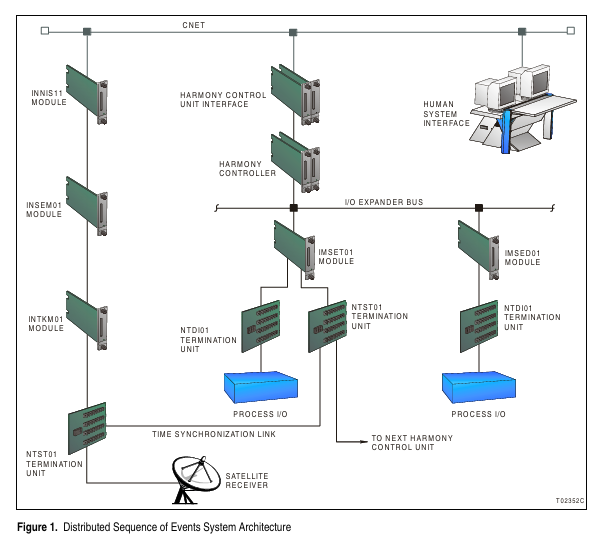
Harmony Sequence of Events (SOE) is for Symphony ™ The distributed event monitoring, recording, and reporting system provided by the enterprise management and control system is mainly used to capture the state transitions of digital signals from on to off or from off to on (SOE events), collect and timestamp these events through a series of SOE modules, and provide event data support for the system.
System architecture and core components
Server Node (INSOE01 Server Node)
INNIS11 Network Interface Module: As the front-end of all Cnet (control network) communication interfaces, it is an intelligent link between nodes and Cnets.
INSEM01 event sequence main module: communicates with INNIS11 and INTKM01 modules, responsible for managing the distributed event sequence system, including processing 1500 points from up to 1000 Harmony control units (HCUs), 256 complex triggers (each containing 16 operands), and 3000 simple triggers; Configure through specific function codes (FC 243-246) to monitor Harmony control unit data based on anomaly reports, collect and organize data, and provide SOE data to the human-machine interface after triggering conditions are met.
INTKM01 time synchronization main module: provides time information to the INSEM01 module and other parts of the distributed SOE system through a time synchronization link, connects to an external receiver using an IRIG-B time code link, and transmits absolute time using an RS-485 time synchronization link; Connect the external receiver signal and time synchronization link through the NTST01 terminal unit.
I/O module
IMSET01 event sequence timing module: processes up to 16 digital field inputs, receives and decodes time synchronization link information sent by INTKM01 module; The controller interacts and configures data with the module through specific function codes (FC 241, 242), with each channel optically isolated and individually programmable to support multiple input voltages; Communicating with the Harmony controller through the I/O expansion bus, only one module can run on one I/O expansion bus segment, connecting the NTST01 and NTDI01 terminal units, responsible for the time synchronization link and on-site wiring terminals, respectively.
IMSED01 event sequence digital input module: similar to IMSET01, but only processes up to 16 digital field inputs and does not handle time synchronization link information; The controller is configured and accesses its input channels through FC 242 function codes. One I/O expansion bus segment can run up to 63 of these modules and one IMSET01 module, and on-site wiring terminals are implemented through NTDI01 terminal units.
Terminal unit
NTDI01 terminal unit: provides physical connection points for on-site wiring.
NTST01 terminal unit: used for terminal connection of time synchronization link, and also provides relevant connection support for IMSET01 module, etc.
technical specifications
General specification: The module is installed in one slot of the standard module installation unit.
Environmental Specifications
Environmental temperature: 0 ° to 70 ° C (32 ° to 158 ° F)
Relative humidity: 5% to 95% at 55 ° C (131 ° F) (no condensation), 5% to 45% at 70 ° C (158 ° F) (no condensation)
Air quality: non corrosive
Certification and Standards
Compliant with CE marking related directives and standards, such as EN50082-2, EN50081-2, EN61010-1, etc.
Certified by the Canadian Standards Association (CSA) and Factory Mutual (FM), suitable for general (non hazardous) locations and classified as non flammable in specific categories.
Parameters of each module
INSEM01: 16 bit microprocessor, operating at a frequency of 10 MHz; The memory includes 2 Mb RAM, 512 kb ROM, and 512 kb NVRAM.
INTKM01: Operating voltage 5 VDC, ± 5%, typical current 300 mA; 16 bit microprocessor, operating frequency 10 MHz; The communication input and output are IRIG-B (DC level conversion format) and RS-485 time synchronization (62.5 kbaud).
IMSED01/IMSET01: Operating voltage+5 VDC, ± 5%, typical current 350 mA; 16 bit microprocessor, operating frequency 10 MHz; The memory includes 64 kb RAM and 64 kb ROM; Digital input supports multiple voltages, with corresponding parameters such as on/off voltage and current. The response time varies depending on the type, and it has certain isolation and surge protection capabilities.
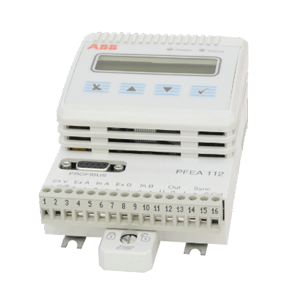
ABB Tension Electronics PFEA111/112 is a high-performance tension electronic device belonging to the ABB Measurement and Analysis series. It is designed specifically for web tension measurement systems and is widely used in manufacturing processes involving web material transmission, such as papermaking, plastics, and textiles.
Composition: Composed of PFEA111/112 tension electronic devices and various types of weighing sensors such as PFCL 301E and PFTL 301E, used for web tension measurement systems.
Function: To achieve precise measurement, monitoring, and control of web tension, PFEA112 also supports Profibus DP fieldbus communication.
Technical foundation: Based on Presductor ® Technology perceives mechanical forces through electromagnetic field changes and generates signals without the need for physical displacement.
Core functions and features
Measurement and output: Can receive input from 2 weighing sensors, provide voltage and current output A+B, and have adjustable filtering. The display screen can show content such as A, B, A+B, A-B, etc.
Installation flexibility: There are two versions available: IP 20 (non sealed, DIN rail installation) and IP 65 (NEMA 4, wall mounted), to adapt to different environments.
Configuration and Calibration: Supports quick and complete settings, can be set by hanging heavy objects or calculating package gain, and can perform zero point settings and other operations.
Compatibility and Compliance: Compliant with multiple international standards and certifications, such as CE marking, electrical safety certification, hazardous area certification, etc., and also meets RoHS and WEEE directives.
Installation and debugging
Installation requirements: The installation of weighing sensors and electronic units must follow specific specifications, including cleaning the surface, correctly connecting cables, ensuring the flatness of the installation plane, and also considering factors such as dynamically balanced measuring rollers and self-aligning bearings.
Wiring and Connection: Specific specifications of cables are recommended, and attention should be paid to the connection of cable shielding layers, distance from interference sources, etc. Multiple IP 20 version devices need to be connected synchronously.
Debugging steps: including basic settings (language, units, etc.), quick or complete settings (package gain, output parameters, etc.), checking sensor signal polarity and functionality, etc.
Technical Parameter
Power supply: IP 20 version is 24 V DC (18-36 V DC); The IP 65 version can be connected to 24 V DC (18-36 V DC) or 85-264 V AC.
Measurement range: The zero point setting range is ± 2.0 × Fnom, and the dynamic measurement range (including zero point setting) is -2.5 × Fnom to+3.5 × Fnom (Fnom is the nominal load of the weighing sensor).
Output: Voltage output 0-10 V (range -5 to+11 V), current output 4-20 mA (range 0 to 21 mA), with multiple filtering settings available.
Environmental parameters: operating temperature from 0 to+55 ° C (certification range+5 to+55 ° C), storage temperature from -40 to+70 ° C, relative humidity from 5 to 95% (non condensing), etc.
Operation and maintenance
Operation: Includes startup and shutdown processes, with continuous measurement during normal operation. Measurement values and menus can be viewed through the operation panel.
Maintenance: Regularly inspect the weighing sensor, electronic unit, and connecting cables, such as cleaning gaps, tightening screws, and checking for cable damage.
Troubleshooting: Provides common fault symptoms and solutions, such as signal noise, unstable zero point, no signal output, as well as methods for handling errors and warning messages.
ABB AI801 is a high-performance analog input module belonging to the Compact Product Suite compact product series, with article number 3BSE020512R1. It is equipped with 8 current input channels, supporting 0… 20 mA, 4… 20 mA DC signals, and adopts a single ended unipolar input method. The 8 channels are isolated from ground as one group.
Basic information
Product Model: AI801 (Analog Input Module)
Article ID: 3BSE020512R1
Series: Compact Product Suite
Core functions and features
Channel configuration: 8 channels, supporting 0… 20 mA, 4… 20 mA DC signals, using single ended unipolar input method.
Isolation design: 8 channels are isolated from ground as one group.
Protection mechanism:
The input end is protected by a PTC resistor for current limiting, which can withstand a short-circuit voltage of at least 30 V DC (non-destructive).
Simulate input for ZP or+24V short-circuit safety.
Compatibility: Supports HART communication.
Connection method: Process and power connection are achieved through detachable connectors.
Specification parameters
Category specific parameters
Performance parameter resolution: 12 bits; Input impedance (including PTC): 230-275 k Ω; temperature drift: typical 50 ppm/° C, maximum 80 ppm/° C; input filter (0-90% rise time): 180 ms; update cycle: 1 ms; maximum field cable length: 600 meters; Common mode rejection ratio (NMRR) at 50Hz/60Hz:>40dB
Electrical parameters: rated insulation voltage: 50 V; dielectric test voltage: 500 V AC; Power consumption: 1.1 W;+5 V Modulus current consumption: 70 mA;+24 V Modulus current consumption: 0; +24V external current consumption: 30mA
Solid wire specification: 0.05-2.5 mm ² (30-12 AWG); Stranded wire: 0.05-1.5 mm ² (30-12 AWG); Recommended torque: 0.5-0.6 Nm; wire stripping length: 6-7.5 mm (0.24-0.30 inches)
Size, weight, and width: 86.1 mm (3.4 inches); Depth: 58.5 mm (2.3 inches); Height: 110 mm (4.33 inches); Weight: 0.24 kg (0.53 lbs.)
Diagnostic function
Indicator light: The front is equipped with an S (status) LED, which displays the running or fault status.
Status indication: It can monitor module errors, module warnings, channel errors, and other statuses.
Environment and Certification
Certification status:
Possessing the CE mark.
Electrical safety certification: EN 61010-1, UL 61010-1, EN 61010-2-201, UL 61010-2-201.
Dangerous Place Certification: C1 Div 2 cULus, C1 Zone 2 cULus, ATEX Zone 2.
Classification society certification: ABS, BV, DNV, LR.
Environmental parameters
Working temperature: 0 to+55 ° C (+32 to+131 ° F), certified range is+5 to+55 ° C.
Storage temperature: -40 to+70 ° C (-40 to+158 ° F).
Pollution level: Level 2 (compliant with IEC 60664-1).
Anti corrosion grade: ISA-S71.04: G3.
Relative humidity: 5-95%, no condensation.
Maximum ambient temperature: 55 ° C (131 ° F), 40 ° C (104 ° F) when installed vertically.
Protection level: IP20 (compliant with IEC 60529).
Equipment category: Class I (compliant with IEC 61140, grounding protection).
Compliance: Compliant with RoHS (Directive 2011/65/EU) and WEEE (Directive 2012/19/EU) directives
AF C094 AE02 is an ARCnet control board launched by ABB, with product ID HIEE200130R0002, originating from Switzerland. As a new product, it is not a customized product and can be ordered in a conventional manner. It is mainly used in control scenarios based on ARCnet networks in the field of industrial automation, and can achieve control and coordination of related equipment and systems, providing stable hardware support for industrial control.
Working principle
ARCnet (Attached Resource Computer Network) is a local area network technology, and this control board operates based on this technology. It establishes connections with other devices in the network through the ARCnet network protocol for data transmission and exchange. Receive command signals from higher-level control systems or other devices, process them internally, and send control commands to the corresponding executing devices; At the same time, it can also collect operational status data of connected devices and provide feedback to relevant systems, thereby achieving closed-loop control of industrial processes.
Key advantages
Brand guarantee: Belonging to the ABB brand, relying on ABB’s technical strength and good reputation in the industry, the product quality and reliability are strongly guaranteed.
Strong adaptability: Designed specifically for ARCnet networks, it can adapt well to industrial control environments based on this network, ensuring the stability of network communication and control.
Standardized design: Following relevant industry standards, it has standardization in installation, connection, and use, making it easy to integrate with other equipment that meets the standards.
Precautions
Installation environment: Although the document does not explicitly mention specific working environment parameters, as an industrial control equipment, it should be avoided to install in environments that are too humid, dusty, high-temperature, or have strong electromagnetic interference to avoid affecting its normal operation.
Connection specifications: When connecting with other devices, it is necessary to strictly follow the connection specifications of ARCnet network to ensure correct and secure wiring, and avoid communication failures caused by connection problems.
Ordering and Inventory: The inventory location of this product is in Baden, Switzerland. When ordering, please note that the minimum order quantity and order multiple are both 1, and it is not a customized product. The order quantity and time should be reasonably planned according to actual needs.
ABB TP830-1 is an excellent PLC module that plays an important role in industrial automation control systems, providing reliable control solutions for various complex industrial scenarios.
Functional Features
Digital input/output function: With 16 channels, it can be used as a digital output module to provide accurate digital control signals for industrial automation systems; It can also serve as a digital input module to receive digital signals from external devices, enabling monitoring and control of industrial processes.
Multi interface design: Equipped with multiple interfaces such as digital input, digital output, analog input, analog output, etc., it can easily connect and communicate with various sensors, actuators, and other devices to meet the diverse needs of different industrial scenarios.
High performance processing capability: Equipped with a high-performance processor, it has fast data calculation and processing speed, and can easily handle complex control algorithms and data processing tasks, ensuring the efficient operation of the system.
Real time monitoring and control: It can monitor and control various industrial processes and equipment in real time, detect and handle abnormal situations in a timely manner, achieve automation control and optimization, and improve production efficiency and product quality.
Reliability and Stability: Using high-quality materials and advanced manufacturing processes, it has undergone rigorous testing and inspection to adapt to different working environment temperature and humidity conditions. It can work stably in the temperature range of -25 ℃ to+60 ℃, with high stability and reliability, and can operate stably for a long time in harsh industrial environments.
Scalability: Supports combination and expansion with other devices, and supports multiple different communication protocols and control methods, making it convenient for users to flexibly integrate and control the system according to actual needs to meet constantly changing production requirements.
Easy to use: Supports plug and play, easy installation, and has a simple and easy to understand interface and operation interface, reducing the user’s threshold for use, reducing installation and debugging time, and facilitating maintenance and management.
Application area
Manufacturing industry: Used for equipment control on production lines, such as robot control, automated assembly, material conveying, etc., to achieve automation and intelligence of the production process, improve production efficiency and product quality.
Process control: In process control systems in industries such as chemical, petroleum, and power, precise control of process parameters such as temperature, pressure, flow rate, and liquid level is carried out to ensure stable operation of the production process and consistency in product quality.
Factory automation: It can be used for the overall automation control system of factories, including workshop lighting control, air conditioning system control, access control system control, etc., to achieve intelligent management of factory facilities, improve the operational efficiency and management level of factories.
Install
Site Planning
Site selection and building requirements: The AC 800M system is designed for harsh industrial environments, introducing requirements for temperature, vibration, cooling, grounding, and other aspects, as well as other requirements such as room lighting independent of equipment power supply, complete process connections, effective grounding, cable wiring that complies with standard installation regulations, available power and other necessary facilities, compliance with standards and laws and regulations, and sufficient space in front of cabinets.
Cable: Introduces the requirements for laying on-site and communication cables, such as maintaining a distance of 10cm (4 inches) from other cables for short distance communication cables, maintaining a distance of 30cm (12 inches) from all power cables connected to AC 800M, and maintaining a distance of 10cm (4 inches) from relevant international immunity standard Category 4 cables; Applications that use shielded cables and situations where unshielded cables can be used; The lightning protection requirements for industrial equipment and power plants, as well as the installation of lightning protection equipment for overhead signal cable laying in large dispersed factories.
Power supply: Under normal circumstances, the power required for the AC 800M controller and related on-site equipment can be obtained from the factory’s standard 120/230V AC main power supply; When using the SD831/832/833/834 power unit, there is no need to use a main grid filter; The main circuit breaker must be installed near the controller installation to immediately and completely disconnect the power supply of the equipment when needed, and installed in an easily accessible and clearly visible location; Equipment connected to 115/230V AC power supply must be equipped with protective grounding (PE); To meet the requirements of IEC61131-2 for PE connection, it is recommended to use 35mm ² (2 AWG) copper wire as the PE conductor for the equipment; Recommended external main power supply fuse rating for standard AC 800M controller configuration, etc; The SD83X series power supply unit can easily handle short-term (<20 milliseconds) power outages that may occur in industrial environments, but to protect certain applications from transient voltage faults, uninterruptible power supply (UPS) equipment needs to be installed; The AC 800M controller will safely shut down in the event of a power failure, during which the application program memory and system clock are backed up by internal batteries. For systems that have not been running for a long time, it is recommended to install an external battery backup unit. After reconnecting to the power supply, the controller will restart and run the application program normally. If unexpected shutdown is not acceptable, it is strongly recommended to fully connect the AC 800M controller to an uninterruptible power supply (UPS) source.
Shell: The protection level of AC 800M and S800 I/O units is IP20, and each unit is individually marked with CE. If a higher IP level is required, an additional shell is needed; The use of additional enclosures usually does not affect the EMC characteristics of the controller; When installing the controller casing, in order to ensure good ventilation, a certain minimum distance should be maintained between the casing and the walls and ceilings; If the enclosure has a removable wall panel, it shall not be removed from any enclosure adjacent to any device that does not belong to the AC 800M controller and its connected S800 I/O; ABB recommends using RM550 (floor standing cabinet) and RE820 (wall mounted cabinet), with a protection level of IP54 and no additional cooling equipment required.
AC 800M unit installed on DIN rail: Due to the natural convection cooling of the AC 800M unit (CPU and communication interface), it can only be installed on a horizontal DIN rail; Each base has a locking mechanism that contacts the DIN rail with the metal backplate, providing an effective grounding connection. The DIN rail serves as the effective grounding for the system; The additional screw ears at the bottom of the base have no electrical function and can be used for additional fastening in environments with excessive vibration; There are two installation methods for the product in the cabinet, namely aluminum profiles with DIN rails or DIN rails installed on appropriately sized metal plates. The aluminum profiles or metal plates should be correctly connected to the protective grounding; Use DIN rails with a height of 7.5mm, referring to the NS 35/7.5 type of EN50022 standard; The interference suppression of external signals is usually directly grounded to the chassis and/or factory grounding, and the factory grounding potential must be stable and clear; The conductive backplate of each module is connected to a metal DIN rail as an electronic grounding conductor between modules, ensuring good grounding connection for internal logic, module EMI immunity, and RF transmission. The DIN mounting rail must have a good connection with the PE of the cabinet; If the AC 800M module is configured as two or more groups interconnected through extension cables, special attention should be paid to ensuring that all groups have good grounding connections for their DIN rails.
Other installation contents: including specific requirements and steps for installation on metal plates, installation of prefabricated aluminum profiles, as well as various processor units CEX-Bus、 The installation steps and precautions for communication interfaces, power supplies, main circuit breaker units, voting units, external battery units, I/O units, etc., as well as examples of installation in cabinets and installation size requirements for appropriate ventilation.
Configuration
General information: Using the engineering tool Control Builder, hardware (I/O and communication units) can be configured and applications can be created using control languages that comply with IEC 61131-3. The program can be compiled and run offline to facilitate process simulation before ultimately downloading the application to the controller. Control Builder provides a set of options, each with its own set of properties, simply select the option that is closest to the system requirements.
Connect Control Builder: Control Builder is installed on a PC and is usually connected to the AC 800M controller through the CN1 or CN2 ports on the control network and controller. It can also be connected through the COM4 port (RS-232C) on the AC 800M controller using tool cable TK212 and the serial port on the PC. In redundant configuration, Control Builder is connected to the COM4 port of the main CPU, and the backup CPU cannot communicate with Control Builder. PM851/PM851A is limited to one Ethernet (CN1) port and therefore does not support redundant Ethernet. The Control Builder standard does not support CI862, and to use CI862, appropriate system extensions must be installed. To use the FF HI function, the firmware of CI852 unit needs to be upgraded through the Serial Firmware Upgrade Tool. This tool loads special firmware with FF HI function into the controller and manually browses it in the Serial Firmware Upgrade Tool . \ Firmware Files \ SC860rFFHI folder and select firmware. ext.
Connecting to the control network: The control network is a dedicated IP network domain used for real-time data and general system communication between industrial computers, which can be expanded from small networks to large networks containing multiple “network areas” and hundreds of nodes. The controller is installed in the cabinet, and in industrial environments, AC 800M/control network connections must be converted to fiber optic (FO), which can be achieved by installing Ethernet switches with optical and electrical ports.
Communication possibility: The processor unit (PM8XX/TP830 or PM891) contains multiple communication ports, such as CN1 and CN2 for connecting to the control network, COM3 for RJ45 port with modem signal, COM4 for connecting to service tools, etc. By adding communication interfaces to CEX Bus, the number of protocols and processor unit ports can be expanded. The document lists the available interfaces and their quantities on CEX Bus.
Controller IP Address: It is recommended to always use the “Factory Reset” command to start an IPConfig session before allocating the expected IP address, in order to clear previously stored backup MAC and IP addresses (if any). Introduced the methods and precautions for setting IP addresses in both single CPU and redundant CPU configurations.
I/O system: There are various methods to connect the I/O system to the AC 800M controller, such as connecting S100 I/O through CI856; By connecting S800 I/O units through Modulus Bus, it supports hot configuration, redundancy at all levels, HART routing, and sequence of events (SOE) during operation. Also introduced ModuleBus、PROFIBUS DP、PROFINET IO、FOUNDATION Fieldbus High Speed Ethernet(FF HSE)、TRIO/Genius Remote I/O、Satt I/O on ControlNet、PROFINET IO via CI871 Waiting for relevant information.
Drive system: ABB standard (Std) and engineering (Eng) drives can be connected to AC 800M in various ways, such as optical Modulus Bus, CI801 and PROFIBUS DP, NPBA-12, RPBA-01 or FPBA-01 PROFIBUS DP adapter modules, and CI854. The relevant parameters and limitations of different connection methods are also introduced.
Power System: The power system configuration of the AC 800M controller is very simple, providing a series of simple circuit diagrams that demonstrate various possibilities of connecting the input main power supply to the 24V DC distribution terminal through the main circuit breaker, power unit, and SS83X voting device. It also introduces the requirements and precautions for power supply to units inside the cabinet, power supply to on-site equipment outside the cabinet, and power supply from external power sources.
Operate
AC 800M Controller (PM8xx): After being equipped with control software, the basic PM8xx/TP830 or PM891 hardware units installed on the AC 800M hardware platform constitute the AC 800M controller. Introduced relevant information on LED indicator lights, switches and buttons, and connectors.
Startup: including reference documents for firmware download, controller IP address, application download, firmware update, and other information; Precautions for CEX bus and CEX module during startup in redundant configuration.
Startup mode: including hot start, cold start, controller reset, and the operation methods and characteristics of cold start and controller reset in redundant configurations.


_001_small_1200x630.jpg%3fsfvrsn%3d699670c_0&ehk=DC9Qq12FiwDC7qBWNwnlUPgannRttThr4DlbUnCA9Os%3d&risl=&pid=ImgRaw&r=0)