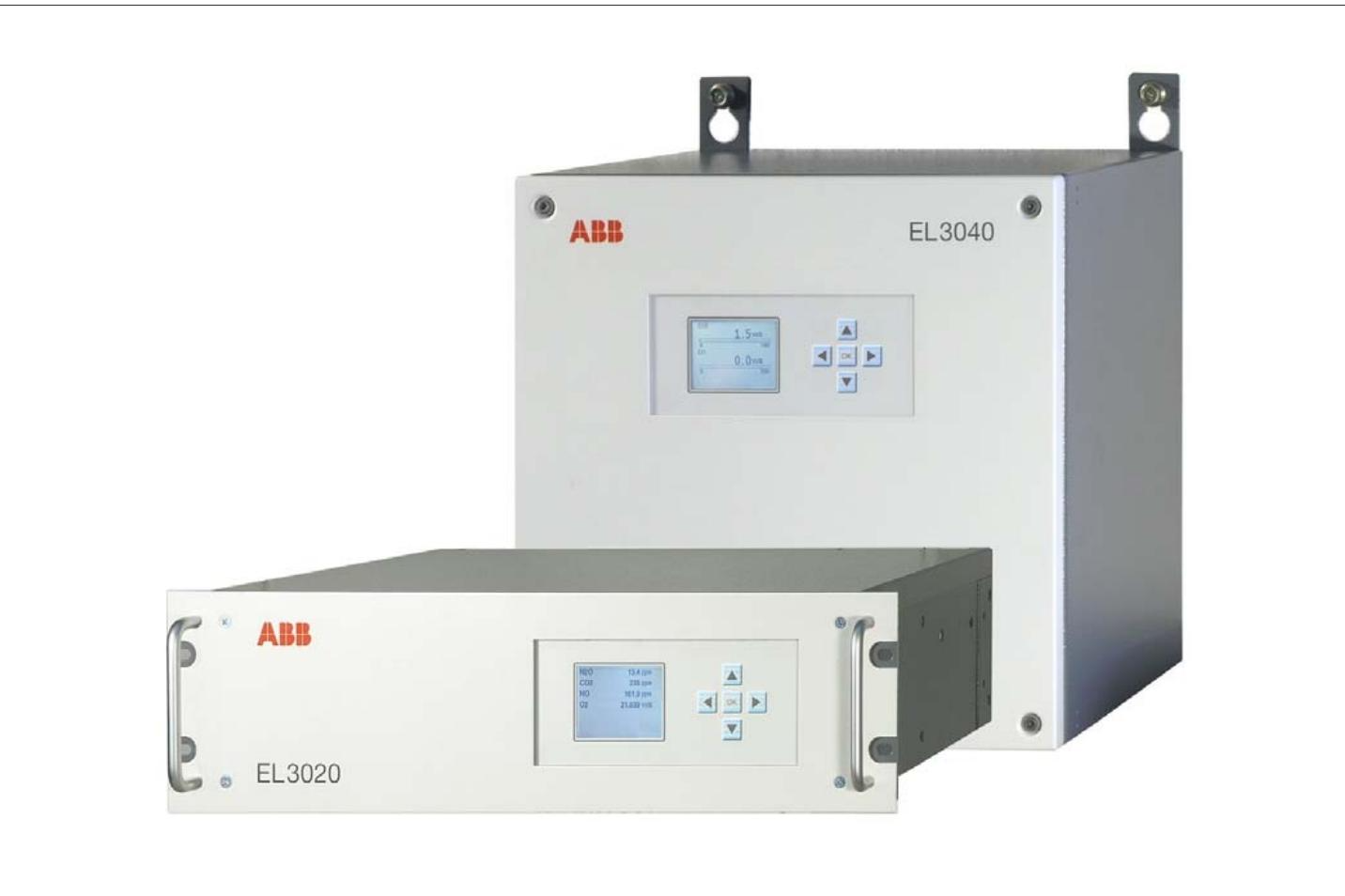
The ABB EasyLine series gas analyzer includes models EL3020 and EL3040, with software version 3.2, mainly used for continuous measurement of the concentration of individual components in gases or vapors. Among them, EL3020 is a 19 inch chassis with a protection level of IP20 and a weight of approximately 7-15 kg; EL3040 is a wall mounted chassis with a protection level of IP65 and a weight of approximately 13-21 kg.
This analyzer cannot be used to measure combustible gases/air or gas/oxygen mixtures. The stainless steel gas path and gas connection version can measure flammable gases and vapors in non hazardous environments, but special requirements must be followed; The explosion-proof version (EL3040, protection level II 3G) can measure non combustible gases and vapors in hazardous environments.
Installation preparation
Installation site and power requirements
Installation site: It needs to be installed indoors and should be as close as possible to the sampling location to ensure sufficient air circulation and avoid adverse conditions such as cold, hot, temperature changes, strong airflow, dust accumulation, corrosive atmosphere, and vibration. The installation site needs to be stable enough to withstand the weight of the analyzer, and it is recommended to install the 19 inch chassis in a cabinet or rack with sliding rails.
Climate conditions: atmospheric pressure 600-1250 hPa; The maximum relative humidity is 75%, and slight condensation is allowed; Storage and transportation temperature -25-+65 ° C, operating temperature+5-+45 ° C (Uras26 combined with other analyzers is+5-+40 ° C, Limas23 is+5-+40 ° C); The maximum altitude of the installation location is 2000 meters.
Power supply: Input voltage 100-240 V AC (-15%,+10%), 50-60 Hz (± 3 Hz); Maximum power consumption of 187 VA; using a 3-pole grounded instrument connector (EN 60320-1/C14), equipped with a power cord; The built-in clock is powered by a 3 V CR2032 lithium battery.
Sample gas conditions
Different analyzers have different requirements for the inlet and outlet conditions of the sample gas. For example, Uras26 requires the dew point of the sample gas to be at least 5 ° C lower than the lowest ambient temperature in the entire sample gas path, with a positive pressure of 2-500 hPa and a flow rate of 20-100 l/h; Limas23, Magnos206, Caldos27, etc. also have their own corresponding requirements for temperature, pressure, flow rate, etc.
Special requirements
Combustible gas measurement: EL3020 needs to ensure air circulation around it and cannot be placed directly on a table. The chassis holes must not be closed and should be at least 3 cm away from adjacent built-in components. The enclosed cabinet should have sufficient ventilation; The EL3040 chassis must be purged with nitrogen gas at a flow rate of 1-20 l/h, and the outlet flow rate of the purging gas needs to be monitored.
Explosion proof design (EL3040, protection level II 3G): The cable should be correctly inserted into the threaded cable sealing sleeve and tightened, and unused cable connectors should be sealed with suitable ventilation plugs; In hazardous areas, it is not allowed to open the chassis with electricity on; Unused purge gas connections during operation need to be sealed with ventilation plugs, etc.
Installation process
Unpacking and Inspection
Two people are required to open the box. After removing the accessories, take out the analyzer from the packaging box, remove the packaging and place it in a clean location. Check for any transportation damage and keep the packaging box and materials for future transportation.
Gas connection installation
It is recommended to install gas connections before installing the analyzer. The accessories should be clean and free of residue, and no sealant should be used. PTFE sealing tape should be used instead. Different models and combinations of analyzers have different gas connection methods, which need to be operated according to the corresponding connection diagram, such as Uras26, Limas23, and their combinations with other analyzers.
Analyzer installation
19 inch chassis (EL3020): requires 4 oval head screws (M6 recommended) and 1 pair of mounting rails (approximately 240 mm in length) to be installed in a cabinet or rack, with a minimum spacing of 1 height unit between multiple 19 inch chassis.
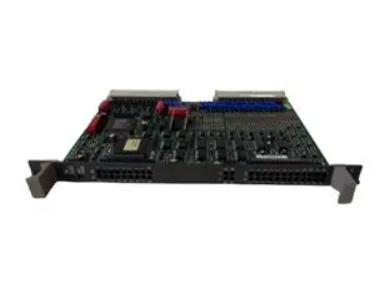
83SR04 is a module for storing program binary and analog control tasks at the driver, group, and unit control levels, which can be used in conjunction with a multifunctional processing station. The model number is 83SR04-E/R1210, and the order number is GJR2390200R1210. It is produced by ABB Utilities GmbH. Its country of origin and other information are not explicitly mentioned. It weighs approximately 0.55kg and complies with DIN 41612 standard. The board size is 6 units, 1 partition, 160mm deep, equipped with 1 48 pin edge connector (X11 for station bus connection) and 1 32 pin edge connector (X21 for process connection).
Application scenarios
This module has a wide range of applications and can be used for driving control of unidirectional drivers, actuators, solenoid valves, binary function group control (sequence and logic control), three-step control, and signal conditioning.
Functional Features
Core functions
It has three operation modes, namely binary control mode (and analog basic function), analog control mode (and binary control), and signal conditioning mode (with interference bit output), which can be selected through the function block TXT1.
Having four hardware interfaces with switch devices and processes, it can achieve communication with processes and switch devices, receive and process relevant signals, and output control instructions.
The module address is automatically set by inserting the module into the PROCOTROL station. Telegrams received through the station bus are checked for transmission accuracy using parity bits, and telegrams sent by the module to the bus are also checked for transmission accuracy using parity bits.
The user program is stored in non-volatile memory (EEPROM) and can be loaded and modified from PDDS through the bus. After loading a valid user list, the module can run.
Diagnostic and alarm functions
The front of the module indicates faults through light-emitting diodes (LEDs), the ST indicator light displays any faults in the module and data communication with the module, and the SG indicator light only displays module faults.
The alarm system and control diagnostic system (CDS) receive fault alarms from the control module through the bus.
The module processing part will perform error monitoring (self diagnosis) on input telegrams, generated telegrams to be transmitted, and internal signal processing. The fault type will be stored in the diagnostic register, and a general fault alarm will be sent to the PROCOTROL system. When requested, telegrams with data from the diagnostic register will be transmitted.
Module Design
Component
It mainly consists of process interfaces, station bus interfaces, and processing parts. The process interface adapts the process signal to the internal signal level of the module; The station bus interface adapts module signals to bus signals, mainly involving parallel to serial conversion; The processing part is equipped with a microprocessor, which works in conjunction with multiple storage areas through the internal bus of the module, including EPROM (storing operating programs, functional blocks), EEPROM (storing user programs, etc.), RAM (storing user programs, historical values, current module input and output signals, etc.).
Structuring and Addressing
When structuring, module inputs and outputs need to be assigned to neutral inputs and outputs of each functional block, or constants, parameters, or outputs of other functional blocks need to be specified for functional block inputs, and there are many limiting values that need to be followed, such as a maximum module input of 287 and a maximum imitable module input of 32.
The signal exchange between the module and the bus system is carried out through shared memory, which includes source registers (0-63) for transmitting telegrams and destination registers (64-199) for receiving telegrams. The allocation of module input and output signals to shared memory registers is determined by PDDS based on user provided data, including module input address list, module output to bus address list, etc.
MODE
Binary Control Mode (STR)
Provide functional blocks for all binary control functions at the driver, group, and unit control levels, as well as additional analog basic functions.
The module cycle time is variable and strictly determined by the functional blocks used. In this mode, except for the output of the GRE function block, analog values do not transmit interference bits.
Simulated Control Mode (REG)
Provide simulation control function blocks for all single variables and main controls, including drive control function blocks.
The module cycle time can be preset in steps to a fixed minimum time (50, 100, 150, 200, or 250ms). When implementing multiple control loops, the module cycle time will increase accordingly.
ABB 216EA41b is a high-performance control module designed specifically for industrial automation and power systems. As a key member of ABB’s automation control module series, it is responsible for signal processing, data calculation, and executing control operations. With its outstanding performance and reliable quality, it plays a core role in various complex industrial scenarios. It can receive multiple signals from sensors, switches, buttons and other devices, and after internal precision processing, accurately output control instructions to achieve efficient monitoring and precise control of equipment operation status.
Specification parameters
Physical specifications
Size: 12.7 cm x 7.6 cm x 17.8 cm, compact and reasonable appearance design, can adapt to various control cabinet space layouts, whether in large industrial facilities with ample space or small control systems with strict space utilization requirements, it can be flexibly installed.
Weight: 350g. The lightweight design not only facilitates transportation, but also greatly reduces the difficulty of operation during equipment installation.
Shell material: Made of aluminum alloy material, it has good mechanical strength and corrosion resistance, which can effectively resist physical impact and chemical erosion in industrial environments, providing solid and reliable protection for internal precision electronic components.
Protection level: reaching IP65, which means that the module has complete protection against dust and can effectively protect against water spray from all directions. It can operate stably in harsh industrial environments such as high dust and humidity.
Electrical specifications
Power supply voltage: 24V DC, compatible with common industrial DC power sources, providing reliable power guarantee for stable operation of modules.
Power consumption: ≤ 10W. Low power design not only helps reduce energy consumption, but also reduces heat generation during equipment operation, improving system stability and economy.
Input/output points: up to 128 points, the abundant I/O points can meet the needs of complex industrial control systems for multi device connection and signal interaction.
Speed: ≤ 0.5ms/point, high-speed data processing speed ensures that the module responds to various signal changes in a timely manner, achieving fast and accurate control of industrial processes.
Communication interface: Integrated with multiple communication interfaces such as RS232, RS485, CAN, Ethernet, etc., it can easily achieve interconnection and intercommunication with different types of devices and systems, facilitating the construction of efficient industrial automation networks.
Environmental adaptability
Working temperature: The working temperature range is -20 ° C to+60 ° C, which can adapt to industrial production scenarios under different temperature conditions, from cold northern industrial environments to hot southern factories.
Storage temperature: The storage temperature range is -40 ° C to+85 ° C, which ensures that the module performance is not compromised even when stored in extreme temperature environments, ensuring normal operation when needed for use.
Relative humidity: It can operate stably in a relative humidity environment of 5% to 95% (non condensing), effectively responding to large humidity changes in industrial environments.
Core functions
Voltage monitoring
It can monitor the voltage situation in the system in real-time and accurately, including key parameters such as phase voltage and line voltage, and detect abnormal voltage fluctuations in a timely manner. Once the voltage value is detected to exceed the preset safe range, an alarm mechanism will be quickly triggered to notify the operator in a timely manner, so that corresponding measures can be taken to ensure the safe and stable operation of the system.
Signal processing
It can efficiently collect analog or digital signals from on-site equipment, and through advanced signal processing algorithms, perform a series of processing operations such as denoising, amplification, and conversion on the signals. The processed signals are converted into standard formats suitable for subsequent control and monitoring, providing accurate and reliable data support for the control system.
Fault diagnosis
Equipped with powerful fault diagnosis capabilities, it can quickly and accurately detect potential faults in the system through real-time analysis of input signals, equipment operating status, and its own working parameters. It can also generate alarm information in a timely manner, providing detailed reports on fault types, locations, and possible causes, helping users quickly locate and solve problems, and significantly reducing equipment downtime.
Control execution
Based on the preset control logic and received signals, this module can quickly generate precise control instructions and send them to the executing mechanism, such as motors, valves, etc., to achieve various control operations such as start stop, speed adjustment, flow control, etc. of industrial equipment, ensuring that the industrial production process strictly operates according to the predetermined process and parameters.
Working principle
When sensors, switches, and other equipment in the industrial field generate signals, the 216EA41b module receives these signals through its input channel. For analog signals, the module first performs analog-to-digital conversion to convert them into digital signals; For digital signals, further processing is performed directly. The internal high-performance microprocessor analyzes, calculates, and logically judges these signals according to preset programs and algorithms. For example, when monitoring voltage signals, the real-time collected voltage values are compared with the preset normal range. If the voltage is normal, continue to maintain real-time monitoring of the signal; If the voltage is abnormal, the microprocessor will immediately trigger an alarm program and generate control instructions according to the preset response strategy, which will be sent to relevant executing devices through the output channel, such as voltage regulating devices or alarm devices. At the same time, the module also interacts with the upper computer or other devices through communication interfaces, uploads collected data and device operating status, and receives control parameters and instructions issued by the upper computer to achieve more comprehensive and intelligent industrial automation control.
Precautions
Installation process
During the installation process, it is essential to strictly follow the standard DIN rail installation dimensions to ensure that the module is securely and stably installed. At the same time, it is necessary to carefully check whether each connecting cable is correctly connected to avoid situations such as reverse insertion and looseness, so as not to affect signal transmission and normal equipment operation.
Environmental considerations
Although the module has good environmental adaptability, it should still be installed in a dry, well ventilated, and non corrosive gas environment as much as possible. Avoid using in environments with high temperature, high humidity, or strong electromagnetic interference to prevent adverse effects on module performance and service life.
Power supply
Ensure that the 24V DC power supply connected is stable and reliable, and the power fluctuation range should be within the allowable working voltage range of the module. It is recommended to equip corresponding voltage stabilizing devices and overcurrent protection devices to prevent module damage caused by power supply issues.
Communication settings
When establishing communication connections and setting parameters, it is necessary to accurately configure communication interface types, communication protocols, baud rates, and other parameters based on the actual connected devices and systems. Incorrect parameter settings may lead to communication failures and affect the overall operation of the system.
Application scenarios
Industrial automation production line
In industrial automation production lines such as automobile manufacturing and electronic equipment production, the 216EA61b module can be used to collect and process signals from various sensors and actuators, accurately control equipment on the production line, such as controlling the movement of robot arms, starting and stopping the material conveying system, and adjusting the speed, ensuring efficient and stable operation of the production line, improving production efficiency and product quality.
Power system
In the processes of power generation, transmission, and distribution, this module can monitor real-time parameters such as voltage and current in the power system, and protect and control power equipment. For example, in a substation, by monitoring voltage changes and adjusting transformer taps in a timely manner, the stability of the power supply voltage is ensured; When a power failure occurs, quickly cut off the faulty line to prevent the fault from expanding and ensure the safe and reliable operation of the power system.
Manufacturing process control
In the manufacturing industries such as chemical, food and beverage, and pharmaceutical, the 216EA40B module can monitor and control key parameters such as temperature, pressure, and flow rate during the production process. Taking chemical production as an example, by precisely controlling the temperature and pressure of the reaction vessel, the chemical reaction is ensured to proceed under optimal conditions, thereby improving product quality and production safety.
Transportation and infrastructure
In intelligent transportation systems, it can be used to control the switching of traffic signals, adjust the duration of signal lights in real time according to traffic flow, and optimize traffic flow. In terms of infrastructure construction and management, such as sewage treatment plants and water treatment plants, this module can be used to remotely monitor and control equipment such as pumps and valves, achieve automated operation, and improve the operational efficiency and management level of infrastructure.
The ABB MB510 program card interface (product ID: 3BSE002540R1) is a key component belonging to the ABB control system accessory series, mainly used for connecting and exchanging data between program cards and related control systems. As an important interface device for control and communication, it plays a bridging role in industrial automation control systems, capable of storing, reading, and transmitting programs, providing strong support for stable system operation and program management. This product is non customized, with a minimum order quantity and order multiple of 1 piece.
Basic Product Information
Product ID: 3BSE002540R1
ABB model name: MB510
Product Name: MB510 Program Card Interface
Core credit: 0.00
Country of Origin: Sweden (SE)
Customs tariff number: 85389091
Gross weight: 0.14 kg
Net weight of product: 0.14 kg
Invoice Description: MB510 Program Card Interface
Is it a customized product? No
Packaging grade 1 Gross weight: 0.14 kg
Packaging Level 1 Unit: 1 piece
Component Type: New Product
Sales measurement unit: piece
Inventory location (warehouse): Distribution center, US central warehouse DEOSCEXPU、SGRL4414FEXPU、SELOGVEXPU
Technical information: Program card interface
UNSPSC:39120000
Size and weight
Product net depth/length: 260 mm
Product net height: 20mm
Product net width: 120mm
Category
Control System Products → Control & Communication → AC 400 → AC 400 – Accessories → MB510 Program Card Interfaces MB510 Program Card Interface
Control Systems → Advant OCS with Master SW → Controllers → Advant Controller 450 → Advant Controller 450 Version 2.3 → Control System Accessories
Control Systems → Safety Systems → Safeguard → Safeguard 400 Series → Safeguard 400 1.6 → Unclassified
Control Systems → Advant OCS with Master SW → Controllers → Advant Controller 410 → Advant Controller 410 Version 1.5 → Central Units
Control Systems → Advant OCS with Master SW → Controllers → Advant Controller 450 → Advant Controller 450 Version 2.3 → Central Units
Control Systems → Advant OCS with Master SW → Controllers → Advant Controller 450RMC → Advant Controller 450RMC 2.x → Central Units
Working principle
The working principle of the ABB MB510 program card interface is mainly to establish physical and data connection channels between the program card and the control system. After the program card is inserted into the interface, the interface identifies the type and status of the program card through internal circuit design, and establishes a data transmission link.
During data transmission, the interface receives program data signals from the program card, undergoes internal signal processing and conversion, converts them into a signal format that the control system can recognize and process, and transmits them to the control system; At the same time, it can also receive program storage, reading and other instruction signals issued by the control system, convert them into signals recognizable by the program card, and control the program card to perform corresponding operations, such as writing program data from the control system into the program card for storage, thereby achieving effective data exchange between the program card and the control system.
Key advantages
Reliable Connection: Adopting high-quality interface design and manufacturing processes, it can provide stable and reliable connections for program cards and control systems, reduce data transmission errors caused by loose connections or poor contacts, and ensure the smooth operation of program loading, storage, and other operations.
Strong adaptability: Specially designed for specific control system suites, with good compatibility with related systems, it can seamlessly integrate into the system without the need for complex debugging and adaptation work, reducing the difficulty and cost of system integration.
Compact and convenient: Its compact size and lightweight weight make it highly flexible during installation and use, able to adapt to different installation space requirements, and also convenient for transportation and storage.
Precautions
Installation operation: During the installation process, it is necessary to ensure that the interface is correctly connected to the program card and control system, and to avoid damage to the interface or related equipment caused by incorrect insertion or misconnection. When installing, pay attention to moderate force to prevent physical damage to the interface caused by excessive force.
Environmental protection: Although the product itself has certain design considerations, it should be installed in a dry, ventilated, non corrosive gas and dust free environment as much as possible during use to avoid environmental factors affecting the performance and service life of the interface.
Compatibility note: Due to the specific compatibility kit of this product, it is necessary to confirm whether it matches the control system kit used when selecting, in order to avoid malfunction caused by incompatibility.
RoHS related: This product does not comply with RoHS standards. In application scenarios with strict requirements for RoHS, this factor needs to be considered in advance to determine whether it is applicable.
ABB LDGRB-01 3BSE013177R1 is an excellent independent resolution module designed specifically for the industrial automation field, aiming to provide precise and reliable signal processing and control capabilities for complex control systems. Its excellent manufacturing process from Sweden represents ABB’s profound technical accumulation and strict quality control in industrial control products.
Specification parameters
Electrical specifications
Operating voltage: usually 24V DC, suitable for common industrial DC power supply systems to ensure stable power supply.
Output frequency: up to 30KHZ, capable of high-speed response to various control signals, timely processing, and accurate command output.
Physical specifications
Size: 30 × 20 × 20cm, compact design saves control cabinet space and facilitates installation and layout in industrial environments with limited space.
Weight: Due to differences in specific design and configuration, it remains within a reasonable range for easy transportation and installation.
Environmental adaptability
Working temperature: 0 ° C to 55 ° C (32 ° F to 131 ° F), suitable for most conventional industrial environment temperature changes.
Storage temperature: -20 ° C to 70 ° C (-4 ° F to 158 ° F), ensuring performance is not compromised even in extreme temperature environments when not in operation.
Humidity requirement: The relative humidity during operation and storage is usually 5% to 95% and there is no condensation. It can work stably in both humid and dry environments.
Core functions
Signal acquisition and processing
It can accurately collect analog and digital signals, and efficiently convert and process them. Whether it is analog quantities such as temperature, pressure, flow rate, or digital quantities such as equipment switch status, they can be accurately captured and converted into system recognizable information, providing precise data support for automation control.
Control instruction output
Based on the processed signal and preset control strategy, generate corresponding control instructions and output them to the executing mechanism, such as valves, motors, etc., to achieve precise control of industrial equipment and ensure that the production process proceeds according to predetermined parameters and processes.
Data Storage and Management
Having large memory and storage space, it can store a large amount of programs, parameters, and running data. Easy to query, analyze, and trace historical data, providing a basis for production optimization and fault diagnosis.
Communication and Interaction
Equipped with multiple interfaces and communication functions, such as Ethernet and serial interfaces, it can exchange and communicate data with other devices and systems, achieve information sharing and collaborative control, and integrate into the entire industrial automation network.
Key advantages
Accurate signal processing
High performance processors ensure efficient processing of complex control algorithms and real-time tasks, precise acquisition, conversion, and processing of analog and digital signals, providing accurate input and output data for automation systems, ensuring high-precision control of production processes, such as ensuring product quality consistency in the precision manufacturing industry.
Powerful storage and multitasking capabilities
The large memory and storage space can store a large amount of programs and data, support multitasking, and can simultaneously execute multiple control tasks, improving system response speed and operating efficiency. It can balance multiple tasks in large industrial production lines, ensuring efficient and stable operation.
High reliability design
High quality materials are selected, and the structural design takes into account the harsh industrial environment, with good anti-interference ability and stability, to resist adverse factors such as electromagnetic interference, vibration, dust, etc., ensuring long-term stable operation of the system, reducing downtime and production losses.
Rich communication and flexible configuration
Multiple interfaces facilitate data exchange with other devices and systems, seamlessly integrating with ABB’s own or third-party control systems. Support flexible configuration and programming, users can customize settings according to actual needs, and easily implement complex control strategies.
Precautions
Installation aspect
When installing, choose a location with good ventilation, away from strong electromagnetic interference sources, and low vibration to ensure a stable working environment for the module. Connect various types of circuits according to the correct wiring method, ensuring firm wiring and good contact, and avoiding signal transmission abnormalities or module damage caused by wiring problems.
Operation and maintenance
Regularly inspect the module to check for dust and debris accumulation, clean it in a timely manner, and keep the module clean. Check if the connecting wires are loose or aging, and promptly address any issues found. Avoid operating the module under conditions beyond its environmental adaptation range, such as excessively high or low temperatures, humidity, etc.
Operating standards
Operators should receive professional training, be familiar with the operation process and parameter setting methods of modules, and avoid module failures or system abnormalities caused by misoperation. When performing parameter modifications, program updates, and other operations, backup work should be done to prevent data loss.
The ABB ACH550-01 frequency converter is a drive device suitable for HVAC applications, designed to provide efficient motor control for various related scenarios. Its design emphasizes reliability and practicality, achieving precise control of the motor through advanced technology to meet the operational needs under different working conditions. This frequency converter has multiple manuals for reference, including user manuals, HVAC information guides, flange installation instructions, and various option manuals, providing comprehensive guidance for users’ installation, operation, and maintenance.
Installation related
Installation preparation
Before installation, multiple preparations are required. To confirm the drive identification, including checking the model, serial number, protection level, rating, and other information on the label, clarify the type and specifications of the drive. At the same time, it is necessary to determine the frame size, as different frame sizes correspond to different output current, power, and other parameters. It is also necessary to identify the motor, check the rated voltage, current, frequency, speed, power and other information of the motor to ensure compatibility with the driver.
In terms of installation environment, it is necessary to choose a suitable environment and enclosure. The IP21 enclosure requires an environment free of airborne dust, corrosive gases, or liquids; The IP54 casing provides dust and splash protection. The installation position should meet the requirement of vertical installation on smooth, non flammable, and sturdy surfaces or frames, and ensure a certain amount of heat dissipation space to avoid hot air circulation.
Wiring and electromagnetic compatibility (EMC) also need to be carefully considered. Input power lines, motor lines, and control/communication lines should be wired separately, following relevant cable specifications. It is recommended to use shielded twisted pair cables for control cables. In addition, it is necessary to prepare the necessary tools and install the hardware.
Setup script
When installing, first use the installation template to mark the installation hole position and drill holes, and then screw the screw part into the hole. For drivers with different levels of protection, the way to remove the front cover varies. For IP54 models, the edge capstive screws need to be loosened, while for IP21 models, the control panel needs to be removed first, the top screws need to be loosened, and the side clamp needs to be pressed.
When installing the IP54 driver, the rubber plug should be removed first, the driver should be positioned on the mounting screw and tightened, the protective plug should be reinstalled, and a warning label should be affixed; The IP21 model should directly position the driver onto the mounting screw and tighten it, and also attach a warning label.
Wiring installation should be carried out according to the corresponding terminal layout, including the connection of input power, motor, and control cables. When connecting, attention should be paid to torque requirements. After installation, it is necessary to check whether the installation meets the requirements, such as the driver being securely installed, wiring being correct, and no tools or foreign objects remaining. Then, reinstall the cover and turn on the power.
Startup and Control Panel
control panel
The ACH550-01 frequency converter is equipped with an HVAC control panel (ACH-CP-B), which has multiple functions including language selection, instant disconnection and connection of drive connections, startup assistant, parameter copying and backup functions, context sensitive assistance, and real-time clock. The control panel is compatible with specific firmware versions and can display relevant information and perform operations in different modes.
Start operation
Startup can be done through the startup assistant or by modifying parameters separately. When powered on for the first time, the driver will activate the startup assistant, guiding the user to perform language selection, motor data input, rotation check, and other operations. Users can also enter parameter mode and manually modify relevant parameters for startup settings.
The control panel has multiple modes, such as output (standard display) mode for displaying driver status information and operating drivers; Parameter mode is used to individually edit parameter values; Assistant mode is used to guide startup and configuration; There are also parameter mode changes, drive parameter backup mode, time and date mode, I/O setting mode, fault recorder mode, etc., to meet different operational and configuration requirements.
Application macros and wiring
Application macro
Application macros are used to define a set of parameters and change them to predefined values to reduce the need for manual parameter editing. The ACH550-01 frequency converter includes various application macros, such as HVAC default macro (suitable for typical BMS applications), supply fan macro, return fan macro, cooling tower fan macro, condenser macro, booster pump macro, etc. Each macro has its specific parameter settings and applicable scenarios.
When selecting application macros, you can operate them through the assistant mode of the control panel. After selecting the appropriate macro, you can also set whether to use the mechanical HAND-OFF-AUTO switch as needed. To restore the default factory settings, you can choose the HVAC default application macro.
Wiring Example
Different application macros correspond to different wiring methods, including connections for analog input, analog output, digital input, relay output, etc. For example, the default macro wiring of HVAC specifies the functions and connection requirements of each terminal, such as analog input 1 for external reference, analog input 2 for actual signals, digital input 1 for start/stop, etc. At the same time, connection examples for two-wire and three wire sensors are provided, as well as connection methods for obtaining 0… 10V signals from analog outputs.
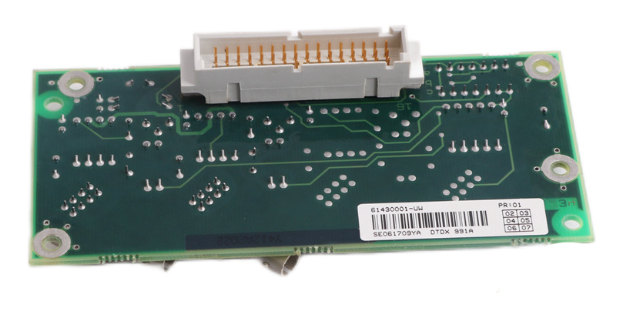
ABB DTDX991A 61430001-UW is a high-performance servo controller specially designed for industrial automation. With excellent signal processing capabilities and precise control performance, it can ensure stable and efficient system operation in many complex industrial scenarios such as manufacturing, process control, and energy management. Its reliable quality and outstanding performance have become key components highly favored in the field of industrial automation.
Core parameters
Input/output characteristics: The input voltage of this controller is 24V DC, and the output voltage can be flexibly adjusted, usually up to 24V DC. The rated current of each channel is 1A, with a maximum of 16 channels and a maximum total output current of 2A. This configuration enables it to adapt to various load requirements, whether driving small precision equipment or providing power control for large industrial machinery, it can be accurately matched to ensure stable operation of the equipment.
Physical specifications: The product has a compact appearance with dimensions of 100mm x 100mm x 25mm (width x height x depth) and weighs only 0.5kg. The compact and lightweight design not only facilitates installation in control cabinets with limited space, but also does not impose too much burden on the overall structure of the equipment, greatly improving its applicability in various industrial environments.
Electrical performance: The input voltage range is DC 5V to 30V, demonstrating good voltage adaptability and compatibility with different power environments. The working temperature range is very wide, from -40 ° C to+85 ° C, which can work stably under extreme environmental conditions such as high and low temperatures, ensuring that industrial automation systems can continue to operate under various complex working conditions without excessive interference from environmental temperature changes.
Certification status: Obtained multiple international authoritative certifications such as CE, UL, ATEX, etc. These certifications not only highly recognize product quality and safety, but also mean that the servo controller meets a wide range of global industry standards and can be used with confidence in various industrial projects in different countries and regions, providing strong guarantees for multinational enterprises and global industrial projects.
Core advantages
Accurate signal processing: By utilizing advanced digital signal processing technology, various input signals can be quickly and accurately processed to achieve precise perception and feedback of equipment operating status. In industrial automation production lines, small changes in equipment operation can be accurately captured, control strategies can be adjusted in a timely manner, ensuring high precision and consistency in product production, effectively reducing defect rates, and improving production quality.
High reliability: From component selection to overall structural design, it has undergone strict control and optimization, possessing excellent anti-interference ability and stability. In the complex electromagnetic environment of industrial sites, it can effectively resist electromagnetic interference, ensure accurate transmission and execution of control signals, reduce equipment failures caused by signal interference, and provide solid support for the long-term stable operation of industrial automation systems.
Convenient integration: The design fully considers compatibility with existing industrial systems and can be seamlessly integrated into ABB’s PLC systems and other common automation control systems. Without the need for large-scale modifications to the existing system, it can be quickly integrated, greatly reducing the cost and difficulty of system upgrades and transformations, and improving the implementation efficiency of industrial automation projects.
Easy to maintain: Adopting a user-friendly interface design makes installation, debugging, and daily maintenance work simple and convenient. Operators can quickly complete parameter configuration and troubleshooting through an intuitive interface, effectively reducing equipment downtime and improving production efficiency. Meanwhile, its compact structure and modular design also facilitate the replacement of individual modules when needed, further reducing maintenance costs.
Application Fields
Manufacturing industry: In industries such as automobile manufacturing and electronics manufacturing, it is used to control robot arms, precision machining equipment, etc. in automated production lines. For example, on an automotive assembly line, the movements of robot arms can be precisely controlled to achieve precise grasping and installation of components; In the process of electronic chip manufacturing, it is possible to accurately control the movement of equipment such as lithography machines to ensure the high precision requirements of chip manufacturing.
Process control industry: widely used in production process control in chemical, petroleum, pharmaceutical and other fields. In the temperature and pressure control of chemical reaction vessels, precise control of reaction conditions can be achieved by adjusting the speed and operating status of servo motors, ensuring the smooth progress of chemical reactions and stable product quality; In the pharmaceutical industry’s drug filling production line, the action of the filling equipment can be precisely controlled to ensure the accuracy of the drug filling volume.
In the field of energy management, it can be used for controlling new energy equipment such as wind power generation and solar power generation. In wind power generation systems, by adjusting the servo controller, the angle and speed of the wind turbine blades are precisely adjusted according to changes in wind speed, achieving efficient capture and conversion of wind energy; In the solar photovoltaic power generation system, the tracking device that can control the photovoltaic panel can always aim at the sun, improving the efficiency of photovoltaic power generation.
The 300 series NEMA rated controller is an industry-leading full voltage motor control product that provides reliability and long-term performance for the most demanding industrial installation scenarios. Its design emphasizes simplicity and durability, with a unique design that allows for contact inspection or coil replacement to be done in seconds, and contact replacement to be completed in minutes. The starter or contactor can be removed from the housing without the need for tools, control or power lines to be removed, and a variety of complex applications can be matched through a wide range of options.
Main components and characteristics
Motor starter
The 300 series starter is a full voltage magnetic motor starter with encapsulated coils and a three leg overload relay. The overload relay has visual trip indicators, manual reset, and manual welding inspection functions. It has multiple housing types to choose from, including Type 1 (universal), Type 3R (rainproof, ice proof), Type 4 (waterproof, dustproof), Type 4X (waterproof, dustproof, anti-corrosion), Type 12 (drip proof, dustproof), and comes in NEMA 00-6 size, including standard non reverse, reverse, dual speed, and combination types.
magnetic contactor
The 300 series contactor is a high-performance unit that is easy to inspect and maintain, and has many characteristics. In terms of wiring terminals, NEMA 00、 All circuits and load terminals of 0 and 1 size starters can accommodate ring, shovel, and stripped terminals; NEMA 00-1 size terminals are arranged in a staggered manner for easy wiring; NEMA 2-6 size starters come standard with inline stripped connections, 2-5 sizes have ring terminal options, and 1-4 sizes have optional terminals for easy connection to power factor correction capacitors to save energy.
In terms of maintenance, the 00-4 size can be disassembled without tools, while the 00-6 size is easy to disassemble. Lifting the armature allows for quick inspection and contact with the contacts. Pulling out the spring clip on the armature allows for contact with the coil without removing any wiring. In terms of contacts, for sizes 1 and above, anti soldering silver alloy contact tips are used in a wedge-shaped configuration to ensure reliable contact and minimal bounce. Contacts of sizes 00, 0, and 1 can easily switch between normally open and normally closed without the need for additional parts. The coil is a molded coil that is not affected by moisture, dust, and oil. It has strong resistance to mechanical damage and high humidity failure, long magnet life, and can be rust proof after special treatment.
Overload Relay
The 300 series three leg overload relay can provide reliable motor protection and additional operational safety. Among them, the bimetallic overload relay has bimetallic overload protection, which can predict motor overload and respond faster to severe overload. The tripping current can be adjusted by ± 10%, increasing flexibility. Its heater is completely interchangeable with the 200 series starter heater, without the need for additional reserves.
Solid state overload relays (such as CR324X) provide additional motor protection for critical production processes, do not require heaters, have phase failure protection function, use solid-state surface mount technology, improve reliability, excellent vibration resistance, reduce heat generation, and can choose 10/20/30 trip levels. They have strong application flexibility and can be directly installed on 300 series starters, as well as panel mounted versions. In addition, the overload relay also has a manual welding inspection function, which can be manually tripped to check the welding condition of the contacts; There is a visual trip indicator, the yellow indicator can quickly determine whether the relay has tripped, and there is also an optional automatic reset overload relay (special application required); Additional isolation and high fidelity normally open contacts can also be equipped for programmable controller input or computer interface.
Modification and accessory kit
The 300 series offers a wide range of modifications and accessory kits to meet special operational needs. The auxiliary contact kit can add control circuits to power auxiliary equipment or control the sequence of other motor starters. It is suitable for various full voltage magnetic starters, reverse controllers, and dual speed controllers. Each auxiliary contact is rated for a continuous AC current of 10 amperes and can be installed on the right or left side. It has basic contact blocks or additional blocks with single/dual circuits.
The coil kit provides adaptability for different voltages, and the packaged coil can replace the contactor coil. The rated voltage is up to 600 volts, 50 and 60 hertz, and replacement is fast and easy. The surge suppression kit uses an RC network to absorb energy surges when the coil circuit is disconnected, preventing adverse reactions in the logic circuit. It does not require separate installation of resistor and capacitor networks, and is easy to install. Only one wire is needed to connect, and the installation board realizes another electrical connection. It can be neatly installed on the contactor coil fixing clip. The mechanical interlocking kit is used by customers to assemble reverse or multi speed controllers (usually for panel installation), mechanically interlocking two contactors or starters to ensure that one is only engaged after the other is disconnected. The contact kit is designed for quick replacement of contacts after normal wear and tear, and can be completed within a few minutes without the need to remove wires or starters.
ABB DTCC901B High Performance Digital Temperature Controller
Product Overview
ABB DTCC901B is an excellent high-performance digital temperature controller designed to meet various complex industrial environments and precision temperature control requirements. It utilizes advanced digital processing technology to accurately perceive temperature changes and achieves precise temperature control through efficient control algorithms. This controller has rich functional interfaces and can flexibly adapt to various temperature sensors, such as thermocouples, PT100, etc., ensuring accurate temperature data can be obtained in different measurement scenarios, thereby providing reliable guarantee for the stable operation of the equipment.
Brand background
As mentioned earlier, ABB, as a globally renowned Fortune 500 company, has a deep foundation and outstanding influence in the fields of power and automation technology. Since its merger with ASEA and BBC Brown Boveri in 1988, ABB has continuously launched industry-leading products and solutions with over a hundred years of technological accumulation and innovative spirit. In the field of temperature control, ABB also relies on its advanced research and development capabilities and strict quality control to ensure that DTCC901B inherits ABB’s consistent high quality and high reliability genes.
Specification parameters
Working voltage: It is usually compatible with common industrial voltages, such as 220V, to ensure compatibility with most industrial electrical systems and facilitate access to existing equipment networks.
Output frequency: up to 60KHZ, the fast output frequency enables the controller to quickly respond to temperature changes, adjust control strategies in a timely manner, and achieve rapid and stable temperature regulation.
Temperature measurement range: It is compatible with the measurement range of multiple temperature sensors. Taking thermocouples as an example, it can adapt to a wide temperature range and accurately measure from low to high temperatures; For the PT100 sensor, it can also accurately obtain temperature data within its specified range, meeting the requirements of different application scenarios for temperature measurement range.
Communication Interface: Equipped with multiple communication interfaces, supporting high-speed communication, facilitating data exchange and system integration with other devices, such as seamless connection with industrial control systems such as PLC and DCS, achieving remote monitoring and centralized control.
Core functions
Accurate temperature measurement and control: Combined with high-precision temperature sensors, it can accurately measure the temperature of the environment or equipment. Through the built-in advanced control algorithm, the temperature can be stably controlled within the set threshold range with minimal deviation, suitable for processes that require extremely high temperature accuracy, such as chip temperature control in semiconductor manufacturing and reactor temperature control in the pharmaceutical industry.
Multi sensor adaptation: It can easily connect different types of temperature sensors such as thermocouples and PT100. Users can flexibly choose the most suitable sensor according to the characteristics and needs of actual application scenarios, greatly expanding the product’s applicability.
Intelligent alarm function: equipped with a comprehensive alarm mechanism, when the temperature exceeds the preset safe range, an alarm signal can be immediately issued to remind operators to handle it in a timely manner, avoiding equipment failure or production accidents caused by abnormal temperature. There are various alarm methods, such as sound and light alarms, and sending alarm information through communication networks.
Precautions
Installation location: It should be installed in a well ventilated area away from heat sources and strong electromagnetic interference sources to avoid measurement and control errors caused by environmental factors affecting the controller itself. At the same time, ensure that the installation is firm and prevent equipment damage caused by vibration or collision.
Sensor connection: Connect the temperature sensor correctly, pay attention to the polarity and sequence of the wiring, and avoid incorrect connections that may cause measurement data errors or sensor damage. During the connection process, it is important to ensure that the wiring is secure and prevent poor contact from affecting signal transmission.
Parameter setting: When setting temperature control parameters, users need to make reasonable settings according to actual application scenarios and process requirements to avoid unstable temperature control or abnormal equipment operation caused by improper parameter settings. If you are unsure about the parameter settings, you can refer to the product manual or consult ABB technical support personnel
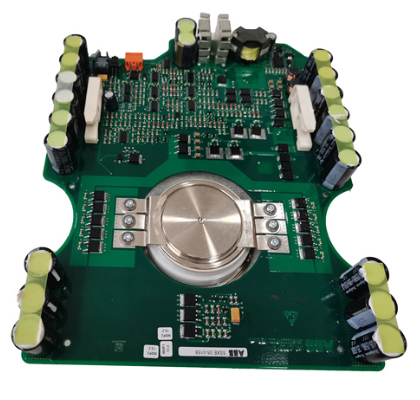
ABB 5SHX14H4502 is not a traditional controller, but a high-performance insulated gate bipolar transistor (IGCT) module belonging to ABB’s 5SHX series. It combines GCT (gate commutated thyristor) and integrated gate driver circuit, integrating the high blocking ability, low on state voltage drop of GTO (gate turn off thyristor), and excellent switching performance of IGBT (insulated gate bipolar transistor), making it an ideal choice for megawatt level medium voltage switch applications.
Brand background
ABB Group is a Fortune 500 company headquartered in Zurich, Switzerland. It was formed by the merger of ASEA from Sweden and BBC Brown Boveri from Switzerland in 1988. These two companies were established in 1883 and 1891, respectively. ABB has always been a leader in the field of power and automation technology, with business coverage in over 100 countries worldwide and a large workforce. Its technology is widely used in multiple fields such as electricity, public utilities, and industry, committed to helping customers improve performance while reducing adverse environmental impacts.
Specification parameters
Voltage and current parameters: able to withstand high voltage and high current, specific rated voltage and current values need to refer to detailed product manuals, generally suitable for high-power application scenarios, and meet high load operation requirements.
Switching speed: The switching speed is fast and can operate stably in high-frequency working environments, meeting the requirements of applications that require fast response.
Conducting voltage drop: It has the characteristic of low conducting voltage drop, which reduces power loss in conducting state and effectively improves energy utilization efficiency.
Working temperature range: The working temperature range is -40 ℃ to+150 ℃, which can adapt to various complex environmental temperature conditions.
Main features
High voltage and high current: able to withstand high voltage and high current, suitable for high-power application scenarios.
Fast switching speed: Fast switching speed, suitable for high-frequency applications.
Low conduction voltage drop: The conduction voltage is reduced, the power consumption is small, and it can effectively improve energy utilization efficiency.
High reliability: Adopting advanced packaging technology, it has high reliability and can work stably under various complex working conditions.
Wide temperature range: The working temperature range is -40 ℃ to+150 ℃, and it can operate stably within a wide temperature range.
Application scenarios
Power electronic frequency converter: plays a key role in the power conversion process of the frequency converter, especially suitable for situations that require high response speed. It can accurately control the speed and operating status of the motor and is widely used in various motor drive systems in industrial production.
Industrial Drive: Used in scenarios such as motor drive and servo drive, it can achieve fast start, stop, and reverse of equipment, meeting the demand for fast and precise control of equipment on industrial automation production lines.
Traction field: In transportation vehicles such as electric locomotives and electric vehicles that require frequent starting and braking, 5SHX14H4502 can adapt to these high load and frequently changing working conditions, ensuring the stable operation of the traction system.
Welding equipment: used for welding power supply, its fast switching characteristics can quickly establish and interrupt welding current, ensuring welding quality and efficiency, suitable for various welding processes and equipment.
In other fields, it is also widely used in pulse power applications (such as lasers, particle accelerators, etc.), power systems (substations, etc.), new energy (wind power generation, photovoltaic power generation, etc.), rail transit, and other areas, helping to achieve efficient power conversion and control.