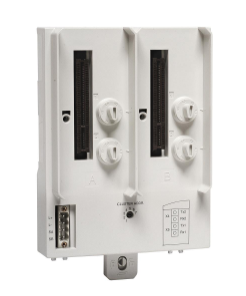
Type:Redundant TB840/TB840A, Single I/O, Single Power
Power input:24 V d.c (19.2 – 30 V)
Mounting:Vertical or Horizontal
The TU841 is a module termination unit (MTU) for redundant configuration of Optical ModuleBus Modem TB840/TB840A, for use with non-redundant I/O.
The MTU is a passive unit having connections for power supply, a single electrical ModuleBus, two TB840/TB840A and a rotary switch for cluster address (1 to 7) setting.
Four mechanical keys, two for each position, are used to configured the MTU for the right types of modules. Each key has six positions, which gives a total number of 36 different configurations. The configurations can be changed with a screwdriver.
Termination Unit TU840 connects TB840/TB840A to redundant I/O. Termination Unit TU841 connects TB840/TB840A to non-redundant I/O.
Features and benefits
• A rotary switch for cluster address setting
• Mechanical keying prevents insertion of wrong module type
• Single ModuleBus connection
• Latching device to DIN rail for locking and grounding
• DIN rail mounted
Product Overview ABB TU841 Communications – S800 I/O Communication Interfaces is a high-performance communication interface module designed specifically for S800 I/O systems, playing a critical bridging role in industrial automation control systems. It can achieve efficient data communication and interaction between S800 I/O systems and various controllers, upper computers, and other external devices, providing a solid foundation for building complex and reliable industrial automation networks. It is widely used in multiple industries such as energy, manufacturing, and transportation, helping enterprises improve their automation level and production efficiency.
Specification parameters Communication Protocol: Supports multiple industrial standard communication protocols, including PROFIBUS DP, Modbus TCP, Ethernet/IP, etc., which can flexibly adapt to different brands and types of industrial equipment, achieving seamless communication between multiple devices. Transmission rate: The transmission rate varies depending on different communication protocols. Under the PROFIBUS DP protocol, the maximum transmission rate can reach 12Mbps; Under Modbus TCP and Ethernet/IP protocols, Ethernet based transmission rates can achieve 10/100Mbps adaptive, meeting the requirements of high-speed data transmission. Interface type: Equipped with a variety of interfaces, including PROFIBUS DP interface, Ethernet RJ45 interface, etc., for easy connection with different devices. Among them, the PROFIBUS DP interface adopts a standard 9-pin D-type connector, and the Ethernet RJ45 interface complies with the IEEE 802.3 standard. Working voltage: The working voltage range is 24V DC ± 10%, with good power adaptability and stable operation within a certain voltage fluctuation range, ensuring communication continuity. Working temperature: The working temperature range is -25 ℃ to+70 ℃, and the storage temperature range is -40 ℃ to+85 ℃. It can operate normally under harsh industrial temperature conditions and adapt to the needs of different industrial scenarios. Protection level: reaching IP20 protection level, it can effectively prevent solid foreign objects larger than 12mm from entering, suitable for most indoor industrial environments. If it needs to be used in more harsh environments, measures such as protective cabinets can be taken.
Core functions Multi protocol communication: With support for multiple industrial standard communication protocols, TU841 can serve as a communication conversion hub between devices with different protocols. In large-scale industrial automation projects, on-site sensors and actuators using PROFIBUS DP protocol can be connected to upper level monitoring systems based on Ethernet/IP protocol to achieve interconnectivity between heterogeneous devices, break down communication barriers between devices, and improve system integration and compatibility. High speed data transmission: Based on Ethernet communication interfaces and high transmission rates, it can achieve fast and stable transmission of large amounts of data. In industrial production process monitoring scenarios, various data from on-site equipment (such as temperature, pressure, flow rate, etc.) can be collected and transmitted in real time to the control center, allowing operators to timely grasp the production operation status and quickly issue control instructions to on-site equipment, ensuring efficient and accurate control of the production process. Equipment status monitoring: Equipped with equipment status monitoring function, it can monitor the real-time operation status of communication interfaces themselves and connected devices. Intuitively display the working status, communication connection status, fault information, etc. of the device through indicator lights, diagnostic software, and other means. When there are abnormal situations such as communication interruptions or equipment failures, timely alarm signals can be issued to facilitate technicians to quickly locate and handle the problem, improving the maintainability and reliability of the system. Redundant design support: Supports redundant configuration and can form a redundant communication system with another TU841 module. When the main module fails, the backup module can automatically take over communication tasks, ensuring uninterrupted system communication and greatly improving the reliability and stability of industrial automation systems. It is suitable for critical industrial application scenarios that require extremely high reliability, such as power generation, petrochemicals, and other industries.
Precautions Installation environment: It should be installed in a dry, well ventilated environment away from strong electromagnetic interference sources to avoid damage to equipment caused by harsh environments such as high temperature, humidity, and corrosive gases. The installation location should ensure sufficient space for heat dissipation and equipment maintenance. It is recommended to install it in a standard industrial control cabinet and maintain good ventilation and heat dissipation conditions. Power connection: Provide stable 24V DC power to the module, ensuring that the power supply voltage is within the specified operating voltage range (24V DC ± 10%). Use power cords that meet the specifications and ensure a secure power connection to avoid abnormal module operation caused by unstable power supply or poor contact. It is recommended to equip overvoltage and overcurrent protection devices to prevent module damage caused by abnormal power supply. Communication connection: When conducting communication connection, strictly follow the instructions in the product manual to correctly connect various communication cables, ensuring that the interface connection is firm and the contact is good. Use appropriate communication cables (such as PROFIBUS DP dedicated cables, Category 5e and above Ethernet cables, etc.), and pay attention to cable length limitations and laying requirements to avoid affecting communication quality due to cable issues. For systems with redundant configurations, it is important to ensure that the redundant connections are correct and error free. Parameter configuration: When configuring communication parameters, carefully check each parameter setting to ensure that it matches the parameters of the connected device. Different communication protocols have different parameter requirements (such as baud rate, station address, data format, etc.), and configuration errors may lead to communication failures. After the configuration is completed, conduct sufficient testing to verify the stability of communication and the accuracy of data transmission. Regular maintenance: Regularly inspect and maintain the TU841 module, including cleaning the surface dust of the equipment, checking the connection of communication cables, and checking the operating status indicator lights of the equipment. Regularly backup module configuration data to prevent system malfunction or parameter loss. At the same time, pay attention to ABB’s official product update information and maintenance guidelines, promptly perform software upgrades and troubleshooting, and ensure that the equipment is always in good operating condition.
Similar model supplement ABB TU830: It is also a communication interface module used for S800 I/O systems. Compared with TU841, TU830 mainly supports PROFIBUS DP protocol, which is slightly inferior in the diversity of communication protocols. But it has high stability and reliability in PROFIBUS DP communication, and is suitable for industrial automation systems mainly based on the PROFIBUS DP protocol. Its price is relatively low, making it an economical choice for projects with limited budgets and relatively single communication protocol requirements. ABB TU850: The communication interface module of this model is more powerful in terms of functionality than TU841. In addition to supporting common protocols such as PROFIBUS DP, Modbus TCP, Ethernet/IP, it also supports some advanced communication protocols and functions, such as PROFINET, OPC UA, etc. It has higher data processing capabilities and faster transmission speeds, making it suitable for complex industrial automation projects that require extremely high communication performance and functionality, such as large smart factories, high-end manufacturing production lines, etc. However, its price is relatively high, and when selecting, it is necessary to consider project requirements and cost budget comprehensively.
TU515: As an I/O terminal unit, it is mainly used in the field of industrial automation to connect field devices with programmable logic controllers (PLCs). For example, on the automated assembly line in the manufacturing industry, various sensors (such as proximity sensors for detecting the position of workpieces, thermocouples for measuring temperature, etc.) and actuators (such as motor drivers for controlling the movement of robotic arms) can be connected to PLC through TU515 to achieve data transmission and control command issuance. It supports multiple signal types, including analog signals, digital signals, and temperature signals, and is compatible with various communication protocols such as Modbus, Profibus, and Profinet, making it easy to integrate into existing automation control systems.
TU516 (- H): Also an I/O terminal unit, specifically designed for analog and 24V DC digital modules. Among them, TU516-H has hot swappable function, which is of great significance in industrial production. For example, in some automated production processes that require uninterrupted operation, if a module fails, the operator does not need to stop the machine and can directly plug and replace the faulty module with power, greatly reducing equipment downtime and improving production efficiency. It uses spring terminals for a more stable connection and can adapt to complex industrial environments.
TU541: This terminal unit mainly serves 24V DC high current modules and uses screw terminals. In some large industrial equipment, such as the control system of high-power motors, the high current module in the control circuit can be connected and controlled through TU541. It can reliably carry and transmit high currents, ensuring stable system operation.
TU542: Used for 24V DC modules, with spring terminals, supporting up to 32 channels, divided into 4 groups of 8 channels each. Its flexible installation method (horizontal or vertical) and reliable grounding design make it suitable for control cabinets of various layouts. In the distributed control system of industrial automation production lines, TU542 can serve as an I/O connection unit for various nodes, efficiently transmitting signals from field devices to the control center.
Working principle
TU515: Adapt and convert different types of input signals through internal circuit structure. When the on-site equipment sends analog signals, it will convert them into digital signals suitable for PLC processing; For digital signals, they are directly matched in level and isolated before being transmitted to the PLC. In terms of communication, based on the supported communication protocol, the control instructions of the PLC are packaged into data packets that comply with the protocol specifications and sent to the field devices. At the same time, the data returned by the field devices is unpacked and transmitted to the PLC.
TU516 (- H): The principle is similar to TU515 when processing analog and digital signals. For analog signals, perform signal conditioning and analog-to-digital conversion; For digital signals, perform level conversion and signal shaping. The implementation of hot swappable functionality relies on its specially designed internal hot swappable circuit. This circuit can quickly cut off or restore the corresponding power and signal paths when detecting module insertion or removal actions, preventing current surges and signal interference generated during the plugging and unplugging process from affecting other parts of the system.
TU541: For high current modules, it uses conductor materials and electrical connection structures that can withstand high currents internally. When a high current is passed through a circuit connected by screw terminals, the terminals and internal circuit can effectively dissipate heat, avoiding equipment damage caused by the heat generated by excessive current. At the same time, through reasonable circuit layout and electrical isolation measures, ensure that high current circuits are independent of other low voltage and low current control circuits and do not interfere with each other.
TU542: Its channel design allows each channel to independently process input and output signals. The elastic contact method of spring terminals ensures a good electrical connection between wires and terminals in harsh industrial environments such as vibration and impact. During signal transmission, the input signal is buffered, amplified, and isolated to ensure accurate transmission to subsequent circuits. At the same time, the output signal is adapted to meet the driving requirements of on-site equipment.
Key points for use
Selection matching:
TU515: Select based on the signal type and quantity of on-site equipment, communication protocol requirements, and installation space. If there are multiple types of signals on site and integration with systems with different communication protocols is required, TU515 is a more suitable choice. At the same time, it is necessary to ensure that its rated current, voltage, and other parameters can meet the requirements of the connected equipment.
TU516 (- H): When there are analog and 24V DC digital modules in the system and there is a need for hot swappable functionality of the modules, TU516-H should be selected. For general analog and digital module connection requirements, a regular TU516 is sufficient. It should be noted that it matches the electrical parameters of the connected module, such as signal level, impedance, etc.
TU541: If it involves the connection of 24V DC high current modules, it is necessary to choose TU541. When selecting, it is necessary to ensure that the current carrying capacity of TU541 is sufficient based on the rated current of the high current module. Generally, a certain margin should be left to cope with possible instantaneous current surges.
TU542: Considering the number of channels and installation methods, if the system requires a large number of channels (up to 32) and installation space is limited, and flexible installation methods (horizontal or vertical) are needed, TU542 is the ideal choice. At the same time, attention should be paid to whether its rated voltage is consistent with the voltage of the connected circuit.
Installation specifications:
TU515: DIN rail installation method can be used. During installation, ensure that the rail meets relevant standards (such as TH35-15, 35x15mm mounting rail, in compliance with IEC 60715), and firmly install TU515 on the rail. The installation location should avoid environments with humidity, high temperature, and strong electromagnetic interference to ensure stable operation.
TU516 (- H): Pay attention to the wiring direction and fastening degree of the spring terminal during installation to ensure that the wire connection is firm. For the hot plug function of TU516-H, it is necessary to confirm that the system has taken corresponding safety protection measures, such as wearing anti-static wristbands, before performing the plug operation, to prevent static electricity from damaging the module.
TU541: Due to the use of screw terminals, appropriate tools should be used when wiring, and screws should be tightened to the specified torque to avoid safety hazards such as poor contact, heating, and even fire caused by loose screws. The installation position should be easy to operate and maintain, and convenient for subsequent inspection and fastening of screw terminals.
TU542: Whether installed horizontally or vertically, ensure that the mounting bracket is firm and reliable. When connecting wires, pay attention to the wiring method of spring terminals to ensure that the wires are inserted in place to ensure good electrical connection. At the same time, it is necessary to ensure reliable grounding of the equipment to prevent leakage and electromagnetic interference.
Maintenance inspection:
TU515: Regularly check its communication status, which can be checked for normal data transmission, packet loss, errors, etc. through the connected PLC or specialized communication testing tools. Check whether the appearance of the equipment is damaged or deformed, and whether there is dust accumulation on the internal circuit board. If there is dust accumulation, use specialized tools to clean it to prevent electrical short circuits caused by dust accumulation.
TU516 (- H): In addition to regular appearance and communication status checks, TU516-H with hot swappable functionality should undergo regular hot swappable function testing. Under simulated fault conditions, module hot plugging operations can be performed to check whether the system can respond normally, whether the module can work properly, and observe whether the hot plugging process interferes with other parts of the system.
TU541: Focus on checking the connection of screw terminals to see if there are any loose screws, oxidation or corrosion. Regularly measure the temperature at the terminal. If the temperature is too high, it may be due to poor contact or excessive current, and the cause should be promptly investigated and dealt with. At the same time, check the heat dissipation of the equipment to ensure that it can effectively dissipate heat during high current operation.
TU542: Check the working status of channels by testing input and output signals to verify whether each channel is working properly. Regularly check the elasticity of the spring terminals. If the elasticity weakens, the terminals should be replaced in a timely manner to ensure the reliability of the connection. In addition, it is necessary to check the grounding resistance of the equipment to ensure that the grounding meets safety standards.
ABB TK516 thermal overload relay plays a crucial role in industrial electrical systems, mainly used for overload protection of three-phase motors. In actual production, electric motors often experience overload due to various reasons, such as sudden increase in mechanical load, improper motor selection, etc. If the overload situation cannot be dealt with in a timely manner, it will cause the motor winding to overheat, accelerate insulation aging, and in severe cases, even burn out the motor. The TK516 thermal overload relay can monitor the motor current in real time. Once the current exceeds the set overload threshold, it will quickly act, cut off the control circuit, and protect the motor from being burned out, ensuring the stable operation of production equipment. For example, in the large-scale ventilation fan system of a factory, if the fan motor is overloaded due to air duct blockage or other reasons, the TK516 thermal overload relay can respond in a timely manner to prevent motor damage and ensure the continuous normal operation of the ventilation system.
Working principle
Its working principle is based on the current thermal effect. When the motor is running normally, the thermal element inside the thermal overload relay generates heat through the normal working current, causing the bimetallic strip to slowly bend, but the degree of bending at this time is not enough to trigger the action mechanism. However, once the motor is overloaded, the working current increases sharply, the thermal element heats up quickly, the temperature rises rapidly, and the bimetallic strip bends faster due to uneven heating. When the degree of bending reaches a certain level, push the action mechanism to open the normally closed contact and close the normally open contact. In the control circuit, normally closed contacts are usually connected in series in the coil circuit of the AC contactor. When the thermal overload relay is activated, the normally closed contacts open and the AC contactor coil loses power, thereby cutting off the main power supply line of the motor and achieving overload protection for the motor.
Key points for use
Current setting value setting: Accurate setting of current setting value is the key to realizing the protection function of TK516 thermal overload relay. In general, the setting value should be set between 0.95-1.15 times the rated current of the motor. If the setting value is set too high, when the motor is truly overloaded, the thermal overload relay may not be able to operate in a timely manner and fail to provide protection; If the setting value is set too small, the motor may frequently touch the thermal overload relay during normal operation, causing the motor to malfunction. For example, for a motor with a rated current of 10A, the setting value of the thermal overload relay can be set at around 9.5A during light load operation; If it is running under overload, it can be set to around 11A.
Maintenance of connection contacts: It is crucial to ensure that the contacts of the thermal overload relay are tightly connected to the circuit. If the contact is not in good contact, additional resistance will be generated during operation, resulting in heating, which may cause the thermal overload relay to malfunction. Therefore, in installation and daily maintenance, it is necessary to regularly check the contact connections to ensure their firmness and reliability.
Reset operation: After the thermal overload relay is activated, the reset method should be selected reasonably according to the actual application scenario. In the case of unmanned operation on site, the reset mode should be set to manual reset to prevent the motor from automatically resetting and starting when the fault is not resolved, which may cause secondary faults or safety accidents. In scenarios where someone is on duty and can handle faults in a timely manner, automatic reset or manual reset can be selected according to the needs.
Circuit board circuit breaker
Functions and Applications
Circuit board circuit breakers are mainly used for overload and short circuit protection of circuits on circuit boards. In modern industrial automation control systems, circuit boards undertake important functions such as signal processing and control instruction transmission. Once the circuit on the circuit board is overloaded or short circuited, it may damage the electronic components on the circuit board and cause the entire control system to malfunction. Circuit board circuit breakers can quickly cut off the circuit when there is an abnormal increase in current, protecting the safety of the circuit board and related electronic equipment. For example, in the PLC control cabinet of an industrial automation production line, circuit board circuit breakers can effectively protect PLC circuit boards, communication circuit boards, etc., ensuring stable operation of the production line’s automation control.
Working principle
Circuit board circuit breakers typically use bimetallic or electromagnetic working principles. Bimetallic circuit board circuit breakers are similar to thermal overload relays, utilizing the thermal effect generated by current passing through the bimetallic strip. When the circuit is overloaded, the current increases, and the bimetallic strip heats up and bends. After reaching a certain degree, it pushes the release mechanism to operate and disconnect the circuit. Electromagnetic circuit board circuit breakers are based on the principle of electromagnetic induction. When a short circuit occurs in the circuit, the short-circuit current instantly increases, generating a strong electromagnetic force that causes the trip mechanism to quickly operate and cut off the circuit.
Key points for use
Selection and adaptation: When selecting a circuit breaker for a circuit board, it is necessary to ensure that its rated current, rated voltage, and other parameters match the actual working requirements of the circuit board. If the rated current is selected too low, the circuit breaker may trip frequently during normal operation of the circuit; If the rated current is selected too high, the circuit breaker may not be able to operate in a timely manner when the circuit experiences overload or short circuit. For example, for a circuit board with a working voltage of 24V and a normal working current of 2A, a circuit board circuit breaker with a rated voltage of not less than 24V and a rated current of around 2.5A-3A should be selected.
Installation position: The circuit board circuit breaker should be installed near the power input end of the circuit board to quickly detect abnormal currents in the circuit and cut off the circuit in a timely manner. At the same time, the installation location should be convenient for maintenance and repair, and easy to reset or replace after the circuit breaker is activated.
Regular inspection: Regularly inspect the circuit board circuit breaker to see if there is any damage, deformation, etc. on its appearance, and check if there is any burning phenomenon on the contacts. In addition, by simulating overload or short circuit tests, the sensitivity and reliability of the circuit breaker’s action can be detected to ensure that it can function properly in critical moments for protection.
The ABB 630 series engineering manual is a comprehensive technical document specially designed for the use of ABB 630 series products. It covers a comprehensive range of information from product basic principles, hardware composition, software operation to system integration and maintenance, aiming to provide comprehensive and in-depth technical guidance for engineering and technical personnel, equipment maintenance personnel, and system integrators, ensuring that ABB 630 series products can be correctly selected, installed, configured, debugged, and maintained in various industrial projects.
Scope of Application
This manual is applicable to all project scenarios involving the application of ABB 630 series products. Whether used for production line automation control in the manufacturing industry or for intelligent monitoring and control of power equipment in the power system; Alternatively, in industries such as petrochemicals and transportation, complex automated communication networks can be constructed, and ABB 630 series products can be efficiently applied with the guidance of manuals. For example, in an automobile manufacturing factory, when using ABB 630 series products to build an automated production line communication system, engineers can complete a series of tasks from equipment selection to system construction based on the manual.
Detailed explanation of manual structure and content
Product Overview
Product positioning and features: Clarify the positioning of ABB 630 series in the field of industrial automation communication, and explain its unique advantages compared to other series of products. Emphasizing its higher data processing capability, it can achieve ultra high speed and low latency data transmission in complex industrial environments, meeting the extremely demanding real-time requirements of industrial control scenarios, such as high-speed and high-precision electronic component SMT production lines.
Application areas and cases: Provide a detailed list of successful application cases of this series of products in different industries. Taking the power industry as an example, this article introduces its application in intelligent substation automation systems, how to achieve reliable communication between power equipment through ABB 630 series products, accurately transmit power parameters and equipment status information, ensure the stable operation of substations, and lists actual project data, such as the proportion of reduced communication delay and data on shortened fault diagnosis response time, to visually demonstrate the application effect of the product.
Technical specifications and parameters
Hardware specifications: A comprehensive introduction to the hardware composition of the product, including detailed parameters such as module models, interface types, size specifications, weight, etc. For example, in addition to the standard industrial Ethernet interface, the interface describing the communication module also has multiple optional fieldbus interfaces, such as PROFIBUS-DP, Modbus RTU, etc., which facilitate connection with different types of industrial equipment. At the same time, provide dimension diagrams and installation dimensions for each module to provide precise guidance for equipment installation layout.
Electrical parameters: covering key electrical parameters such as operating voltage range, current consumption, power requirements, etc. Explain the allowable fluctuation range of working voltage and the current consumption under different working modes, to help engineers plan the power system reasonably and ensure stable operation of the equipment. For example, indicate the maximum current consumption under full load operation in order to select the appropriate capacity power module.
Communication parameters: Focus on explaining core communication parameters such as communication protocol support, transmission rate, and communication distance. Indicate that this series of products supports multiple mainstream industrial communication protocols, such as Ethernet/IP, PROFINET, etc., and provide detailed information on the maximum transmission rate under different protocols and the effective communication distance in practical applications. Under the Ethernet/IP protocol, the transmission rate can reach 100Mbps, and under specific cable specifications, the communication distance can reach up to 100 meters.
Hardware Installation Guide
Preparation before installation: List the required tools for installation, such as screwdrivers, wrenches, network cable testers, etc., and guide operators to check the installation environment, including environmental temperature, humidity, electromagnetic interference, etc. Emphasize that the installation environment should comply with the working conditions specified by the product, such as a temperature range of -20 ℃ to+60 ℃, humidity not exceeding 95% RH (no condensation), and should be kept away from strong electromagnetic interference sources such as large motors, transformers, etc.
Equipment installation steps: Display in detail the installation steps of each component of ABB 630 series products in a visual and textual manner. Starting from the installation and fixation of the cabinet, gradually introduce the installation sequence and method of the modules, such as installing the power module in the designated position of the cabinet first, and then installing the communication module, control module, etc. in sequence. Each step is accompanied by clear pictures and text instructions to ensure that the operator can accurately complete the installation work. At the same time, precautions should be taken during the installation process, such as wearing an anti-static wristband when plugging and unplugging modules to avoid damage to the equipment caused by static electricity.
Software operation and configuration
Software Overview: Introduce the functional characteristics, applicable operating systems, and software installation requirements of the supporting software. The software has an intuitive and user-friendly interface, supports multiple language switching, and is convenient for global users to use. At the same time, specify the operating system versions supported by the software, such as Windows 7, Windows 10, etc., and provide hardware configuration requirements for software installation, such as at least 2GB of memory and 500MB of available hard disk space.
Configuration process: Detailed explanation of the steps for parameter configuration of ABB 630 series products through software. Starting from device initialization, gradually guide users to complete key configuration operations such as network parameter settings, communication protocol selection, and data mapping. For example, when setting network parameters, guide users on how to input IP address, subnet mask, gateway, and other information, and introduce how to verify and save parameters through the software interface. At the same time, typical configuration cases and recommended parameter values are provided for different application scenarios to help users quickly complete the configuration work.
System integration and debugging
Key points of system integration: Explain the key technical aspects of integrating ABB 630 series products into existing industrial automation systems. Including compatibility issues with other brand devices, how to design system architecture to achieve optimal performance, etc. For example, when integrating with Siemens PLC, introduce how to choose appropriate communication protocols and interface modules, as well as how to configure data exchange to ensure stable communication between two different brands of equipment. At the same time, provide a topology diagram of system integration to help users understand the system architecture design ideas.
Debugging methods and processes: Detailed introduction to the methods and processes of system debugging. Starting from hardware connection inspection, gradually carry out equipment power on testing, software configuration verification, communication link testing, and other stages. In each debugging stage, provide specific testing methods and judgment criteria, such as checking the device status indicator lights through the software interface to determine whether the device is working properly; Use communication testing tools to send and receive data to verify the reliability of the communication link. Meanwhile, provide detailed troubleshooting guidelines and solutions for potential issues that may arise during the debugging process.
Maintenance and troubleshooting
Daily Maintenance Guide: Develop a daily maintenance plan and content for ABB 630 series products. This includes regularly cleaning the dust on the surface of the equipment, checking for loose cable connections, and checking the operating status indicator lights of the equipment. Provide maintenance cycle recommendations, such as weekly equipment surface cleaning and monthly cable connection inspection. At the same time, it introduces how to view device operation logs through software, analyze device operation status, and detect potential faults and hidden dangers in advance.
Troubleshooting: Provide detailed troubleshooting procedures and solutions for common fault phenomena such as communication interruptions, equipment crashes, parameter abnormalities, etc. Taking communication interruption as an example, first guide the user to check whether the hardware connection is normal, including whether the network cable is plugged in properly, whether the interface is damaged, etc; Then check if the software configuration is correct, such as whether the IP address conflicts, whether the communication protocol settings match, etc; Finally, by using professional testing tools such as network testers, the communication link is checked to determine the fault point and provide corresponding repair methods.
Suggestions for using the manual
Quick access: For experienced engineers who need to quickly solve urgent problems, they can directly search for relevant chapter content through the manual directory or index. For example, when a device experiences a communication failure, it can quickly scroll to the “Maintenance and Troubleshooting” section to find troubleshooting methods and solutions related to communication failures.
System learning: For technicians who are new to ABB 630 series products, it is recommended to follow the manual chapter sequence for system learning. Starting from the product overview, gradually understand the technical specifications, hardware installation, software operation, system integration and maintenance of the product, establish a comprehensive product knowledge system, and lay a solid foundation for subsequent practical work.
Combining practice: In actual project work, the manual content should be combined with practical operations. When installing, configuring, and debugging equipment, follow the steps in the manual and pay attention to recording the problems and solutions encountered during the actual operation process, in order to deepen the understanding and application ability of the product. For example, if a step is found to be slightly different from the manual description during the installation process, the reason should be carefully analyzed, whether it is improper operation or a difference in the actual product situation, and recorded in a timely manner for future reference.
ABB TC625 3BSE002224R1 – AF100 Coaxial Modem It is a high-performance fieldbus communication module designed specifically for industrial automation communication needs. It uses coaxial cable as the communication medium and builds a reliable communication bridge in industrial control systems with excellent data transmission performance. It can achieve high-speed and stable data exchange between devices and is widely used in industrial environments that require strict communication quality and real-time performance, effectively improving the overall efficiency and reliability of industrial automation systems.
Core functions
High speed and stable communication: By utilizing the transmission advantages of coaxial cables, high-speed and stable data transmission between industrial equipment can be achieved, reducing data transmission delay and packet loss, ensuring timely and accurate interaction of instructions and data in industrial control systems, and guaranteeing the smooth operation of industrial production processes. For example, in automated warehousing systems, the location information of goods and equipment control instructions can be quickly transmitted to achieve efficient scheduling of warehousing equipment.
Multi protocol compatibility: Supports multiple industrial fieldbus protocols and can serve as a communication conversion hub between different protocol devices, enabling interconnection and interoperability of heterogeneous devices. In large-scale industrial automation projects, sensors, controllers, actuators, and other devices using different communication protocols can be connected to build a unified communication network and improve system integration.
Real time data processing: With powerful real-time data processing capabilities, it can quickly parse, package, and forward collected data, meeting the strict requirements of industrial control systems for real-time data. In the power monitoring system, real-time transmission of power parameter data enables the monitoring center to timely grasp the operating status of the power system, achieving rapid diagnosis and handling of faults.
Network management function: Supports basic network management functions such as device status monitoring, network topology management, etc., making it convenient for users to monitor the operation status of communication networks in real time, detect and solve network failures in a timely manner, and improve the maintainability and reliability of industrial communication networks.
Key advantages
High performance communication: With high-speed transmission rates and long-distance communication capabilities, compared to similar products, it can transmit data more efficiently, reduce communication delays, improve the response speed and operational efficiency of industrial automation systems, especially suitable for industrial control scenarios with extremely high real-time requirements.
High compatibility and flexibility: Multi protocol support and rich interface types make it easy to integrate into different industrial automation systems. Whether it is building a new system or upgrading an existing system, it can quickly adapt and reduce the difficulty and cost of system integration.
High reliability and stability: With excellent anti-interference ability and wide temperature working characteristics, it can adapt to harsh industrial environments. At the same time, strict quality testing and mature manufacturing processes ensure that the product is stable and reliable during long-term operation, reducing equipment failures and maintenance costs, and improving the continuity of industrial production.
Easy to use and maintain: With a simple user interface and intuitive network management functions, it facilitates installation, configuration, and maintenance work for technical personnel. Equipment initialization and parameter adjustment can be completed through simple settings, reducing the technical requirements for operators and improving work efficiency.
Precautions
Installation environment: It should be installed in a dry, well ventilated environment away from strong electromagnetic interference sources to avoid damage to equipment caused by harsh environments such as high temperature, humidity, and corrosive gases, which can affect communication performance and equipment lifespan.
Cable connection: Use coaxial cables that meet the specifications for connection, ensuring that the cable connection is firm and in good contact, and avoiding unstable or interrupted signal transmission due to loose, damaged or non compliant cables. At the same time, pay attention to the bending radius of the cable not being too small to prevent damage to the internal structure of the cable.
Power supply: Provide stable power to the module to ensure that the operating voltage is within the specified range. It is recommended to use a power adapter with overvoltage and overcurrent protection functions to prevent module damage caused by abnormal power supply.
Network configuration: When configuring the network, strictly follow the instructions in the product manual, carefully check the parameter settings, and avoid communication failures caused by incorrect configuration. After the configuration is completed, conduct sufficient testing to ensure normal communication.
Regular maintenance: Regularly inspect and maintain the module, including cleaning the dust on the surface of the equipment, checking the cable connection status, checking the equipment operation status indicator lights, etc., promptly identify and handle potential problems, and ensure long-term stable operation of the equipment.
Similar model supplement
ABB TC620: It is also a fieldbus communication module launched by ABB, with similar functions to TC625, but relatively low transmission speed and communication distance. It is suitable for industrial automation systems with low communication performance requirements and small scale, such as local production line control in small factories. Its cost is relatively low, making it a good choice in projects with limited budgets.
ABB TC630: This model has increased the support for communication protocols and has stronger network management capabilities, enabling more complex industrial communication network topology management and equipment monitoring. Suitable for large and complex industrial automation projects, such as large chemical plants, steel joint ventures, etc., it can better meet the management needs in multi equipment and multi protocol communication environments. However, its price is relatively high, and when selecting, it is necessary to consider both project requirements and cost factors comprehensively.
Application scenarios
Manufacturing production line: In modern manufacturing production lines such as automobile manufacturing and electronic assembly, it is used to connect various automation equipment, such as industrial robots, CNC machine tools, detection equipment, etc., to achieve high-speed communication and collaborative work between equipment, improve production efficiency and product quality, and ensure the stable operation of the production line.
Power system: Applied in smart grids, substation automation and other power systems, it realizes data communication and remote monitoring between power equipment, such as transmitting power parameters, equipment status information, etc., helping power enterprises to real-time grasp the operation of the power grid, improve the reliability and intelligent management level of the power system.
Petrochemical industry: In complex industrial environments such as oil extraction, refining, and chemical production, it is used to build reliable communication networks, connect on-site sensors, controllers, actuators, and other equipment, achieve automated control and real-time monitoring of the production process, ensure production safety, and improve production efficiency and resource utilization.
In the field of transportation, it plays a role in intelligent transportation systems, port automation equipment, and other scenarios, such as connecting traffic signal control equipment, port crane control systems, etc., to achieve efficient communication and precise control between devices, and enhance the intelligence and automation level of transportation.
ABB’s TB511, TB521, TB523, and TB541 Terminal Base series products are carefully designed as important components for connection and adaptation requirements in industrial automation control systems. They are mainly used to achieve stable connections between various modules and systems, and undertake key data transmission and electrical adaptation tasks in the entire automation architecture, ensuring that all parts of the system can work efficiently and collaboratively, thereby ensuring the smooth operation of automated production processes.
Specification parameters
(1) TB511
Applicable system: Suitable for AC500 series automation control systems, can work in conjunction with various CPU modules and communication modules.
Number of slots: With a specific number of slots, it is convenient to connect different functional modules. The specific number of slots is X, providing a foundation for system expansion.
Electrical characteristics: The working voltage is [specific voltage value] V DC, which can stably adapt to the power supply requirements of the system and ensure the normal operation of connected equipment. Having a rated current carrying capacity of [specific current value] A, it can meet the current requirements of the connection module under normal working conditions, ensuring the stability of power transmission.
Physical dimensions: The design is compact, with dimensions of [length X] mm x [width Y] mm x [height Z] mm, making it easy to install in various control cabinets, effectively saving space, and adapting to the requirements of different installation environments.
Weight: Approximately [weight value] kg. The lightweight design not only reduces the overall weight of the system, but also facilitates installation and maintenance personnel operation.
(2) TB521
Applicable system: Designed specifically for the AC500 V2 version of the system, it has clear compatibility with the system version and can ensure compatibility with other modules under this system.
Number of slots: There are 2 slots specifically designed for installing communication modules, providing a hardware foundation for building communication links in the system.
Communication Interface: Equipped with ARCNET interface, it can efficiently support specific network communication protocols and achieve stable data transmission between devices. Equipped with two serial interfaces, namely RS 232/RS 485, it can flexibly connect different types of external devices to meet diverse communication needs.
Physical dimensions: The overall dimensions are [length A] mm x [width B] mm x [height C] mm, and the compact structure facilitates the layout and installation inside the control cabinet.
Weight: Approximately [weight value] kg, convenient for installation and maintenance operations.
(3) TB523
Applicable system: Suitable for AC500 series automation control systems, can be used in conjunction with various CPU modules and communication modules.
Number of slots: Equipped with 2 slots to facilitate the expansion of system functions.
Communication interface: Equipped with 2 Ethernet RJ45 interfaces, it can connect to the network at high speed, meeting the requirements of large data volume and high-speed data transmission. Simultaneously equipped with one COM interface, it increases the flexibility of device connection.
Physical dimensions: The dimensions are [length M] mm x [width N] mm x [height P] mm, with a compact design that is easy to install in various control cabinets.
Weight: Approximately [weight value] kg, lightweight and portable.
(4) TB541
Applicable system: Designed specifically for AC500 series automation control systems, it can operate in conjunction with various CPU modules and communication modules.
Number of slots: With 4 slots, it provides more possibilities for system expansion.
Communication Interface: Equipped with Ethernet interface, supports Ethernet communication protocol, and can achieve high-speed and stable data transmission. Simultaneously using 24V DC power supply to meet the system’s power supply requirements.
Physical dimensions: The dimensions are [length Q] mm x [width R] mm x [height S] mm, with a compact design that saves space.
Weight: Approximately [weight value] kg, convenient for operation.
Core functions
(1) TB511
Module connection: mainly used to achieve physical connections between various modules and systems, providing stable electrical pathways for data transmission. For example, input/output (I/O) modules, communication modules, etc. can be connected to AC500 series CPU modules to ensure that the modules can communicate with each other and work together.
Electrical adaptation: It can adapt and adjust the electrical parameters of the connected modules to ensure electrical compatibility between different modules. Adjust parameters such as voltage and current to ensure stable operation of each module in a unified electrical environment, avoiding equipment failures caused by electrical mismatches.
(2) TB521
Communication module connection: specifically used to connect communication modules, providing a foundation for building communication networks for the system. Through its ARCNET interface and RS 232/RS 485 serial interface, the AC500 V2 system can be connected to other devices with corresponding interfaces to achieve data transmission and interaction.
Communication protocol support: Supports ARCNET communication protocol, enabling efficient data transmission in industrial automation networks. Meanwhile, the RS 232/RS 485 interface can support multiple serial communication protocols, facilitating communication with different types of external devices and meeting diverse communication needs.
(3) TB523
High speed network connection: With its two Ethernet RJ45 interfaces, it can achieve high-speed data transmission and meet the high real-time requirements of industrial automation application scenarios. For example, in an automated production line, a large amount of production data and control instructions can be quickly transmitted to ensure the efficient operation of the production line.
Device expansion: Through its two slots, different functional modules can be connected to achieve system function expansion. Connect more communication modules and increase the number of communication interfaces in the system to meet the needs of multi device connections in complex industrial environments.
(4) TB541
Multi module connection: Its four slots can connect multiple different types of modules, providing the possibility for large-scale expansion of the system. In large-scale industrial automation projects, multiple I/O modules, communication modules, etc. can be connected to meet the requirements of complex control systems for a large number of module connections.
Ethernet communication: Utilizing Ethernet interfaces, it supports high-speed and stable Ethernet communication, enabling data exchange with other devices that have Ethernet interfaces. If the system is connected to devices such as upper computers and servers to achieve centralized data management and remote monitoring.
Working principle
(1) TB511
After the system is powered on, TB511 establishes physical and electrical connections with the connected modules through its own slots. It matches the electrical characteristics of the signals transmitted from each module based on the electrical standards set by the system, such as adjusting the voltage amplitude and current size of the signals, to ensure stable transmission between different modules. At the same time, it organizes and forwards communication requests from various modules, similar to a transportation hub, ensuring orderly flow of data between modules. It does not perform logical processing of data itself, but only focuses on connection and electrical adaptation work.
(2) TB521
The work of TB521 in the system mainly revolves around communication. When the connected communication module requires data transmission, TB521 encapsulates and parses the data according to the supported ARCNET protocol or RS 232/RS 485 serial communication protocol. For example, in the ARCNET network, it packages the data transmitted by the communication module in the format of the ARCNET protocol and sends it to the network through the ARCNET interface; When receiving data, perform the opposite operation by unpacking the received data that complies with the ARCNET protocol and passing it to the communication module. For the RS 232/RS 485 interface, data processing and transmission are also carried out according to the corresponding serial communication protocol to ensure smooth communication.
(3) TB523
The working principle of TB523 is based on Ethernet communication and device connection expansion. In terms of Ethernet communication, it utilizes its own Ethernet RJ45 interface and follows the Ethernet communication protocol to achieve data exchange with other Ethernet devices. When there is data in the system that needs to be sent to or received from an external network, TB523 performs Ethernet frame encapsulation and decapsulation operations on the data to ensure accurate transmission in the Ethernet network. In terms of device expansion, TB523 provides electrical connections and communication channels for functional modules connected through its slots, integrating these modules into the overall communication architecture of the system to achieve data sharing and collaborative work between modules.
(4) TB541
TB541 mainly works through its multi slot design and Ethernet communication function. In terms of module connection, each slot can connect different functional modules, and TB541 provides stable electrical connections and communication interfaces for these modules. When data exchange is required between different modules, TB541 is responsible for coordinating the transmission path of data to ensure that the data can arrive at the target module accurately and without errors. In terms of Ethernet communication, it is similar to TB523, using Ethernet interfaces to follow Ethernet communication protocols for data transmission and reception, achieving communication between the system and external Ethernet devices, such as uploading data collected by the system to remote servers or receiving control instructions issued by remote servers.
Key advantages
(1) TB511
High reliability: Adopting ABB’s advanced manufacturing technology and high-quality electronic components, after strict quality testing, it can operate stably for a long time in harsh industrial environments. For example, in high temperature and high humidity industrial environments, TB511 can work continuously and stably, reducing the probability of system failures caused by connection problems and improving the continuity and stability of the production process.
Flexible scalability: Its multiple slot design provides convenience for system expansion, allowing users to add or replace modules with different functions at any time according to their actual needs, meeting the constantly changing needs of industrial automation applications. For example, when expanding production scale or adjusting production processes, it is convenient to add I/O modules or communication modules to achieve system function upgrades.
Good compatibility: It has good compatibility with various modules of the AC500 series, without worrying about matching issues between different modules, reducing the difficulty and cost of system integration. Whether connected to CPU modules, I/O modules, or communication modules, stable communication and collaborative work can be ensured.
(2) TB521
Professional communication function: Designed for communication needs, its ARCNET interface and RS 232/RS 485 serial interface can meet the diverse communication requirements in the field of industrial automation. In some industrial networks that require high real-time performance, ARCNET interface can achieve fast and stable data transmission; The RS 232/RS 485 interface can easily connect some traditional serial devices, such as sensors, controllers, etc., to achieve interconnection and intercommunication between devices.
System compatibility: Specially designed for the AC500 V2 system, it has extremely high compatibility with other modules within the system, ensuring stable operation in the AC500 V2 system, reducing communication failures caused by compatibility issues, and improving the overall reliability of the system.
Easy to install and maintain: With a compact design and simple installation method, maintenance personnel can easily troubleshoot and replace it. When a communication failure occurs, the TB521 module can be quickly located and inspected and repaired, reducing equipment downtime and improving production efficiency.
(3) TB523
High speed communication capability: Two Ethernet RJ45 interfaces provide high-speed data transmission channels, which can meet the needs of industrial automation for large data volumes and high-speed data transmission. In the real-time monitoring and control scenario of automated production lines, a large amount of production data and control instructions can be quickly transmitted to ensure the efficient and precise operation of the production line.
Easy device expansion: Two slots facilitate users to connect different functional modules, enabling system functionality expansion. In industrial automation projects, communication modules, I/O modules, etc. can be flexibly added according to actual needs to improve system functionality and performance, and adapt to changes in different application scenarios.
Stable and reliable: Using high-quality electronic components and mature manufacturing processes, rigorously tested and verified, it can work stably in complex industrial environments. Whether in environments with strong electromagnetic interference or in places with large temperature and humidity changes, TB523 can ensure the stability of communication and the reliability of device connections.
(4) TB541
Powerful expansion capability: 4 slots provide powerful expansion space for the system, which can connect multiple different types of modules, meeting the needs of large-scale industrial automation projects for a large number of module connections and system function expansion. When building complex automation control systems, TB541 can serve as a core connecting component to achieve efficient integration of numerous devices and modules.
Efficient Ethernet Communication: The Ethernet interface supports high-speed and stable communication, enabling fast data exchange with various external devices. In industrial IoT applications, TB541 can easily connect systems with cloud servers, smart devices, etc., enabling remote transmission and sharing of data, providing support for industrial intelligence upgrades.
High reliability: With high reliability design, it can operate stably for a long time in harsh industrial environments. Through strict quality inspection and optimized circuit design, TB541 can resist adverse factors such as electromagnetic interference, vibration, dust, etc. in industrial environments, ensuring the normal operation of the system and reducing losses caused by equipment failures.
Precautions
(1) TB511
Installation environment: It should be installed in a dry, well ventilated environment without strong electromagnetic interference. Avoid installing near equipment that generates strong electromagnetic fields, such as large motors and transformers, to prevent electromagnetic interference from affecting the stability of signal transmission and causing equipment failure.
Installation operation: During the installation process, it is necessary to follow the requirements of the product manual. Ensure that the module slots are securely connected to avoid unstable signal transmission or equipment damage caused by looseness. When plugging and unplugging modules, use appropriate tools and pay attention to the operating force to prevent damage to the slot interface.
Regular maintenance: Regularly inspect and maintain the equipment, including cleaning the dust on the surface of the equipment, checking whether the connection lines are loose, etc. It is recommended to conduct comprehensive maintenance checks at regular intervals (such as 3-6 months) to ensure long-term stable operation of the equipment.
(2) TB521
Communication settings: When using TB521 to connect the communication module, strictly follow the requirements of the communication protocol for parameter settings. Carefully check the communication parameters of ARCNET interface and RS 232/RS 485 interface, such as baud rate, data bits, parity bits, etc., to prevent communication failure caused by incorrect parameter settings.
Installation location: Try to install TB521 in a location that is easy to operate and maintain, so that it can be quickly inspected and repaired in case of communication failures. At the same time, it is necessary to avoid installation in environments with high temperature, humidity, or corrosive gases to avoid affecting the service life of the equipment.
Module compatibility: When selecting communication modules to connect with TB521, ensure compatibility between modules. Although TB521 is compatible with most communication modules within the AC500 V2 system, attention should still be paid to the subtle differences that may exist between different models of modules to avoid communication difficulties caused by compatibility issues.
(3) TB523
Network security: Due to the Ethernet interface of TB523, attention should be paid to network security issues when accessing the network. Set appropriate network access permissions to prevent unauthorized devices from accessing the system, avoiding data leaks and network attacks. It is recommended to adopt security measures such as firewalls and encrypted communication to ensure the network security of the system.
Heat dissipation requirements: During operation, TB523 may generate a certain amount of heat, so it is necessary to ensure that the installation environment has good heat dissipation conditions. Avoid installing it in enclosed and poorly ventilated spaces to prevent equipment damage due to overheating. Consider installing auxiliary cooling devices such as cooling fans or fins to ensure that the equipment operates within the normal temperature range.
Interface protection: Ethernet RJ 45 interface and COM interface should be appropriately protected to avoid external impact or damage to the interface. When the interface is not in use, an interface protective cover can be installed to prevent dust, moisture, and other contaminants from entering the interface and affecting communication quality.
(4) TB541
Module configuration: When using TB541 to connect multiple modules, it is necessary to configure the modules reasonably. Allocate slot resources reasonably based on the system’s functional requirements and data traffic to avoid system performance degradation caused by unreasonable module configuration. At the same time, attention should be paid to the electrical compatibility between different modules to prevent equipment failures caused by electrical mismatches.
Power supply stability: Ensure stable 24V DC power supply for TB541. Unstable power supply may cause abnormal device operation and even damage the equipment. Stable voltage power supply or UPS (uninterruptible power supply) equipment can be used to ensure the stability and reliability of the power supply.
Regular inspection: Regularly inspect TB541 and its connected modules to check the operation status, communication status, etc. of the equipment. Timely identify and resolve potential issues to ensure the stable operation of the system. During the inspection process, professional testing tools can be used to inspect the equipment, improving the efficiency and accuracy of the inspection.
Similar model supplement
(1) TB511 Similar Models
TB512: Similar in function to TB511, it is also used for module connection and electrical adaptation in AC500 series systems. However, TB512 has increased in the number of slots and has [specific number of slots] slots. Compared to TB511, it can provide stronger expansion capabilities for the system and is suitable for industrial automation projects that require a high number of module connections. Its physical size and installation method are similar to TB511, making it convenient for users to replace it when expanding the system scale.
TB510: This model differs from TB511 in terms of electrical characteristics, with a working voltage of [different voltage values] V DC and a rated current carrying capacity of [different current values] A. It is suitable for some application scenarios with specific requirements for electrical parameters, such as in some industrial control systems with low voltage and low current
The ABB TA524 Dummy Coupler Module is designed specifically for AC500 series programmable logic controllers (PLCs) and is a critical connecting component. It plays a specific role in adapting and connecting the system architecture. Although it does not have data processing or complex control functions, it is crucial for building a complete and stable automation control system network, ensuring orderly and efficient communication and collaborative work between various modules.
Brand background
ABB, as a globally renowned leader in the fields of power and automation technology, has a long history of over 130 years. Throughout its long development journey, ABB has established an outstanding reputation worldwide through its relentless pursuit of innovation and strict control over quality. In the field of industrial automation, ABB has always been at the forefront, continuously launching advanced and reliable products. Its solutions are widely used in many key industries such as energy, industry, transportation, and infrastructure, playing an important role in promoting automation processes and improving production efficiency in various industries.
Specification parameters
Applicable PLC series: designed specifically for AC500 series PLC.
Weight: Approximately 0.08kg-0.12kg. The lightweight design helps to reduce the weight burden of the entire control system, while also facilitating installation and maintenance personnel operation.
Environmental temperature: The operating temperature range is 0 ° C to+60 ° C, and the storage temperature range is -40 ° C to+70 ° C. It can adapt to a wide range of working environment temperatures and operate stably in complex indoor and outdoor environments in industrial production.
Protection level: IP20 protection level, can prevent solid foreign objects larger than 12mm from entering, effectively protect internal circuits from the influence of small particles such as dust, and ensure the normal operation of equipment in general industrial environments.
Maximum operating altitude: The maximum allowable operating altitude is 2000m, which can meet the needs of different geographical regions and application scenarios.
Programming software: Paired with PS 501- prog control builder plus programming software, it provides users with a convenient and efficient programming environment, making it easy to configure and debug the system.
Core functions
Connection adaptation: As a coupling module, it can achieve physical connection and electrical adaptation between AC500 series PLC and other expansion modules, communication modules or external devices, ensuring stable signal transmission. For example, when building a distributed control system, TA524 can reliably connect remote I/O modules to the AC500 PLC master station, enabling the master station to obtain real-time data from remote devices and control them.
Communication pathway construction: Build a bridge for data communication between modules, support standard communication protocols, and ensure smooth data interaction between different devices. In industrial automation production lines, it can connect sensor modules, actuator modules, and PLC controllers, allowing the data collected by sensors to be quickly transmitted to the PLC for processing. The control instructions of the PLC can also be delivered to the actuators in a timely manner, achieving the automation operation of the production line.
Working principle
When the TA524 Dummy Coupler Module works, it is mainly based on electrical connections and signal transmission principles. After the system is powered on, it establishes electrical connections with the AC500 PLC and other related modules through its own interface. During the communication process, it organizes and transmits signals from different devices according to the preset communication protocol. For example, when the PLC sends control instructions, TA524 will accurately transmit these instruction signals to the corresponding actuator modules; On the contrary, when the sensor module collects data, TA524 will transmit the data signal back to the PLC for analysis and processing. It is like a transportation hub, ensuring the orderly flow of information within the system, without performing substantive logical operations or processing on signals, but only focusing on the transmission and adaptation of signals.
Key advantages
High reliability: Adopting ABB’s mature manufacturing process and high-quality electronic components, after strict quality testing, it can operate stably for a long time in harsh industrial environments, reduce the probability of system failures, and improve the continuity and stability of the production process. In high temperature and high dust industrial environments such as steel smelting, TA524 can work continuously and stably to ensure the normal operation of automation control systems.
Strong compatibility: It has good compatibility with AC500 series PLCs, numerous expansion modules, and external devices, making it convenient for users to flexibly build control systems according to actual needs, without worrying about compatibility issues between different devices, reducing the difficulty and cost of system integration. Users can freely choose to match various sensors, actuators, and other equipment according to the scale and complexity of the production line, and achieve efficient integration through TA524.
Easy to install and maintain: The compact design and standardized interface make the installation process simple and fast, and maintenance personnel can easily troubleshoot and replace it, reducing equipment downtime and improving production efficiency. Even non professional technicians can complete installation and basic maintenance work in a short period of time.
Precautions
Installation environment: It should be installed in a dry, well ventilated environment without strong electromagnetic interference to avoid equipment failure caused by environmental factors. For example, do not install it near equipment that generates strong electromagnetic fields such as large motors and transformers.
Installation operation: During the installation process, it is necessary to follow the requirements of the product manual to ensure a secure connection and avoid unstable signal transmission or equipment damage caused by looseness. When tightening screws and other operations, use appropriate tools to avoid damaging the equipment interface with excessive force.
Programming and configuration: When using PS 501- prog control builder plus programming software for programming and configuration, it is necessary to strictly follow programming specifications, carefully check parameter settings, and prevent system operation abnormalities caused by incorrect programming or configuration. After modifying the parameters, sufficient testing should be conducted to ensure that the system works properly.
Regular maintenance: Regularly inspect and maintain the equipment, including cleaning the dust on the surface of the equipment, checking whether the connection lines are loose, etc., to ensure long-term stable operation of the equipment. It is recommended to conduct a comprehensive maintenance check at regular intervals (such as 3-6 months).
Similar model supplement
TA525: Also used for AC500 series PLC systems, similar in function to TA524, but with improved communication speed, suitable for application scenarios that require high data transmission speed, such as data acquisition and control in high-speed production lines. Its physical size and installation method are similar to TA524, making it convenient for users to replace it when upgrading communication performance.
TA523: This model has a protection level of IP30, which can better prevent dust and solid foreign objects with a diameter greater than 2.5mm from entering compared to TA524’s IP20 protection level. It is suitable for industrial sites with relatively harsh environments and high dust content, such as mining and cement production industries. Similar to TA524 in terms of functionality and basic electrical characteristics, users can choose the appropriate model based on their actual usage environment.
Application scenarios
Industrial automation production line: In automation production lines such as automobile manufacturing and electronic equipment production, TA524 is used to connect PLC with various sensors and actuators, achieve automation control of the production process, improve production efficiency and product quality. For example, on the automotive assembly line, the TA524 connects PLC with various position sensors and robotic arm controllers to accurately control the movement of the robotic arm and complete the precise assembly of automotive components.
Energy industry: In energy facilities such as power plants and substations, TA524 can be used to build automated monitoring systems, connecting PLCs with various power monitoring sensors, switch control equipment, etc., to achieve real-time monitoring and control of the power system, ensuring the stability and safety of energy supply. For example, in a substation, real-time monitoring and fault protection of the substation’s operating status can be achieved by connecting the PLC with voltage and current sensors, as well as the circuit breaker control module through TA524.
In the field of transportation, TA524 plays an important role in transportation equipment such as port cranes and automated logistics systems. It connects PLC with various motor drivers, position detection devices, etc., to achieve automated operation and precise control of equipment. For example, in port crane operations, TA524 connects PLC with the crane’s motor controller and hook position sensor to ensure accurate loading and unloading of goods, improving the efficiency of port loading and unloading.
Wind power generation: Whether it is offshore or onshore wind farms, TA524 can be used to connect the PLC in the control system of wind turbines with various sensors (such as wind speed sensors, wind direction sensors), actuators (such as blade pitch control motors), to achieve intelligent control of wind turbines, improve wind energy utilization efficiency and power generation stability. Through TA524, PLC can accurately control the angle and speed of the blades based on real-time data such as wind speed and direction, ensuring that the wind turbine can operate efficiently under different working conditions.
ABB, as a leading global enterprise in the fields of power and automation technology, has a development history of over a hundred years. Since its establishment, ABB has always focused on technological innovation and is at the forefront of the industry in electrical equipment manufacturing, power system solutions, and more. Its products are renowned for their high quality, high reliability, and advanced technology, and have been widely used in energy, industry, transportation, and other fields in over 100 countries and regions worldwide. The TA25DU – TA450DU series current transformers inherit the technical advantages and quality standards of ABB brand, and are important achievements of ABB in the field of power measurement and protection equipment.
Product Overview
The ABB TA25DU – TA450DU series products are high-performance current transformer series launched by ABB. This series of products plays an important role in the measurement, protection, and control of power systems with accurate current measurement, reliable performance, and excellent stability. It can be widely used in various scenarios such as substations and industrial distribution systems, providing reliable data support and guarantee for the stable operation of power systems.
Specification parameters
Parameter category: TA25DU/TA450DU
Rated primary current: 25A – [X] A/450A – [X] A
Rated secondary current: 5A or 1A (optional)/5A or 1A (optional)
Accuracy level: Multiple accuracy levels available, such as 0.2S, 0.5S, 1P, 5P, etc./Multiple accuracy levels available, such as 0.2S, 0.5S, 1P, 5P, etc
Working temperature range: -25 ℃ -70 ℃/-25 ℃ -70 ℃
Protection level: IP20- IP67 (optional for different models)/IP20- IP67 (optional for different models)
Installation method
Multiple installation methods such as through type and bolt fixation/Multiple installation methods such as through type and bolt fixation
Core functions
1. High precision current measurement
This series of current transformers adopts advanced electromagnetic induction technology and precise manufacturing processes, which can measure the primary side current with high precision. Different accuracy levels of settings can meet the measurement accuracy requirements of different application scenarios such as metering, measurement, and protection in the power system. For example, the 0.2S level is suitable for high-precision electricity metering, ensuring the accuracy of electricity calculation; The 5P level is mainly used for relay protection devices to provide reliable current signals for protection actions.
2. Reliable electrical isolation
Through good insulation design, reliable electrical isolation between the primary and secondary sides has been achieved. Effectively prevent the high voltage on the primary side from causing harm to secondary equipment and personnel, and ensure the safe operation of the power system. At the same time, the high insulation level enables it to operate stably in harsh electrical environments and resist the effects of factors such as overvoltage and lightning strikes.
3. Wide range current adaptation
The TA25DU – TA450DU series covers a wide range of rated primary currents from 25A to 450A and above, and can adapt to the current measurement needs of power systems of different scales and various loads. Whether it is a small distribution line or the main power supply line of a large industrial enterprise, suitable models of current transformers can be found to ensure accurate monitoring and control of current.
4. Multiple protection and installation options
Provide multiple protection levels and installation methods, which can be flexibly selected according to the actual application environment and equipment layout. IP67 high protection products are suitable for harsh environments such as humidity and dust, such as outdoor substations, mines, etc; And multiple installation methods facilitate installation in switch cabinets and distribution cabinets of different structures, improving the applicability and installation convenience of the product.
5、 Working principle
The ABB TA25DU – TA450DU current transformer operates based on the principle of electromagnetic induction. When there is current passing through the primary circuit, a magnetic field is generated in the primary winding of the current transformer. Due to the electromagnetic coupling relationship between the primary winding and the secondary winding, the magnetic field will induce a corresponding current in the secondary winding. The secondary current is proportional to the primary current, and the proportionality coefficient is determined by the transformation ratio of the current transformer. By measuring and processing the secondary current, the magnitude of the primary current can be indirectly obtained, thereby achieving monitoring and control of the current in the power system. At the same time, the insulation structure inside the current transformer ensures electrical isolation between the primary and secondary sides, ensuring the safe operation of measurement and protection equipment.
6、 Key advantages
1. High precision and reliability
The use of high-quality magnetic materials and advanced manufacturing processes ensures the high precision and long-term stability of the current transformer. After strict quality inspection and testing, it can operate reliably in various complex power environments, reduce measurement errors and the probability of equipment failures, and provide strong guarantees for the stable operation of the power system.
2. Flexible product configuration
Rich specifications and diverse product models enable customers to flexibly configure according to specific application needs. Whether it is the requirements for measurement accuracy, rated current, protection level, or installation method, suitable products can be found in the TA25DU – TA450DU series to meet the personalized needs of different projects.
3. Easy to install and maintain
Reasonable structural design and standardized installation interfaces make the installation process of current transformers simple and convenient. At the same time, the product has good durability and stability, and requires minimal daily maintenance. Even when maintenance is required, quick inspection and repair can be carried out, reducing operation and maintenance costs and equipment downtime, and improving the operational efficiency of the power system.
4. Complies with international standards
Strictly follow international and domestic standards for design, manufacturing, and inspection to ensure that product quality and performance reach international advanced levels. It has good compatibility with other standard compliant power equipment, making it easy to integrate and apply in various power engineering projects, enhancing the competitiveness and applicability of the product in the global market.
7、 Precautions
1. Installation requirements
Before installation, carefully check the product model and specifications to ensure they match the actual usage requirements. During the installation process, strictly follow the product installation instructions to ensure the correct connection of the primary and secondary windings and avoid polarity reversal. At the same time, ensure that the installation position of the current transformer is firm, meets the mechanical strength requirements, and prevents its performance from being affected by factors such as vibration.
2. Operation monitoring
During the operation of the current transformer, regularly check its appearance for signs of damage, overheating, and loose secondary circuit wiring. Monitor whether the output current on the secondary side is normal. If there is any abnormality, analyze the cause in a timely manner and take corresponding measures. Avoid open circuit operation on the secondary side, as it can generate high voltage at both ends of the secondary winding, endangering equipment and personnel safety, and potentially damaging the current transformer.
3. Maintenance and upkeep
Maintain the current transformer according to the prescribed cycle, including cleaning surface dust, checking insulation performance, etc. For products that operate for a long time, regular accuracy checks should be conducted to ensure measurement accuracy. If insulation aging, performance degradation and other problems are found, equipment should be replaced in a timely manner to ensure the safe and reliable operation of the power system.
Similar model supplement
1. ABB TA15DU series
Compared with the TA25DU – TA450DU series, this series has a smaller rated primary current range and is mainly suitable for small power systems or low current load circuits with a rated current of 15A – [X] A. Similar to some models in the TA25DU-TA450DU series in terms of accuracy level, rated output, and other parameters, but the overall performance indicators and product size are relatively small, making it more suitable for installation environments with limited space.
2. ABB TA600DU series
The TA600DU series has a higher rated primary current, ranging from 600A and above, and is suitable for current measurement and protection of large industrial enterprises, substation main transformers, and other high current circuits. We have strengthened the design in terms of insulation level and rated output to meet the operational requirements of higher current and voltage levels. At the same time, this series of products has been upgraded in intelligent monitoring function, which can provide more device status information, making it easier to achieve remote monitoring and intelligent operation and maintenance.
ABB 3BSE000863R1 SR511 Regulator 24V/5V is a professional voltage regulation device that focuses on achieving stable 24V and 5V DC voltage output. In the fields of industrial automation, power electronic equipment, control systems, etc., stable voltage supply is the key to ensuring the normal operation of equipment. With its reliable performance and precise adjustment ability, this regulator has become a solid support for the stable operation of many devices. It can efficiently convert and adjust the input voltage to the required 24V and 5V, meeting the specific power requirements of different devices and effectively avoiding equipment failures or performance degradation caused by voltage fluctuations.
Brand background
ABB, as a global leader in power and automation technology, has a long history of over a hundred years. Since its establishment, ABB has always been at the forefront of technological innovation, continuously promoting the development of the power and automation fields. Its business covers over 100 countries worldwide, with a large R&D team and production network. In the field of electrical equipment manufacturing, ABB is known for its strict quality standards, advanced production processes, and outstanding technical strength. Its products are widely used in many fields such as energy, transportation, and industry. 3BSE000863R1 SR511 Regulator 24V/5V is a high-performance voltage regulation product that ABB has brought to the market with its profound technological accumulation and relentless pursuit of quality.
Specification parameters
Input voltage range: AC 85-264V, 47-63Hz
Output voltage: 24V DC, 5V DC
Voltage regulation accuracy: ± 1%
Efficiency: ≥ 85%
Working temperature range: -20 ℃ -70 ℃
Storage temperature range: -40 ℃ -85 ℃
Protection level: IP20
Core functions
1. Precise voltage regulation
Through the built-in high-precision control circuit and advanced adjustment algorithm, the output voltage can be monitored in real time, and the output can be automatically adjusted according to load changes and input voltage fluctuations, stabilizing the 24V and 5V output voltages within a high-precision range (± 1%), providing reliable power for devices that require strict voltage stability.
2. Efficient power conversion
Having efficient power conversion capability, the process of converting input AC power into DC power has a conversion efficiency of over 85%, effectively reducing energy loss, saving operating costs, and reducing equipment heating, improving equipment reliability and service life.
3. Multiple protection mechanisms
It has comprehensive protection functions, including overcurrent protection, overvoltage protection, undervoltage protection, short circuit protection, and overheating protection. When abnormal situations occur, such as excessive output current, voltage exceeding normal range, load short circuit, or equipment temperature being too high, the regulator will quickly activate corresponding protective measures, cut off the output or limit the current, and protect the safety of itself and connected equipment.
4. Wide range input adaptation
It can adapt to a wide range of AC input voltages from 85-264V and a frequency range of 47-63Hz, and can operate stably in different regions and power grid conditions without worrying about the impact of voltage fluctuations on equipment. It has strong environmental adaptability.
5、 Working principle
When AC power is input into ABB 3BSE000863R1 SR511 Regulator 24V/5V, it first goes through a rectification circuit to convert the AC power into pulsating DC power. Next, the filtering circuit filters the pulsating DC power to remove the ripple and obtain a relatively smooth DC power. Then, the DC voltage enters the voltage regulation module, which regulates the output voltage by controlling the on and off time of switching devices (such as MOSFETs). At the same time, the feedback circuit collects the output voltage signal in real time, compares it with the preset reference voltage, and feeds back the difference signal to the control circuit. The control circuit adjusts the working state of the switching device based on the feedback signal, forming a closed-loop control to ensure the stability of the output voltage. Throughout the entire process, the protection circuit continuously monitors parameters such as current, voltage, and temperature. Once an abnormality is detected, the protection action is immediately triggered to ensure the safe operation of the equipment.
Key advantages
1. High reliability and stability
Using high-quality electronic components and rigorous manufacturing processes, after rigorous testing and verification, it can operate stably for a long time in harsh industrial environments. It has strong anti-interference ability and can effectively resist the influence of external factors such as electromagnetic interference and power grid fluctuations, ensuring the stability and reliability of the output voltage.
2. High precision output
The precise voltage regulation capability enables the output voltage error to be controlled within a very small range, meeting the strict requirements of various high-precision devices for power supply, ensuring the normal operation and performance of the equipment, and improving production efficiency and product quality.
3. Flexible application adaptability
The wide range of input voltage and dual output design enable it to adapt to various devices and application scenarios. Whether it is small electronic devices, industrial control modules, or complex automation systems, stable and reliable power support can be provided for them.
4. Convenient installation and maintenance
Compact size design and standard installation interface make it easy to install in various devices and control cabinets. At the same time, the concise circuit design and modular structure reduce maintenance difficulty, facilitate troubleshooting and maintenance, reduce equipment downtime, and improve equipment availability.
Precautions
1. Installation requirements
During installation, it is necessary to ensure that the equipment is installed in a dry, well ventilated, and non corrosive gas environment, avoiding high temperature, humidity, and strong electromagnetic interference. The installation location should leave sufficient space for equipment heat dissipation and maintenance operations. Strictly follow the instructions for electrical connections, ensuring that the voltage and frequency of the input power supply match the rated parameters of the equipment, the wiring is firm and the polarity is correct, and avoiding short circuits or loose wiring.
2. Operation monitoring
During the operation of the equipment, regularly check its operating status, observe whether the indicator light displays normally, and measure whether the output voltage and current are within the specified range. If any abnormal situation is found, the machine should be stopped for inspection in a timely manner, and the cause of the fault should be investigated. If necessary, professional technicians should be contacted for maintenance.
3. Maintenance and upkeep
Regularly clean the equipment, remove dust and dirt from the surface, and maintain good heat dissipation performance. Perform performance testing and calibration on the equipment according to the prescribed cycle, promptly replace aging or damaged components, and ensure that the equipment is always in the best working condition. Avoid frequent power on/off of equipment to reduce impact on internal components.
Similar model supplement
1. ABB 3BSE000864R1 SR512 Regulator 12V/5V
Compared with 3BSE000863R1 SR511, this model has output voltages of 12V and 5V, making it suitable for devices that require a 12V DC power supply, such as some sensors, small relays, etc. There are differences in output current and power compared to SR511, and users can choose according to their actual load requirements. In addition, SR512 has been optimized for 12V output in circuit design, with better 12V voltage stability and load regulation.
2. ABB 3BSE000865R1 SR513 Regulator 24V/12V
This model outputs 24V and 12V DC voltage, suitable for industrial equipment and control systems that require these two voltage levels. In terms of protection functions and communication interfaces, SR513 has been upgraded to add communication functions, support Modbus protocol, and enable remote monitoring and control, making it convenient for users to centrally manage and maintain equipment. It is suitable for application scenarios with high requirements for intelligent management.
Application scenarios
1. Industrial automation production line
In industrial automation production lines, numerous devices such as PLC controllers, servo drives, sensors, actuators, etc. require stable DC power supply. 3BSE000863R1 SR511 Regulator 24V/5V can provide precise and stable 24V and 5V power supply for these devices, ensuring stable operation of the production line, improving production efficiency and product quality, and avoiding equipment failures and production interruptions caused by voltage issues.
2. Power electronic equipment
In power electronic devices such as frequency converters, inverters, switch mode power supplies, etc., a stable power supply is the foundation for the normal operation of the equipment. This regulator can serve as an internal power module for these devices, providing reliable 24V and 5V DC voltages for their control circuits, drive circuits, etc., ensuring the performance and reliability of power electronic equipment.
3. Communication equipment
In communication facilities such as base stations and data centers, various types of communication equipment require extremely high stability and reliability of power supply. 3BSE000863R1 SR511 Regulator 24V/5V can provide stable DC power supply for control units, signal processing modules, etc. of communication equipment, ensuring stable transmission of communication signals and reducing communication interruptions and data loss caused by power issues.
4. Medical equipment
In the medical field, such as monitors, ventilators, ultrasound diagnostic equipment, etc., a stable power supply is crucial for the accuracy and safety of the equipment. This regulator can meet the strict requirements of medical equipment for power supply, providing clean and stable 24V and 5V DC voltages to ensure the normal operation of medical equipment and ensure the safe and reliable diagnosis and treatment of patients.
ABB SPCJ4D34-AA power protection relay is a high-performance device designed specifically to ensure the safe and stable operation of power systems. It relies on advanced technology and reliable performance to quickly and accurately detect abnormal situations in the power system, and take timely protective measures to effectively avoid equipment damage and large-scale power outages caused by faults. It is an indispensable key protective component in the fields of power transmission, distribution, and industrial electricity.
Specification parameters
Rated voltage: AC 110V-240V, 50/60Hz
Rated current: 5A or 1A (can be selected according to demand)
Protection function types: overcurrent protection, overvoltage protection, undervoltage protection, short circuit protection, ground fault protection, etc
Action time: overcurrent protection action time:<0.1s (at 2 times the rated current); The duration of other protective actions depends on the type of fault and the set parameters
Communication interface: RS485, supports Modbus protocol
Working temperature range: -25 ℃ -70 ℃
Protection level: IP20
Dimensions (length x width x height): 100mm x 80mm x 60mm
Weight: Approximately 0.5kg
Core functions
1. Multiple protection functions
It has multiple protection functions such as overcurrent, overvoltage, undervoltage, short circuit, and grounding fault. When the current in the power system exceeds the rated value, the voltage rises or falls abnormally, the line is short circuited, and there is a ground fault, the relay can quickly detect the abnormal signal and issue a trip command in a timely manner according to the preset protection logic and action threshold, cutting off the fault circuit, preventing the fault range from expanding, and protecting the safety of power equipment and personnel.
2. Accurate detection and judgment
By using high-precision sensors and advanced microprocessor technology, real-time and accurate monitoring and analysis of parameters such as current and voltage in the power system are carried out. Being able to quickly and accurately identify the differences between normal operating conditions and fault conditions, avoiding unnecessary power outages caused by misjudgments or equipment damage caused by missed judgments, ensuring the accuracy and reliability of protective actions.
3. Flexible parameter settings
Support users to flexibly adjust parameters such as threshold and delay time for protection actions based on the actual operational needs of the power system. Through the accompanying setting software or operation panel, parameter configuration can be easily carried out to enable relays to adapt to different power system structures and operating conditions, meeting diverse protection needs.
4. Communication and remote monitoring
Equipped with RS485 communication interface and supporting Modbus protocol, it can communicate and connect with power monitoring systems, PLCs and other devices. Realize remote real-time monitoring of relay operation status, protection parameter settings, and uploading and downloading of fault information. Operation and maintenance personnel can centrally manage and remotely control relays distributed in different locations through the monitoring center, improving the operation and maintenance efficiency and intelligence level of the power system.
Working principle
The operation of ABB SPCJ4D34-AA power protection relay is based on real-time monitoring and analysis of power system parameters. The internal current and voltage transformers collect real-time current and voltage signals in the circuit, convert these analog signals into digital signals, and transmit them to the microprocessor. The microprocessor processes and analyzes the collected data based on preset protection algorithms and parameters. When parameters such as current and voltage exceed the set protection threshold, the microprocessor immediately sends a trigger signal to drive the actuator of the relay to close or open the contacts, thereby achieving protection control of the faulty circuit. At the same time, the relay will also transmit fault information to the monitoring system through a communication interface, so that operation and maintenance personnel can timely understand the fault situation and handle it.
Key advantages
1. High reliability and stability
By using high-quality electronic components and rigorous manufacturing processes, and undergoing rigorous quality testing and aging tests, the relay ensures long-term stable operation in various harsh working environments. Its strong anti-interference ability can effectively resist the influence of external factors such as electromagnetic interference and voltage fluctuations, reduce the probability of misoperation, and provide reliable protection barriers for the power system.
2. Fast response and precise protection
With extremely fast action speed, it can respond in a very short time after a fault occurs, quickly cut off the faulty circuit, and minimize the damage to power equipment caused by the fault. Accurate detection and judgment capabilities ensure accurate identification of faults and timely adoption of protective measures in complex power system operating environments, improving the safety and stability of the power system.
3. Easy to install and maintain
The compact design and standard installation interface make the installation process of relays simple and fast, and can be easily integrated into various power equipment and systems. At the same time, the friendly human-computer interaction interface and remote communication function make it easy for operation and maintenance personnel to set parameters, troubleshoot, and perform daily maintenance, reducing maintenance costs and difficulties, and improving equipment availability.
4. Flexible scalability
Supporting multiple communication protocols and interfaces, it can be easily integrated and networked with other power protection devices and monitoring systems to achieve intelligent protection and management of the power system. Its flexible parameter setting function can also meet the personalized protection needs of different scales and types of power systems, with good scalability and adaptability.
Precautions
1. Installation requirements
The installation environment should be dry, well ventilated, and away from high temperature, humidity, dust, and corrosive gas environments to avoid environmental factors affecting the performance and service life of the relay.
Ensure that the installation location has sufficient space for heat dissipation and daily maintenance operations. During installation, electrical connections should be strictly made according to the requirements of the product manual to ensure secure and correct wiring, and to avoid relay malfunction or safety accidents caused by wiring errors.
2. Parameter settings
When setting parameters, it is necessary to fully understand the actual operation and protection requirements of the power system, and strictly follow the prescribed operating procedures. After the setup is completed, necessary testing and verification should be conducted to ensure the accuracy and reliability of the protective actions. To avoid relay misoperation or inability to respond to faults in a timely manner due to improper parameter settings.
3. Operation monitoring
During the operation of the relay, it is necessary to regularly monitor its operating status, check whether the indicator lights display normally, whether communication is smooth, and whether various parameters are within the normal range. If any abnormal situation is found, timely troubleshooting and handling should be carried out, and professional technicians should be contacted for maintenance if necessary.
4. Maintenance and upkeep
Regularly clean the relay, remove dust and dirt from the surface, and maintain good heat dissipation performance. Perform performance testing and calibration on the relay according to the prescribed cycle, promptly replace aging or damaged components, and ensure that the relay is always in the best working condition.
Similar model supplement
1. ABB SPCJ4D34-BB
Compared with SPCJ4D34-AA, SPCJ4D34-BB has differences in the rated voltage range, with a rated voltage of AC 220V -380V, making it more suitable for industrial power systems with higher voltage levels. In terms of protection function types, SPCJ4D34-BB has added negative sequence current protection function, which can better cope with faults such as three-phase imbalance and provide more comprehensive protection for the power system.
2. ABB SPCJ4D34-CC
This model has been upgraded in terms of communication function, in addition to having RS485 interface and Modbus protocol, it also adds Ethernet interface and supports TCP/IP protocol, which can achieve faster and more stable data transmission and remote monitoring. At the same time, the protection level of SPCJ4D34-CC has been upgraded to IP30, with better dust and foreign object intrusion resistance, suitable for industrial environments with harsh conditions. Users can choose the appropriate model based on their actual power system needs, budget, and requirements for functionality and protection level.