
Call us 24/7uaedcs@163.com
Welcome to the official website of CNIACS Automation Technology Co., Ltd!
Call us 24/7uaedcs@163.com

ABB 72395-4-039123 excitation system power module

Product Overview

ABB 72395-4-039123 is a power module specially designed for ABB excitation systems, playing a core role in the stable operation of the entire excitation system, providing continuous and reliable power supply. It is widely used in the industrial field, especially in scenarios involving power control, thanks to its advanced technology and excellent performance, ensuring that various devices can operate efficiently and stably.

Specification parameters

Input voltage: Refer to ABB PCD231B101 excitation control module for input voltage ranging from 380V AC to 690V AC. As a power module, 72395-4-039123 is likely to be able to adapt to similar wide AC input voltage ranges to meet the needs of different application scenarios.

Output voltage and current: Analogous to ABB UNITOL 1010 module, the output voltage is DC 0V -400V, and the output current is 0-10A. 72395-4-039123 may provide corresponding DC output voltage and current according to the excitation system requirements to supply power to the excitation winding. It is speculated that the output voltage may be in the range of tens to hundreds of volts DC, and the output current may be in the range of several amps to tens of amps.

Working temperature: Referring to other ABB excitation related modules, such as UNITOL 1010, the working temperature is -20 ° C to+60 ° C. 72395-4-039123 is expected to operate stably in the temperature range of -20 ° C to+60 ° C to adapt to different environmental temperature conditions in industrial sites.

Protection level: Referring to ABB PCD235A101 module, the protection level can reach IP54 or IP67 (depending on the specific configuration). 72395-4-039123 may also have a similar level of protection, with certain dust and water resistance, and can be used in harsh industrial environments.

Core functions

Stable power supply: providing a continuous and reliable power supply for ABB excitation system, ensuring the normal operation of various functions of the excitation system, and ensuring the stability of power transmission and control.

Energy Conversion and Regulation: Accurately convert the input AC power into DC power suitable for the excitation system, and precisely adjust the output voltage and current to meet the energy requirements of the excitation system under different operating conditions.

Working principle

Input rectification: When the AC input voltage is connected to the module, it is first converted into DC power through the internal rectification circuit. This process utilizes the unidirectional conductivity of rectifying devices such as diodes to convert alternating positive and negative AC power into unidirectional DC power, providing a foundation for subsequent circuit processing.

Filtering and voltage stabilization: After rectification, the DC power often has certain fluctuations. At this time, the filtering circuit starts to work. Through a filtering network composed of components such as capacitors and inductors, the ripple in the DC power is removed, making it smoother and more stable. At the same time, the voltage regulator circuit monitors the output voltage in real time. When the voltage fluctuates, the circuit parameters are adjusted to ensure that the output voltage is always maintained at the set stable value.

Output adaptation: After filtering and stabilizing the DC power, the voltage and current are precisely adjusted and adapted according to the actual needs of the excitation system through specific circuits and control algorithms, and output to the excitation system in the appropriate form of electrical energy to ensure its stable operation.

Key advantages

Efficient and energy-saving: By adopting advanced power conversion technology and optimized circuit design, stable power supply can be achieved while effectively reducing energy loss, improving energy utilization efficiency, and saving operating costs for enterprises.

High reliability: The product strictly follows ABB’s high standard quality control system in the design and manufacturing process, selects high-quality electronic components, undergoes multiple rigorous tests, and has excellent anti-interference ability and stability. It can operate stably for a long time, greatly reducing the risk of equipment failure and improving the reliability of system operation.

Easy installation: Its structural design is compact and reasonable, and the installation interface is standardized. In the actual installation process, it can effectively reduce installation difficulty, reduce installation time and labor costs, and be easily and quickly integrated into various ABB excitation systems.

Precautions

Installation environment: The module should be installed in a dry, well ventilated, non corrosive gas and less dust environment to avoid performance degradation or damage due to environmental factors.

Electrical connection: When making electrical connections, it is necessary to strictly follow the requirements of the product manual to ensure correct and secure wiring, prevent loosening, short circuits, and other problems, so as not to affect the normal operation of the module or even cause safety accidents.

Maintenance: Regularly inspect and maintain the module, observing for any abnormal phenomena such as overheating or damage to the components. If any problems are found, professional technicians should be contacted in a timely manner for maintenance and handling. Do not disassemble the module without authorization.
ABB Excitation Systems AVR - UNITROL 1005 main features - ABB Indirect ...

ALSTOM NRD108031 TRVC070999000 BOTTOM counting module

Product Overview

The ALSTOM NRD108031 TRVC070999000 BOTTOM high-speed counting module, as a key member of Alstom’s industrial automation product line, is designed to meet the stringent requirements for high-precision, high-speed counting and signal processing in complex industrial environments. This module, with its excellent performance, can accurately capture and process rapidly changing pulse signals, and is widely used in many fields such as automated production lines, industrial robot control, motor speed monitoring, flow measurement, etc. It plays a crucial role in improving the automation level of industrial production processes and ensuring the accuracy and stability of production processes.

Brand background

Alstom has long been renowned in the global industrial sector, particularly in areas such as rail transit, power equipment, and power transmission infrastructure. The company has a profound technical background and rich industry experience, and is committed to providing customers with high-quality solutions through innovative technology for a long time. Its products are renowned for their advanced technology, reliable quality, and outstanding performance. This high-speed counting module inherits Alstom’s brand advantages, embodies the company’s research and development achievements in the field of industrial control, and fully demonstrates Alstom’s continuous efforts and leading position in promoting industrial automation processes.

Core functions

High speed pulse counting

Capable of accurately counting input pulse signals at extremely high speeds, whether in high-speed motor speed monitoring scenarios or in counting applications on rapidly running automated production lines, it can quickly and accurately record the number of pulses, providing key data for equipment operation status monitoring and production process control.

Encoder signal processing

For complex signals output by encoders, such as AB phase orthogonal encoded signals, the module can efficiently decode and process them. By analyzing the phase relationship of AB phase pulse signals, not only can the rotational speed of rotating equipment be accurately calculated, but its rotation direction can also be determined, playing a core role in applications such as industrial robot motion control and CNC machine positioning that require extremely high position and velocity accuracy.

Data collection and transmission

Real time collection of pulse signal related data, and rapid transmission of processed counting results, frequency information, and other data to other industrial automation equipment connected to it through internal high-speed data processing channels, such as programmable logic controllers (PLCs), industrial computers, etc., to achieve data sharing and interaction, providing a data foundation for the decision-making and operation of the entire automation control system.

Frequency measurement and conversion

It can accurately measure the frequency of input pulse signals and convert the measured frequency information into a standard data format that is easy for other devices to understand and process according to system requirements. It has important applications in industrial application scenarios involving frequency analysis, such as flow measurement and vibration monitoring.

Precautions

Installation points

When installing modules, it is necessary to choose an environment with good ventilation, dryness, and away from strong electromagnetic interference sources to avoid adverse environmental conditions affecting the normal operation of the module. Strictly follow the instructions in the installation manual for wiring operations, ensuring that the wiring is firm and correct, and preventing signal transmission abnormalities or even module damage caused by loose or incorrect wiring. In addition, according to the protection level requirements of the module, it is necessary to avoid installation in environments that exceed its protection capabilities, such as high humidity, dusty or corrosive gas environments.

Operation and maintenance

Regularly inspect and maintain the module, clean the dust and debris on the surface of the module, ensure good heat dissipation, and avoid overheating of the module due to poor heat dissipation, which may affect performance. Check whether there are signs of aging or damage to the connecting lines, replace the damaged lines in a timely manner, and ensure the stability of signal transmission. During the operation of the module, avoid frequent power switch operations to prevent instantaneous current surges from damaging the module. At the same time, attention should be paid to monitoring the operating temperature, voltage, and other parameters of the module to ensure that it operates within the normal range.

Parameter settings

Before setting parameters, it is necessary to carefully read the user manual, deeply understand the meaning and function of each parameter, and carefully set various parameters such as counting mode, pulse frequency range, communication protocol, etc. according to actual industrial application scenarios and control requirements. After the parameter settings are completed, comprehensive testing and verification are required to ensure that the module can work as expected. If any abnormalities are found, the parameter settings should be checked and adjusted in a timely manner.

​Application scenarios

Automated production line

On various automated production lines, this module is used to accurately count the quantity of products, monitor production progress in real-time, and ensure efficient and orderly production processes. At the same time, the operating speed of various equipment on the production line can be monitored and controlled, such as the operating speed of conveyor belts, the operating frequency of robotic arms, etc. By accurately controlling the operating parameters of the equipment, product quality and production efficiency can be improved.

Industrial Robot Control

In the motion control of industrial robots, the module processes the encoder signal to accurately calculate the rotation angle and displacement of the robot joints, achieving precise control of the robot’s motion trajectory. Whether in tasks such as handling, assembly, or welding, it can ensure that the robot completes operations accurately and without errors, improving the application accuracy and reliability of industrial robots in the production process.

Motor speed monitoring and control

For various types of motor equipment, the module can monitor the motor speed in real time and provide feedback on the speed information to the control system. The control system adjusts the speed of the motor based on feedback data to meet the requirements of different production processes for motor speed. This module can provide accurate data support for motor start, stop, and speed adjustment during operation, ensuring stable and efficient operation of the motor.

Flow measurement

In fluid transportation systems in industrial production, such as chemical, petroleum, water supply and drainage industries, modules can count and measure the frequency of pulse signals output by flow meters, thereby accurately calculating the flow rate of fluids. By monitoring and controlling the flow rate in real-time, it ensures stable fluid supply during the production process, meets the strict requirements of the production process for flow rate, and also helps to achieve rational energy utilization and cost control.

ALSTOM 阿尔斯通产品中心_厦门雄霸电子商务有限公司

ALSTOM CMU 42015-115-00 Control Module

Product Overview

The ALSTOM CMU 42015-115-00 control module is a high-performance industrial control module launched by Alstom, specifically designed for industrial automation systems. It can provide precise and stable control services for various equipment and production processes in complex and changing industrial environments. With excellent performance, it is widely used in many industries such as power generation, manufacturing and processing, and process automation. It is a key component in the field of industrial automation to ensure efficient and reliable operation of the system, providing strong support for the intelligent and automated development of industrial production.

Brand background

Alstom is a globally renowned supplier of rail transit, power equipment, and power transmission infrastructure, with a long history and profound technological accumulation. The company has strong research and development capabilities and rich experience in energy, transportation, and other fields, and is always committed to providing customers with innovative, efficient, and reliable solutions. Its products are renowned for their high quality, high performance, and advanced technology, occupying an important position in the global market. As an important component of the industrial automation field, ALSTOM’s control module series products inherit the company’s consistent technological advantages and quality commitments, and are widely used in various industrial fields to help industrial production achieve automation and intelligent upgrades.

Specification parameters

Working voltage: 220V, compatible with common industrial power standards, capable of efficient operation under stable power supply, ensuring stable output of control commands.

Output frequency: 50kHz, precise frequency output can ensure precise control of equipment operation rhythm, meeting the strict requirements of control frequency in different industrial scenarios.

Size: 16.7cm × 14.8cm × 5.5cm. The compact design allows it to be flexibly installed in various control cabinets or equipment spaces, saving valuable installation space.

Weight: 0.6kg. The lightweight design not only facilitates transportation and handling, but also reduces operational difficulty during equipment installation.

Certification: Compliant with multiple international certification standards such as CE, UL, RoHS, etc., this means that the control module has reached internationally recognized levels in terms of safety, quality reliability, and environmental friendliness.

Protection level: up to IP65, with excellent dust and water resistance, can effectively resist dust particles and water splashes from all directions in industrial environments, and can work stably even in harsh working conditions.

Core functions

Accurate parameter control

It can accurately monitor and regulate various parameters in the industrial production process, including analog parameters such as equipment operating speed, temperature, pressure, as well as digital signals such as equipment start stop and valve opening and closing, ensuring that the production process strictly follows the preset process requirements.

Data collection and processing

It can collect various data information from sensors and other devices in real time, process and analyze the data quickly, provide accurate basis for control decisions, and upload the processed data to the higher-level control system to achieve data sharing and interaction.

Fault diagnosis and alarm

Equipped with comprehensive fault diagnosis functions, it can timely detect the fault information of the module itself and the controlled equipment, and remind operators in a timely manner through alarm signals, facilitating quick troubleshooting and problem-solving, and reducing the impact of faults on production.

Communication and linkage

Support communication with other industrial automation equipment, such as programmable logic controllers (PLCs), human-machine interfaces (HMIs), etc., to achieve information transmission and linkage control, and jointly build a complete automation control system.

​Precautions

Installation aspect

When installing, choose a location with good ventilation, away from strong electromagnetic interference sources, and low vibration to ensure a stable working environment for the module. During the installation process, it is necessary to strictly follow the requirements of the installation manual to ensure correct and secure wiring, and to avoid module damage or abnormal operation caused by wiring errors. At the same time, it is important to pay attention to the protection level requirements of the module and avoid installing and using it in environments that exceed its protection capabilities.

Operation and maintenance

Regularly inspect and maintain the module, clean the dust and debris on the surface of the module, and ensure good heat dissipation. Check if the connecting wires are loose or aging, and promptly address any issues found. Prevent the module from running at full load for a long time to extend its service life. When conducting maintenance and repairs, the power must be cut off first to prevent electric shock accidents.

Parameter settings

Before setting parameters, carefully read the user manual and correctly set various parameters according to actual production needs to avoid a decrease in control accuracy or equipment failure caused by incorrect parameter settings. After the parameter settings are completed, testing and verification should be carried out to ensure that the module can work properly.

GE P40 Agile Series Intelligent Electronic Devices (IEDs)

Product overview

The GE P40 Agile series includes intelligent electronic devices (IEDs) such as P14N (non directional feeders), P14D (directional feeders), and P94V (voltage and frequency), designed to provide comprehensive protection, control, and monitoring functions for power systems. This series of products integrates the design rigor and technology of transmission applications, suitable for new construction and renovation projects in public utilities and industrial markets. It can be applied to scenarios such as overhead lines, underground cables, busbars, circuit breakers, transformers, reactors, and distributed generation, supporting various applications from distribution (as primary protection) to transmission voltage levels (as backup protection), and is suitable for direct grounding, resistance grounding, and arc suppression coil systems.

Model and Application

Different models are based on different hardware foundations and are suitable for different application scenarios, paired with different chassis models, as follows:

Model, hardware foundation, expected application, chassis model

P14NB、P14N、 Non directional feeder, 20, 30 or 40TE

P14NZ、P14N、 Non directional feeder with HIF, 20, 30 or 40TE

P14DA、P14D、 Directional feeder line compatible with 20TE chassis, 20TE

P14DB、P14D、 Directional feeder, 20, 30 or 40TE

P14DH、P14D、 Directional feeder with power direction grounding fault, 30TE or 40TE

P14DG、P14D、 Distributed generation, 30TE or 40TE

P14DL、P14D、 Advanced directional feeder protection (with automatic reclosing and fault locator), 20, 30 or 40TE

P14DZ、P14D、 Advanced directional feeder with HIF or TEFD, 30TE or 40TE

P94VB、P94V、 Voltage and frequency, 20, 30 or 40TE

P94VP、P94V、 Voltage and frequency with synchronous inspection, 20, 30 or 40TE

P94VR、P94V、 Voltage and frequency with automatic reclosing and synchronization check, 20, 30 or 40TE

(Note: TEFD is for transient grounding fault detection; HIF is a high impedance fault)

Core functions

Protection and control

It has comprehensive current, voltage, power, and frequency protection functions, including multi-stage independent protection components, multiple curves (4 setting groups), high impedance faults, load intrusion, switch closure to faults, and fault locators.

Support functions such as rate of change, automatic reclosing for all schemes, TEFD, and synchronization check.

Measurement and Monitoring

Provide comprehensive metering and power on diagnostic functions, including two-level circuit breaker faults and circuit breaker status monitoring.

Support switch device monitoring, including CT/VT, DC power supply, complete trip circuit monitoring, circuit breaker faults, switch control and status (up to 8), as well as up to 2048 events and 10.5 second disturbance records.

Advanced communication

Up to two Ethernet ports, optional redundancy protocol (RSTP or PRP/HSR).

Supports SNTP or IRIG-B time synchronization, multiple communication protocols including IEC 61850, Modbus, DNP 3.0, IEC 60870-5-103, and Courier/K-Bus, and supports simultaneous operation of IEC 61850 and DNP3 Ethernet protocols.

Ease of Use

Compact and withdrawable design, available in 4-inch, 6-inch, and 8-inch size options.

Through programmable binary input voltage, universal CT, and simplified standardization of power supply, seamless migration with K-series relays is achieved, facilitating on-site relay upgrades.

GE MICOM P40 AGILE TECHNICAL MANUAL Pdf Download | ManualsLib

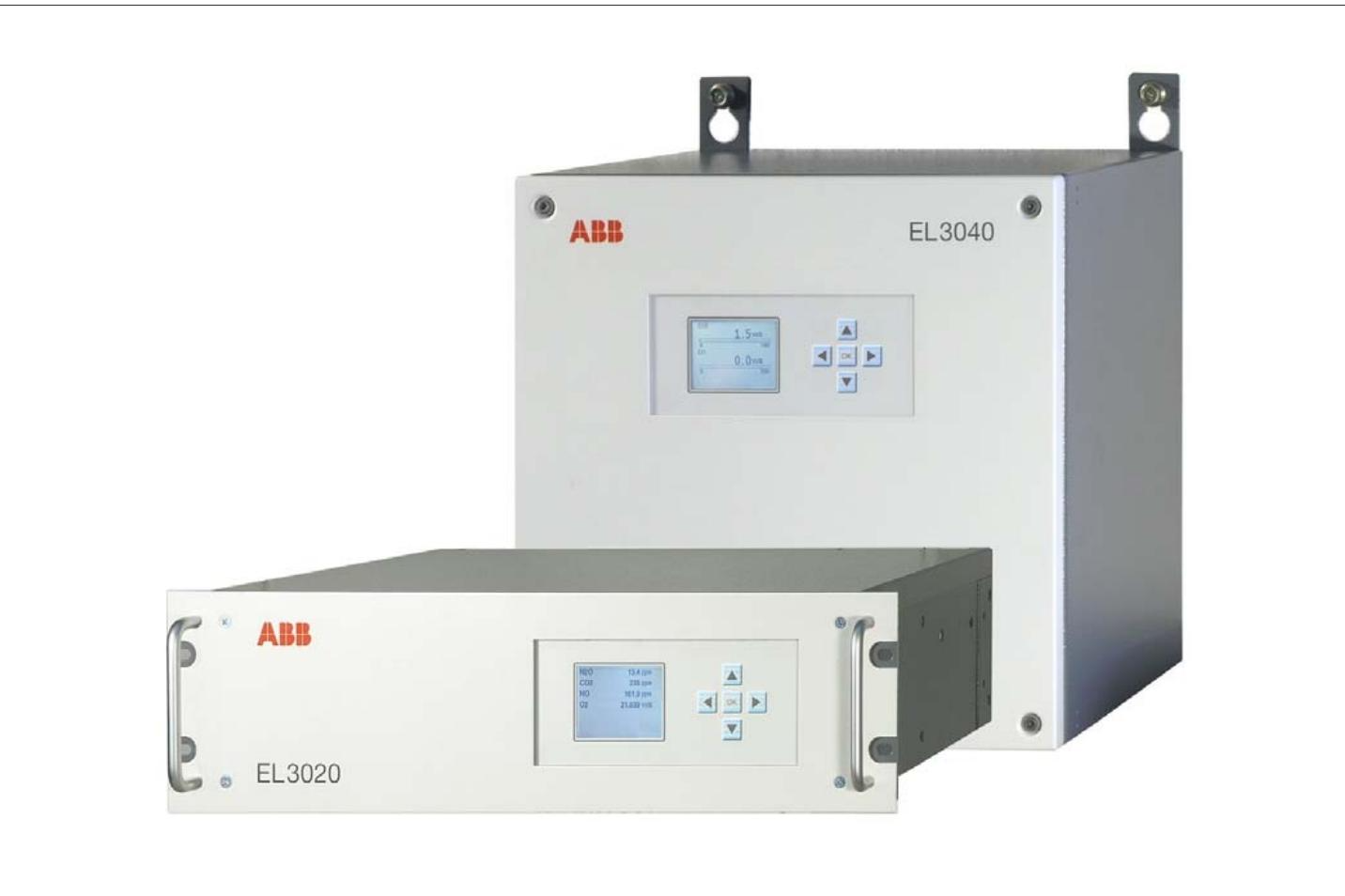
ABB EasyLine series gas analyzer EL3020, EL3040

Product overview

The ABB EasyLine series gas analyzer includes models EL3020 and EL3040, with software version 3.2, mainly used for continuous measurement of the concentration of individual components in gases or vapors. Among them, EL3020 is a 19 inch chassis with a protection level of IP20 and a weight of approximately 7-15 kg; EL3040 is a wall mounted chassis with a protection level of IP65 and a weight of approximately 13-21 kg.

This analyzer cannot be used to measure combustible gases/air or gas/oxygen mixtures. The stainless steel gas path and gas connection version can measure flammable gases and vapors in non hazardous environments, but special requirements must be followed; The explosion-proof version (EL3040, protection level II 3G) can measure non combustible gases and vapors in hazardous environments.

Installation preparation

Installation site and power requirements

Installation site: It needs to be installed indoors and should be as close as possible to the sampling location to ensure sufficient air circulation and avoid adverse conditions such as cold, hot, temperature changes, strong airflow, dust accumulation, corrosive atmosphere, and vibration. The installation site needs to be stable enough to withstand the weight of the analyzer, and it is recommended to install the 19 inch chassis in a cabinet or rack with sliding rails.

Climate conditions: atmospheric pressure 600-1250 hPa; The maximum relative humidity is 75%, and slight condensation is allowed; Storage and transportation temperature -25-+65 ° C, operating temperature+5-+45 ° C (Uras26 combined with other analyzers is+5-+40 ° C, Limas23 is+5-+40 ° C); The maximum altitude of the installation location is 2000 meters.

Power supply: Input voltage 100-240 V AC (-15%,+10%), 50-60 Hz (± 3 Hz); Maximum power consumption of 187 VA; using a 3-pole grounded instrument connector (EN 60320-1/C14), equipped with a power cord; The built-in clock is powered by a 3 V CR2032 lithium battery.

Sample gas conditions

Different analyzers have different requirements for the inlet and outlet conditions of the sample gas. For example, Uras26 requires the dew point of the sample gas to be at least 5 ° C lower than the lowest ambient temperature in the entire sample gas path, with a positive pressure of 2-500 hPa and a flow rate of 20-100 l/h; Limas23, Magnos206, Caldos27, etc. also have their own corresponding requirements for temperature, pressure, flow rate, etc.

Special requirements

Combustible gas measurement: EL3020 needs to ensure air circulation around it and cannot be placed directly on a table. The chassis holes must not be closed and should be at least 3 cm away from adjacent built-in components. The enclosed cabinet should have sufficient ventilation; The EL3040 chassis must be purged with nitrogen gas at a flow rate of 1-20 l/h, and the outlet flow rate of the purging gas needs to be monitored.

Explosion proof design (EL3040, protection level II 3G): The cable should be correctly inserted into the threaded cable sealing sleeve and tightened, and unused cable connectors should be sealed with suitable ventilation plugs; In hazardous areas, it is not allowed to open the chassis with electricity on; Unused purge gas connections during operation need to be sealed with ventilation plugs, etc.

Installation process

Unpacking and Inspection

Two people are required to open the box. After removing the accessories, take out the analyzer from the packaging box, remove the packaging and place it in a clean location. Check for any transportation damage and keep the packaging box and materials for future transportation.

Gas connection installation

It is recommended to install gas connections before installing the analyzer. The accessories should be clean and free of residue, and no sealant should be used. PTFE sealing tape should be used instead. Different models and combinations of analyzers have different gas connection methods, which need to be operated according to the corresponding connection diagram, such as Uras26, Limas23, and their combinations with other analyzers.

Analyzer installation

19 inch chassis (EL3020): requires 4 oval head screws (M6 recommended) and 1 pair of mounting rails (approximately 240 mm in length) to be installed in a cabinet or rack, with a minimum spacing of 1 height unit between multiple 19 inch chassis.

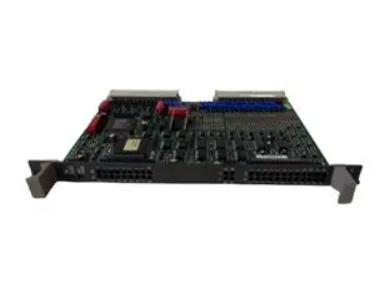
ABB 83SR04 module

Basic information

83SR04 is a module for storing program binary and analog control tasks at the driver, group, and unit control levels, which can be used in conjunction with a multifunctional processing station. The model number is 83SR04-E/R1210, and the order number is GJR2390200R1210. It is produced by ABB Utilities GmbH. Its country of origin and other information are not explicitly mentioned. It weighs approximately 0.55kg and complies with DIN 41612 standard. The board size is 6 units, 1 partition, 160mm deep, equipped with 1 48 pin edge connector (X11 for station bus connection) and 1 32 pin edge connector (X21 for process connection).

Application scenarios

This module has a wide range of applications and can be used for driving control of unidirectional drivers, actuators, solenoid valves, binary function group control (sequence and logic control), three-step control, and signal conditioning.

Functional Features

Core functions

It has three operation modes, namely binary control mode (and analog basic function), analog control mode (and binary control), and signal conditioning mode (with interference bit output), which can be selected through the function block TXT1.

Having four hardware interfaces with switch devices and processes, it can achieve communication with processes and switch devices, receive and process relevant signals, and output control instructions.

The module address is automatically set by inserting the module into the PROCOTROL station. Telegrams received through the station bus are checked for transmission accuracy using parity bits, and telegrams sent by the module to the bus are also checked for transmission accuracy using parity bits.

The user program is stored in non-volatile memory (EEPROM) and can be loaded and modified from PDDS through the bus. After loading a valid user list, the module can run.

Diagnostic and alarm functions

The front of the module indicates faults through light-emitting diodes (LEDs), the ST indicator light displays any faults in the module and data communication with the module, and the SG indicator light only displays module faults.

The alarm system and control diagnostic system (CDS) receive fault alarms from the control module through the bus.

The module processing part will perform error monitoring (self diagnosis) on input telegrams, generated tele​grams to be transmitted, and internal signal processing. The fault type will be stored in the diagnostic register, and a general fault alarm will be sent to the PROCOTROL system. When requested, telegrams with data from the diagnostic register will be transmitted.

Module Design

Component

It mainly consists of process interfaces, station bus interfaces, and processing parts. The process interface adapts the process signal to the internal signal level of the module; The station bus interface adapts module signals to bus signals, mainly involving parallel to serial conversion; The processing part is equipped with a microprocessor, which works in conjunction with multiple storage areas through the internal bus of the module, including EPROM (storing operating programs, functional blocks), EEPROM (storing user programs, etc.), RAM (storing user programs, historical values, current module input and output signals, etc.).

Structuring and Addressing

When structuring, module inputs and outputs need to be assigned to neutral inputs and outputs of each functional block, or constants, parameters, or outputs of other functional blocks need to be specified for functional block inputs, and there are many limiting values that need to be followed, such as a maximum module input of 287 and a maximum imitable module input of 32.

The signal exchange between the module and the bus system is carried out through shared memory, which includes source registers (0-63) for transmitting telegrams and destination registers (64-199) for receiving telegrams. The allocation of module input and output signals to shared memory registers is determined by PDDS based on user provided data, including module input address list, module output to bus address list, etc.

MODE

Binary Control Mode (STR)

Provide functional blocks for all binary control functions at the driver, group, and unit control levels, as well as additional analog basic functions.

The module cycle time is variable and strictly determined by the functional blocks used. In this mode, except for the output of the GRE function block, analog values do not transmit interference bits.

Simulated Control Mode (REG)

Provide simulation control function blocks for all single variables and main controls, including drive control function blocks.

The module cycle time can be preset in steps to a fixed minimum time (50, 100, 150, 200, or 250ms). When implementing multiple control loops, the module cycle time will increase accordingly.

ABB 216EA61b High Performance Industrial Control Module

Product Overview

ABB 216EA41b is a high-performance control module designed specifically for industrial automation and power systems. As a key member of ABB’s automation control module series, it is responsible for signal processing, data calculation, and executing control operations. With its outstanding performance and reliable quality, it plays a core role in various complex industrial scenarios. It can receive multiple signals from sensors, switches, buttons and other devices, and after internal precision processing, accurately output control instructions to achieve efficient monitoring and precise control of equipment operation status.

Specification parameters

Physical specifications

Size: 12.7 cm x 7.6 cm x 17.8 cm, compact and reasonable appearance design, can adapt to various control cabinet space layouts, whether in large industrial facilities with ample space or small control systems with strict space utilization requirements, it can be flexibly installed.

Weight: 350g. The lightweight design not only facilitates transportation, but also greatly reduces the difficulty of operation during equipment installation.

Shell material: Made of aluminum alloy material, it has good mechanical strength and corrosion resistance, which can effectively resist physical impact and chemical erosion in industrial environments, providing solid and reliable protection for internal precision electronic components.

Protection level: reaching IP65, which means that the module has complete protection against dust and can effectively protect against water spray from all directions. It can operate stably in harsh industrial environments such as high dust and humidity.

Electrical specifications

Power supply voltage: 24V DC, compatible with common industrial DC power sources, providing reliable power guarantee for stable operation of modules.

Power consumption: ≤ 10W. Low power design not only helps reduce energy consumption, but also reduces heat generation during equipment operation, improving system stability and economy.

Input/output points: up to 128 points, the abundant I/O points can meet the needs of complex industrial control systems for multi device connection and signal interaction.

Speed: ≤ 0.5ms/point, high-speed data processing speed ensures that the module responds to various signal changes in a timely manner, achieving fast and accurate control of industrial processes.

Communication interface: Integrated with multiple communication interfaces such as RS232, RS485, CAN, Ethernet, etc., it can easily achieve interconnection and intercommunication with different types of devices and systems, facilitating the construction of efficient industrial automation networks.

Environmental adaptability

Working temperature: The working temperature range is -20 ° C to+60 ° C, which can adapt to industrial production scenarios under different temperature conditions, from cold northern industrial environments to hot southern factories.

Storage temperature: The storage temperature range is -40 ° C to+85 ° C, which ensures that the module performance is not compromised even when stored in extreme temperature environments, ensuring normal operation when needed for use.

Relative humidity: It can operate stably in a relative humidity environment of 5% to 95% (non condensing), effectively responding to large humidity changes in industrial environments.

Core functions

Voltage monitoring

It can monitor the voltage situation in the system in real-time and accurately, including key parameters such as phase voltage and line voltage, and detect abnormal voltage fluctuations in a timely manner. Once the voltage value is detected to exceed the preset safe range, an alarm mechanism will be quickly triggered to notify the operator in a timely manner, so that corresponding measures can be taken to ensure the safe and stable operation of the system.

Signal processing

It can efficiently collect analog or digital signals from on-site equipment, and through advanced signal processing algorithms, perform a series of processing operations such as denoising, amplification, and conversion on the signals. The processed signals are converted into standard formats suitable for subsequent control and monitoring, providing accurate and reliable data support for the control system.

Fault diagnosis

Equipped with powerful fault diagnosis capabilities, it can quickly and accurately detect potential faults in the system through real-time analysis of input signals, equipment operating status, and its own working parameters. It can also generate alarm information in a timely manner, providing detailed reports on fault types, locations, and possible causes, helping users quickly locate and solve problems, and significantly reducing equipment downtime.

Control execution

Based on the preset control logic and received signals, this module can quickly generate precise control instructions and send them to the executing mechanism, such as motors, valves, etc., to achieve various control operations such as start stop, speed adjustment, flow control, etc. of industrial equipment, ensuring that the industrial production process strictly operates according to the predetermined process and parameters.

Working principle

When sensors, switches, and other equipment in the industrial field generate signals, the 216EA41b module receives these signals through its input channel. For analog signals, the module first performs analog-to-digital conversion to convert them into digital signals; For digital signals, further processing is performed directly. The internal high-performance microprocessor analyzes, calculates, and logically judges these signals according to preset programs and algorithms. For example, when monitoring voltage signals, the real-time collected voltage values are compared with the preset normal range. If the voltage is normal, continue to maintain real-time monitoring of the signal; If the voltage is abnormal, the microprocessor will immediately trigger an alarm program and generate control instructions according to the preset response strategy, which will be sent to relevant executing devices through the output channel, such as voltage regulating devices or alarm devices. At the same time, the module also interacts with the upper computer or other devices through communication interfaces, uploads collected data and device operating status, and receives control parameters and instructions issued by the upper computer to achieve more comprehensive and intelligent industrial automation control.

Precautions

Installation process

During the installation process, it is essential to strictly follow the standard DIN rail installation dimensions to ensure that the module is securely and stably installed. At the same time, it is necessary to carefully check whether each connecting cable is correctly connected to avoid situations such as reverse insertion and looseness, so as not to affect signal transmission and normal equipment operation.

Environmental considerations

Although the module has good environmental adaptability, it should still be installed in a dry, well ventilated, and non corrosive gas environment as much as possible. Avoid using in environments with high temperature, high humidity, or strong electromagnetic interference to prevent adverse effects on module performance and service life.

Power supply

Ensure that the 24V DC power supply connected is stable and reliable, and the power fluctuation range should be within the allowable working voltage range of the module. It is recommended to equip corresponding voltage stabilizing devices and overcurrent protection devices to prevent module damage caused by power supply issues.

Communication settings

When establishing communication connections and setting parameters, it is necessary to accurately configure communication interface types, communication protocols, baud rates, and other parameters based on the actual connected devices and systems. Incorrect parameter settings may lead to communication failures and affect the overall operation of the system.

Application scenarios

Industrial automation production line

In industrial automation production lines such as automobile manufacturing and electronic equipment production, the 216EA61b module can be used to collect and process signals from various sensors and actuators, accurately control equipment on the production line, such as controlling the movement of robot arms, starting and stopping the material conveying system, and adjusting the speed, ensuring efficient and stable operation of the production line, improving production efficiency and product quality.

Power system

In the processes of power generation, transmission, and distribution, this module can monitor real-time parameters such as voltage and current in the power system, and protect and control power equipment. For example, in a substation, by monitoring voltage changes and adjusting transformer taps in a timely manner, the stability of the power supply voltage is ensured; When a power failure occurs, quickly cut off the faulty line to prevent the fault from expanding and ensure the safe and reliable operation of the power system.

​Manufacturing process control

In the manufacturing industries such as chemical, food and beverage, and pharmaceutical, the 216EA40B module can monitor and control key parameters such as temperature, pressure, and flow rate during the production process. Taking chemical production as an example, by precisely controlling the temperature and pressure of the reaction vessel, the chemical reaction is ensured to proceed under optimal conditions, thereby improving product quality and production safety.

Transportation and infrastructure

In intelligent transportation systems, it can be used to control the switching of traffic signals, adjust the duration of signal lights in real time according to traffic flow, and optimize traffic flow. In terms of infrastructure construction and management, such as sewage treatment plants and water treatment plants, this module can be used to remotely monitor and control equipment such as pumps and valves, achieve automated operation, and improve the operational efficiency and management level of infrastructure.

ABB MB510 Program Card Interface

Product overview

The ABB MB510 program card interface (product ID: 3BSE002540R1) is a key component belonging to the ABB control system accessory series, mainly used for connecting and exchanging data between program cards and related control systems. As an important interface device for control and communication, it plays a bridging role in industrial automation control systems, capable of storing, reading, and transmitting programs, providing strong support for stable system operation and program management. This product is non customized, with a minimum order quantity and order multiple of 1 piece.

Basic Product Information

Product ID: 3BSE002540R1

ABB model name: MB510

Product Name: MB510 Program Card Interface

Core credit: 0.00

Country of Origin: Sweden (SE)

Customs tariff number: 85389091

Gross weight: 0.14 kg

Net weight of product: 0.14 kg

Invoice Description: MB510 Program Card Interface

Is it a customized product? No

Packaging grade 1 Gross weight: 0.14 kg

Packaging Level 1 Unit: 1 piece

Component Type: New Product

Sales measurement unit: piece

Inventory location (warehouse): Distribution center, US central warehouse DEOSCEXPU、SGRL4414FEXPU、SELOGVEXPU

Technical information: Program card interface

UNSPSC:39120000

​Size and weight

Product net depth/length: 260 mm

Product net height: 20mm

Product net width: 120mm

Category

Control System Products → Control & Communication → AC 400 → AC 400 – Accessories →  MB510 Program Card Interfaces MB510 Program Card Interface

Control Systems → Advant OCS with Master SW → Controllers → Advant Controller 450 → Advant Controller 450 Version 2.3 → Control System Accessories

Control Systems → Safety Systems → Safeguard → Safeguard 400 Series → Safeguard 400 1.6 → Unclassified

Control Systems → Advant OCS with Master SW → Controllers → Advant Controller 410 → Advant Controller 410 Version 1.5 → Central Units

Control Systems → Advant OCS with Master SW → Controllers → Advant Controller 450 → Advant Controller 450 Version 2.3 → Central Units

Control Systems → Advant OCS with Master SW → Controllers → Advant Controller 450RMC → Advant Controller 450RMC 2.x → Central Units

Working principle

The working principle of the ABB MB510 program card interface is mainly to establish physical and data connection channels between the program card and the control system. After the program card is inserted into the interface, the interface identifies the type and status of the program card through internal circuit design, and establishes a data transmission link.

During data transmission, the interface receives program data signals from the program card, undergoes internal signal processing and conversion, converts them into a signal format that the control system can recognize and process, and transmits them to the control system; At the same time, it can also receive program storage, reading and other instruction signals issued by the control system, convert them into signals recognizable by the program card, and control the program card to perform corresponding operations, such as writing program data from the control system into the program card for storage, thereby achieving effective data exchange between the program card and the control system.

Key advantages

Reliable Connection: Adopting high-quality interface design and manufacturing processes, it can provide stable and reliable connections for program cards and control systems, reduce data transmission errors caused by loose connections or poor contacts, and ensure the smooth operation of program loading, storage, and other operations.

Strong adaptability: Specially designed for specific control system suites, with good compatibility with related systems, it can seamlessly integrate into the system without the need for complex debugging and adaptation work, reducing the difficulty and cost of system integration.

Compact and convenient: Its compact size and lightweight weight make it highly flexible during installation and use, able to adapt to different installation space requirements, and also convenient for transportation and storage.

Precautions

Installation operation: During the installation process, it is necessary to ensure that the interface is correctly connected to the program card and control system, and to avoid damage to the interface or related equipment caused by incorrect insertion or misconnection. When installing, pay attention to moderate force to prevent physical damage to the interface caused by excessive force.

Environmental protection: Although the product itself has certain design considerations, it should be installed in a dry, ventilated, non corrosive gas and dust free environment as much as possible during use to avoid environmental factors affecting the performance and service life of the interface.

Compatibility note: Due to the specific compatibility kit of this product, it is necessary to confirm whether it matches the control system kit used when selecting, in order to avoid malfunction caused by incompatibility.

RoHS related: This product does not comply with RoHS standards. In application scenarios with strict requirements for RoHS, this factor needs to be considered in advance to determine whether it is applicable.

MB510 ABB AC 400 Controllers Program Card Interface PLC Spare Parts ...

ABB LDGRB-01 3BSE013177R1 Stand-alone resolution module

Product Overview

ABB LDGRB-01 3BSE013177R1 is an excellent independent resolution module designed specifically for the industrial automation field, aiming to provide precise and reliable signal processing and control capabilities for complex control systems. Its excellent manufacturing process from Sweden represents ABB’s profound technical accumulation and strict quality control in industrial control products.

Specification parameters

Electrical specifications

Operating voltage: usually 24V DC, suitable for common industrial DC power supply systems to ensure stable power supply.

Output frequency: up to 30KHZ, capable of high-speed response to various control signals, timely processing, and accurate command output.

Physical specifications

Size: 30 × 20 × 20cm, compact design saves control cabinet space and facilitates installation and layout in industrial environments with limited space.

Weight: Due to differences in specific design and configuration, it remains within a reasonable range for easy transportation and installation.

Environmental adaptability

Working temperature: 0 ° C to 55 ° C (32 ° F to 131 ° F), suitable for most conventional industrial environment temperature changes.

Storage temperature: -20 ° C to 70 ° C (-4 ° F to 158 ° F), ensuring performance is not compromised even in extreme temperature environments when not in operation.

Humidity requirement: The relative humidity during operation and storage is usually 5% to 95% and there is no condensation. It can work stably in both humid and dry environments.

Core functions

Signal acquisition and processing

It can accurately collect analog and digital signals, and efficiently convert and process them. Whether it is analog quantities such as temperature, pressure, flow rate, or digital quantities such as equipment switch status, they can be accurately captured and converted into system recognizable information, providing precise data support for automation control.

Control instruction output

Based on the processed signal and preset control strategy, generate corresponding control instructions and output them to the executing mechanism, such as valves, motors, etc., to achieve precise control of industrial equipment and ensure that the production process proceeds according to predetermined parameters and processes.

Data Storage and Management

Having large memory and storage space, it can store a large amount of programs, parameters, and running data. Easy to query, analyze, and trace historical data, providing a basis for production optimization and fault diagnosis.

Communication and Interaction

Equipped with multiple interfaces and communication functions, such as Ethernet and serial interfaces, it can exchange and communicate data with other devices and systems, achieve information sharing and collaborative control, and integrate into the entire industrial automation network.

Key advantages

Accurate signal processing

High performance processors ensure efficient processing of complex control algorithms and real-time tasks, precise acquisition, conversion, and processing of analog and digital signals, providing accurate input and output data for automation systems, ensuring high-precision control of production processes, such as ensuring product quality consistency in the precision manufacturing industry.

Powerful storage and multitasking capabilities

The large memory and storage space can store a large amount of programs and data, support multitasking, and can simultaneously execute multiple control tasks, improving system response speed and operating efficiency. It can balance multiple tasks in large industrial production lines, ensuring efficient and stable operation.

High reliability design

High quality materials are selected, and the structural design takes into account the harsh industrial environment, with good anti-interference ability and stability, to resist adverse factors such as electromagnetic interference, vibration, dust, etc., ensuring long-term stable operation of the system, reducing downtime and production losses.

Rich communication and flexible configuration

Multiple interfaces facilitate data exchange with other devices and systems, seamlessly integrating with ABB’s own or third-party control systems. Support flexible configuration and programming, users can customize settings according to actual needs, and easily implement complex control strategies.

Precautions

Installation aspect

When installing, choose a location with good ventilation, away from strong electromagnetic interference sources, and low vibration to ensure a stable working environment for the module. Connect various types of circuits according to the correct wiring method, ensuring firm wiring and good contact, and avoiding signal transmission abnormalities or module damage caused by wiring problems.

Operation and maintenance

Regularly inspect the module to check for dust and debris accumulation, clean it in a timely manner, and keep the module clean. Check if the connecting wires are loose or aging, and promptly address any issues found. Avoid operating the module under conditions beyond its environmental adaptation range, such as excessively high or low temperatures, humidity, etc.

Operating standards

Operators should receive professional training, be familiar with the operation process and parameter setting methods of modules, and avoid module failures or system abnormalities caused by misoperation. When performing parameter modifications, program updates, and other operations, backup work should be done to prevent data loss.

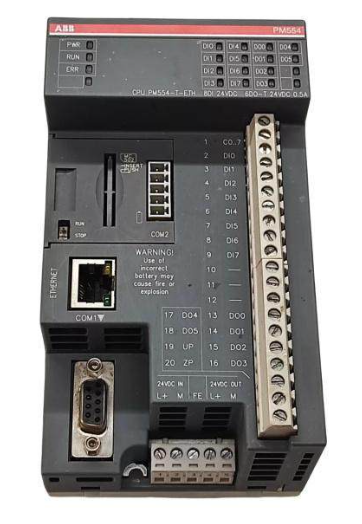
ABB ACH550-01 frequency converter

Product overview

The ABB ACH550-01 frequency converter is a drive device suitable for HVAC applications, designed to provide efficient motor control for various related scenarios. Its design emphasizes reliability and practicality, achieving precise control of the motor through advanced technology to meet the operational needs under different working conditions. This frequency converter has multiple manuals for reference, including user manuals, HVAC information guides, flange installation instructions, and various option manuals, providing comprehensive guidance for users’ installation, operation, and maintenance.

Installation related

Installation preparation

Before installation, multiple preparations are required. To confirm the drive identification, including checking the model, serial number, protection level, rating, and other information on the label, clarify the type and specifications of the drive. At the same time, it is necessary to determine the frame size, as different frame sizes correspond to different output current, power, and other parameters. It is also necessary to identify the motor, check the rated voltage, current, frequency, speed, power and other information of the motor to ensure compatibility with the driver.

In terms of installation environment, it is necessary to choose a suitable environment and enclosure. The IP21 enclosure requires an environment free of airborne dust, corrosive gases, or liquids; The IP54 casing provides dust and splash protection. The installation position should meet the requirement of vertical installation on smooth, non flammable, and sturdy surfaces or frames, and ensure a certain amount of heat dissipation space to avoid hot air circulation.

Wiring and electromagnetic compatibility (EMC) also need to be carefully considered. Input power lines, motor lines, and control/communication lines should be wired separately, following relevant cable specifications. It is recommended to use shielded twisted pair cables for control cables. In addition, it is necessary to prepare the necessary tools and install the hardware.

Setup script

When installing, first use the installation template to mark the installation hole position and drill holes, and then screw the screw part into the hole. For drivers with different levels of protection, the way to remove the front cover varies. For IP54 models, the edge capstive screws need to be loosened, while for IP21 models, the control panel needs to be removed first, the top screws need to be loosened, and the side clamp needs to be pressed.

When installing the IP54 driver, the rubber plug should be removed first, the driver should be positioned on the mounting screw and tightened, the protective plug should be reinstalled, and a warning label should be affixed; The IP21 model should directly position the driver onto the mounting screw and tighten it, and also attach a warning label.

Wiring installation should be carried out according to the corresponding terminal layout, including the connection of input power, motor, and control cables. When connecting, attention should be paid to torque requirements. After installation, it is necessary to check whether the installation meets the requirements, such as the driver being securely installed, wiring being correct, and no tools or foreign objects remaining. Then, reinstall the cover and turn on the power.

Startup and Control Panel

control panel

The ACH550-01 frequency converter is equipped with an HVAC control panel (ACH-CP-B), which has multiple functions including language selection, instant disconnection and connection of drive connections, startup assistant, parameter copying and backup functions, context sensitive assistance, and real-time clock. The control panel is compatible with specific firmware versions and can display relevant information and perform operations in different modes.

Start operation

Startup can be done through the startup assistant or by modifying parameters separately. When powered on for the first time, the driver will activate the startup assistant, guiding the user to perform language selection, motor data input, rotation check, and other operations. Users can also enter parameter mode and manually modify relevant parameters for startup settings.

The control panel has multiple modes, such as output (standard display) mode for displaying driver status information and operating drivers; Parameter mode is used to individually edit parameter values; Assistant mode is used to guide startup and configuration; There are also parameter mode changes, drive parameter backup mode, time and date mode, I/O setting mode, fault recorder mode, etc., to meet different operational and configuration requirements.

Application macros and wiring

Application macro

Application macros are used to define a set of parameters and change them to predefined values to reduce the need for manual parameter editing. The ACH550-01 frequency converter includes various application macros, such as HVAC default macro (suitable for typical BMS applications), supply fan macro, return fan macro, cooling tower fan macro, condenser macro, booster pump macro, etc. Each macro has its specific parameter settings and applicable scenarios.

When selecting application macros, you can operate them through the assistant mode of the control panel. After selecting the appropriate macro, you can also set whether to use the mechanical HAND-OFF-AUTO switch as needed. To restore the default factory settings, you can choose the HVAC default application macro.

Wiring Example

Different application macros correspond to different wiring methods, including connections for analog input, analog output, digital input, relay output, etc. For example, the default macro wiring of HVAC specifies the functions and connection requirements of each terminal, such as analog input 1 for external reference, analog input 2 for actual signals, digital input 1 for start/stop, etc. At the same time, connection examples for two-wire and three wire sensors are provided, as well as connection methods for obtaining 0… 10V signals from analog outputs.

Variable Frequency Drive ACH550-01-03A3-4 ABB 1.1kw 3.3A 3AUA0000004417 ...

Search for products

Back to Top
Product has been added to your cart