KP1-10X (flat button): such as KP1-10R (red), KP1-10G (green), supports instantaneous operation.
KP2-10X (Flat Head Hold Button): Keep pressed for continuous control of the scene.
KP3-10X (Extended Button): Suitable for scenes that require a noticeable tactile sensation.
Lighting type:
KP1-11X (flat head lighting button): such as KP1-11R (red lighting), built-in light block (KLB-1), supports 24V/115V/230V voltage.
2. Dual button (KPD series)
KPD1-11B (Double Flat Head Button): integrates two buttons for combined control (such as start/stop), supports lighting function (such as KPD1-11R red lighting).
3. Mushroom Head Button (KPM Series)
KPM1-10R (40mm mushroom head, instantaneous): Used for emergency operations, mainly red, supports rotary release (KPMT) or key release (KPMK).
KPMT3-10R (emergency stop button with twist release): meets safety standards and has a protection level of IP66.
4. Key lock button (KPK series)
KPK1-101 (hold type): requires key operation to prevent accidental touch, suitable for permission control scenarios, supports different key codes (71/72/73).
Select switches
1. Two/three position selector switch (K2SS/K3SS series)
K2SS1-10R (two non illuminated): manual switching, status feedback through contacts (NO/NC).
K3SS1-11G (three position lighting type): The middle position is “OFF”, the two sides are functional positions, and it supports LED indicator lights.
K2SSV1-10R: Designed specifically for vertical panels, suitable for narrow spaces, with flexible operating angles.
Flip Switches (KTS series)
KTS1-10B (two non illuminating): Simple switching function, such as power on/off, with contacts supporting 16A current.
KTS1-11C (two position lighting type): with transparent lampshade, status visualization, suitable for operation inside the control cabinet.
Indicator lights (Pilot Lights, KL series)
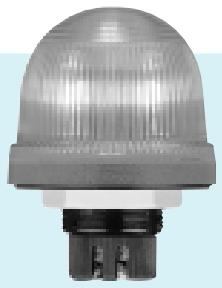
KL1-100R (red non illuminated): pure indication function, no operation button.
KL1-11G (green lighting type): Built in LED or incandescent lamp, supports 24V DC power supply, brightness up to 1000 mcd (green LED).
Signal Towers&Beacons
1. Signal tower (K70 series)
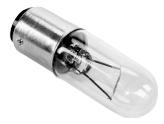
KL70-401R (red constant light module): A single-layer optical signal module that supports BA15d bulbs and can be stacked with multiple layers (up to 5 layers).
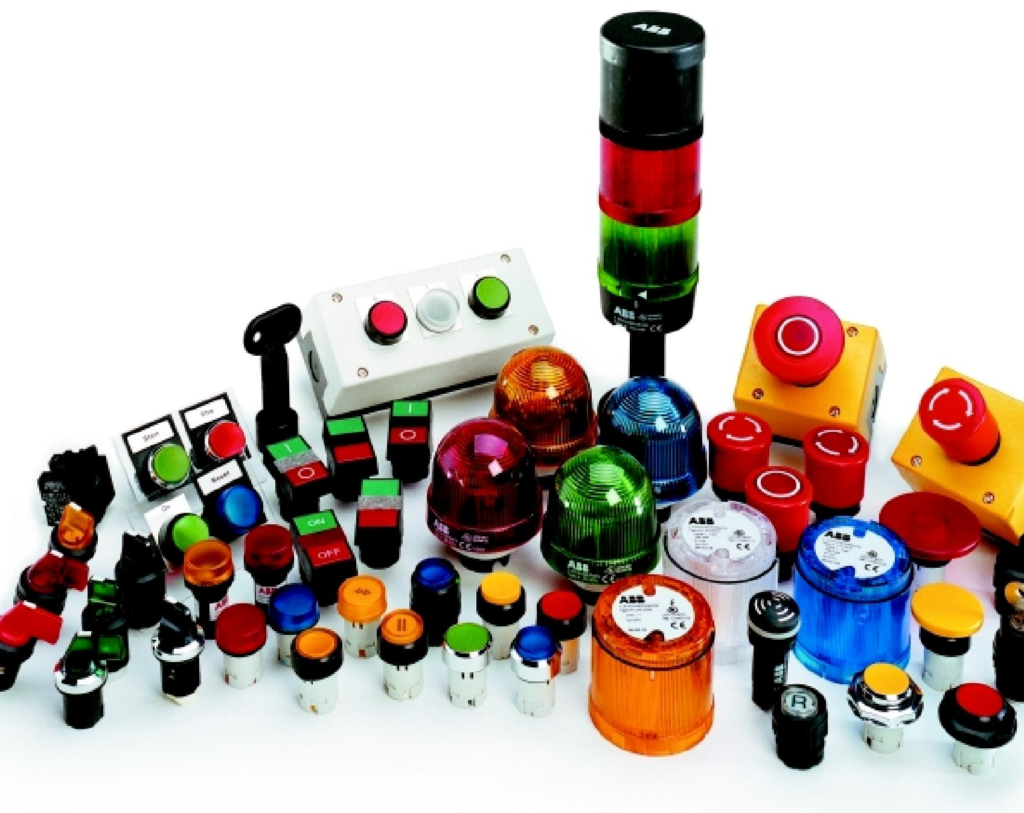
Positioning: Provides industrial control components with a 22mm aperture, including push buttons, selector switches, toggle switches, pilot lights, signal towers K70, and signal beacons KSB, suitable for human-machine interaction and signal indication in industrial automation control systems.
Design features:
Modular design, supports flexible combinations, and achieves multiple functions through different base and module combinations.
Provide non illuminated and illuminated versions, with indicator lights supporting LED, neon, and incandescent lights, and supporting multiple voltage levels.
The shell material includes plastic and metal, with a protection level of up to IP67 (metal shell), suitable for harsh industrial environments.
Core product types and functions
Push buttons
Types: including regular button, mushroom head button, emergency stop button, key lock button, etc.
Function: Supports momentary and maintained operation modes, emergency stop button meets safety standards and is suitable for emergency stop control.
Specifications: The buttons come in various colors (red, green, yellow, blue, white, etc.) and support text caps for easy function recognition.
Application: Used for mode switching (such as manual/automatic), speed selection, etc., can be paired with status indicator lights.
Flip Switches
Features: Two/three bit switching, suitable for simple logic control, such as power on/off, function enable/disable.
Pilot Lights
Function: Display device status (such as running, faulty, standby), support multiple colors (red, green, yellow, etc.) and light source types (LED, incandescent).
Specification: Built in lamp holder (Ba9s base), supports 24V/115V/230V voltage, LED lifespan exceeds 50000 hours.
Signal Towers K70&Signal Beacons KSB
Signal tower: Multi layer modular design, supporting combination of optical and acoustic signals, with a protection level of IP54/IP65, suitable for status warning of large equipment.
Beacon: High protection level (IP65), impact resistant, suitable for outdoor or harsh environments with sound and light alarms.
Technical parameters
Electrical parameters
Contact rating:
Communication (AC): Maximum 600V, current 1.5-8A (depending on model).
Direct current (DC): up to 250V, current 0.55-5A.
Lamp holder power: maximum 2W (incandescent lamp), LED power consumption is lower (such as 24V DC, 15mA).
Insulation level: Complies with IEC 947-5-1, UL 508, CSA C22.2 standards.
mechanical parameters
Operating lifespan:
Normal button: 2 million times (instantaneous); Emergency stop button: 100000 times.
Select switch: 500000 times (hold type).
Protection level:
Button/switch: IP66 (non illuminated), IP64 (illuminated); The metal casing can reach IP67.
Industrial automation production line: buttons and switches are used for equipment start stop and mode switching; Indicator lights are used for status monitoring.
Mechanical engineering: Emergency stop button ensures equipment safety, signal tower is used for multi-level fault alarm.
Energy and Infrastructure: Beacons are used for outdoor power equipment status warning and are suitable for high humidity and dust environments.
Building control: Select switch for manual/automatic mode switching of HVAC system.
Rail transit: Mushroom head button is used for emergency operation in the train cab, and the indicator light displays the system running
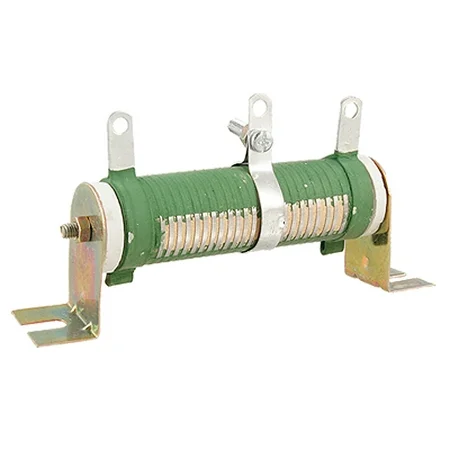
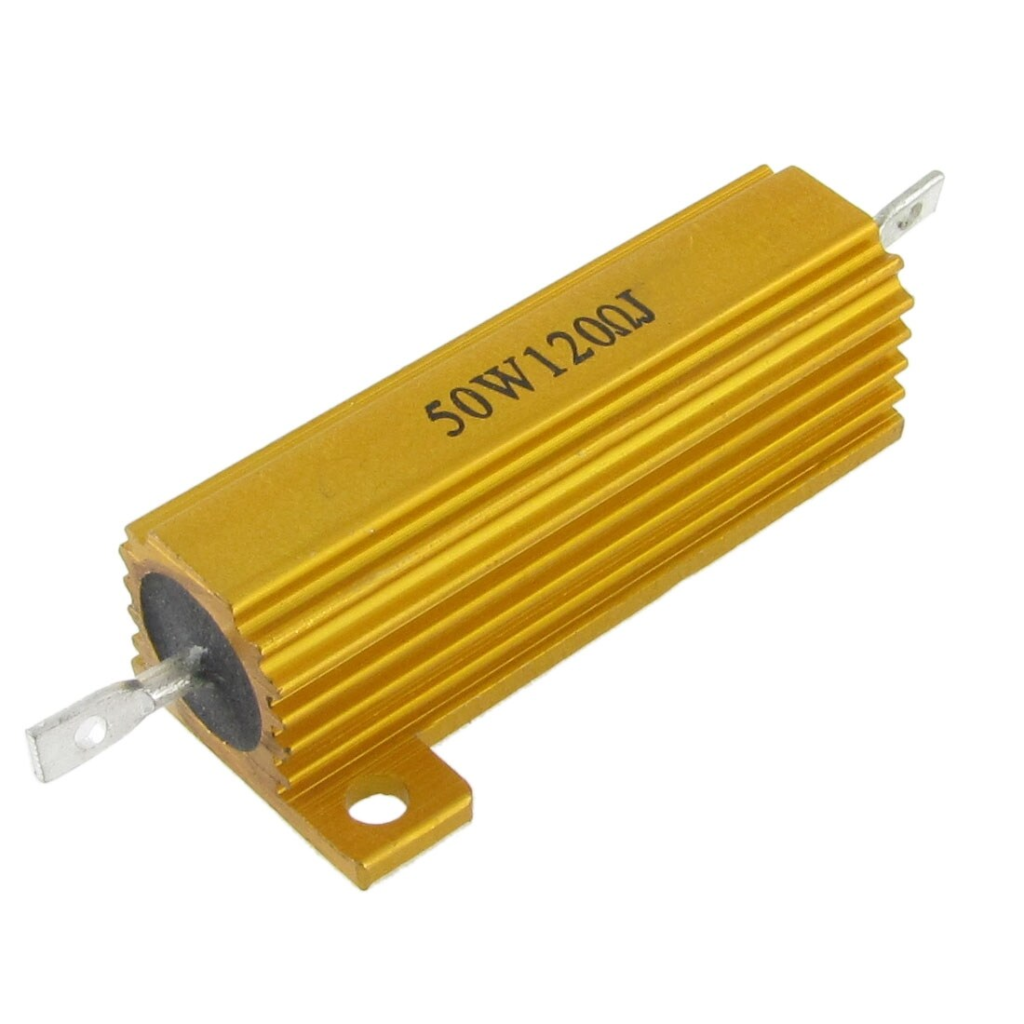
ABB 3HAC0977-1 is a high-power fixed resistor designed specifically for industrial automation systems and is a core component of ABB’s industrial control product line. Its rated resistance is 10 Ω, with a power capacity of 50W. It adopts aluminum shell packaging and forced heat dissipation design, suitable for harsh environments with high loads and continuous operation. This product is mainly used in scenarios such as energy absorption, braking control, load testing, and circuit protection. It is commonly found in robots, servo drives, elevator control systems, and industrial power supplies.
2、 Brand background
ABB is a globally leading industrial automation and power technology group headquartered in Zurich, Switzerland. Established in 1988, it was formed by the merger of ASEA from Sweden and BBC Brown Boveri from Switzerland. ABB has over 130 years of history in the fields of power transmission, robotics technology, and industrial automation. Its products are renowned for their high reliability, precision control, and energy efficiency and environmental protection. In China, ABB has participated in national key projects such as the Three Gorges Project and the Qinghai Tibet Railway, and has research and production bases in Shanghai, Beijing, Guangzhou, and other places.
3、 Specification parameters
Parameter details
Model 3HAC0977-1
Resistance of 10 Ω (tolerance ± 5%, optional high-precision version ± 1%)
Rated power 50W (ambient temperature of 25 ° C), derating curve: 35W at 70 ° C, 0W at 125 ° C
Temperature coefficient ± 200ppm/° C (-55 ° C~+175 ° C)
Voltage withstand up to 500V DC/AC effective value
Temperature range -55 ° C~+175 ° C (storage temperature), -40 ° C~+125 ° C (operating temperature)
Installation method: rail installation or bolt fixation (M4 screws)
Cooling method: natural convection or forced air cooling (requires the use of cooling fins)
Certified CE, UL, RoHS
4、 Core functions
energy absorption
Used for energy release during servo motor or robot braking to prevent voltage spikes from damaging the drive. For example, in an elevator control system, when the motor stops, regenerative energy is consumed through this resistor to achieve smooth braking.
Current limiting and voltage divider
As a current limiting component in power circuits to protect sensitive electronic devices; Or provide precise voltage ratios in the voltage divider circuit to ensure stable control signals.
Load Testing
As a dummy load used for performance testing of power sources or inverters, it simulates power consumption under real working conditions.
EMC filtering
Combined with capacitors to form an RC filtering network, it suppresses high-frequency interference and improves the system’s anti-interference ability.
5、 Working principle
This resistor operates based on Joule’s law: when current passes through the resistor, electrical energy is converted into thermal energy(P=I two×R).
The aluminum shell packaging design achieves efficient heat dissipation through the following methods:
Material characteristics: The thermal conductivity of aluminum is as high as 237W/(m · K), which can quickly conduct heat from the resistance wire to the shell.
Structural design: The shell surface usually has heat dissipation fins to increase the heat dissipation area; Internally filled with thermal conductive silicone to reduce thermal resistance.
Thermal management: When the temperature exceeds the rated value, the power automatically decreases to ensure safe operation.
6、 Key advantages
high reliability
Adopting winding technology, it has strong resistance to impact current (up to 3 times the rated current), and MTBF (mean time between failures) exceeds 100000 hours.
Precision control
The low temperature coefficient (± 200ppm/° C) ensures stable resistance over a wide temperature range, making it suitable for precision control circuits.
Compactness
The volume is 20% smaller than similar products, with high power density, saving control cabinet space.
Easy to integrate
Support standard rail installation, compatible with ABB and third-party control systems, reducing installation costs.
7、 Precautions
Heat dissipation requirements
Keep the surrounding air circulating, it is recommended to reserve ≥ 50mm of heat dissipation space during installation; When forced air cooling, it is necessary to ensure that the wind speed is ≥ 2m/s.
voltage limit
The actual application voltage should not exceed the rated withstand voltage (500V), otherwise it may cause arc breakdown.
temperature monitoring
When operating at full load for a long time, it is recommended to use a temperature sensor to monitor the resistance temperature and avoid overheating.
installation direction
Vertical installation has a 15% higher heat dissipation efficiency than horizontal installation, and it is recommended to use it vertically.
8、 Similar model supplement
Model, Resistance, Power, Temperature Coefficient, Application Scenarios
3HAC0976-1 5 Ω 50W ± 200ppm/° C low resistance high current braking
3HAC0978-1 20 Ω 50W ± 200ppm/° C Medium Resistance Energy Absorption
3HAC0977-2 10 Ω 100W ± 150ppm/° C Higher power demand, no need to increase volume
3HAC0979-1 10 Ω 50W ± 50ppm/° C high-precision measurement circuit, with extremely high temperature stability requirements
9、 Application scenarios
industrial robot
Used for the braking circuit of robot joint servo motors, absorbing braking energy and protecting the driver.
Elevators and lifting equipment
As an energy consuming braking resistor in the elevator control system, it achieves fast start stop of the motor.
Uninterruptible Power Supply (UPS)
During the testing phase, as a load component, verify the stability of UPS output.
New energy equipment
Used for soft start current limiting in photovoltaic inverters to prevent device damage from surge currents.
test and measurement
As a standard load in the laboratory, it is used for power supply and battery charging and discharging tests.
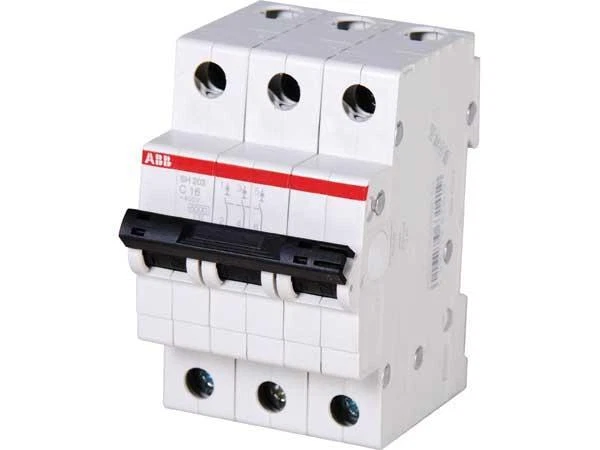
The following is a comprehensive introduction to ABB S503X circuit breaker, combined with the S500 series characteristics and industrial application scenarios in the document:
Product positioning and overview
S503X belongs to ABB S500 series miniature circuit breakers (MCBs), designed for three poles (3P), mainly used for overload and short circuit protection in industrial and commercial circuits, especially suitable for three-phase alternating current (AC) or direct current (DC) systems. Its design is compact, supports DIN rail installation, complies with standards such as UL 1077 and IEC 60947, and is suitable for scenarios such as motor control, power distribution systems, and automation equipment.
Core technical parameters
Electrical parameters
Voltage range:
AC model (such as S503-K): 600V AC (UL)/690V AC (IEC).
DC models (such as S503UC-K/B): 250V DC (single pole)/750V DC (four pole).
Current range: 0.1-45 A (K-curve, inductive load) or 6-63 A (B-curve, DC load).
Breaking capacity: up to 30 kA (UL/CSA/IEC standards).
Physical specifications
Number of poles: 3 poles (3P), with a width of approximately 52.5mm (single pole 17.5mm x 3).
Installation method: 35mm DIN rail installation, supporting vertical or horizontal installation.
Terminal type: Anti electric shock design, supporting wire cross-sectional area of 1.5-10mm ² (M4 screw, torque 1.7N · m).
Release characteristics
K-curve: Suitable for inductive loads such as motors and transformers, allowing for high surge currents during startup (such as 8-12 times the rated current).
B curve (DC model): suitable for DC circuits, more sensitive to overload and short circuit reactions.
Function and application scenarios
Core functions
Thermal magnetic trip protection:
Thermal trip: For overload current, the trip is triggered by heating and bending of a bimetallic strip.
Magnetic trip: For short-circuit current, it trips instantly through an electromagnetic mechanism.
Quick disconnection: The disconnection time is 2.3-2.5ms, reducing the duration of faults and lowering the risk of equipment damage.
Status feedback: Supports auxiliary contacts (optional) and outputs circuit breaker on/off status signals.
Typical applications
Industrial automation: three-phase motor control (such as conveyor belts, fans), PLC system power supply protection.
Energy and Infrastructure: DC Circuit Protection for Photovoltaic Inverters and Energy Storage Systems (DC Models).
Commercial buildings: Overload protection for three-phase circuits in distribution boxes and lighting systems.
Motor starter matching: Combined with contactors and soft starters, it forms a complete motor control circuit.
Model and Selection Reference
Model, prefix, type, number of poles, current range, typical applications
S503-K AC circuit breaker 3P 0.1-45 A three-phase AC motor, transformer
S503UC-K DC Circuit Breaker 3P 0.1-45 A DC Motor and Battery System
S503UC-B DC circuit breaker 3P 6-63A high current DC load (such as welding machine)
Example:
S503-K4.2: Three pole AC circuit breaker, current 2.8-4.2 A, suitable for small three-phase motor protection
S503UC-K45: Three pole DC circuit breaker, current 38-45 A, suitable for industrial DC distribution systems.
Positioning: The S500 series is a high-performance miniature circuit breaker (MCB) that complies with UL 1077 standards and is used for circuit protection, supporting both alternating current (AC) and direct current (DC) systems.
Core function: Provides thermal magnetic trip protection, with high breaking capacity and fast breaking time (2.3-2.5s), suitable for overload and short circuit protection of industrial and commercial circuits.
Model and Technical Parameters
S500 (AC model)
Voltage range:
UL standard: 600Y/277 VAC
IEC standard: 690 VAC
Current range: 0.1-45 A (unipolar/bipolar/triode)
Tripping characteristics: Only K-curve (applicable to inductive loads, allowing high surge currents during startup, such as motors and transformers).
Breaking capacity: up to 30 kA (UL 1077/CSA C22.2).
S500UC (DC model)
Voltage range:
Single pole: 250 VDC
Quadrupole: 750 VDC
Current range: 0.1-63 A (unipolar/bipolar/triode/quadrupole)
Release characteristics: B curve (applicable to DC inductive loads) and K curve (optional).
Breaking capacity: up to 30 kA (UL 1077/CSA C22.2).
Core features
Design and Installation
Rail installation: Supports 35mm DIN rail installation, saving space.
Safe terminals: designed to prevent electric shock (Finger safe terminals), supporting multi-functional terminal connections.
Compact size: The width of a single pole is about 17.5mm, and the width of a multi pole model increases proportionally (such as 35mm for 2-pole and 52.5mm for 3-pole).
Protection function
Thermal magnetic trip: Combined with overload (thermal) and short circuit (magnetic) protection, it responds quickly.
Adjustable trip unit: supports current regulation and adapts to different load requirements.
Certification and Compliance
Compliant with UL 1077, CSA C22.2, IEC 60497-2 and other standards, with CE certification.
Model specifications and prices (some examples)
Model, Pole, Current Range, Catalog Number, Price (Example)
S500-K 1 2.8–4.2 A S501-K4.2
S500UC-B 1 6 A S501UC-B6
S503-K4.2 3 2.8–4.2 A S503-K4.2
S504UC-K4.2 4 2.8–4.2 A S504UC-K4.2
Attachments and extensions
Auxiliary contacts
Provide status feedback (such as on-off signals), supporting 1 normally open/1 normally closed (S500-H11) or 2 normally open (S500-H20)
Bell alarm
Trigger alarm when tripping, with test button (such as S500-S11)
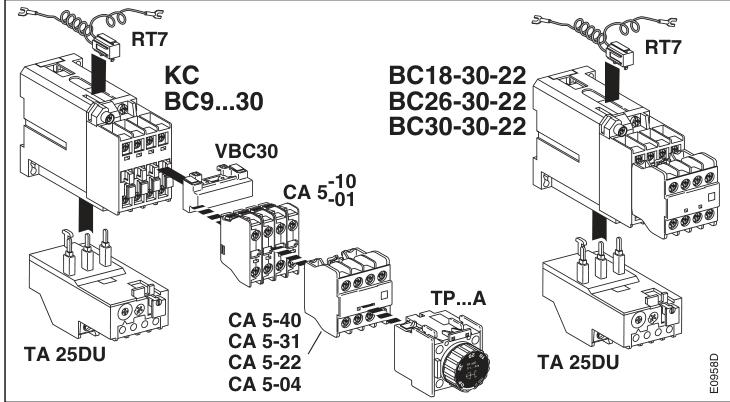
Model positioning: Belonging to ABB BC series contactors, suitable for on/off control of industrial circuits, commonly used in scenarios such as motor drives and power distribution systems.
Category: Contactor, mainly used for frequent connection and disconnection of load circuits, with arc extinguishing capability.
Key technical parameters
Electrical parameters
Rated voltage:
Control coil voltage (U c): Supports 24V DC~250V DC (please refer to the specific nameplate).
Main circuit voltage: suitable for industrial standard voltage levels such as 480V AC and 600V AC.
Breaking ability:
At 480V AC, the breaking current can reach 18kA (requires 50A MCCB protection);
At 600V AC, the breaking current is 5kA (requires 90A K5 fuse or 70A MCCB).
Contact configuration:
Main contact: usually 3 poles (1L1, 3L2, 5L3 input; 2T1, 4T2, 6T3 outputs).
Auxiliary contacts: may include normally open (NO)/normally closed (NC) contacts (such as 13/14 being NO contacts).
Physical specifications
Dimensions: Width B=54mm, height H=81mm, depth reference for similar models is approximately 100mm.
Installation method: DIN Rail installation, supporting vertical or inclined installation (angle ≤± 30 °).
Terminal type: Main circuit: M4 screw terminal, supporting wire cross-sectional area of 1.5-6mm, torque requirement of 1.7N · m.
Control circuit: M3.5 screw terminal, supporting wire cross-sectional area of 0.75-2.5mm, torque requirement of 1N · m.
Function and application scenarios
Core functions
Motor control: used for the start stop and forward/reverse control of industrial motors, and the adapted power range needs to be calculated in conjunction with the motor current (refer to the breaking capacity parameters).
Load protection: Cooperate with fuses or circuit breakers (such as MCCBs) to achieve overload and short circuit protection.
Signal feedback: Feedback the status of the contactor (such as operation or malfunction) to the control system through auxiliary contacts (NO/NC).
Typical applications
Manufacturing industry: control of conveyor belt motors and start stop of fans in automated production lines.
Energy industry: power on/off control in power switchgear, compatible with photovoltaic inverters or energy storage systems.
Building equipment: motor drive and protection for elevators and air conditioning systems.
Installation and operation points
Installation environment
Temperature range: -20 ° C~+55 ° C. Ensure good ventilation to avoid contact oxidation in high temperature environments.
Protection level: IP20 (preventing solid foreign objects), needs to be installed inside the control cabinet to avoid direct exposure to dust or humid environments.
Wiring specifications
Main circuit: When connecting the motor or load, it is necessary to connect the 1L1/3L2/5L3 input terminals in phase sequence, and connect the 2T1/4T2/6T3 to the load terminal.
Control circuit: The coil terminals (A1/A2) must be strictly matched with voltage levels (such as 24V DC or 230V AC) to avoid reverse connection or overvoltage.
Grounding: The metal casing must be reliably grounded, comply with EMC standards, and reduce electromagnetic interference.
Maintenance suggestions
Regularly check the wear of the contacts and remove any signs of arc erosion.
Test whether the coil resistance meets the nominal value to avoid contactor refusal due to coil aging.
Category: Belonging to contactors or contactor relays, used for on-off control of industrial circuits.
Technical parameters and performance
Electrical parameters
Voltage range: Control voltage U c to cover 6VDC~250VDC (some models support wide voltage).
Current and breaking capacity:
At 480VAC, the breaking capacity can reach up to 18kA (such as BC9, BC16, etc.);
At 600VAC, the breaking capacity can reach up to 5kA (such as BC25, BC30, etc.).
Protection type: Supports MCP (motor control protection), MCCB (molded case circuit breaker), K5/RK5 fuses, Type J fuses, etc.
Physical specifications
Size:
(T) BC9/(T) BC16: Width B=44mm, Height H=81mm;
(T) BC30: Width B=54mm, height H=90mm.
Installation method: DIN Rail, supports installation in multiple positions (Pos.1-6), and some models require attention to angle limitations (such as ± 30 °).
Terminal specifications: small models (such as BC9): using M3.5 screws, wire cross-sectional area 0.75-2.5mm;
Large models (such as BC30): using M5 screws, with a wire cross-sectional area of 2.5-10mm
Installation and operation points
Installation specifications
Environmental temperature: The allowable working temperature is -20 ° C~+55 ° C (some models need to refer to specific specifications).
Protection level: IP20 (prevents solid foreign objects, no waterproofing).
Wiring requirements:
The control coil should be wired according to the marked voltage (such as U c, which should be consistent with the coil nameplate to avoid burning);
The main circuit wire needs to be matched with the current load to ensure firm contact (torque reference: M3.5 screw is 1N · m, M4 screw is 1.7N · m).
Precautions for operation
Prohibited live operation: Installation and maintenance require disconnecting the power supply to avoid the risk of electric shock.
Polarity and voltage matching: DC coils need to pay attention to positive and negative poles, and AC coils need to confirm frequency (50/60Hz).
Redundancy protection: It is recommended to use fuses or circuit breakers to prevent overload or short circuit.
Security Warning
Professional personnel operation: Installation, commissioning, and maintenance must be carried out by qualified electricians, following local safety regulations.
Voltage verification: Before powering on, check that the control voltage is consistent with the nominal value of the coil, otherwise it may burn out the coil.
Anti electric shock: Avoid contact with live parts during operation and ensure good grounding of the equipment.
Model differences and application scenarios
(T) BC series: universal contactor, suitable for industrial scenarios such as motor start stop and pump control.
(T) KC series: possibly a contactor with auxiliary contacts, used in complex systems that require signal feedback (such as automated production lines).
KBC30G/KTBC30G: It may be customized for specific industries (such as wind power, heavy machinery), and needs to be confirmed with specific manuals.
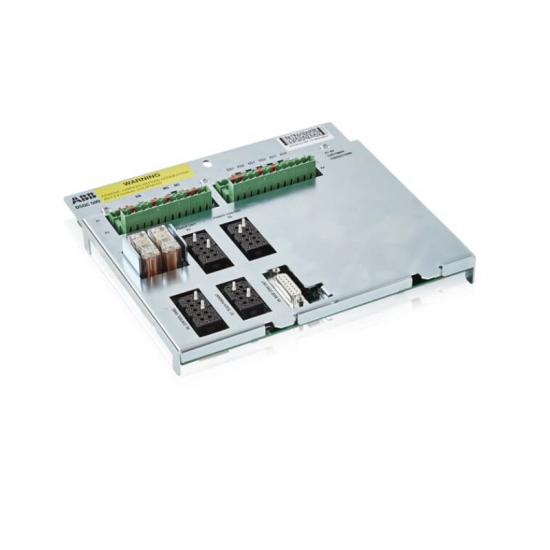
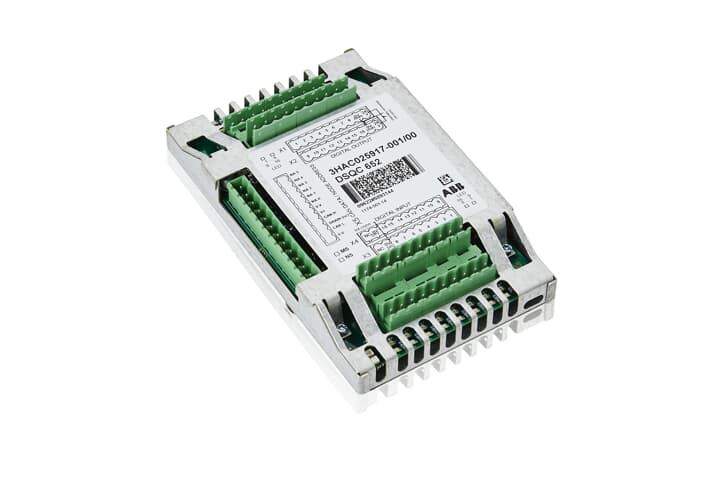
DSQC504 is a connector unit board in ABB industrial automation systems, which is a supporting hardware module for robots or controllers. It is mainly used for signal conversion and electrical connection management. Its core function is to provide standardized interface extensions for industrial control systems, enabling signal transmission and electrical adaptation between different devices, commonly found in robot controllers, PLC systems, or distributed I/O architectures.
Core features
Multi interface integrated design
Provide multiple electrical interfaces (such as terminal blocks and cable interfaces), supporting the access and distribution of digital signals (DI/DO) and analog signals (AI/AO).
Compatible with mainstream ABB controllers (such as IRC5 series), it can be combined with DSQC series I/O modules (such as DSQC346B, DSQC509) to build a complete automation control network.
High reliability connection
Adopting anti misconnection design (such as unique interface shape or coding) to avoid system failures caused by wiring errors.
The terminal supports high current loads (such as 24V DC, with a maximum current of 5A) and is suitable for driving actuators such as relays and solenoid valves.
Flexible system expansion
As an intermediate transfer layer, it can distribute the controller’s signals to multiple peripheral devices or aggregate multiple sensor signals to a single controller, simplifying wiring complexity.
Support hot swapping (some models) for easy system maintenance and upgrades, reducing downtime.
Industrial grade protection
Compliant with IP20 protection level, suitable for dust and slight splashing scenarios in industrial environments.
Anti electromagnetic interference (EMC) design ensures stable operation in strong electromagnetic environments, such as near frequency converters.
Typical application scenarios
Robot system integration
In industrial robot workstations, DSQC504 is used to connect robot controllers with end effectors (such as grippers and welding guns), transmitting control signals and feedback signals. For example:
Connect sensors (such as force sensors) to the controller to achieve force control feedback for robot operations.
Transfer the electromagnetic valve signal to control the opening and closing action of the pneumatic fixture.
Electrical cabinet for automated production line
As the signal center of the electrical cabinet in the production line, it distributes the control signals of the PLC to the executing equipment at each workstation (such as motor drivers and indicator lights), while collecting sensor signals (such as proximity switches and encoders) and transmitting them back to the PLC.
Typical scenario: In the automobile assembly line, the signals from the vehicle positioning sensor and the robotic arm controller are transferred to ensure assembly accuracy.
Process control equipment connection
In the control systems of the chemical and food industries, it is used to connect distributed I/O modules with field instruments (such as temperature transmitters and pressure switches) to achieve centralized processing of analog signals.
Support redundant connections (such as dual power inputs) to enhance the reliability of critical processes.
Testing and Development Platform
In laboratory or R&D scenarios, as a flexible signal testing interface, it facilitates engineers to access temporary sensors or debug equipment, accelerating system development and verification.
DSQC509 is a modular I/O module under ABB, suitable for the industrial automation field, and is a key component of robot controllers or industrial control systems. Its design focuses on high-precision signal processing and system integration flexibility, commonly used in scenarios such as robot arms, automated production lines, and process control equipment. It can achieve the acquisition, processing, and control output of digital/analog signals, supporting efficient collaboration with upper computers, sensors, and actuators.
Core functional characteristics
Multi type signal processing
Supports digital input/output (DI/DO): adapts to switch signals (such as button and relay status), with a response speed of milliseconds, used for logical control of equipment start stop, safety interlock, etc.
Supports analog input/output (AI/AO): can connect continuous signals such as temperature, pressure, current, etc. (such as 4-20mA, 0-10V), built-in high-precision ADC/DAC conversion module, with an accuracy of ± 0.1% FS.
Pulse signal processing: Supports encoder pulse counting, suitable for motor speed monitoring or position feedback.
Modularity and Scalability
Adopting standardized guide rail installation, supporting parallel combination of multiple modules, and expanding the number of I/O points (such as 16 point DI/16 point DO or 8-point AI/8-point AO configurations).
Compatible with mainstream ABB controllers such as IRC5 and AC800M, and enables fast data exchange through bus interfaces such as PROFIBUS DP and EtherCAT.
High reliability design
Electrical isolation: Optoelectronic isolation technology is used between channels, which has strong anti-interference ability and is suitable for strong electromagnetic environments (such as steel and chemical industries).
Fault diagnosis: Built in self diagnostic function, supports channel level fault detection (such as disconnection, short circuit), and provides real-time feedback on status (power supply, communication, fault) through LED indicator lights.
Wide temperature operation: The working temperature range is -20 ° C to+60 ° C, suitable for harsh industrial environments.
Communication and integration capabilities
Supports PROFIBUS DP V1 (maximum transmission rate of 12 Mbit/s), Ethernet/IP or Modbus TCP, seamlessly integrated into industrial Ethernet or fieldbus networks.
Support seamless integration with ABB robot systems (such as RobotStudio) to achieve collaborative control between robots and peripheral devices (such as fixture opening and closing, sensor triggering).
Typical technical parameters
Structural form: Modular (rail mounted)
I/O points: 16 digital quantities+8 analog quantities (expandable)
Used for signal control of end tools of industrial robots, such as welding guns and grippers, to achieve tool status feedback and action triggering.
Typical case: In the automotive welding production line, DSQC509 collects sensor signals to control the lifting of the welding gun and adjust the welding parameters.
Automatic production line
Connect conveyor belts, detection equipment, and actuators to achieve logical control of material sorting and assembly processes.
For example, in an electronic assembly line, the material arrival signal is monitored through digital input to drive the robotic arm to complete component picking and placement.
Process Control and Monitoring
In the chemical, food and beverage industries, it is used to monitor analog signals such as temperature and pressure, and output control instructions to regulate equipment such as valves and pumps.
Support integration with DCS (Distributed Control System) to achieve real-time closed-loop control of process parameters.
ABB DSQC346B is an advanced modular I/O system that plays a critical role in the field of industrial automation. It has become an ideal choice for many industrial enterprises to build efficient automation control systems due to its excellent performance, high flexibility, and outstanding reliability. This system can achieve precise acquisition and control of various industrial signals, effectively improving the automation level and stability of the production process.
Function characteristics
1. Diversified I/O interfaces
The DSQC346B is equipped with a wide range of I/O interfaces, including digital input/output and analog input/output interfaces. The digital interface can easily connect digital signal devices such as buttons and relays, quickly and accurately sensing device status and executing control instructions. For example, in an automated production line, it can quickly respond to various switch signals and control the start stop and operation of equipment. Analog interfaces are suitable for connecting sensors, industrial operation interfaces, etc. They can accurately convert received analog signals into digital values, meeting the collection and processing needs of continuous changing signals such as temperature, pressure, flow, etc. They are widely used in scenarios that require precise process control.
2. Efficient data processing capability
It has a powerful data processing core internally, capable of processing large amounts of I/O data at extremely high speeds. With a processing speed of up to 50MHz, the system can ensure timely response to various input signals in complex industrial environments and quickly generate accurate control outputs. Whether it is high-speed automated equipment or large-scale data collection tasks, it can handle them with ease, effectively improving the real-time performance and response speed of the entire control system.
3. Flexible module combinations
The system adopts a modular design concept, and users can freely choose different types and quantities of I/O modules to combine according to their actual application needs. This flexible configuration method enables the system to perfectly adapt to various complex and ever-changing industrial automation scenarios. Whether it is simple single machine automation control or large-scale factory automation production lines, the best control effect can be achieved through reasonable module combinations, while reducing system construction costs.
Reliable communication function
DSQC346B supports multiple communication protocols, such as PROFIBUS DP, Ethernet, etc. Among them, the PROFIBUS DP transmission rate can be extended to 12 Mbit/s, specifically optimized for interaction with remote I/O, drive, and motor control devices, ensuring fast and stable data transmission in industrial networks. Through Ethernet interface, the system can easily exchange and share data with the upper computer and other intelligent devices, achieving factory level information management and collaborative control, laying a solid foundation for building an intelligent factory.
Technical Parameter
Structural form: modular
LD instruction processor: hard PLC
I/O points: 3
Working voltage: 24V
Output frequency: 10/100 Mbps
Processing speed: 50MHz
Program capacity: 16MB
Data capacity: 256MB
Environmental temperature: 0 to 60 degrees Celsius
Environmental humidity: 5 to 95%, non condensing
Product certification: CE
Weight: 0.2 kilograms
Dimensions: 114mm, 257mm, 80mm
Application scenarios
1. Industrial automation production line
In industrial automation production lines such as automobile manufacturing and electronic equipment production, DSQC346B can collect real-time operation status signals of various equipment on the production line, such as equipment start stop, position detection, etc., and accurately control the operation of the equipment according to preset programs, realizing a series of automated operations such as material handling, processing, assembly, etc., effectively improving production efficiency and product quality, and reducing labor costs.
2. Process control field
In the process control industries such as chemical, power, and metallurgy, this system can accurately collect and control key process parameters such as temperature, pressure, and flow rate. For example, in chemical production, real-time monitoring and adjustment of temperature and pressure inside the reaction vessel ensure that the chemical reaction proceeds under optimal conditions, improve product yield and quality, and ensure the safe and stable operation of the production process.
3. Intelligent warehousing and logistics
In the intelligent warehousing and logistics system, DSQC346B can collaborate with automated three-dimensional warehouses, stackers, conveyors, and other equipment. By collecting information such as the location of goods and the operating status of equipment, automatic storage, retrieval, and handling of goods can be achieved, improving the operational efficiency of warehousing and logistics, and reducing errors during the storage and transportation of goods.