
Call us 24/7uaedcs@163.com
Welcome to the official website of CNIACS Automation Technology Co., Ltd!
Call us 24/7uaedcs@163.com

ABB 3HAC6428-1/04 high-performance control module

Product Overview

The ABB 3HAC6428-1/04 high-performance control module is the core product of ABB’s industrial automation product line, developed specifically to meet the high-precision and high reliability control requirements in complex industrial scenarios. It can serve as the “brain” of industrial control systems, undertaking key tasks such as data processing, logical operations, and equipment control. Through precise instruction output and efficient data interaction, it ensures stable and efficient operation of industrial production processes, and is widely used in intelligent upgrades in various fields from production line automation to energy management.

Specification parameters

working voltage 

Integrated Ethernet (supporting Profinet, Ethernet/IP), RS-485, CAN bus and other interfaces, suitable for multi protocol communication

Working temperature range

-40 ℃~+70 ℃, suitable for extreme industrial environments such as high and low temperatures

protection grade

IP20 (customizable with higher protection level), dustproof and resistant to objects with a diameter greater than 12mm from entering

Certification standards

Compliant with global industrial safety and quality standards through international certifications such as CE, UL, ISO 9001, etc

Core functions

Precision control: Equipped with advanced PID, fuzzy control and other algorithms, it supports microsecond level response speed and can adjust parameters such as motor speed, valve opening, temperature and pressure with an accuracy of ± 0.1%, meeting the high precision control requirements of semiconductor manufacturing, precision machining and other scenarios.

Fault diagnosis and self-healing: Built in intelligent diagnostic system, real-time monitoring of module temperature, voltage, communication status and other parameters through sensors. Once an abnormality is detected, an alarm can be triggered within 100ms and automatic fault isolation or backup module switching can be performed to reduce the risk of shutdown.

Working principle

When the module is working, it first receives analog or digital signals collected by sensors (such as temperature and pressure sensors) through input channels, converts the analog signals into digital signals through A/D converters, and transmits them to the processor. The processor performs logical operations and analysis on data based on preset control programs (such as ladder diagrams and algorithms written in C language) to generate control instructions. The instruction is sent to the actuator (such as motor, solenoid valve) through a D/A converter (for analog signal output) or directly through a digital output channel to execute the action. At the same time, the communication module is responsible for data exchange with the upper computer and other devices, achieving remote monitoring and parameter adjustment; The diagnostic module continuously monitors the system status to ensure safe operation.

Key advantages

High reliability: adopting redundant design, key components (such as power supply and communication module) support hot backup, with an average time between failures (MTBF) of over 100000 hours; The shell is made of high-strength flame-retardant materials and has passed a 1000 hour salt spray test to adapt to humid and corrosive environments.

Flexible Scalability: Supports modular expansion, allowing users to add communication, I/O, and other functional modules according to their needs; At the software level, it is compatible with control systems such as ABB AC 800M, making it easy to integrate into existing automation architectures.

Intelligent operation and maintenance: Supports OPC UA protocol, seamlessly integrates with industrial IoT platforms, and achieves device health prediction and remote firmware upgrades; The fault code is visually displayed on the LCD screen or communication interface, reducing the difficulty of operation and maintenance.

Energy saving and efficiency improvement: Optimize power management technology, reduce standby power consumption by 30%; The dynamic adjustment algorithm can automatically adjust the output power according to load changes, helping enterprises achieve green production.

Precautions

Installation environment: Avoid installing in places with strong electromagnetic interference (such as near high-frequency welding machines), flammable and explosive materials, or high dust concentration; Maintain a module spacing of ≥ 5cm during installation to ensure good heat dissipation.

Wiring specifications: Strictly distinguish between power, signal, and grounding lines, and use shielded cables to reduce signal interference; Disconnect the power supply before wiring to prevent short circuit damage to the module.

Parameter configuration: For the first use, communication protocols, I/O channel functions, and other parameters need to be configured through ABB Control Builder software. After configuration, functional testing should be conducted to ensure normal operation.

Regular maintenance: Check the operation status of the module cooling fan and the tightness of the wiring terminals every quarter; Perform annual energy calibration to extend the service life.

Similar model supplement

ABB 3HAC6429-1/01: positioned as a high-end model, it integrates AI edge computing chips, supports machine learning algorithm real-time optimization control strategies, and is suitable for semiconductor wafer manufacturing, new energy battery production and other fields with high requirements for intelligence.
ABB DSQC643 3HAC024488-001 Control Module kaufen bei CNC BOTE

ABB 3HAC6157-1- High Performance Industrial Control Modules

The ABB 3HAC6157-1 control module is designed specifically for industrial automation systems, playing a critical role in reliable control and monitoring in manufacturing environments, providing solid support for efficient production operations.

Product basic information

Brand: ABB, as a globally renowned enterprise in the field of electrical and automation technology, is known for its excellent technology and reliable quality.

Model: 3HAC6157-1, this specific model represents its unique positioning and functional characteristics in the ABB product line.

Type: Industrial control module, focusing on various control tasks in industrial scenarios.

Voltage range: 220V AC, suitable for common industrial AC power supply environments.

Frequency range: 50Hz, matching the power supply frequency of most regions.

Working temperature: -40 ° C to+85 ° C, with a wide range of working temperatures, able to adapt to extreme industrial environments such as steel smelting, cold storage, etc.

Certification: By obtaining authoritative certifications such as CE, UL, IECEx, etc., it means that the module complies with international safety, quality, and environmental standards, and can be used with confidence in both domestic and international markets.

Product advantages

Accurate and Reliable: Carefully designed to achieve high-precision and high reliability control in industrial automation systems. The module core adopts advanced microprocessors with excellent computing speed and control accuracy, which can accurately execute various complex control instructions, ensure stable system operation, and reduce the risk of production failures caused by control deviations.

Easy to integrate: It can seamlessly integrate into existing control architectures, whether it is upgrading old systems or building new automated production lines, it can be easily adapted, reducing the difficulty and cost of system integration, improving overall system efficiency, reducing downtime, and ensuring production continuity.

Adapt to harsh environments: With a wide working temperature range and high protection level, it can work stably in harsh industrial environments such as dust, humidity, and strong electromagnetic interference. For example, in harsh scenarios such as coal mining and chemical production, the equipment can still operate reliably and maintain normal operation.

Space saving: The compact size design can effectively reduce the occupied space within the limited control cabinet space, making it easy to install and layout. It is particularly suitable for industrial equipment with limited space or scenarios that require equipment miniaturization.

Strong communication compatibility: Supports multiple communication protocols such as Ethernet/IP, DeviceNet, Profinet, etc., allowing for convenient communication with various control systems and intelligent devices, achieving data exchange and collaborative work, and enhancing the overall intelligence and integration level of industrial automation systems.

Convenient to use: The wiring and setup are simple and easy to understand, even non professional technicians can quickly get started, greatly shortening the equipment installation and debugging cycle, accelerating project implementation progress, and reducing technical barriers and training costs.

​Application scenarios

Automobile manufacturing: In the automobile production line, it is used to control the precise movements of robots, such as welding, assembly and other process links of automobile parts. With its precise control performance, it ensures the accuracy and repeatability of robot actions, improving the quality and efficiency of automobile production.

Electronic manufacturing: applicable to the production and testing equipment of electronic products, such as circuit board mounting, plug-in, and product performance testing processes. Being able to accurately control the operating speed and position of equipment, meeting the production requirements of the electronic manufacturing industry for high precision and high speed.

Food and beverage processing: plays a role in the production process of food and beverage filling, packaging, etc. It can accurately control key parameters such as filling volume, packaging speed, and sealing quality, ensuring the quality, safety, and production efficiency of food and beverage products, while adapting to the special requirements of hygiene and cleanliness in the food and beverage industry.

Logistics warehousing: used for controlling automated warehousing equipment such as stackers, shuttle cars, etc. Realize fast and accurate operation of equipment in the warehouse, improve the efficiency of goods storage and handling, and optimize the logistics warehousing process.

3HAC6157-1 | ABB

ABB 3HAC10847-1 Industrial Control Module

The ABB 3HAC10847-1 industrial control module plays a key role in the field of industrial automation, providing strong support for the stable operation and efficient control of various complex industrial systems.

Functional characteristics

Sequence and Logic Control: With powerful sequence control and ladder logic control capabilities, it can accurately and orderly control the operation process of industrial equipment based on preset programs and logic rules. Whether it is simple equipment start stop sequence or complex production process step coordination, reliable control can be achieved, effectively reducing the demand for external PLC capacity, greatly simplifying the complexity of the motor control system, and reducing costs. For example, in material handling applications, the motor can be precisely controlled to complete the material handling operation based on sensor and limit switch signals, ensuring the smooth progress of the production process.

Signal processing: With excellent processing capabilities for input/output signals, it can quickly and accurately collect signals from various sensors, actuators, and other devices, and efficiently process and convert them. At the same time, it can accurately output the processed control signal to drive the actuator to perform the corresponding action. In addition, the module has a digital to analog conversion function, which can achieve stable and accurate conversion between analog signals and digital signals, meet the diverse needs of different industrial equipment for signal types, and ensure efficient information exchange and collaborative work between various devices in the industrial system.

Flexible programming and user interface: Supports flexible programming methods, facilitating engineers to personalize programming according to specific industrial application scenarios to meet the complex control requirements of different production processes. The user interface design fully considers the convenience and flexibility of user operation. The control panel is only required for debugging or troubleshooting, and the standard configuration of the frequency converter does not include a panel. Users can choose the basic or assistant detachable panel according to their actual needs, which can be exchanged and used between multiple drives, bringing great convenience to users and reducing usage costs.

Technical parameters

Power related parameters: This module has a complete 24V DC output product line, with a power range from 72W to 960W, and can be widely used in various industries, especially in the OEM field. Its rated output voltage is 24V DC, with a regulating range between 24-28V DC, which can adapt to voltage fluctuations within a certain range and ensure stable operation of the equipment. The rated output current comes in various specifications such as 3A, 5A, 10A, 20A, and 40A, which can meet the power supply needs of different power devices. For example, for some small industrial equipment, a configuration with 3A or 5A output current can be selected; For devices with higher power, output currents of 10A, 20A, or even 40A can be selected.

Other key parameters: In terms of communication, this module adopts a fully functional fieldbus and is equipped with a small enclosed plug-in adapter, which can achieve high-speed communication, ensure fast and stable data transmission with other devices, and meet the strict real-time requirements of industrial automation systems. In terms of size and installation, its design is compact and reasonable, making it easy to install in various industrial control cabinets or equipment, providing convenient conditions for the integration of industrial systems.

​Application Fields

Industrial automation production line: On the factory automation production line, ABB 3HAC10847-1 industrial control module can accurately control various equipment on the production line, such as robots, conveyors, processing machinery, etc., to achieve automation and intelligence of the production process, improve production efficiency and product quality. For example, on the automobile manufacturing production line, it can accurately control robots to complete operations such as welding and assembly of parts, ensuring high precision and efficiency in automobile production.

Process industry: In the fields of petroleum, chemical, power and other process industries, this module can be used to monitor and control various parameters in the production process, such as temperature, pressure, flow rate, etc., to ensure the safe and stable operation of the production process. For example, in petrochemical production, by processing and analyzing signals such as temperature and pressure collected by various sensors, the operating status of production equipment can be adjusted in a timely manner to avoid production accidents and ensure the smooth progress of the production process.

Intelligent buildings and building automation: In the intelligent building control system, this module can achieve centralized control and management of various equipment in the building, such as elevator operation control, lighting system control, air conditioning system adjustment, etc., improving the intelligent management level of the building and providing users with a more comfortable, convenient, and energy-saving living and working environment. For example, by collecting and analyzing elevator operation data, scheduling elevator operations reasonably and reducing passenger waiting time; Automatically adjust the air conditioning system based on indoor and outdoor environmental parameters to achieve energy conservation and consumption reduction.

Water treatment system: In a water treatment system, it can be used to monitor and control parameters such as water level, water flow rate, and water quality, achieving automated control of the water treatment process and ensuring that water quality meets standards. For example, by processing the signal from the water level sensor, the start and stop of the water pump can be automatically controlled to achieve precise control of the water level in the water tank; According to water quality monitoring data, automatically adjust the dosage of water treatment agents to ensure that the treated water quality meets the requirements.

ABB 3HAC10847-1 Front-end Ethernet Reasonable price - SAUL ELECTRIC

ABB 3HAC5566-1 Industrial Control Module

Product Overview

ABB 3HAC5566-1 Industrial Control Module is a high-performance industrial control module designed to meet the needs of complex industrial automation scenarios. In the industrial production process, precise control and stable operation of equipment are crucial. As the core component of the automation control system, this module undertakes key tasks such as data processing, instruction sending, and equipment coordination, which can effectively improve the efficiency, accuracy, and reliability of industrial production.

Core functions

Precise control: By accurately collecting and processing input signals, combined with advanced control algorithms built in, precise control of industrial equipment is achieved. Whether it is adjusting the motor speed, controlling the valve opening, or accurately adjusting parameters such as temperature and pressure, 3HAC5566-1 can ensure that the control accuracy meets the requirements of industrial production.

Data processing and storage: Its powerful data processing capabilities enable it to process large amounts of data from sensors, actuators, and other devices in real-time, and analyze, filter, and store the data. These data can be used for production process monitoring, fault diagnosis, and process optimization, helping enterprises achieve intelligent production management.

Communication and Networking: Rich communication interfaces and protocol support enable this module to easily connect to industrial automation networks. It can communicate with control systems such as PLC and DCS to achieve collaborative work between devices; At the same time, data can also be uploaded to the upper computer monitoring system, making it convenient for operators to remotely monitor and manage the production process.

Fault diagnosis and protection: Built in self diagnostic function, which can monitor the real-time operation status of the module itself and the working condition of connected devices. Once a fault is detected, such as communication interruption, abnormal input and output, overheating, etc., the module will immediately trigger an alarm mechanism and take corresponding protective measures, such as cutting off output, stopping equipment operation, etc., to prevent the fault from expanding and ensure production safety.

Working principle

When the 3HAC5566-1 Industrial Control Module is working, it first receives signals from various sensors (such as temperature sensors, pressure sensors, position sensors, etc.) through input channels. These signals are preprocessed through filtering, amplification, etc., and then converted into digital signals that are transmitted to the internal processor of the module. The processor analyzes and calculates input data based on preset control programs and algorithms, and generates corresponding control instructions. Then, control instructions are sent to actuators (such as motors, solenoid valves, regulating valves, etc.) through output channels to drive the equipment to perform corresponding actions. Throughout the process, the communication interface is responsible for exchanging data with external devices and systems, ensuring that the module can timely obtain external information and upload operational data. At the same time, the fault diagnosis module continuously monitors the system status and immediately alarms and handles any abnormalities found.

Key advantages

High performance and high reliability: Using high-quality electronic components and advanced manufacturing processes, the module undergoes rigorous testing and verification to ensure long-term stable operation in harsh industrial environments. The strong anti-interference ability and perfect fault protection mechanism effectively ensure the reliability and stability of industrial control systems.

Flexibility and Scalability: Rich input/output channels and support for multiple communication protocols enable it to flexibly adapt to different industrial control scenarios. In addition, the module also supports modular expansion, allowing users to add or replace functional modules according to their actual needs, facilitating system upgrades and modifications.

Easy to use and maintain: Provides an intuitive and user-friendly interface and detailed operation manual, reducing users’ learning costs and difficulty in use. The structural design of the module is easy to install and disassemble, and supports online diagnosis and remote maintenance functions, which can significantly shorten the time for troubleshooting and repair, and reduce maintenance costs.

Good compatibility: It can seamlessly integrate with industrial equipment and control systems from ABB and other brands, facilitating users to build unified industrial automation solutions and improving the overall performance and collaborative efficiency of the system.

Precautions

Installation requirements: During installation, ensure that the module is securely installed to avoid loose connections caused by vibration. At the same time, it is necessary to ensure that the installation environment is dry, well ventilated, and away from strong electromagnetic interference sources. The environmental temperature and humidity of the installation location should be within the working range specified by the module.

Wiring specifications: Strictly follow the product manual for wiring operations to ensure correct and error free power and signal wiring. Different types of signal lines should be wired separately to avoid signal interference. After the wiring is completed, it is necessary to carefully check whether the wiring is secure to prevent poor contact from affecting the normal operation of the module.

Parameter configuration: Before use, it is necessary to correctly configure module parameters according to the actual application scenario, including communication protocol, baud rate, device address, input/output type, etc. Incorrect parameter configuration may result in module communication failure or control errors. Testing and verification should be conducted after the configuration is completed.

Maintenance: Regularly inspect and maintain the module, clean the surface dust of the module, and check whether the connecting cables are damaged. If the module malfunctions, the fault alarm information should be checked first, and the troubleshooting guide should be followed for handling. Non professionals are not allowed to disassemble the module without authorization.

Similar model supplement

ABB 3HAC5566-2 Industrial Control Module: Compared with 3HAC5566-1, 3HAC5566-2 has adjustments in the number and types of input/output channels, making it suitable for industrial control scenarios with different channel requirements. For example, it may increase the number of analog input channels, making it more suitable for applications that require the collection of large amounts of analog signals, such as temperature, pressure, and flow monitoring in chemical production processes.

ABB 3HAC5566-3 Industrial Control Module: This model has been upgraded in communication functionality, supporting more industrial communication protocols or having higher data transmission rates. It is suitable for large-scale industrial automation systems with high communication requirements, such as integrated control systems in smart factories, and can achieve faster and more stable data exchange between devices.

ABB 3BSE037760R1 industrial control module - Xiongba automation

ABB 3HAC9710-1 Robot Heat Exchanger Unit

Product Overview

ABB 3HAC9710 – 1 Robot Heat Exchanger Unit  It is an efficient heat exchange unit designed specifically for industrial robots and automation systems. In industrial environments, equipment operation generates a large amount of heat, and if it cannot dissipate heat in a timely and effective manner, it will affect equipment performance, stability, and service life. This heat exchange unit has emerged to shoulder the responsibility of ensuring the stable operation of equipment and ensuring efficient operation within a suitable temperature range.

Brand background

ABB, as a globally renowned leader in the fields of power and automation technology, has a long history of over 130 years. Its business covers a wide range of key areas such as electricity, industry, transportation, and infrastructure. In the long-term development process, ABB has established an excellent brand reputation in the field of industrial automation through profound technological accumulation, continuous innovation investment, and precise grasp of global market demand. For the research and production of heat exchange equipment, ABB relies on its global R&D team and advanced manufacturing processes to provide customers with high-performance, reliable, and innovative products. The 3HAC9710-1 Robot Heat Exchanger Unit is an outstanding achievement under this concept.

Technical parameters

Working voltage: 220V, compatible with most industrial power supply systems, strong compatibility, and easy access to various industrial automation scenarios.

Output frequency: 50kHz, high-frequency characteristics make heat exchange efficiency higher, can quickly respond to equipment heat dissipation needs, and accurately regulate temperature.

Size specifications: 26.00 x 18.00 x 12.00 (units not mentioned, speculated to be common length units such as centimeters), compact design facilitates installation inside robot control cabinets or automation equipment with limited space, does not take up too much space, and is conducive to system integration.

Application Fields

Industrial robots: During robot operation, components such as motors and controllers generate a large amount of heat. 3HAC9710-1 can be installed in robot control cabinets to dissipate heat from heating components, ensuring the accuracy and stability of robot motion control, and extending its service life. It is widely used in robot workstations in industries such as automotive manufacturing and electronic assembly.

Automated production line: Automated production line equipment is dense, such as PLC control cabinets, industrial computers, etc., all of which require heat dissipation. This heat exchange unit can be integrated into the centralized heat dissipation system of the production line, maintaining stable equipment operation and improving production efficiency. It is suitable for highly automated production lines such as food and beverage, logistics and warehousing.

Advantages and Characteristics

Efficient heat dissipation: With a high output frequency of 50kHz, it quickly removes the heat generated by the equipment, ensuring that the equipment can work normally in high temperature environments and avoiding performance degradation or failure caused by overheating.

Strong reliability: Made of high-quality materials and subjected to strict quality control, it is suitable for harsh industrial environments such as high temperature, high humidity, and high dust, reducing maintenance frequency and lowering operating costs.

Easy to integrate: With compact size and standardized interface design, it is easy to install in existing systems and can be flexibly configured in different locations without affecting the overall layout and functionality of the system. It also supports multiple industrial protocols and communicates smoothly with other devices, ensuring system collaboration.

High safety: Through safety and quality certification, it meets international standards and has low risks of safety hazards such as leakage and overheating during operation, providing assurance for industrial production safety.

Precautions

Installation environment: It should be installed in a dry and well ventilated environment, avoiding installation in damp, corrosive, or flammable and explosive places to prevent damage to equipment or safety accidents.

Regular maintenance: It is necessary to regularly inspect the equipment, including appearance, wiring, sealing, etc., to ensure that the equipment is in good operating condition. At the same time, it is necessary to regularly clean the equipment to prevent dust and dirt from accumulating and affecting the heat dissipation effect. When cleaning, a dry soft cloth should be used to avoid the use of chemical solvents.

Scope of use: Strictly use within the specified parameters such as working voltage and temperature, avoid operating beyond the range, and avoid damaging the equipment or affecting its performance and service life.

ABB Robot Computer With Heat Exchanger 3HAC7038-1/02 3HAC9710-1 | eBay

ABB SPBLK01 Blank Faceplate

Product overview

SPBLK01 is a control system accessory launched by ABB, belonging to the HR series (Harmony Rack) hardware under the Symphony Plus control system. Its core function is to serve as a blank panel, used to cover unused slots or ports in industrial control cabinets, playing a role in dust prevention, foreign object intrusion prevention, and maintaining a clean and uniform appearance of the cabinet. It is an important component for standardized cabinet installation.

Product basic information

product identification

Name: SPBLK01 Blank Faceplate

Product Type: Control System Accessories

Series: HR series (Harmony Rack) hardware accessories under Symphony Plus control system

Physical specifications

Product net depth: 127 mm

Product net height: 254 mm

Product net width: 254 mm

Net weight of product: 0.1 kg

Battery type: Button Cell

Battery chemical substance: Lithium

Battery weight: 5 grams

Environmental and Compliance Information

WEEE classification: This product is not within the regulatory scope of WEEE (European Union electronic waste).

SCIP information: In the Indian region, the product does not contain substances of high concern (SVHC).

​Speculation on product usage

As a blank panel, SPBLK01 may be used for:

Control system cabinet: Covering unused slots or ports to protect internal hardware from dust and foreign objects.

Standardized installation: Used in conjunction with the HR series Harmony Rack to maintain a clean and uniform appearance of the cabinet.

precautions

Compatibility confirmation: Before use, it is necessary to confirm that it matches the cabinet model and slot size to avoid installation problems caused by non-compliance with specifications.

Battery replacement: If it involves battery functions (such as status indication), button batteries should be replaced according to ABB manual requirements to avoid short circuits or environmental pollution.

Maintenance suggestion: Regularly clean the surface of the panel to ensure dust-proof effect and avoid affecting the internal heat dissipation of the cabinet.

ABB SPBLK01 | Maxodeals

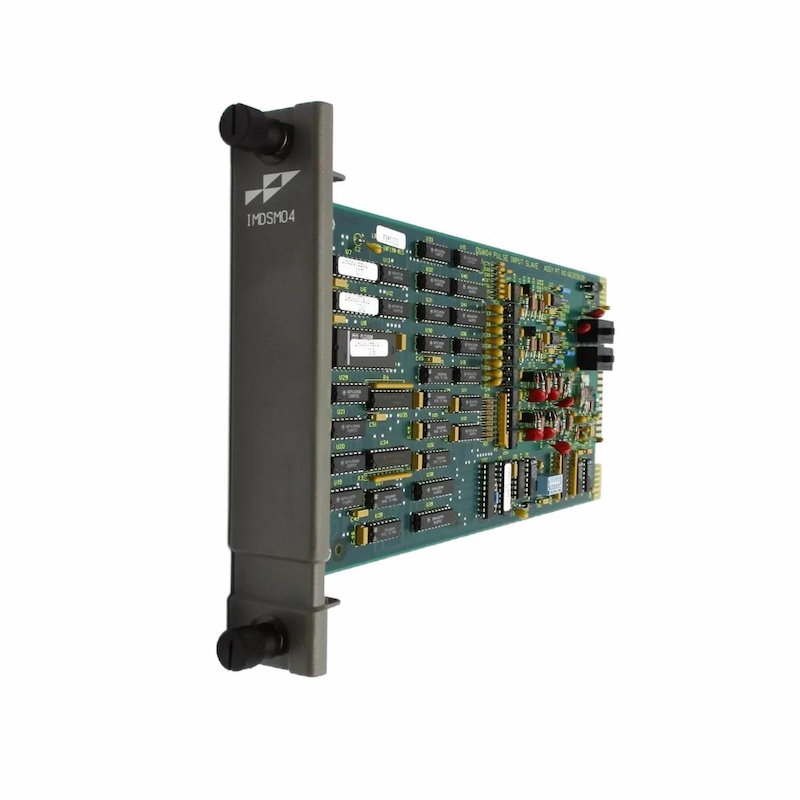
ABB IMDSM04 pulse input slave module

ABB IMDSM04 pulse input slave module

Module positioning and functionality

The ABB IMDSM04 pulse input module is a supporting equipment for the Infi 90 process management system, mainly used for the acquisition and processing of pulse signals in industrial automation scenarios. It supports the conversion of on-site pulse signals (such as equipment speed and flow counting) into digital signals for monitoring and control by the main control system (such as PLC, DCS).

Core technical parameters

Number of input channels: 8 or 16 independent pulse input channels

Signal type: Supports 4-20mA current, 0-10V voltage, HART protocol signal

Measurement accuracy: ± 0.2%

Communication protocols: Modbus RTU, Profibus DP, DeviceNet, etc

Working voltage: 24VDC

Isolation characteristics: Electrical isolation between channels (isolation voltage ≥ 500VAC)

Protection level: IP20 (dustproof)

Key functional characteristics

Multi signal compatibility: It supports a variety of industrial standard signal inputs and adapts to different sensors and actuators.

High precision acquisition: The measurement accuracy of ± 0.2% meets the precise monitoring requirements for parameters such as flow rate and speed.

Reliable communication design: seamlessly integrated with the main system through protocols such as Modbus, supporting real-time data transmission.

Industrial grade protection: The electrical isolation design has strong anti-interference ability and is suitable for harsh environments such as high temperature, humidity, and strong electromagnetic fields.

From a technical principle perspective, the multiplexer and input state circuit inside the IMDSM04 module have a unique operating mechanism. The eight conditioned input signals from the Schmitt trigger inverter will be processed using time-division multiplexing technology with a single 16 bit counter. A channel counter will increment the multiplexer, processing each channel sequentially every 7.2 microseconds (or every 7.8 microseconds if a transaction occurs from the expansion bus). Before switching to the next channel, the channel counter takes approximately 900 nanoseconds to process each input. When the multiplexer selects a channel, an 8-bit shift register stores the input state (0 or 1), which shifts for each channel sample. The 8-bit register saves the previous input state for each complete count, and the main function processor (MFP) can read the current input state.

In terms of performance characteristics, IMDSM04 has significant advantages. Its measurement accuracy is quite high, providing a measurement accuracy of ± 0.2%, which makes it perform well in industrial scenarios with strict precision requirements. This module supports multiple signal inputs, including 4-20mA current signals, 0-10V voltage signals, and HART protocol signals, greatly improving its applicability. Its digital signal output adopts Modbus RTU protocol, which can output one 4-20mA current signal or one 0-10V voltage signal, facilitating data exchange with other devices. In order to facilitate user monitoring, the module is equipped with a large LCD screen that can display various parameters and status information. In terms of reliability, it adopts an isolated design, which can effectively prevent damage to the module due to voltage fluctuations, power supply noise interference and other factors, thereby improving the reliability of the module in complex industrial environments. Moreover, it is compatible with various communication protocols such as PROFIBUS DP, Modbus RTU, and DeviceNet, further enhancing its compatibility with different devices and systems.

Application scenarios (speculated)

Manufacturing industry: Automated production line equipment operation status monitoring (such as conveyor belt speed counting).

Energy industry: Measurement of turbine speed in power plants, acquisition of flow pulses in chemical pipelines.

Process control: Paired with ABB Infi 90 system to achieve automated adjustment of production processes.

Key issues (reasonable inference based on module names)

Question 1: What are the main functions of the IMDSM04 module?

Answer: The main function is to collect pulse signals (such as speed and flow) from industrial sites, convert them into digital signals, and transmit them to the main control system (such as Infi 90) for process monitoring and control.

Question 2: What communication protocols does this module support?

Answer: It is speculated that it supports industrial communication protocols such as Modbus RTU, Profibus DP, DeviceNet, etc., and can be integrated with mainstream PLC/DCS systems.

Question 3: What is the measurement accuracy and number of input channels of the module?

Answer: The measurement accuracy is ± 0.2%, and it is speculated to be equipped with 8 or 16 independent pulse input channels, supporting simultaneous monitoring of multiple devices.

ABB IMDSM04 Pulse Input Slave Module Manufacturers & Suppliers ...

ABB INIIT03 Interface Modules

Product Overview

The ABB INIIT03 interface module is a key equipment designed specifically for industrial automation control systems, responsible for the core tasks of data transmission and protocol conversion in the system. It can efficiently connect different types of devices and systems, break down communication barriers, achieve seamless communication and collaborative work between devices, and is an essential component in building complex industrial automation networks. This module adopts a compact design, which is easy to install in various control cabinets and has excellent environmental adaptability, allowing it to operate stably in harsh industrial environments.

​Specification parameters

Communication Interface: Equipped with multiple communication interfaces such as Ethernet interface and serial communication interface (RS232/RS485), supporting common industrial communication protocols such as Modbus TCP, Modbus RTU, Profibus DP, etc., it can flexibly adapt to the communication needs of different devices.

Working voltage: Supports 24VDC power supply, adapts to the power supply standards of most industrial sites, and ensures stable operation of the module.

Data transmission rate: The maximum data transmission rate of Ethernet interface can reach 100Mbps, and the speed range of serial communication interface is 9.6Kbps -115.2Kbps, which can meet the data transmission requirements in different scenarios.

Working temperature: The working temperature range is -40 ℃ -+70 ℃, suitable for extreme industrial environments such as high and low temperatures; The relative humidity range is 5% -95% (without condensation), effectively addressing the challenges of humid environments.

Protection level: It has an IP20 protection level and can prevent solid foreign objects with a diameter greater than 12mm from entering, while providing a certain degree of dust protection.

Core functions

Protocol conversion: One of the core functions of the INIIT03 interface module is to achieve the conversion between different communication protocols. For example, device data based on Modbus RTU protocol can be converted to Modbus TCP protocol for communication with the upper computer system, enabling devices of different protocols to work together in the same network and solve the compatibility problem of device communication in industrial automation systems.

Data transmission and processing: Able to quickly and accurately transmit device data, and perform necessary processing and optimization on the data. During the data transmission process, the module will verify and correct the data to ensure its integrity and accuracy, providing reliable data support for the control system.

Device connection and management: Multiple different types of devices can be connected simultaneously to achieve centralized management and monitoring of devices. Through the module, users can easily configure device parameters, read device status information, and improve device management efficiency.

Remote monitoring and diagnosis: Supports remote monitoring function, allowing users to remotely obtain module operation status information, fault alarm information, etc. through the network. At the same time, the module has self diagnostic function, which can quickly locate the fault point, facilitate remote troubleshooting and maintenance by technical personnel, and reduce maintenance costs and downtime.

Working principle

When the INIIT03 interface module is working, it first receives communication signals from different devices through its own communication interface. For example, after receiving data signals from sensors using Modbus RTU protocol, the protocol processing unit inside the module parses the signals and extracts valid data information. Then, according to the preset configuration and conversion rules, the protocol processing unit converts the data into the target protocol format, such as Modbus TCP format. The converted signal is sent to the target device or system through the corresponding communication interface, such as to the upper computer monitoring system. During the entire process of data transmission and conversion, the data processing unit will verify and process the data to ensure its accuracy and reliability. At the same time, the status monitoring unit of the module monitors its own operating status in real time. Once any abnormalities are detected, it immediately sends fault alarm information to the upper computer through the communication interface.

Key advantages

High compatibility: Supports multiple communication protocols and interface types, enabling seamless connection with the vast majority of industrial equipment on the market, greatly improving the flexibility and convenience of system integration, and reducing the difficulty of device selection and system integration for users.

Reliable stability: Using high-quality electronic components and advanced manufacturing processes, the module undergoes rigorous testing and verification to ensure long-term stable operation in harsh industrial environments. The strong anti-interference ability and perfect fault protection mechanism effectively ensure the reliability of data transmission and the stability of the system.

Flexible Scalability: The module design has good scalability, allowing users to flexibly increase or decrease the number of connected devices according to actual needs, facilitating system upgrades and modifications. At the same time, it supports multiple configuration methods, and users can easily configure parameters and adjust functions of the module through software tools.

Efficient and convenient: The high-speed data transmission capability and fast protocol conversion speed can meet the real-time requirements of industrial automation systems. The simple and easy-to-use interface and detailed user manual reduce the learning cost and difficulty of users, and improve work efficiency.

Precautions

Installation requirements: During installation, ensure that the module is securely installed to avoid loose connections caused by vibration. At the same time, it is necessary to ensure that the installation environment is dry, well ventilated, and away from strong electromagnetic interference sources. The environmental temperature and humidity of the installation location should be within the working range specified by the module.

Wiring specifications: Strictly follow the product manual for wiring operations to ensure correct and error free power and communication wiring. Different types of signal lines should be wired separately to avoid signal interference. After the wiring is completed, it is necessary to carefully check whether the wiring is secure to prevent poor contact from affecting the normal operation of the module.

Parameter configuration: Before use, it is necessary to correctly configure module parameters according to the actual application scenario, including communication protocol, baud rate, device address, etc. Incorrect parameter configuration may result in module communication failure or data transmission errors. Testing and verification should be conducted after the configuration is completed.

Maintenance: Regularly inspect and maintain the module, clean the surface dust of the module, and check whether the connecting cables are damaged. If the module malfunctions, the fault alarm information should be checked first, and the troubleshooting guide should be followed for handling. Non professionals are not allowed to disassemble the module without authorization.

Similar model supplement

ABB INIIT02 interface module: Compared with INIIT03, INIIT02 has slight differences in communication interface types and protocol support. It supports relatively fewer types of communication protocols and has a slightly lower data transmission rate. Suitable for industrial automation scenarios with low communication function requirements and small system scale, such as local equipment control networks in small factories.

ABB INIIT04 interface module: This model has been upgraded in terms of functionality, adding more communication interfaces and protocol support types, and significantly improving data processing capabilities and transmission rates. Suitable for large and complex industrial automation systems, such as automation control systems in large chemical plants and steel plants, it can meet the high-speed communication and data processing needs of a large number of equipment.

Abb INIIT03 | Maxodeals

ABB IMFEC11/12 Analog Input Module

OVERVIEW

The IMFEC12 High Level Analog Input (FEC) module inputs 15 channels of analog signals only to the multifunction processor(MFP) or multifunction controller (MFC) module.

The IMFEC11 High Level Analog Input (FEC) module inputs 15 channels of analog or frequency shift keyed (FSK) digital signals to the MFP or MFC module. The IMFEC11 module performs all the functions of the IMFEC12 module and also provides communication with the Bailey-Fischer & Porter line of FSK digital smart transmitters and other smart devices in afield bus or point to point configuration

INTENDED USER

Installation and application personnel should have a solid background in electronic instrumentation and process control.

They should be familiar with proper grounding and safety procedures for electronic instrumentation. Operators should have a knowledge of the process and should read and understand this instruction before placing the module in operation.

HARDWARE DESCRIPTION

The FEC module is an intelligent module, with on-board micro processor, memory, analog-to-digital converter and communi cation circuitry.

The module is a single printed circuit board that occupies one slot in a module mounting unit (MMU).

Two captive latches on the module faceplate secure it to the module mounting unit.

The module has three card edge connectors for external signals(transmitter inputs and communication), system communica tion (I/O expander bus) and power.

The module receives input through a cable connection to a termination unit (TU) or termi

nation module (TM). Wiring from the field devices connect to terminal blocks on the termination unit or termination module.

The IMFEC11 circuit board has 18 jumpers;three jumpers that allow selecting the mode of operation and communication(J2, J3 and J4) and 15 jumpers that select voltage/current input (J6 through J20). A dipswitch setting (S1) holds the I/O expander bus address of the module

HARDWARE APPLICATION

The FEC module interfaces analog and digital signals from field devices to the MFP or MFC module. The IMFEC11 module can interface Bailey-Fischer & Porter FSK smart transmitters and other smart devices.

The IMFEC12 is for use with conventional transmitters (BC, EQ and PT) and standard analog inputs.

The IMFEC11 module can operate in one of two modes: FSK field bus mode or FSK analog point-to-point mode. In the FSK field bus mode, a single two-wire input (bus) links a maximum of 15 FSK smart transmitters.

All inputs (process data and module to transmitter communication) are in the frequency

shift keyed format and share the field bus.

Refer to the NTFB01 Field Bus Termination Unit instruction for specific limitations on field bus communications.

All field devices must be Bailey-Fischer & Porter when using this mode In the FSK analog point-to-point mode, the IMFEC11 module can interface up to 15 discrete analog process inputs from FSK

smart devices and communicate (digitally) with those devices.

Additionally, the IMFEC11 module can interface a mixture of conventional transmitters and other external analog inputs while operating in this mode.

These devices can input only process data to the FEC module; they cannot communicate to the

module. In point-to-point operation, each device is individually wired to the analog input termination unit or module.

FEATURES

The design of the FEC module, as with all INFI 90 OPEN modules, allows for flexibility in creating a process managementsystem.

The module supports Bailey-Fischer & Porter FSK digital smart transmitters and other smart devices, conventional transmitters and standard voltage or current inputs.

The FSK digital capability (IMFEC11) eliminates conversion errors and increases process control accuracy.

Access is always available to the real time process status. In the field bus mode, all information (including the process variable) is trans mitted digitally between the FEC module and the field devices.

The FEC module stores process data, control commands and transmitter configuration data in memory.

It works to restore communication with a transmitter if a communication failure occurs.

Upon restoring communication with a failed transmit ter, the FEC module checks the transmitter configuration before the control module (MFP/MFC) resumes updating the process control

INTRODUCTION

This section explains the operation of the IMFEC1 Analog Input Module (FEC). The module does two major tasks.

It pro vides an interface by which the controlling module (multifunc tion processor or multifunction controller module (MFP/MFC))can input analog process data from external devices or smart

transmitters. It also serves as a communication link between the INFI 90 OPEN control system and field devices.

The IMFEC12 module accepts inputs from conventional trans mitters (BC, EQ and PT) and standard analog inputs of 4 to 20 milliamps, 1 to 5 VDC, 0 to 1 VDC, 0 to 5 VDC, 0 to 10 VDC and -10 to +10 VDC. The IMFEC11 has all the functionality of the IMFEC12 module but also provides FSK communications for interface to Bailey-Fischer & Porter smart transmitters and other smart devices.

GENERAL OPERATION

Upon receiving initialization from the controlling module (MFP/MFC), the FEC module stores that information in memory and checks the configuration of each input channel.

If all input channels check good, operation begins. If the FEC module detects a configuration error, that error appears in the module status report.

Under normal operation, the controlling module sends trans mitter commands and requests process input data and status information from the FEC module.

The FEC module continu ously reads each input channel, does the necessary conver sions and stores the data in memory.

When the controlling module makes a request for data, the FEC module sends it the most current information that it has in memory.

If a communication failure with one of the transmitters occurs,the FEC module works to restore communication while con tinuing normal operation.

It checks the transmitter configura tion upon restoring transmitter communication and normal process control continues.

ABB SPFEC12 Analog Input Module

ABB IMDSO14 Digital Output Module

Product overview

The ABB IMDSO14 digital output module is a device that plays a critical role in industrial automation control systems. It is mainly responsible for converting the digital signals emitted by the control system into control signals that can drive external devices. It is widely used in various industrial scenarios that require precise control of external actuators, such as factory automation production lines, power energy monitoring systems, and automation control of intelligent buildings. This module is designed to be compact, easy to install, and can be efficiently integrated into various complex automation system architectures.

Brand background

ABB, as a globally renowned leader in the fields of power and automation technology, has a history of over 100 years of innovation. In the field of industrial automation, ABB continuously launches advanced and reliable products and solutions with its profound technological accumulation and rich industry experience. Its products are renowned for their outstanding performance, high reliability, and innovative technology, occupying an important position in the global industrial market. ABB has always been committed to providing customers with cutting-edge and high-quality products through continuous research and development investment, meeting the ever-changing needs of industrial applications, and promoting the continuous improvement of industrial automation level.

Specification parameters

Working voltage: Supports 24VDC or 48VDC, can adapt to the power supply needs of different industrial environments, ensuring stable operation under various conventional power supply conditions.

Number of output channels: It has 16 independent digital output channels, each of which can independently control external devices, greatly improving the flexibility and efficiency of control.

Output current: The output current capability of each channel is 150mA (at 24VDC) or 75mA (at 48VDC), which can meet the driving needs of most common industrial actuators, such as small relays, solenoid valves, etc.

Isolation characteristics: Electrical isolation design is adopted between channels and between channels and internal circuits of modules, with an isolation voltage of up to 500VAC, effectively preventing interference between different circuits and enhancing the reliability of the system in complex electromagnetic environments.

Dimensions: The compact design makes it compact in size, making it easy to install in control cabinets with limited space. The specific dimensions are [length X width X height], making it convenient to integrate into various industrial control cabinets.

Core functions

Digital signal output: capable of receiving digital signals from control systems (such as PLC, DCS, etc.) and accurately converting them into corresponding high and low level outputs to drive the operation of external devices. Whether it’s simple device start stop control or complex sequential control tasks, IMDSO14 can execute them accurately.

Status indication: Each output channel is equipped with LED indicator lights. By the on/off status of the indicator lights, users can intuitively understand the output status of each channel, making it easy to quickly identify the fault point during debugging and maintenance.

Fault diagnosis and protection: It has self diagnostic function and can monitor its own operating status in real time. When abnormal situations such as output short circuit and overload are detected, the module will automatically activate the protection mechanism, cut off the output of the corresponding channel, prevent equipment damage, and send fault alarm information to the control system through the communication interface for timely troubleshooting.

Working principle

When the IMDSO14 digital output module is working, it first receives digital signals from the control system, which are transmitted to the microprocessor inside the module through the communication interface. The microprocessor parses and processes the input signal, determines the required output channel and corresponding level state based on the content of the signal. Then, the microprocessor sends corresponding control signals to the drive circuits of each output channel through the control circuit. The driving circuit controls the conduction and cutoff of the power transistor based on the received signal, thereby converting the internal digital signal into a voltage signal that can drive external devices and outputting it to the corresponding output terminal. Throughout the process, the isolation circuit ensures electrical isolation between the input signal and the output signal, avoiding interference that affects the normal operation of the system.

Key advantages

High reliability: Using high-quality electronic components and advanced manufacturing processes, and undergoing strict quality inspection processes, the module ensures long-term stable operation even in harsh industrial environments. Its excellent anti-interference ability and fault protection mechanism greatly reduce the risk of system downtime caused by module failures.

Flexibility: With 16 independent output channels and support for different operating voltages, this module can be flexibly applied to various complex industrial control scenarios, whether it is a simple small-scale control system or a large-scale automated production line, it can be easily adapted.

Easy to maintain: Clear LED status indication and powerful self diagnostic function enable maintenance personnel to quickly locate fault points and shorten troubleshooting time. Meanwhile, the structural design of the module facilitates disassembly and replacement, reducing maintenance costs and difficulty.

Good compatibility: It can seamlessly integrate with mainstream control systems from ABB and other brands, facilitating users to build a unified automation control network and achieve collaborative work between devices.

Precautions

Installation environment: It should be installed in a dry and well ventilated environment, avoiding installation in places with high temperature, high humidity, or corrosive gases. The working temperature range is generally from 0 ° C to 55 ° C, and the relative humidity does not exceed 95% (non condensing).

Wiring specifications: When carrying out wiring operations, it is necessary to strictly follow the requirements of the product manual to ensure that the wiring is firm and correct. Avoid module damage or system failure caused by wiring errors. At the same time, it should be noted that circuits of different voltage levels should be wired separately to prevent electrical interference.

Load matching: When connecting external loads, ensure that the rated current and voltage of the load match the output capacity of the module. Overloading is strictly prohibited to avoid damaging the module. If high-power loads need to be driven, consideration should be given to using intermediate relays for power amplification.

Electrostatic protection: When operating the module, attention should be paid to electrostatic protection to avoid damage to the electronic components inside the module caused by human static electricity. It is recommended that operators wear protective equipment such as anti-static wristbands.

​Similar model supplement

ABB IMDSO12: Compared with IMDSO14, IMDSO12 is also a digital output module, but it only has 12 output channels, which is suitable for application scenarios with relatively less demand for output channels and more limited control cabinet space. In other aspects, performance parameters such as operating voltage range and output current capability are similar to IMDSO14.

ABB IMDSO24: This model has 24 digital output channels, with more output channels than IMDSO14, making it suitable for large automation systems that require controlling a large number of external devices. Its working principle and basic functions are consistent with IMDSO14, but there may be an increase in module size and power consumption.

Application scenarios

Manufacturing automation production line: In the production lines of industries such as automobile manufacturing and electronic equipment manufacturing, IMDSO14 can be used to control various automation equipment, such as the movement of robotic arms, the start and stop of conveyor belts, and the opening and closing of pneumatic valves, to achieve automated operation of production lines, improve production efficiency and product quality.

Power and energy industry: used in power facilities such as substations and power plants to control the opening and closing of circuit breakers, display of indicator lights, triggering of alarm devices, etc., to ensure the safe and stable operation of the power system. In the field of petrochemicals, various pumps, compressors, regulating valves and other equipment can be controlled to achieve automated control and monitoring of the production process.

In the field of intelligent buildings, it can be used to control the on/off of lighting systems, the start/stop of air conditioning systems, and the unlocking of access control systems, achieving intelligent management of building equipment and improving the energy efficiency and comfort of buildings.

IMDSO14 ABB Bailey Infi 90 Symphony Digital Slave Output Module PLC ...

Search for products

Back to Top
Product has been added to your cart